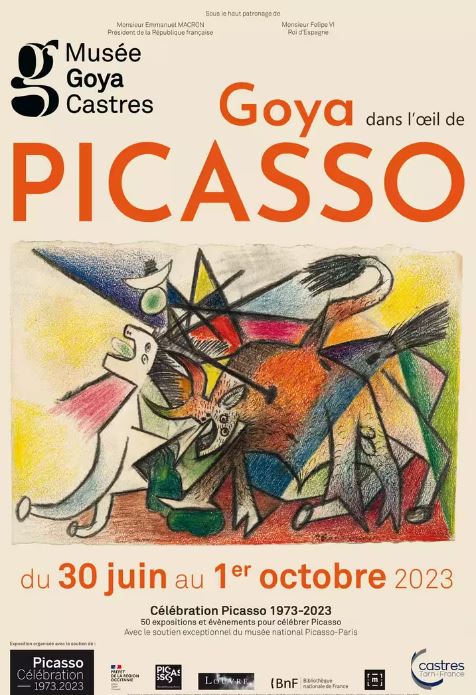
At the Musée Goya in Castres for the exhibition ‘Goya dans l’œil de Picasso’, part of a series of fifty exhibitions being held throughout Europe to mark the fiftieth anniversary of Picasso’s death in 1973. This exhibition celebrates the links between the two great Spanish masters and in particular shows the influence of Francisco Goya on the career of Pablo Picasso.
Both artists shared a fascination with the tradition of bullfighting in Spain and both depicted it in their drawings, engravings and paintings and some of these form the main part of the exhibition. Examples of Goya’s print series ‘La Tauromaquia’, which consisted of thirty-three works completed between 1815 and 1816, were displayed alongside some of the twenty-six aquatints produced by Picasso for the 1957 republication of the bullfighting manual ‘La Tauromaquia’.
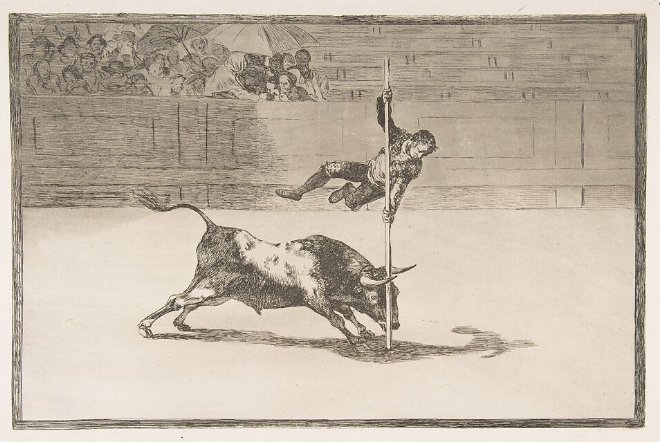
Francisco Goya ‘The Agility and Audacity of Juanito Apiñani in the Ring at Madrid’ (1816)
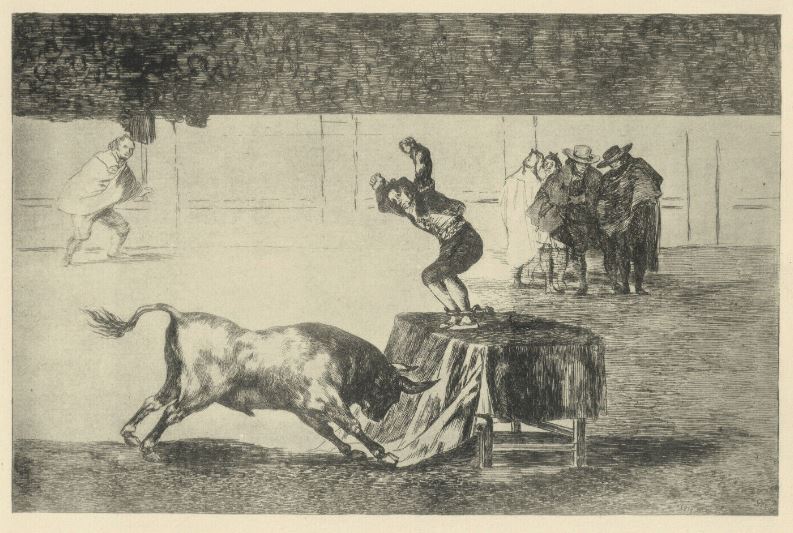
Francisco Goya ‘Another madness of his in the same ring’ (1816)
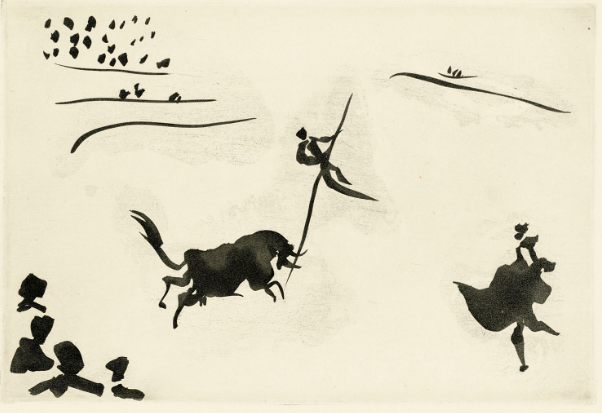
Pablo Picasso ‘Salto con la Garrocha’ (Pole Vault) (1959)
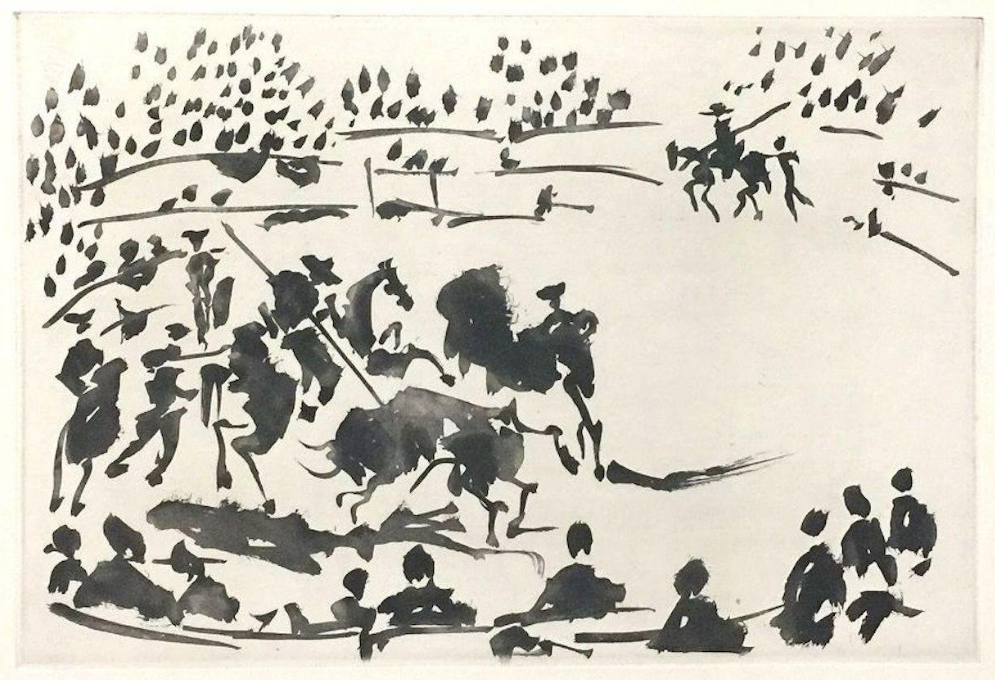
Pablo Picasso ‘El Picador Obligando al Toro con su Pica’ (1959)
Towards the end of his life, when almost blind, Goya produced four large lithographs, ‘The Bulls of Bordeaux’, which focussed on the bullrings and the attending crowds. Picasso also concentrated on the bullring in three coloured tracing papers produced for the documentary film ‘The Mystery of Picasso’ in 1956. Also displayed was Picasso’s more abstract depiction, ‘Corrida’, from 1935.
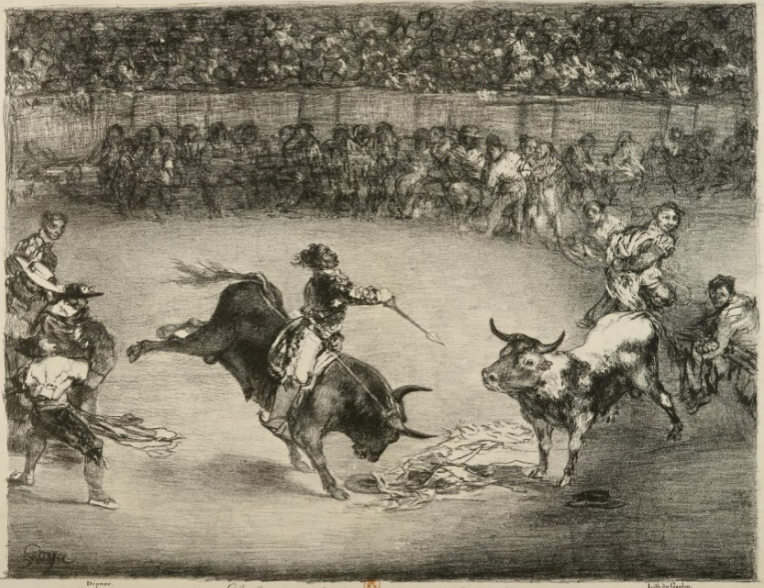
Francisco Goya ‘ El Famoso Americano, Mariano Ceballos’ (1825)
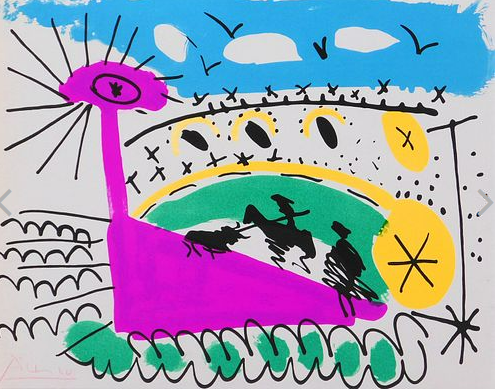
Pablo Picasso ‘Corrida’ (1955)
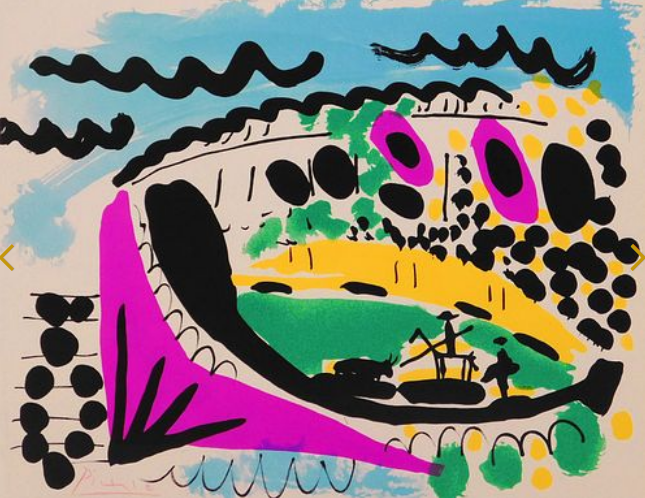
Pablo Picasso ‘Corrida’ (1955)
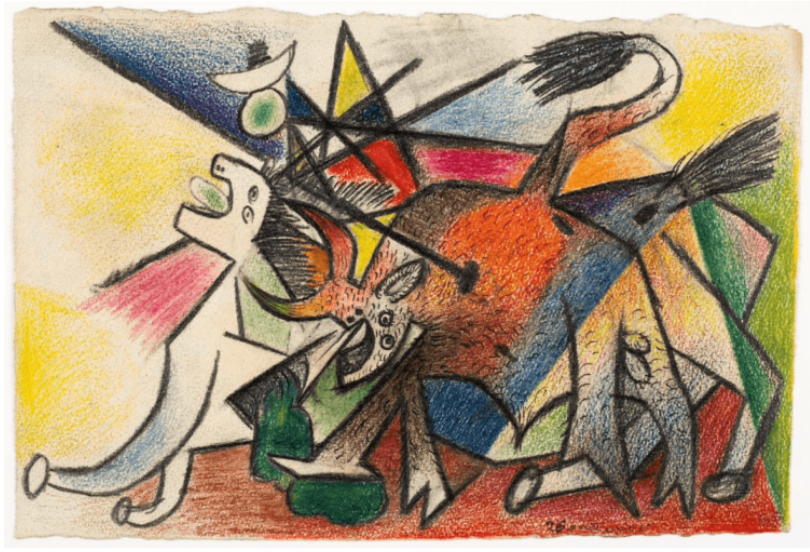
Pablo Picasso ‘Corrida’ (1935)
Both Goya and Picasso created hybrid, monstrous beings, possibly evoking the times they had lived through. Goya went into exile in Bordeaux after engraving ‘The Disasters of War’ and ‘Los Disparates’ and, now deaf, shut himself away in a world where he created his irrational monsters. Picasso had lived through two world wars and the Spanish Civil War and depicted his life through the figure of the Minotaur, which embodies his alter ego.

Pablo Picasso ‘Winged Bull Watched by Four Children’ (1934)
The exhibition ends with a section entitled ‘Death’, which explores the representation of death in the work of both artist through the genre of still-life, Goya is represented by ‘Still Life with Lamb’s Ribs, Loin and Head’ (1808 – 12) which is displayed alongside Picasso’s ‘Still Life with a Ram’s Head’ (1939).
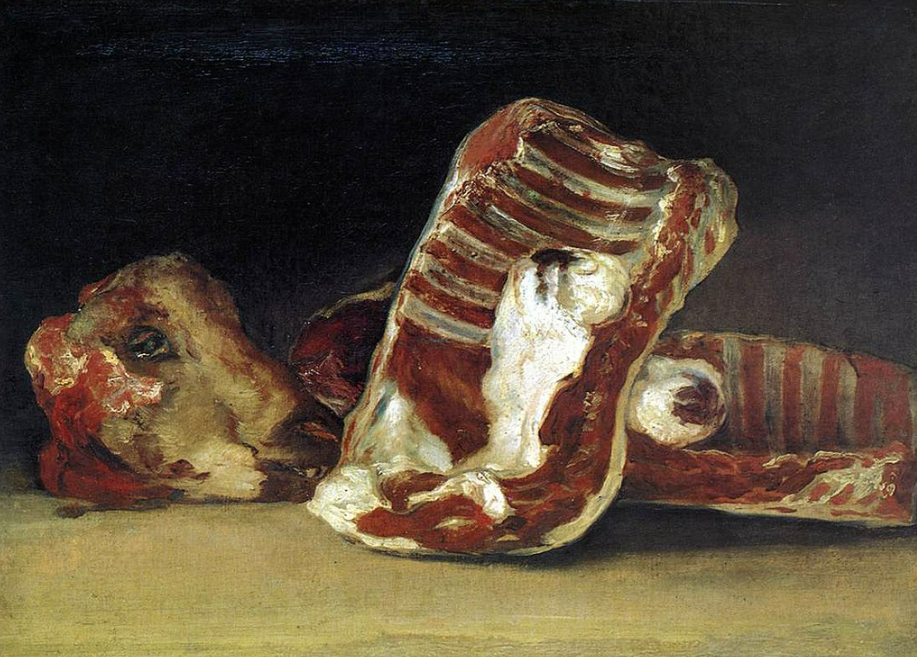
Francesco Goya ‘Still Life with Lamb’s Ribs, Loin and Head’ (1808 – 12)
 The Diary of One Who Disappeared