
La Sainte-Chapelle was constructed in the 1240s (consecrated on 26 April 1248) on the orders of King Louis IX on the Île de la Cité in the River Seine in Paris. The whole structure was completed in just seven years; incredible when compared with its neighbour, Notre-Dame, begun around the same time, which took almost two hundred years. It was built to house the most sacred relics of the Passion of Christ, including the Crown of Thorns and a fragment of the True Cross.

Engraving of La Saint-Chapelle, circa 1630
Louis had purchased the relics from Baldwin II, Latin Emperor of Constantinople, who had pawned them to the Venetians. They were brought from Venice by Dominican friars, with Louis himself carrying them in the final stages of the journey. He bought them for the enormous sum of 135,000 livres and then had them stored in a large silver chest, the Grande-Chasse, which cost a further 100,000 livres. Just how large a sum this was is illustrated by the fact that the entire chapel and its glazing cost 40,000 livres. In 1246, Louis would add to his relic collection by obtaining fragments of the True Cross and the Holy Lance.
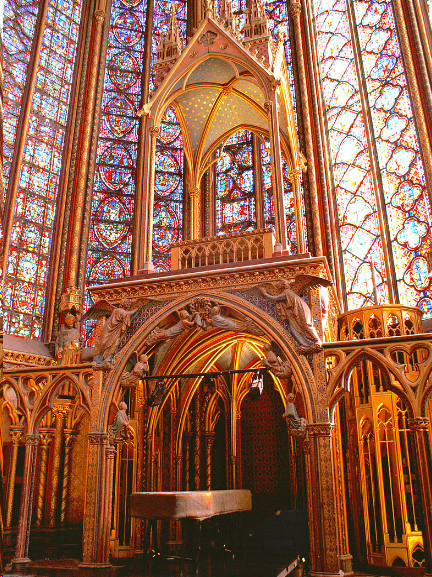
The Grande-Chasse
The chapel was built in the the Gothic rayonnant style, with a ribbed vault but, amazingly, there are no flying buttresses to take the weight of the roof. Nevertheless, the clusters of slender columns together with the robust architecture of the lower chapel provide enough support to allow for a vast expanse of stained-glass windows, a total of 1,113 of them.
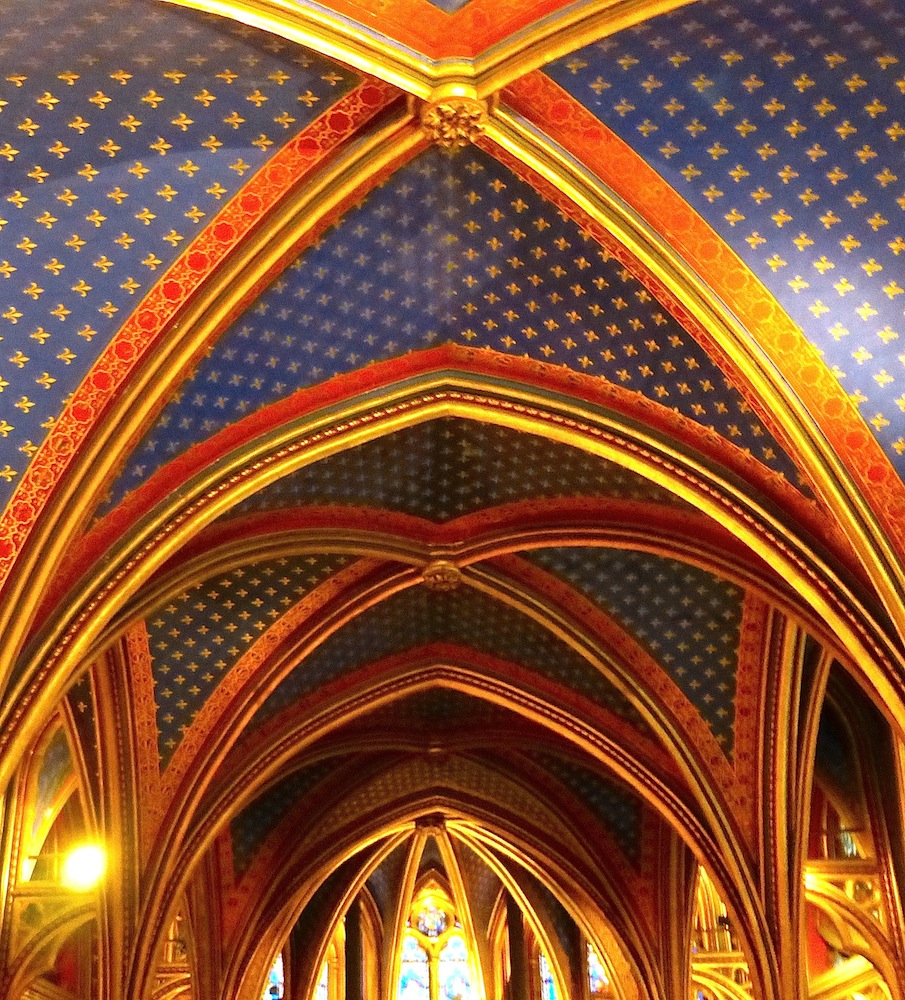
The ribbed vaulted ceiling of the lower chapel


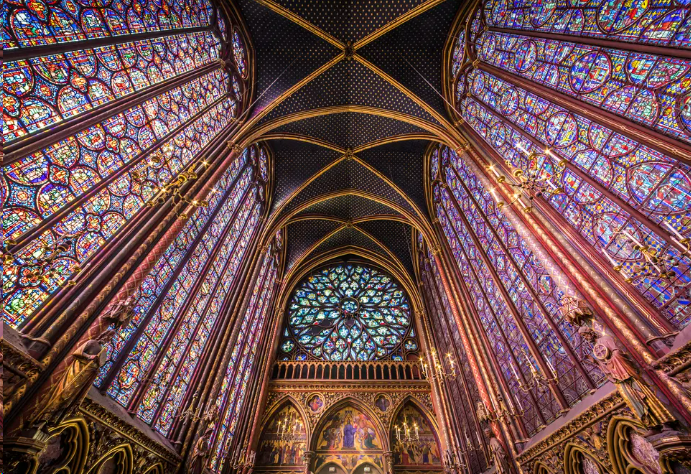
The ribbed vaults and stained-glass windows in the upper chapel
The Rose window in the west front, dedicated to the Apocalypse, was rebuilt during the reign of Charles VIII around 1485. It is extremely well preserved with very little restoration. It is nine metres wide and composed of complex flame-shaped sections, typical of fifteenth-century flamboyant Gothic.
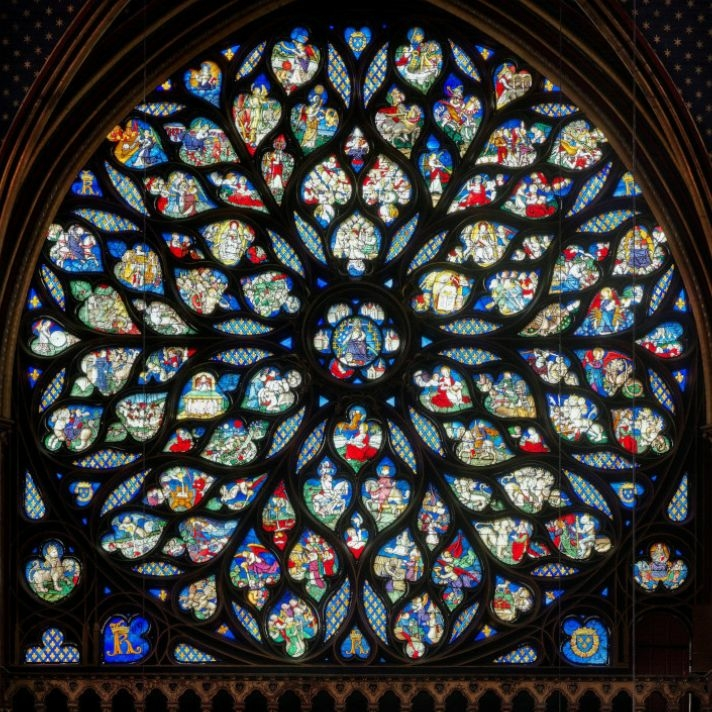
The Rose of the Apocalypse, La Sainte-Chapelle
Below the oculus, two of the four horsemen of the Apocalypse are depicted. On the left, representing death, is a white horseman emerging from a dragon’s mouth, whilst on the right a horseman carrying a scale represents famine.
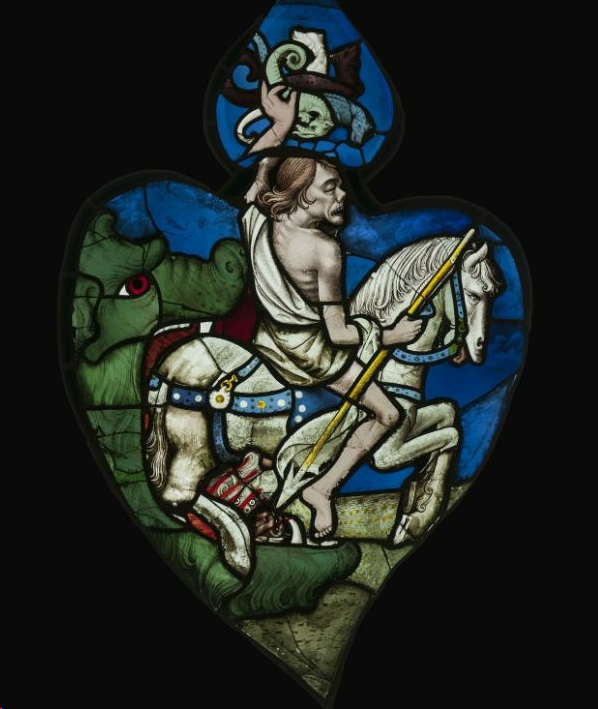
One of the Horsemen of the Apocalypse
During the French Revolution the chapel was a prime target for vandalism and many of the original sculptures were smashed. The chapel was turned into a storehouse for grain and the spire was pulled down. Much of the sculpture of the portals was damaged; however, between 1855 and 1870, the sculptor Adolphe-Victor Geoffroy-Dechaume was able to recreate it using 18th century descriptions and engravings. The tympanum over the portal of the upper chapel was recreated; it contains the central figure of Christ giving a blessing, with the Virgin Mary and John the Baptist alongside him.
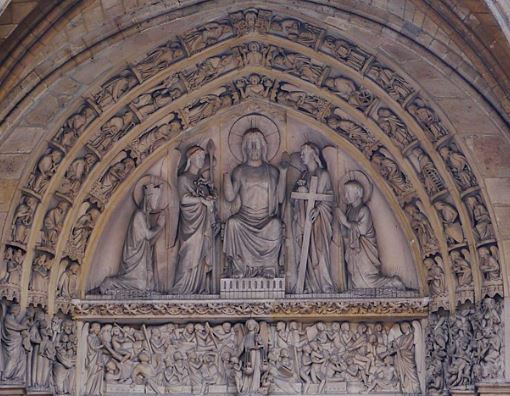
Tympanum above the portal of the upper chapel
Some of the stained glass was also broken during the Revolution but nearly two-thirds of the glass today is original. During World War II the windows were removed and put into safe storage. The windows and the chapel generally have been subject to several expensive restoration projects over the years. In 2008, a comprehensive seven-year programme of restoration began and 10 million euros was spent cleaning and preserving the stained glass, cleaning the facade stonework and repairing some of the sculptures.
 The Diary of One Who Disappeared