
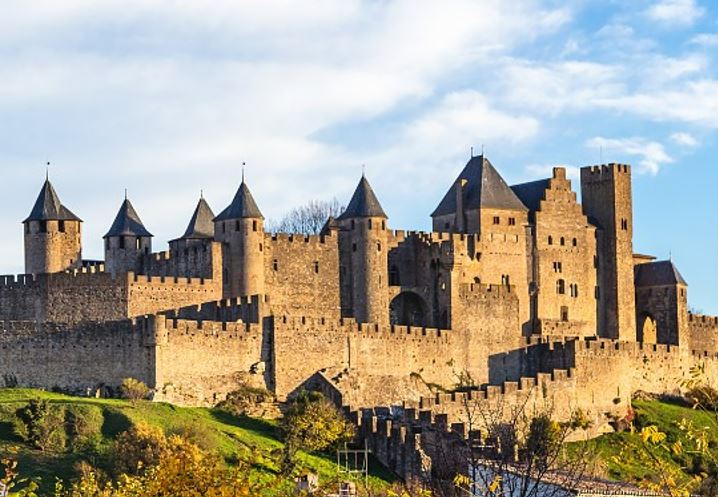
The citadel of Carcassonne in the Aude department of southern France is one of the largest surviving medieval walled cities in Europe and is listed as a UNESCO World Heritage Site. A fortified settlement has existed on the site since pre-Roman times, although in the fifth century the site was taken over by the Visigoths, who founded the current city as part of the newly-established Visigothic Kingdom.
Carcassonne was a stronghold of the Occitan Cathars during the Albigensian Crusades of the early thirteenth century but in 1209 its citizens were forced to surrender and the city submitted to the rule of the kingdom of France in 1247. It became a border fortress between France and the Crown of Aragon in 1258 and and King Louis IX and his successor Philip III built the city’s outer ramparts.
The city’s Gothic Cathédrale Saint-Michel de Carcassonne also dates from the thirteenth century, although following war damage in the fourteenth century it was rebuilt as a fortified church. It was elevated to cathedral status in 1803.

Carcassonne with its double defensive walls.

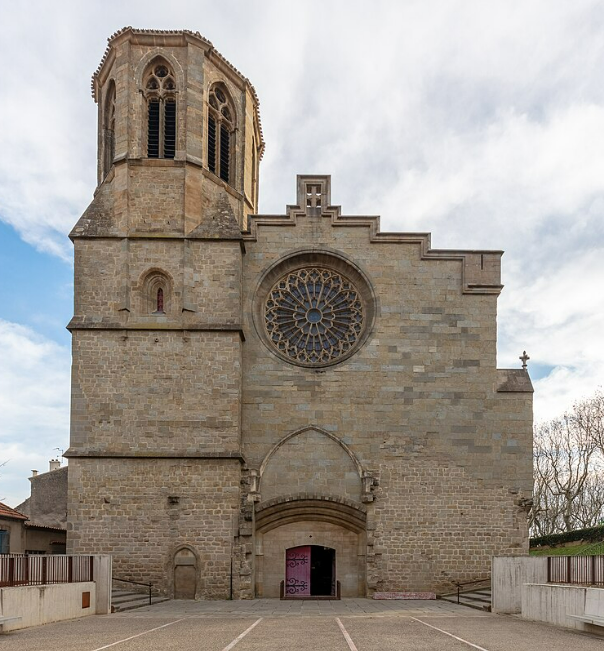
Cathédrale Saint-Michel de Carcassonne
 The Diary of One Who Disappeared