Spending a week exploring Krakow, one of Poland’s oldest and most beautiful cities, home to stunning architecture and magnificent art collections. The city’s Old Town and surrounding buildings were designated a UNESCO World Heritage Site in 1978. UNESCO describes it as “one of the most outstanding examples of European urban planning, characterised by the harmonious development and accumulation of features representing all architectural styles from the early Romanesque to the Modernist periods.”
The city, which is located on the Vistula River, was the seat of the Polish monarchy from 1038 and was the country’s capital until 1595. It remains one of the leading centres of Polish cultural and academic life and in 2000 was named European Capital of Culture.
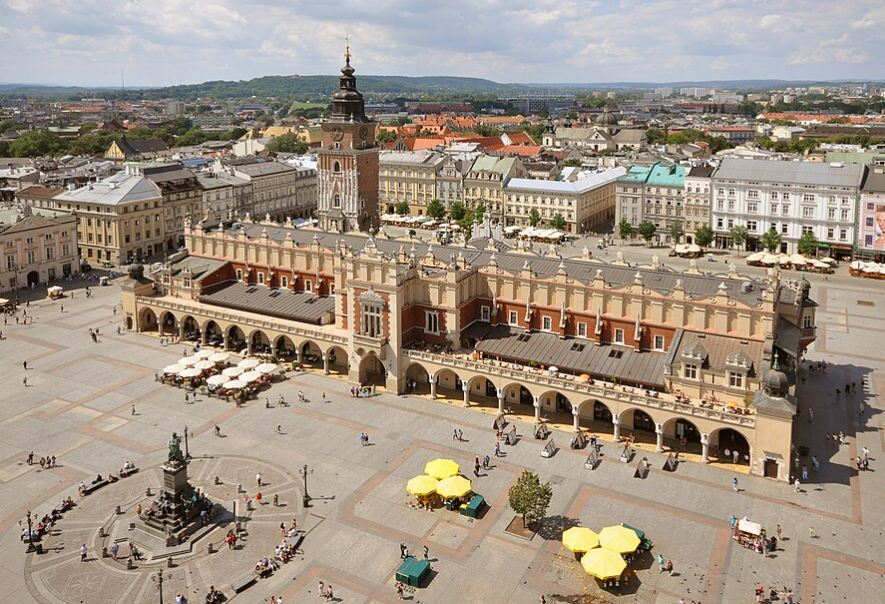
Main Market Square, Krakow
Main Market Square (Polish: Rynek Glówny) in the centre of Krakow’s Old Town dates back to the thirteenth century and is an enormous space of over 3,700 square metres, making it the largest medieval market square in Europe. It is dominated by the Cloth Hall (Sukiennice) in the centre, behind which can be seen the free-standing Town Hall Tower, the only surviving section of the city’s thirteenth-century town hall.
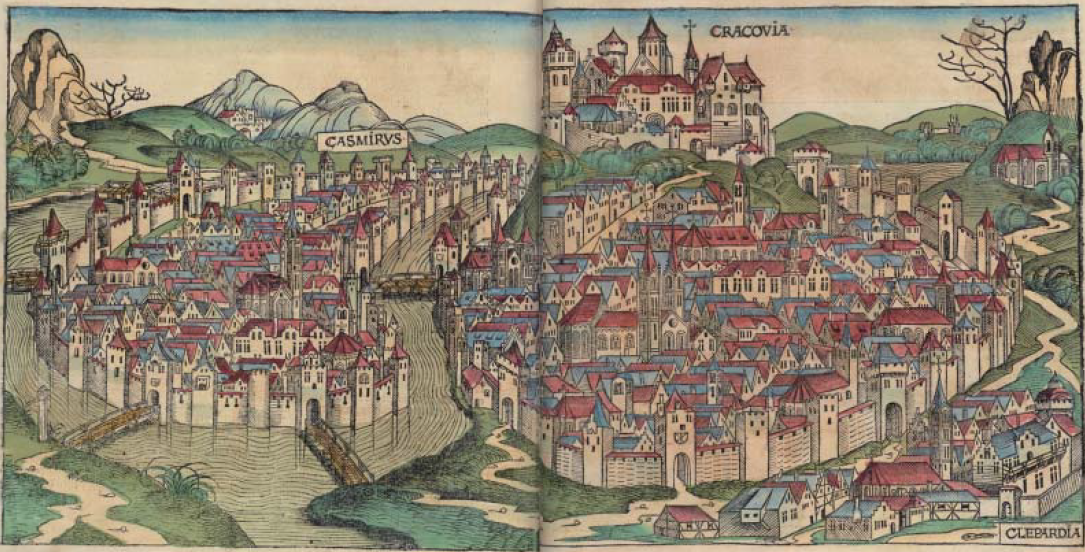
View of Cracow from Hartmann Schedel’s ‘Liber cronicarum’ (1493)
The Cloth Hall was once a centre of international trade, importing spices, silk and leather from the east and exporting salt, textiles and lead. It was rebuilt after a fire in 1555 in a Renaissance style with a frontage topped by a long parapet with a decorative frieze and gargoyles. In a nineteenth-century renovation, extensive arcaded galleries were added. The long hall of the ground floor is still full of stalls which are used today.
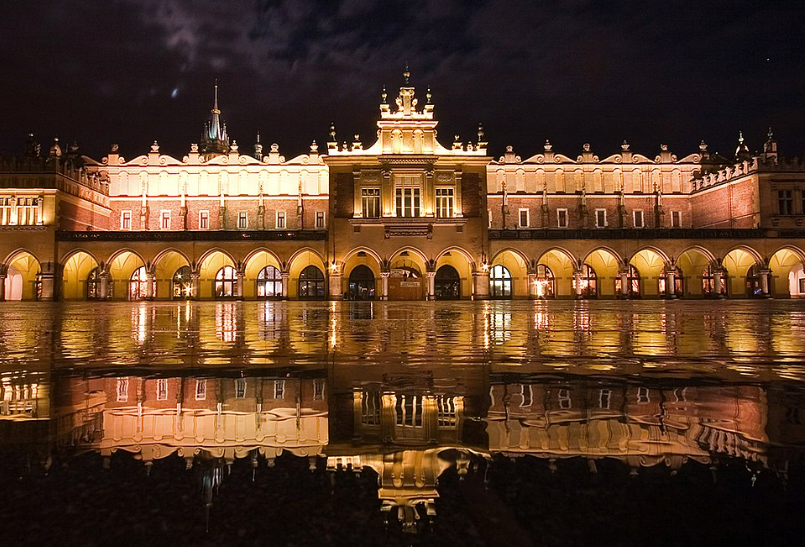
Cloth Hall (Sukiennice), Main Market Square, Kraków
On the upper floor of the hall is the Sukiennice Museum, which holds the largest permanent collection of nineteenth-century Polish painting and sculpture. For me, the display of Realism and Polish Impressionism in the Chełmoński Room was the most interesting. Works shown include:
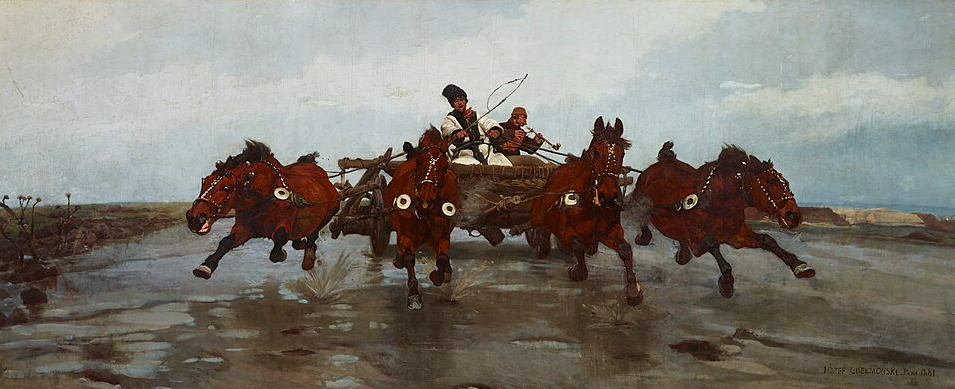
Józef Chełmoński ‘Four-in-Hand’ (1881)
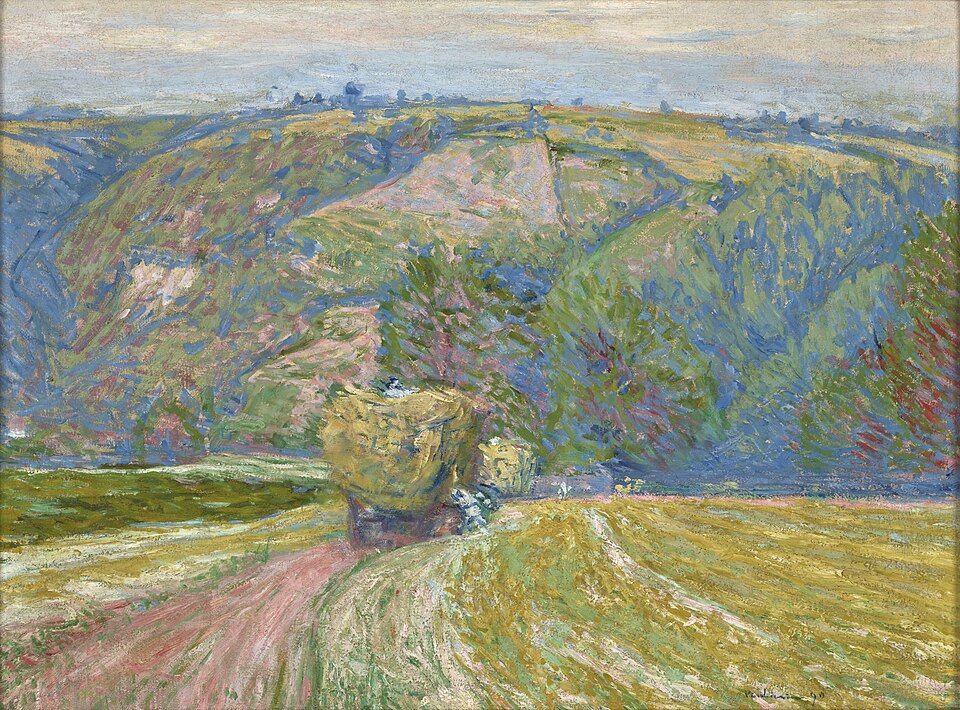
Józef Pankiewicz ‘Cart with Hay’ (1890)
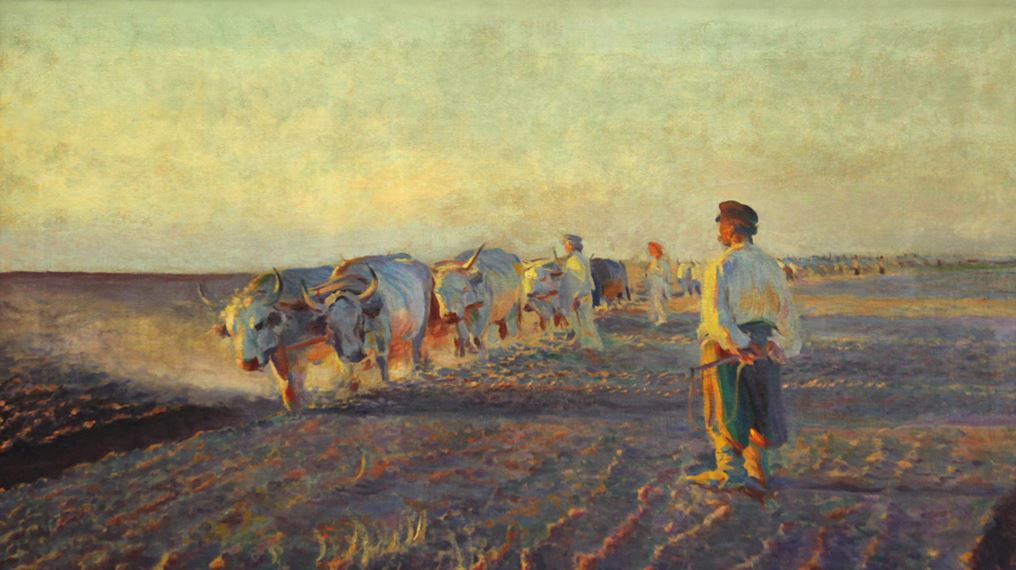
Leon Wyczółkowski ‘Ploughing in Ukraine’ (1892)
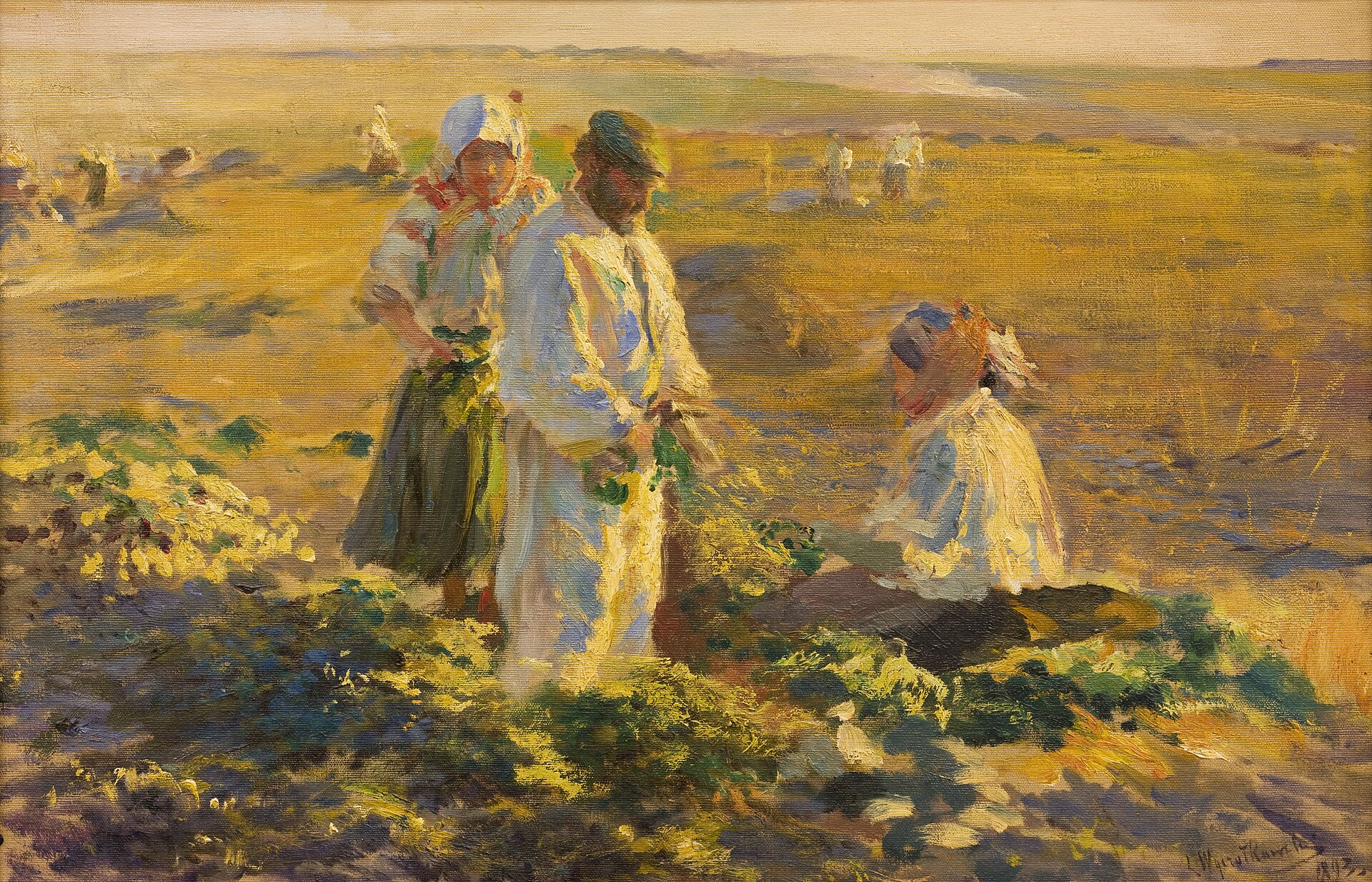
Leon Wyczółkowski ‘Beet Lifting’ (1893)
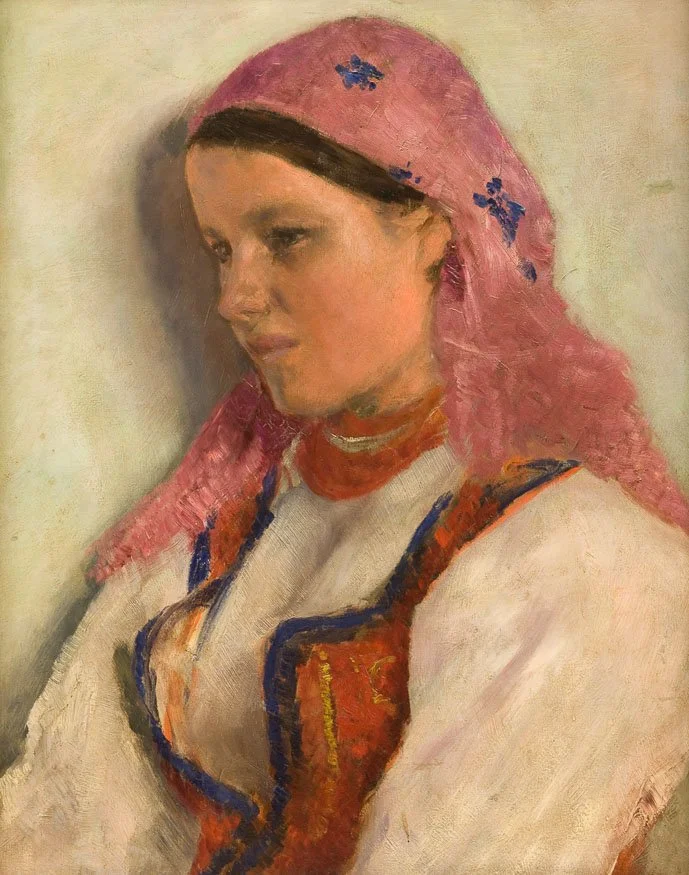
Aleksander Gierymski ‘The Girl from Bronowice’ (1893 – 94)
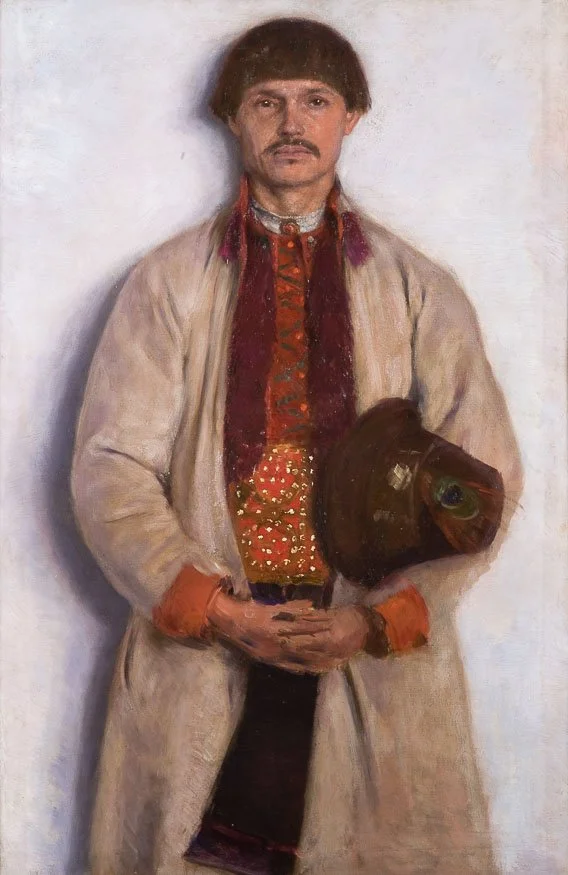
Aleksander Gierymski ‘Peasant from Bronowice’ (c.1895)
Saint Mary’s Basilica, or the Church of the Assumption of the Blessed Virgin Mary, to give it its full name, is a historic Roman Catholic parish church located in Mariacki Square at the north-eastern corner of Main Market Square. It was built in brick in the fourteenth century and consecrated in 1320. It was then reconstructed during the reign of Casimir III the Great between 1355 and 1365, the side chapels being added in the first half of the fifteenth century. In the eighteenth century the interior was rebuilt in the late Baroque style, which was then redecorated with neo-Gothic designs at the end of following century.
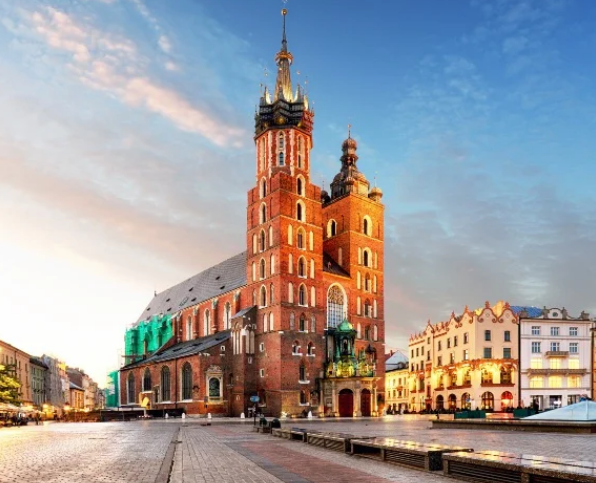
Saint Mary’s Basilica, Krakow
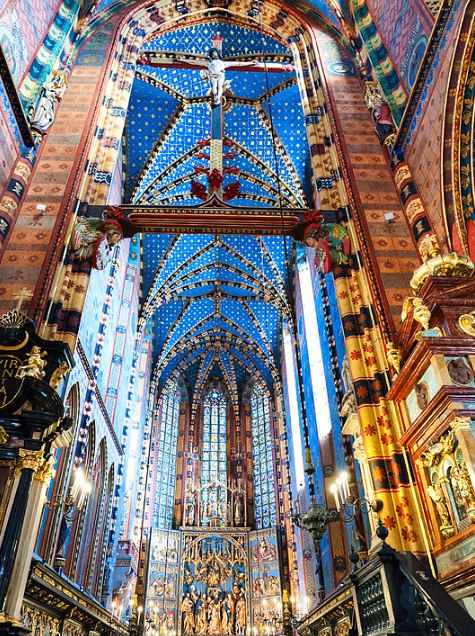
Saint Mary’s Basilica, Krakow, nave
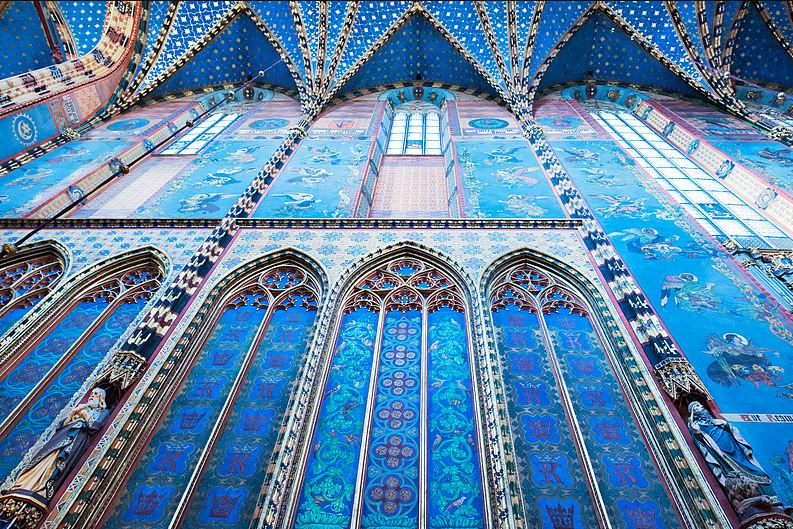
Saint Mary’s Basilica, Krakow, polychromed walls and stained-glass windows
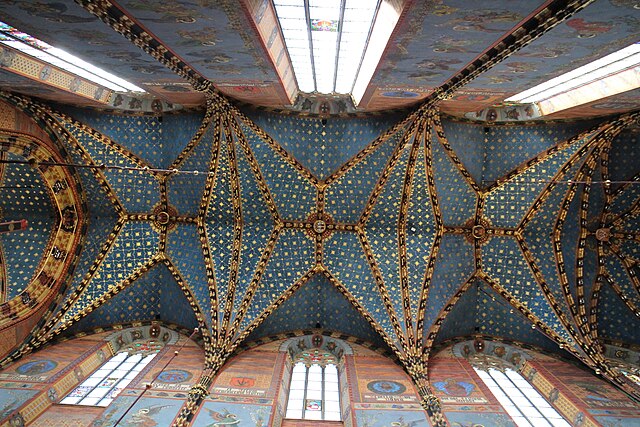
Saint Mary’s Basilica, Krakow, vault
The altarpiece in the Basilica was carved by German-born sculptor Veit Stoss between 1477 and 1489. When the panels are completely open it measures about 13 metres high and 11 metres wide, making it the largest Gothic altarpiece in the world. The sculpted figures are 2.7 metres high; each being carved in lime wood. The background is made of larch and other parts of the altarpiece are in oak. When the panels are closed twelve scenes from the life of Christ and the Virgin Mary.are displayed.
The central panel of the open altarpiece depicts the Dormition of the Virgin in the presence of the Twelve Apostles at the bottom, with the Assumption above. Outside the main frame, the coronation of Mary is shown, with the figures of Saint Stanislaus and Saint Adalbert of Prague on either side. The side panels show six scenes of the Joys of the Virgin.
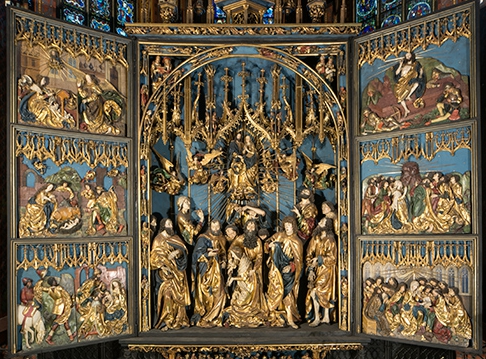
Veit Stoss altarpiece, Saint Mary’s Basilica, Krakow (1477 – 89)
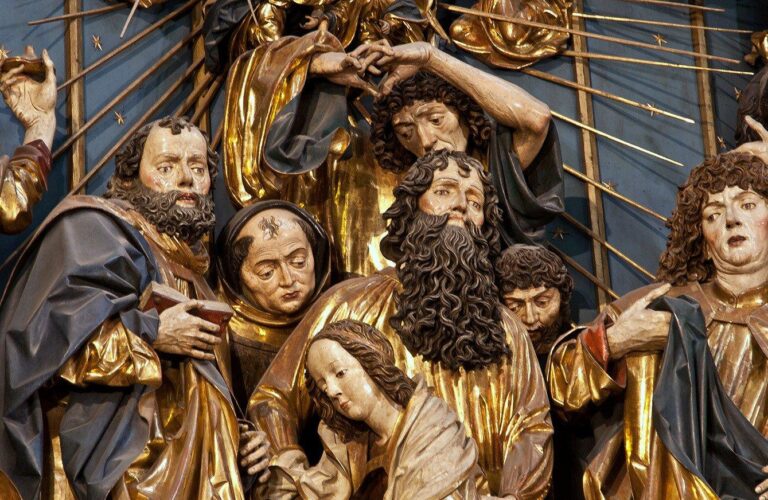
Veit Stoss altarpiece, Saint Mary’s Basilica, Krakow (detail)
Every hour on the hour, twenty-four hours a day, a trumpet call known as Hejnal Mariacki is made four times in succession for north, south, east and west from the highest windows of the tower of Saint Mary’s Basilica, with the noon performance being broadcast on Polish radio. The origin of the ritual is uncertain, but it has taken place for over 700 years. Legend has it that during a Mongol invasion of Poland in 1241, a sentry in the church tower sounded the alarm by playing the Hejnal, allowing the city gates to be closed before the Tatars could take Krakow. However, the trumpeter is said to have been shot in the throat before he could finish the tune, which is why when it is played today the performance ends abruptly.
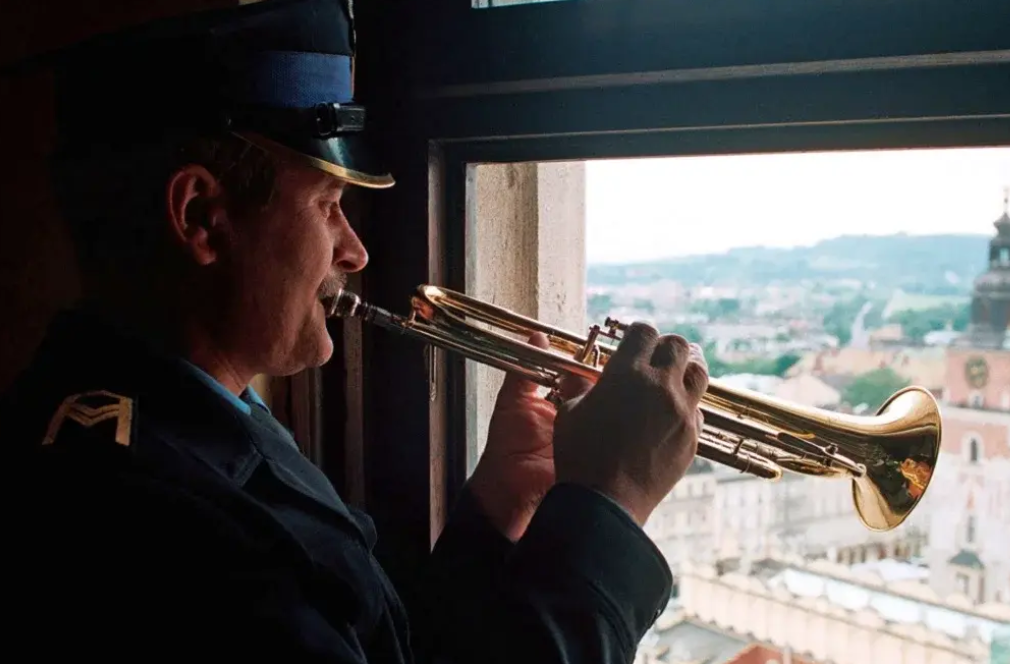
Trumpeter playing ‘Hejnał Mariacki’
The Church of Saint Adalbert, located in the south-eastern corner of Main Market Square, is one of the oldest stone churches in Poland. It was originally built in the eleventh century on the site of an old wooden church and named after the martyred missionary Saint Adalbert (Polish: Wojciech), although it was partly reconstructed in the Baroque style between 1611 and 1618.
Legend has it that Saint Adalbert consecrated the original church in 997 and preached there before going on his mission to introduce Christianity to Prussia, where he was martyred. In the 1960s, remains of the earliest timber church dating back to the time when Saint Adalbert lived in Kraków, were discovered.
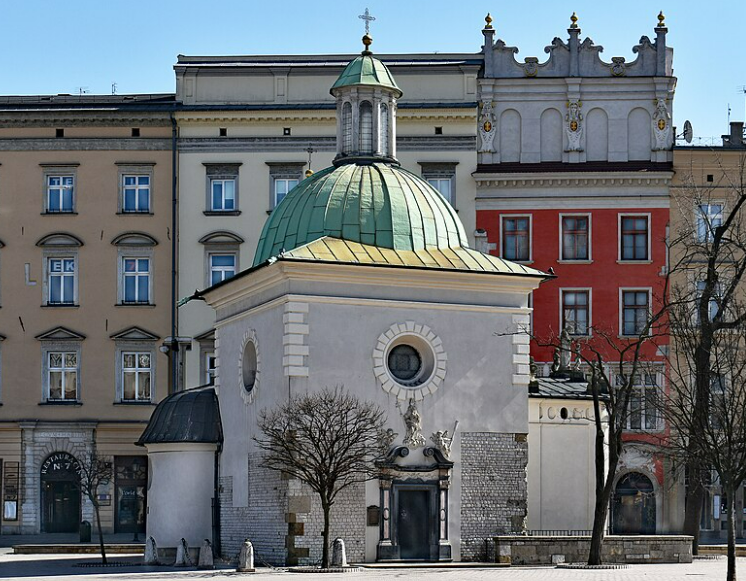
Church of Saint Adalbert, Krakow
Wawel Castle has a rich and fascinating history dating back to the eleventh century. The castle was first built during the reign of Casimir I the Restorer, who reigned as Duke of Poland from 1040 to 1058, but over time it has been expanded by other rulers, and it now displays a mix of architectural styles including Gothic, Renaissance and Baroque.
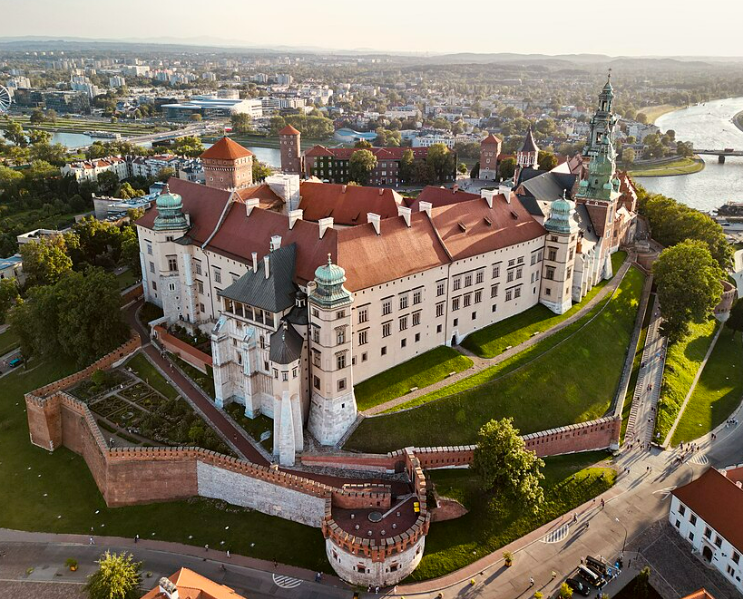
Wawel Castle, Krakow
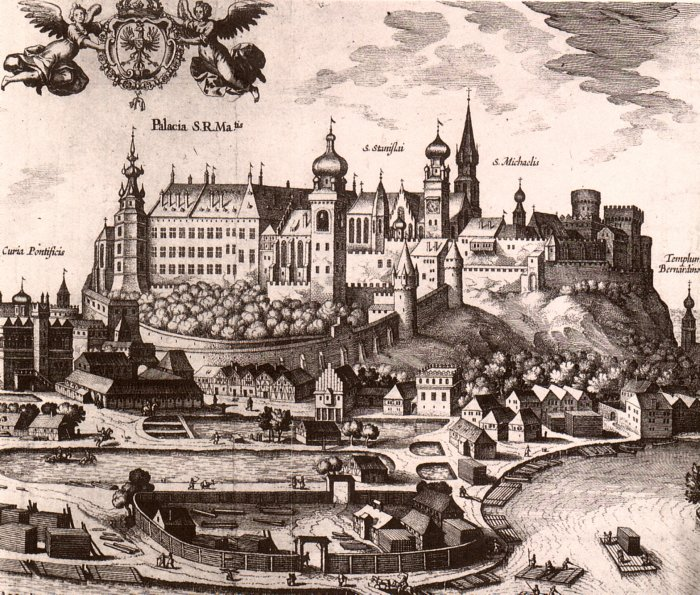
Wawel Castle (woodcut, 1617)
Wawel Cathedral, part of the castle complex, was also built in the eleventh century and, like the castle, it has seen several extensions and restorations. Its interior has stunning frescoes, sculptures and stained glass windows, all of which reflect Poland’s rich cultural heritage.
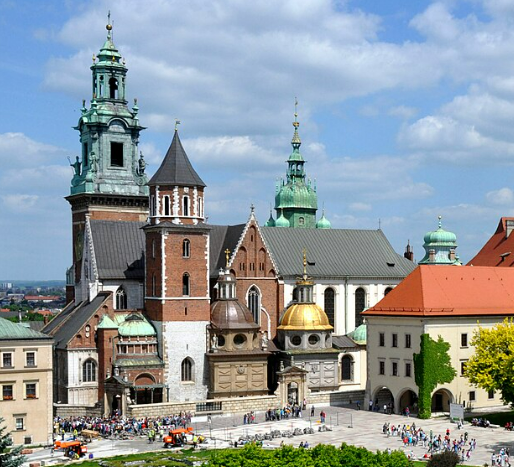
Wawel Cathedral, Krakow
The National Art Collection, comprising over 1000 oil paintings and several hundred watercolours and drawings is housed in Wawel Castle. The collection was greatly enhanced in 1994 when Karolina Lanckorońska donated part of her family collection.
It has an excellent collection of early Italian paintings, the largest in Poland, with works by Simone Martini, Bernard Daddi, Bartolo di Fredi, Vittore Crivella and Dosso Dossi amongst others. The collection of Netherlandish and German Gothic and Renaissance paintings includes works from the school of Roger van der Weyden, Quentin Massys, Pieter Coecke and Lucas Cranach the Younger.
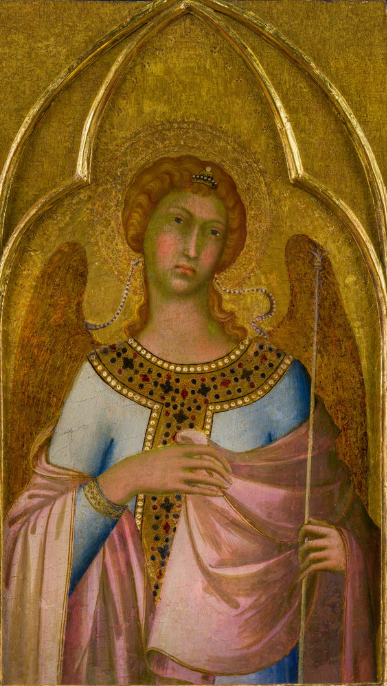
Simone Martini ‘Angel’ (c.1315)
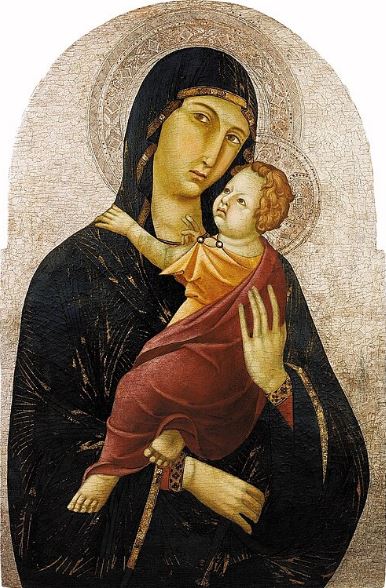
Segna di Bonaventura ‘Madonna and Child’ (c.1325 – 30)
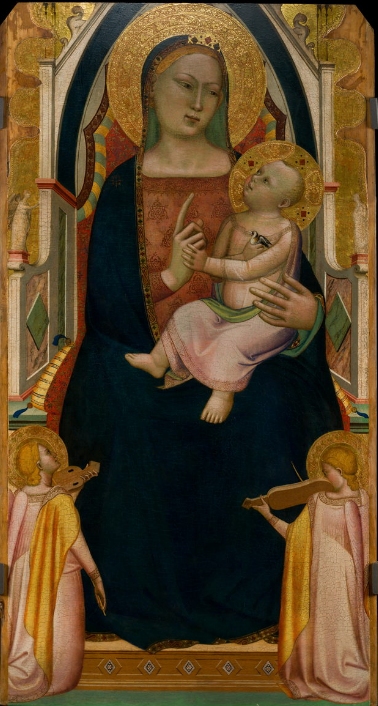
Bernardo Daddi ‘Enthroned Madonna and Child’ (c.1340)
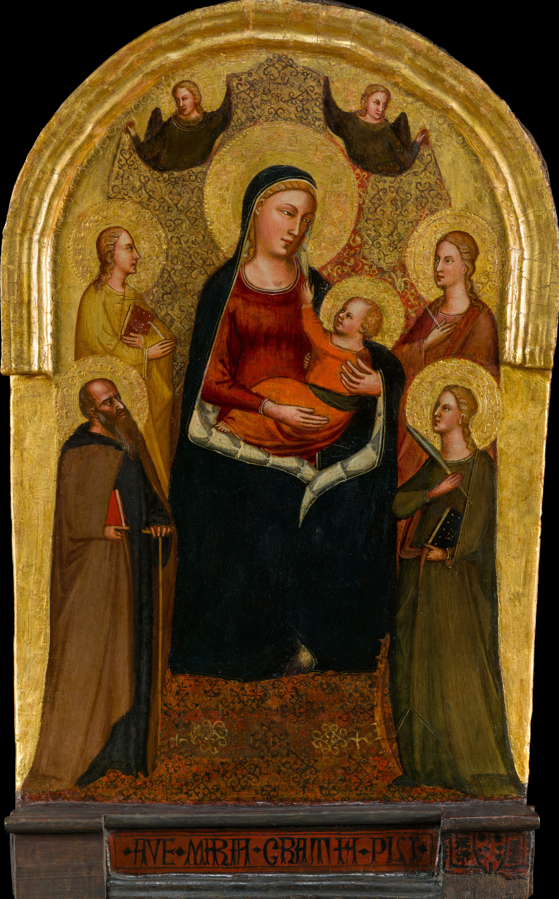
Lorenzo di Bicci ‘Virgin and Child with Saints’ (c.1400)
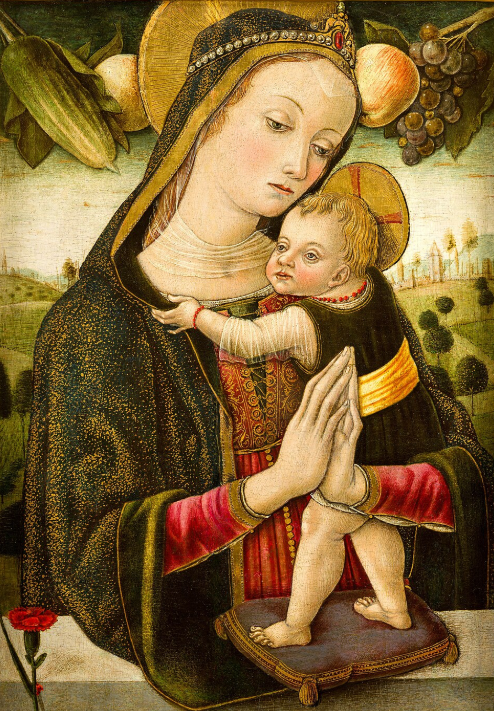
Vittore Crivelli ‘Madonna and Child with a Clove’ (4th quarter 15th century)
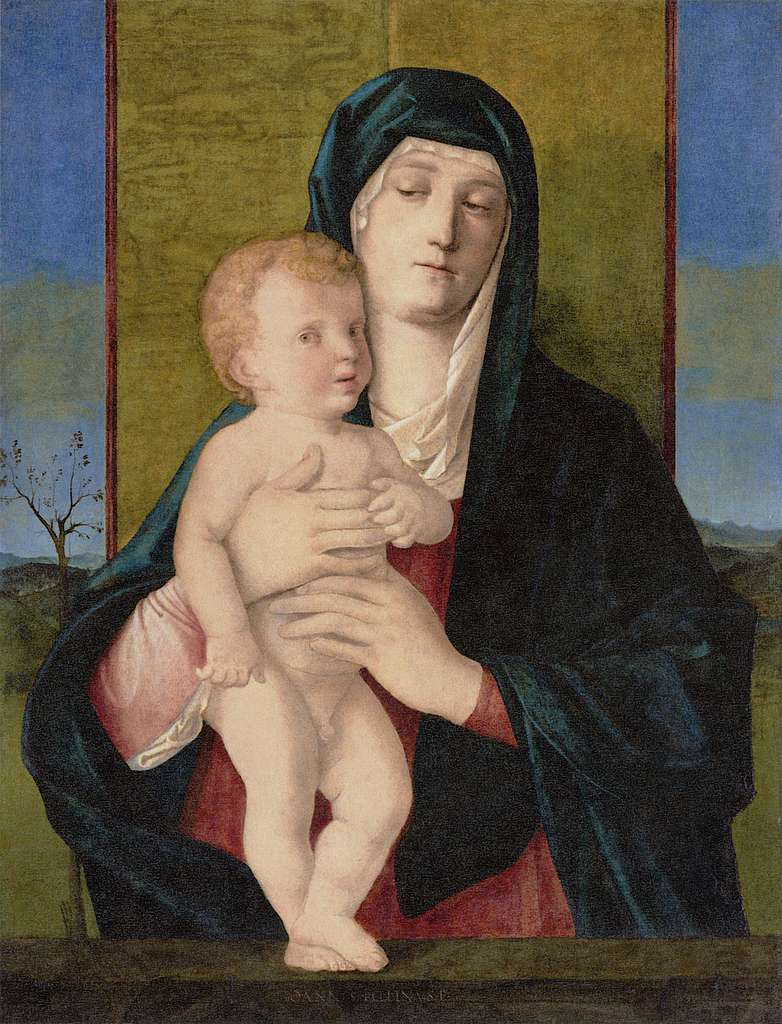
Giovanni Bellini ‘Madonna and Child’ (c.1487)
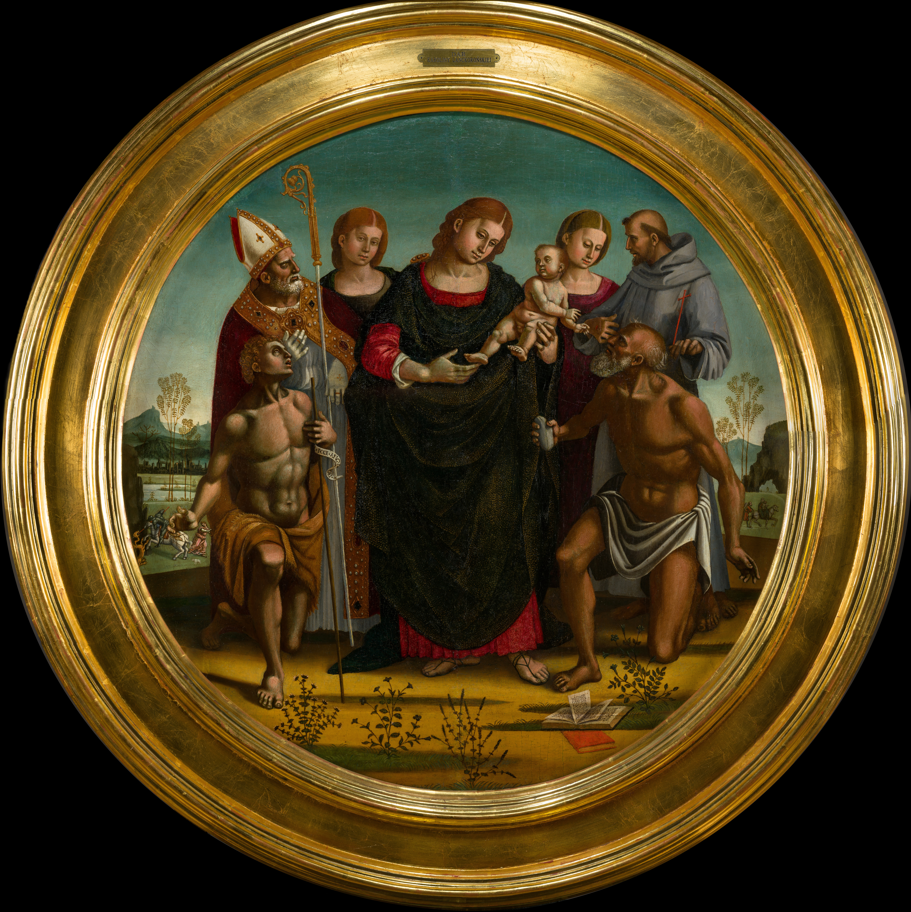
Luca Signorelli ‘Sacra Conversazione’ (before 1523)
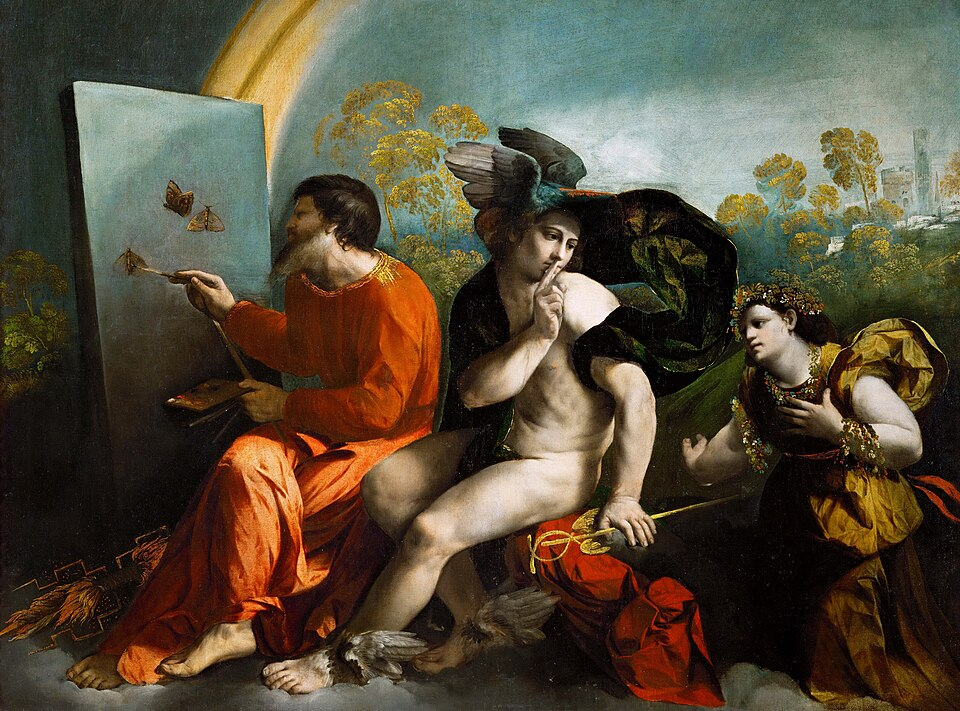
Dossi Dosso ‘Jupiter, Mercury and Virtue’ (1523 – 24)
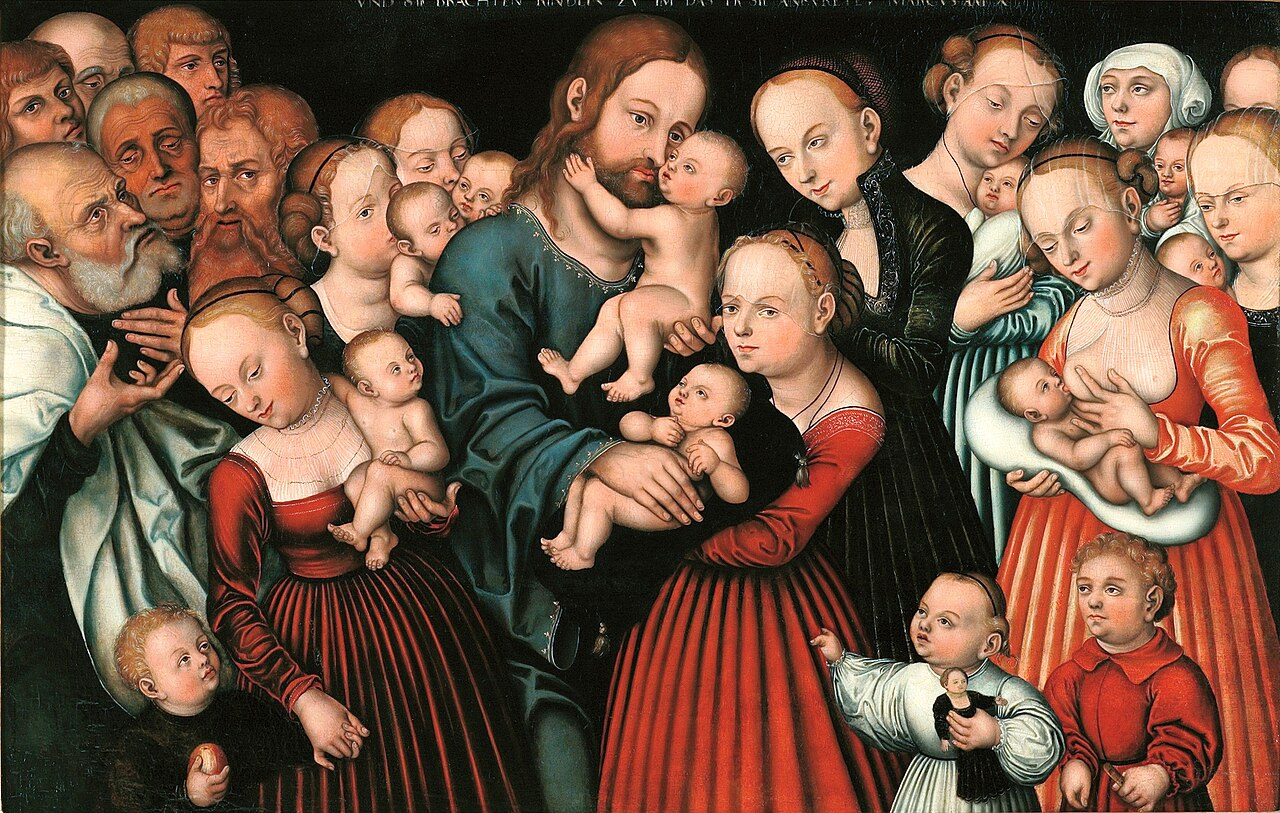
Lucas Cranach the Elder ‘Christ Blessing the Children’ (1537)
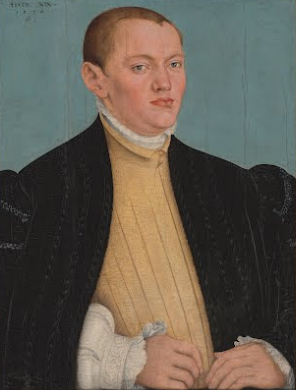
Lucas Cranach the Younger ‘Portrait of a Young Man’ (1550)
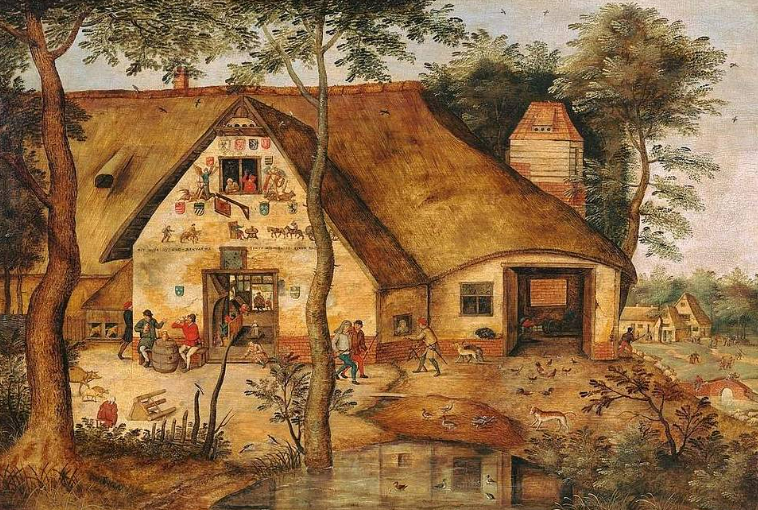
Pieter Brueghel the Younger ‘Saint Michael Tavern’ (1619 – 25)
Czartoryski Museum, in the north of the Old Town, contains a magnificent collection, initially formed in 1796 by Princess Izabela Czartoryska. Its highlights include works by Benozzo Gozzoli, Dieric Bouts, Lorenzo Lotto, Lucas Cranach the Younger and Lorenzo Monaco. However, the most renowned painting in the collection is one of Leonardo da Vinci’s best-known works, the ‘Lady with an Ermine’.
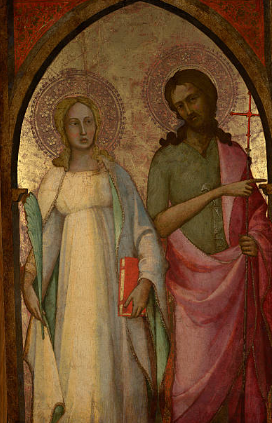
Lorenzo Monaco ‘Saints Catherine of Alexandria and John the Baptist’ (c.1418)
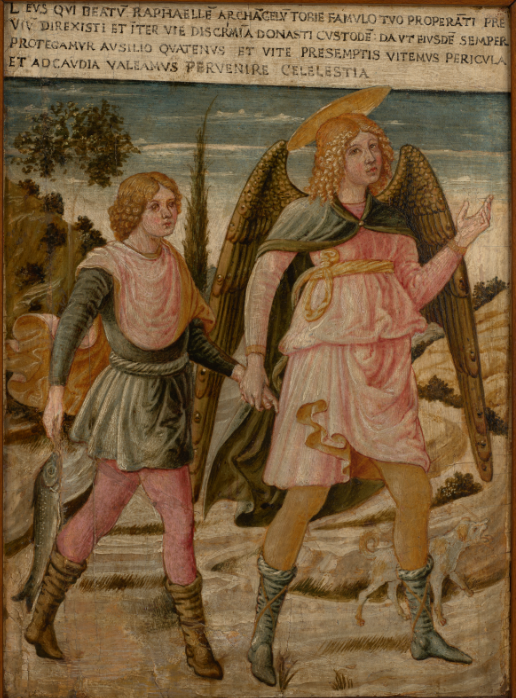
Benozzo Gozzoli ‘Tobias with Archangel Raphael’ (c.1460)
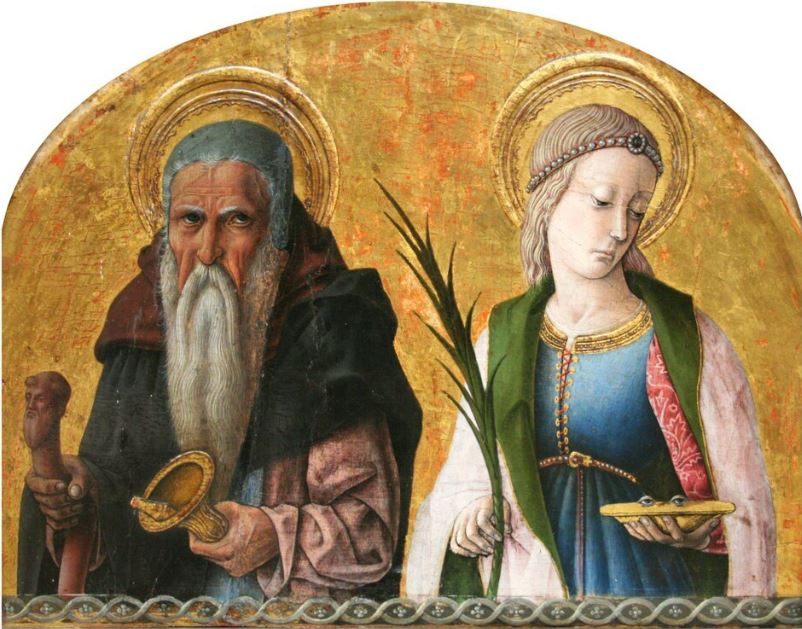
Carlo Crivelli ‘Saints Anthony and Lucia’ (c.1470)
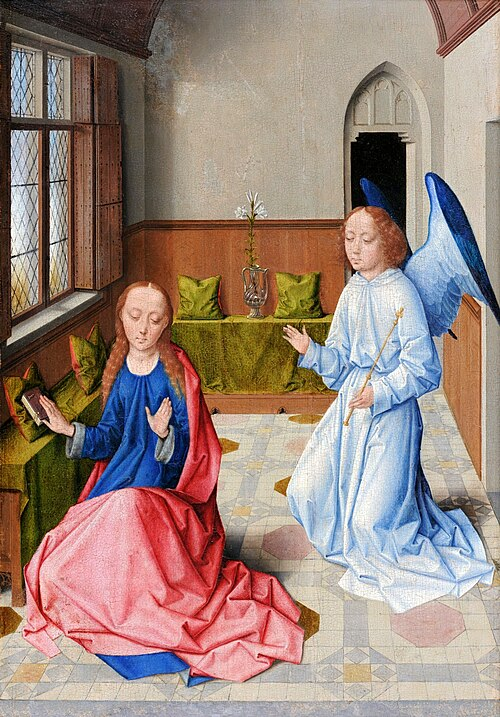
Dieric Bouts ‘The Annunciation’ (1475)
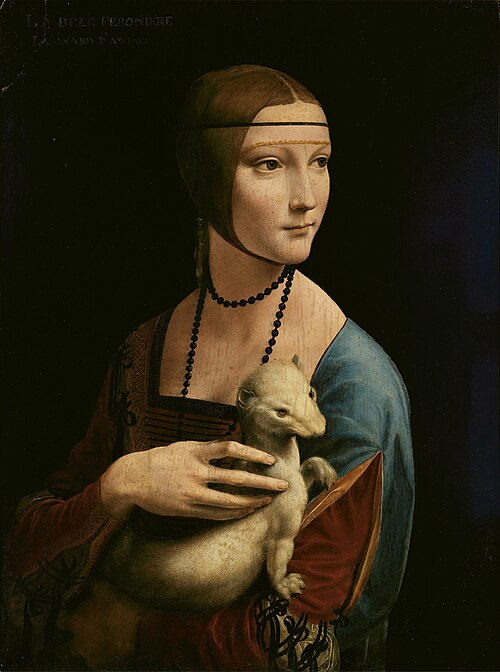
Leonardo da Vinci ‘Lady with an Ermine’ (1490)
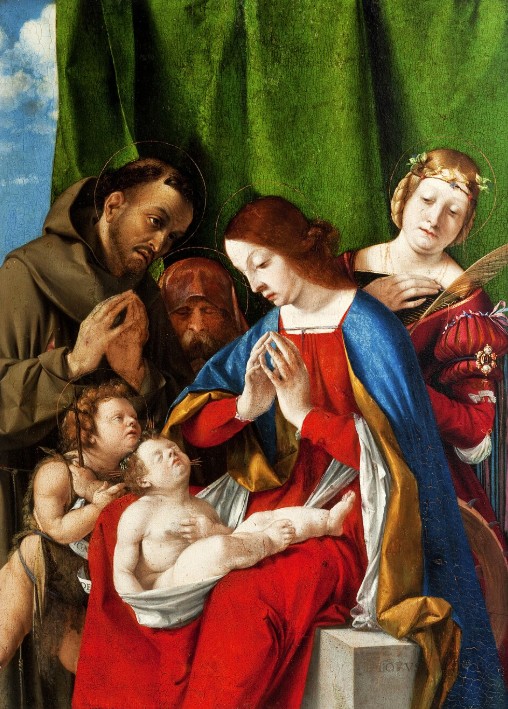
Lorenzo Lotto ‘Adoration of the Child’ (c.1508)
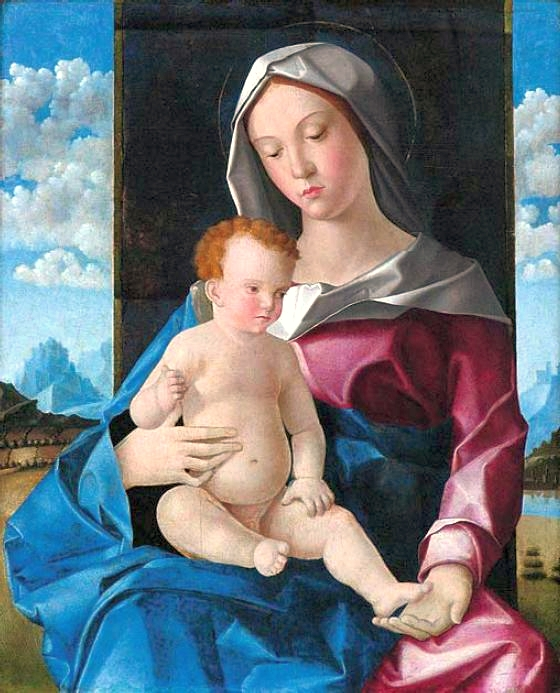
Vincenzo Catena ‘Madonna and Child’ (1510)
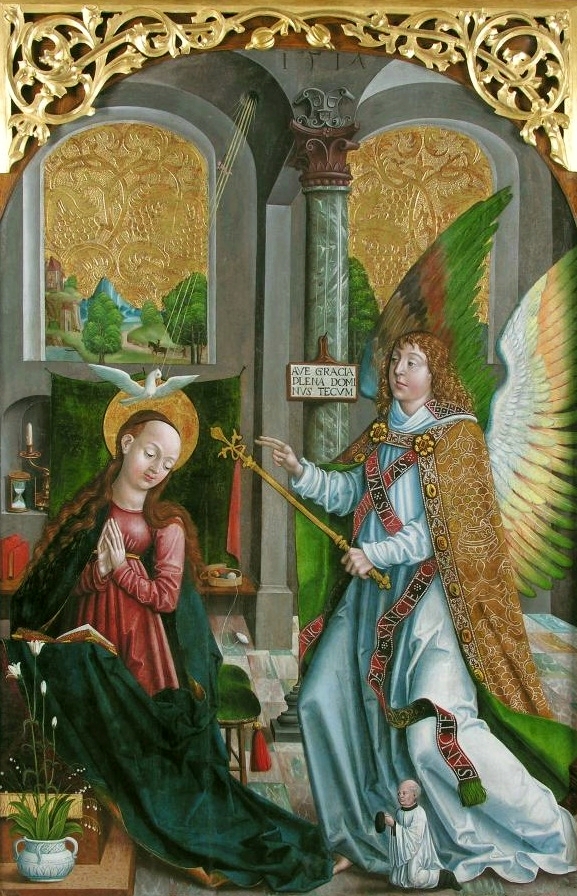
Master Georgius ‘Annunciation’ (1517)
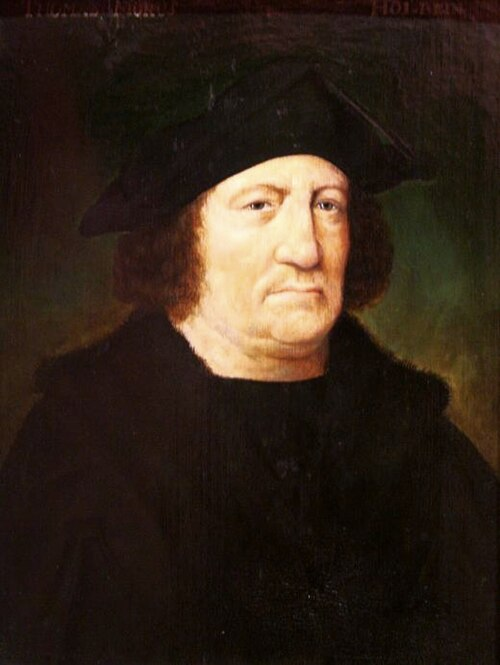
Hans Holbein the Younger ‘Portrait of a Man’ (c.1530)
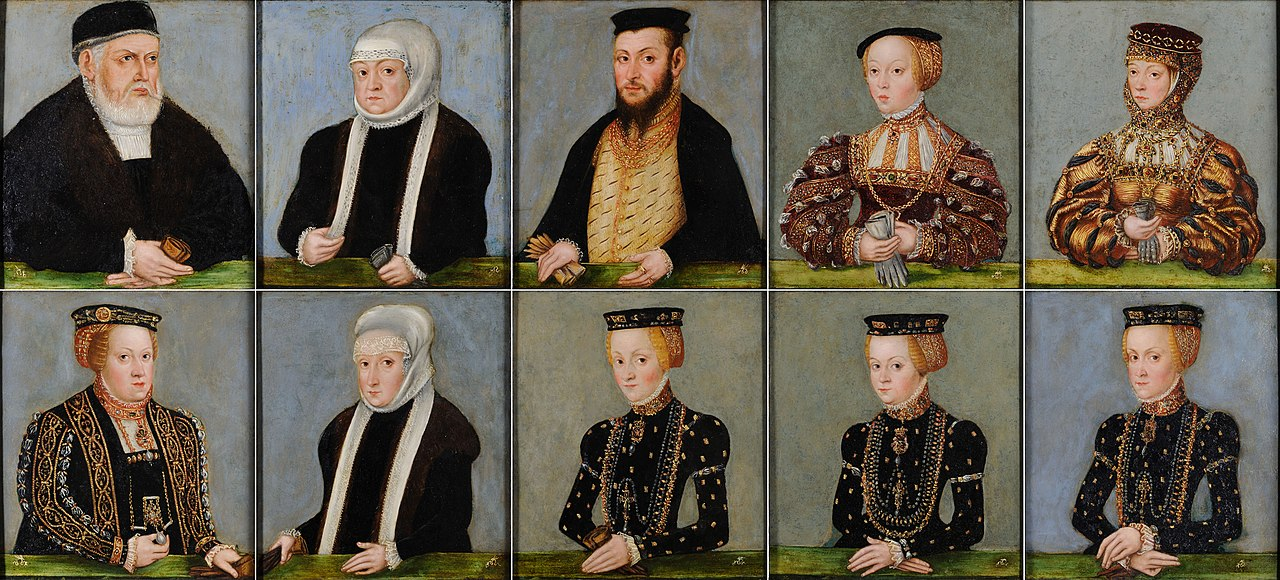
Lucas Cranach the Younger ‘The Family of Sigismund I’ (c.1553 – 55)
The National Gallery of Krakow has two fascinating temporary exhibitions: ‘Gothic in the Carpathians’ and ‘Young Poland’s Group of Five’.
‘Gothic in the Carpathians’ presents the art of the late middle ages from all countries in the region and argues that rather than separate artistic developments the Carpathians actually brought them together, with the same workshops operating on both sides of the mountains, and paintings and sculptures flowing in both directions.
The exhibition shows around 100 paintings and sculptures and also presents recent developments in research. It also reunites, even if only temporarily, works of art whose elements have been scattered in various museums.
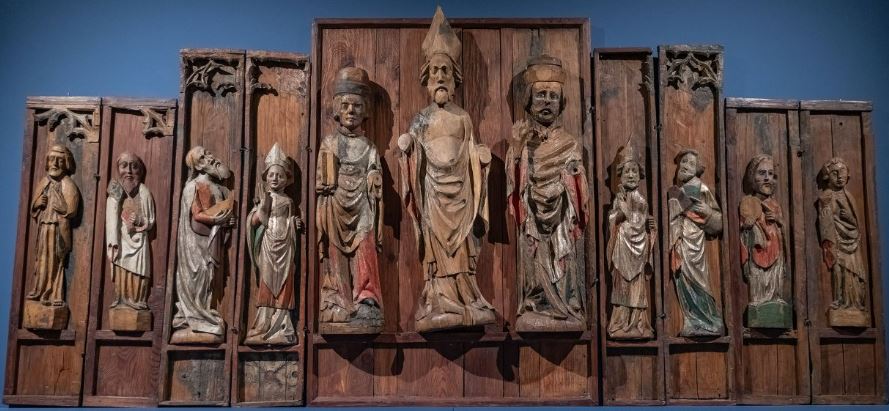
Retable from Siba, nr. Bardejov (Slovakia, c.1380)
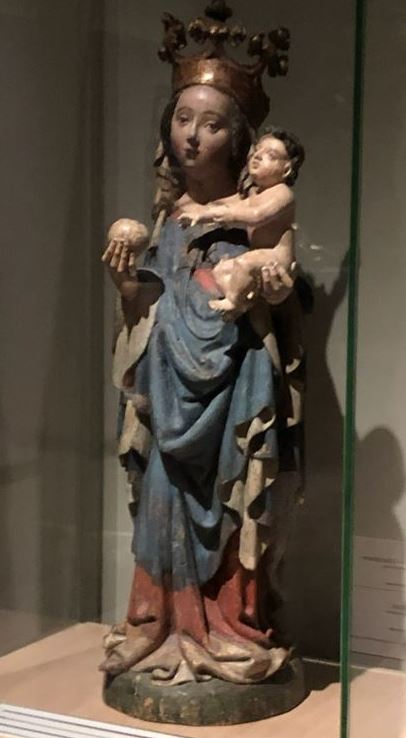
‘Virgin and Child’ (Uzhhorod, Ukraine, c.1415)
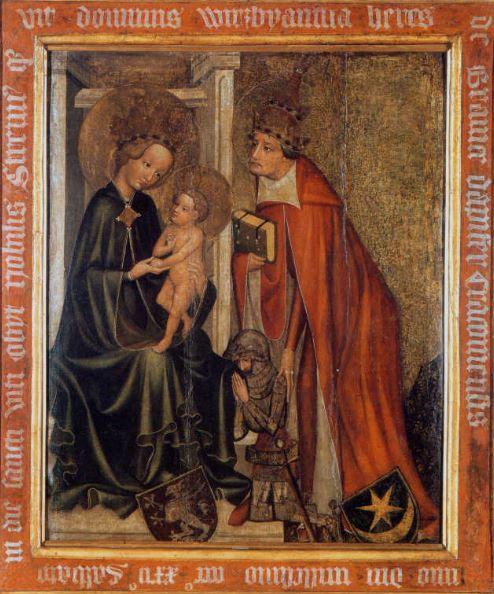
Anon ‘Epitaph of Wierzbieta of Branice’ (c.1425)
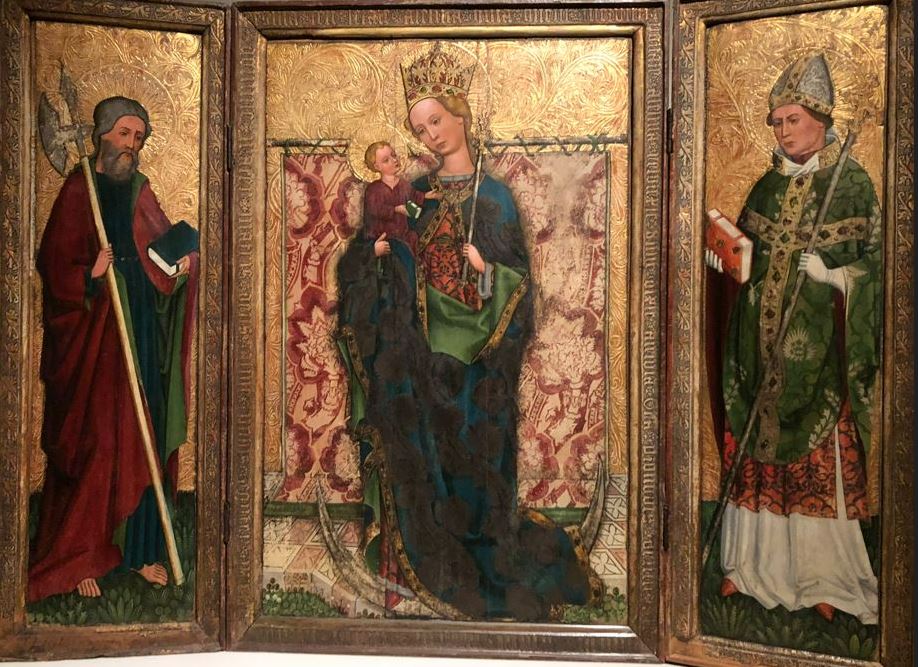
John of Nysa (attrib) ‘Triptych from Opatowek, Poland’ (c.1460)
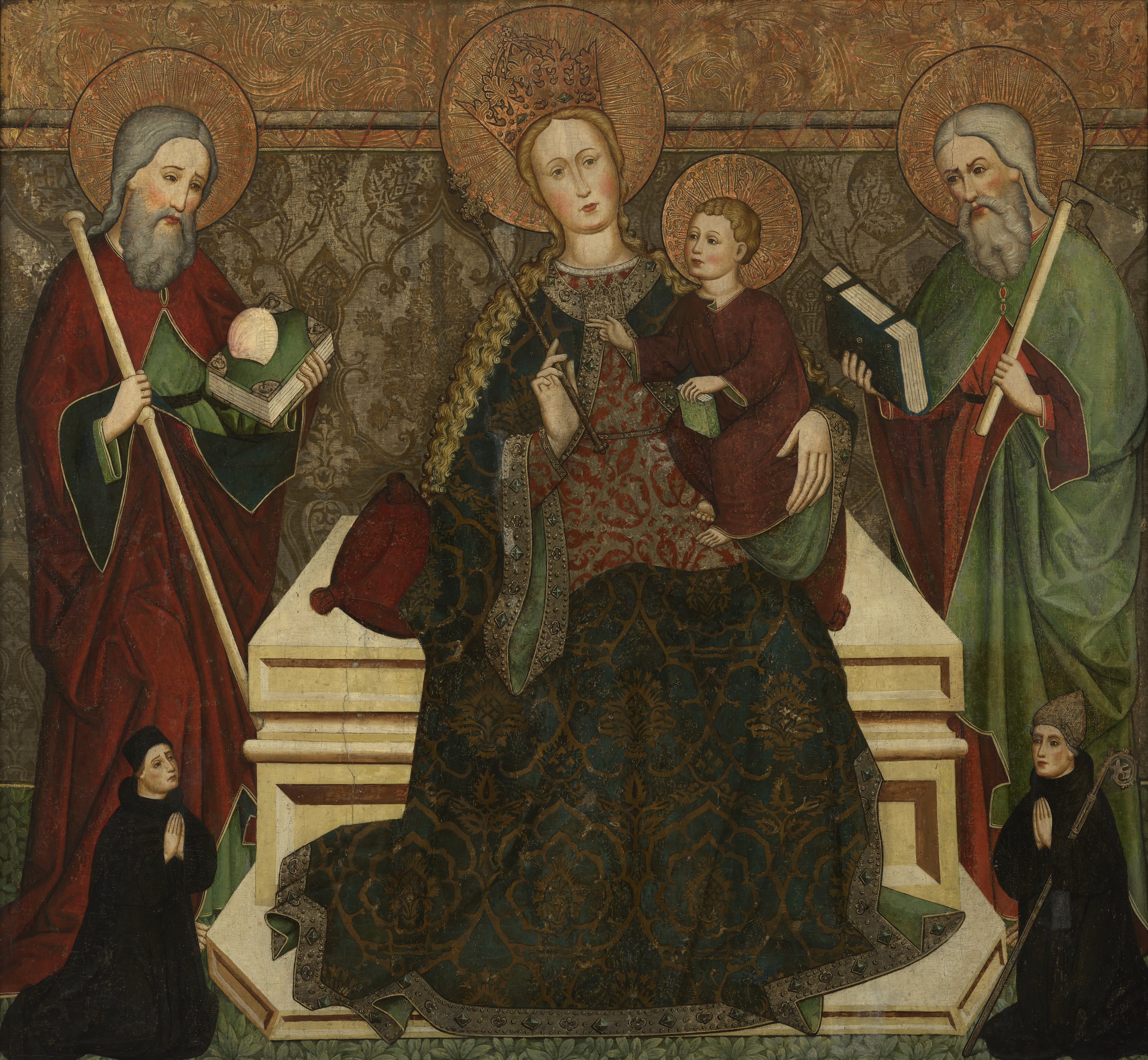
‘Virgin and Child, St. James the Greater and St. Matthias’ (Tuchów, Poland, c.1461)
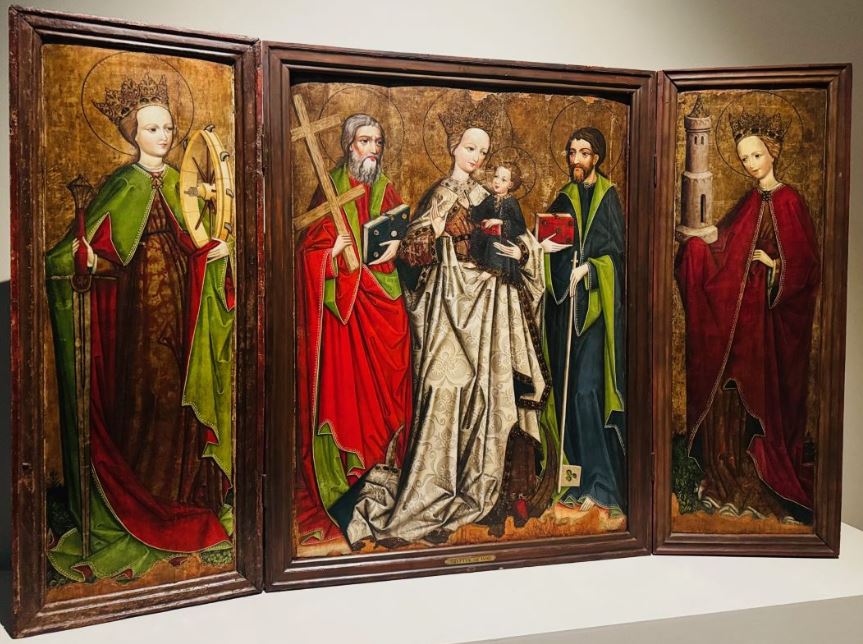
Anon. ‘Triptych of Madonna and Child with Saints’ (Lesser Poland, c.1470)
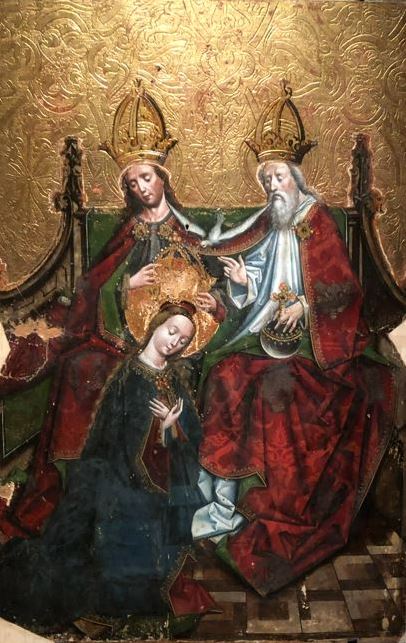
Jan Wielki (attrib) ‘Coronation of the Virgin by the Holy Trinity’ (c.1480)
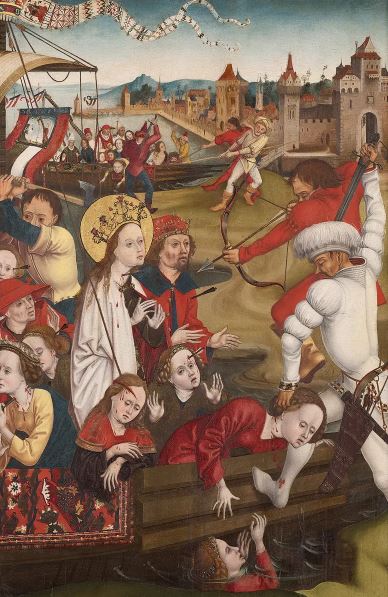
Hans Siebenbürger (attrib) ‘Martyrdom of St. Ursula and her Companions’ (c.1480)
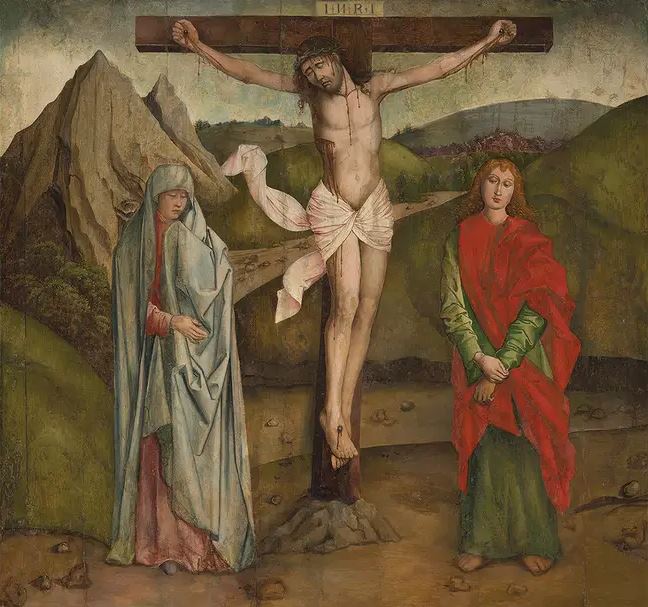
‘Crucifixion’ (Feldioara, Romania, 1490 – 1500)
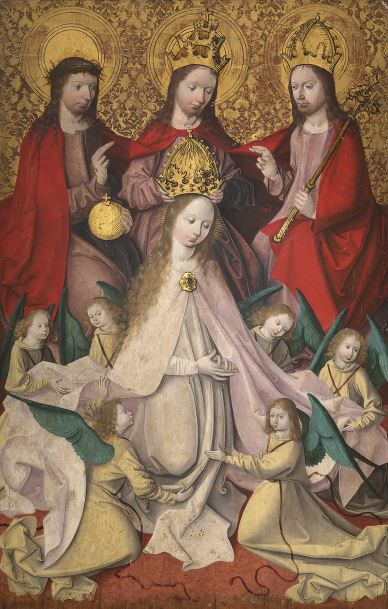
Dominicus Pictor (attrib) ‘Coronation of the Virgin Mary by the Holy Trinity’ (1490 – 1500)
‘Young Poland’s Group of Five’ is an exhibition of the works of five artists who were part of the Young Poland modernist movement which existed between 1890 and 1918 in the visual arts, literature and music. Artists in Poland at that time had no overall style, some were influenced by Art Nouveau, impressionism or symbolism whilst others began to seek some form of national style. Despite being associated with the Young Poland movement, the Group of Five all retained their own individual approaches to painting.
The artists involved in the exhibition were Leopold Gottlieb (1879 – 1934), Mieczyslaw Jakimowicz (1881 – 1917), Witold Wojtkiewicz (1879 – 1909), Wlastimil Hofman (1881 – 1970) and Jan Rembowski (1879 – 1923). The five, also known as the ‘Norwid’ Group, were graduates of the Kraków Academy of Fine Arts, and like other Secessionist groups in Europe at the time, they rebelled against the ‘official’ Society of Artists and its academic rules, striving for their own unrestricted expression.
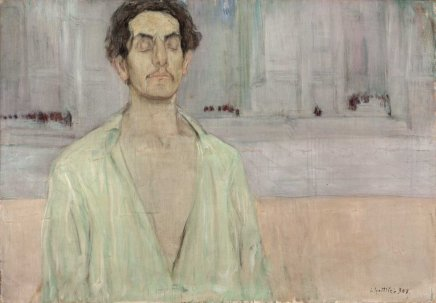
Leopold Gottlieb ‘Self Portrait/Silence’ (1907)
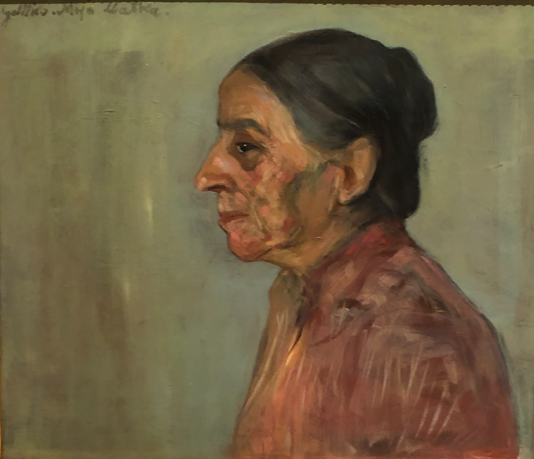
Leopold Gottlieb ‘My Mother’ (c.1900)
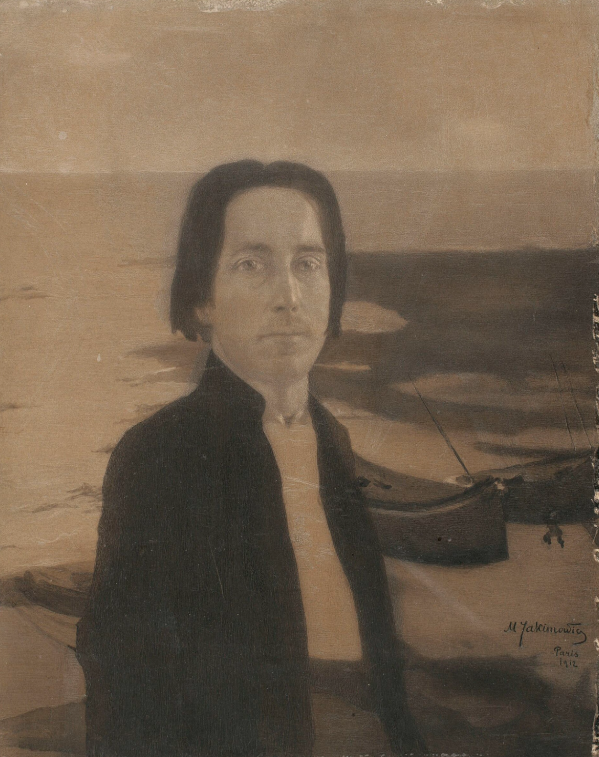
Mieczyslaw Jakimowicz ‘Self Portrait’ (1912)
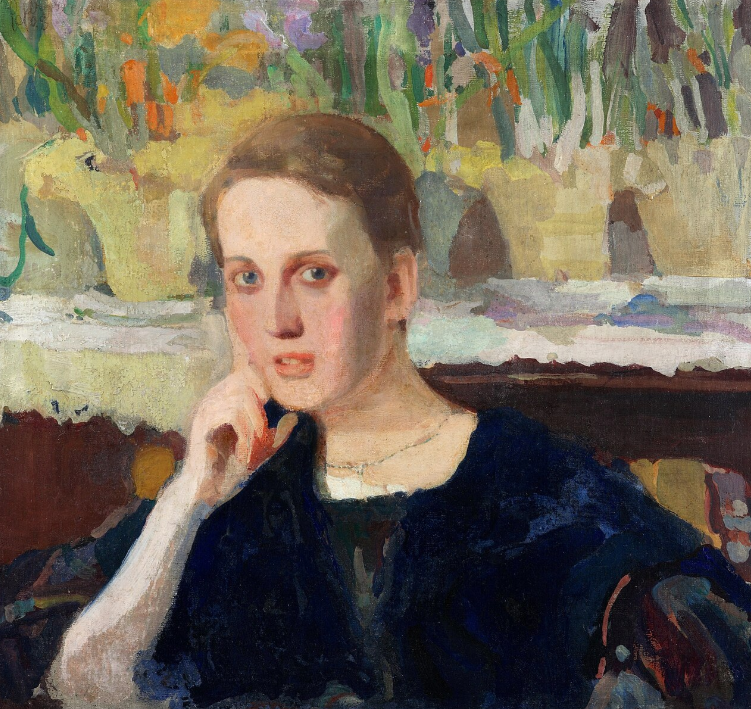
Witold Wojtkiewicz ‘Portrait of Maryna Raczynska’ (1905)
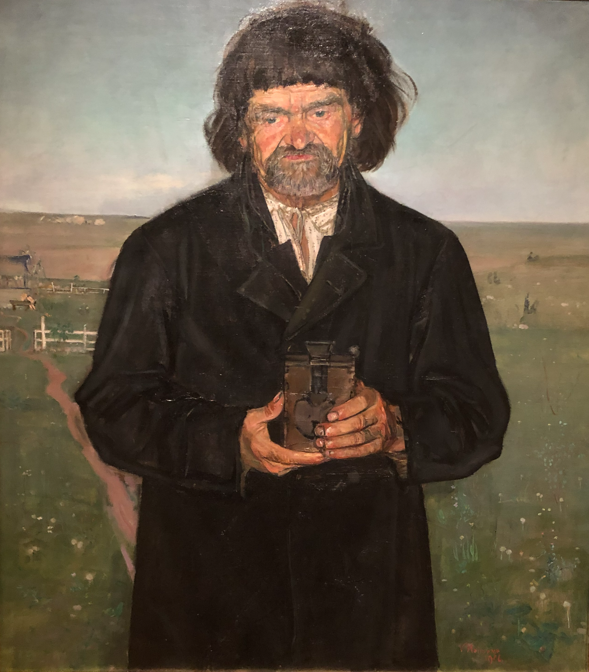
Wlastimil Hofman ‘Old Man with a Can (1906)
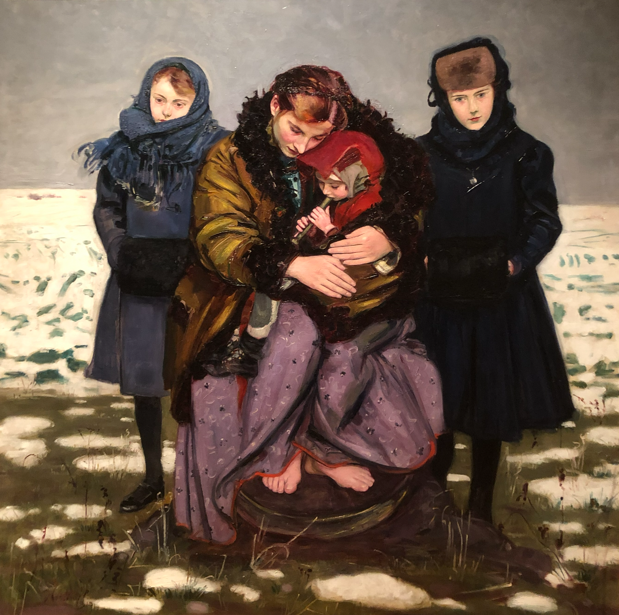
Wlastimil Hofman ‘Concert’ (1910)
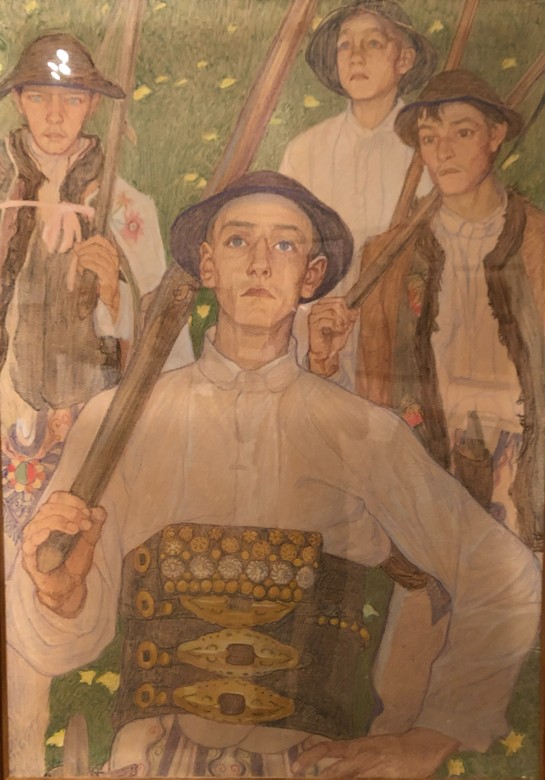
Jan Rembowski ‘Return of Reapers’ (1906)
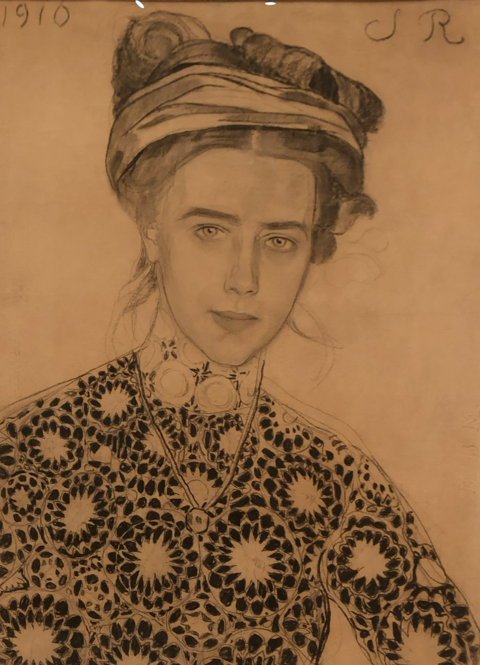
Jan Rembowski ‘Portrait of a Young Woman’ (1910)
Jagellonian University is the oldest higher education institution in Poland and one of the oldest in Europe. It was founded in May 1364 by the Polish king Casimir III the Great. Originally called the Studium Generale, it comprised faculties of liberal arts, medicine and law.
Collegium Maius (Latin for Main College) was built as the university’s main campus in the late fourteenth century, thirty-six years after its founding. A century later it was redesigned as the late-Gothic structure surrounding a courtyard bordered with arcades that survives to this day.
Probably the most eminent student to have attended the university was Nicolaus Copernicus, the Renaissance astronomer and polymath, who studied there in the 1490s. A memorial statue of him is located in front of Witkowski College, one of the university buildings.
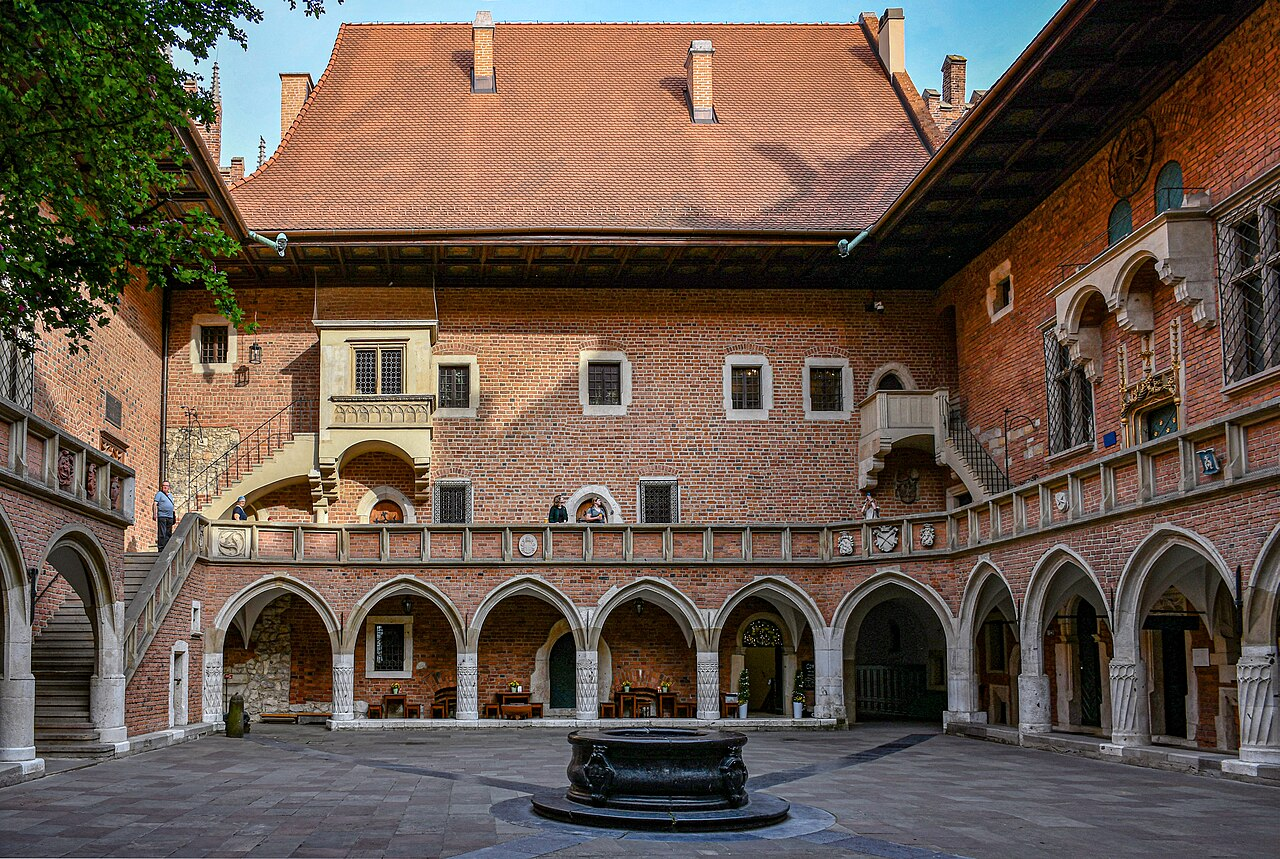
Courtyard of Collegium Maius, Jagiellonian University, Krakow
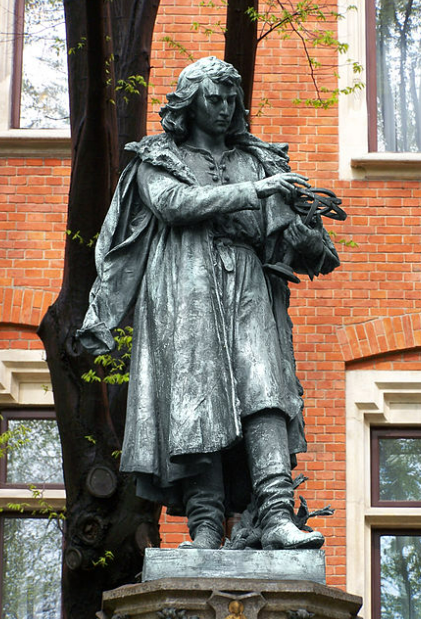
Cyprian Godebski ‘Nicolaus Copernicus Monument’ (1900)
Kazimierz is Krakow’s former Jewish district full of synagogues and narrow lanes. It is now one of the city’s most vibrant neighbourhoods, with shops, bars and restaurants, and an important centre of cultural life. Although now incorporated into the city, it was, from its founding in the fourteenth century until the early nineteenth century, independent, a royal city of the Polish Kingdom, physically separated from Krakow by a branch of the Vistula river. However, at the end of the nineteenth century the riverbed was filled in and transformed into a green avenue. In 1941, the Jews of Kraków were forcibly relocated by the occupying German forces into the Krakow Ghetto and most did not survive the war.
Remuh Synagogue is the most sacred place in Krakow for its Jewish population. It was opened in 1558, during a time when the town was plagued by the Black Death, erected by Rabbi Israel to commemorate his wife who died from the disease.
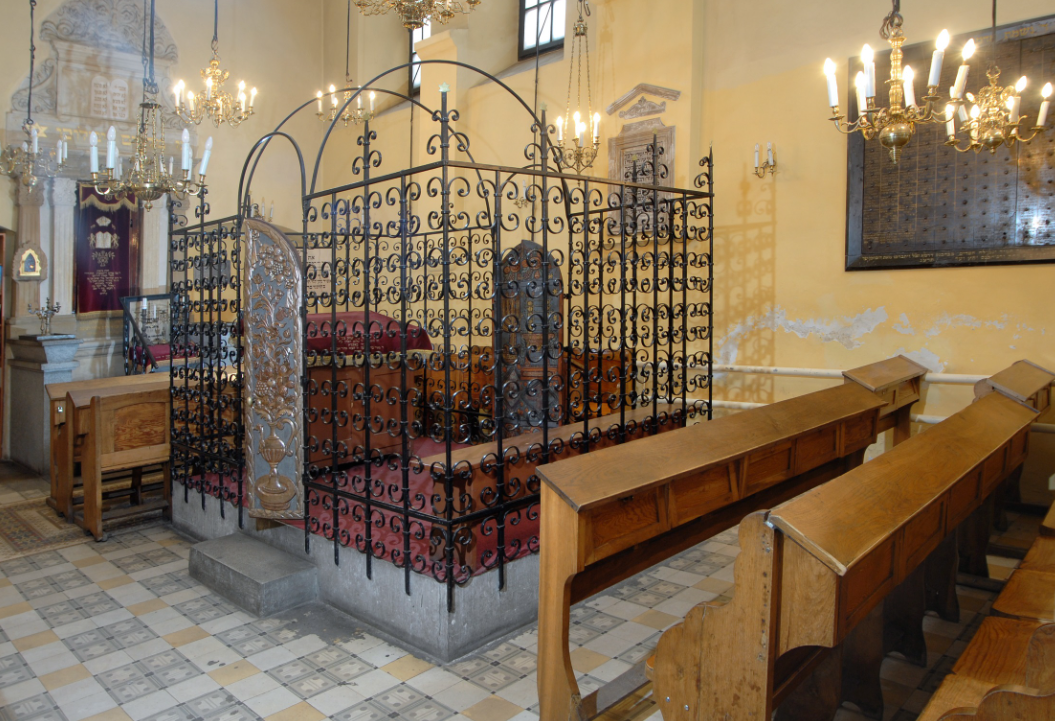
Remuh Synagogue interior
Behind the synagogue building is Remuh Cemetery, one of the earliest Jewish cemeteries preserved in Europe, with the oldest tombstones dating back to 1552. Again it was funded at the time of the Black Death by the local Jewish community. During World War II it was completely devastated by the German occupiers, most of the tombstones being smashed. Since the war, conservation work has recovered 706 tombstones which have been put back in position.
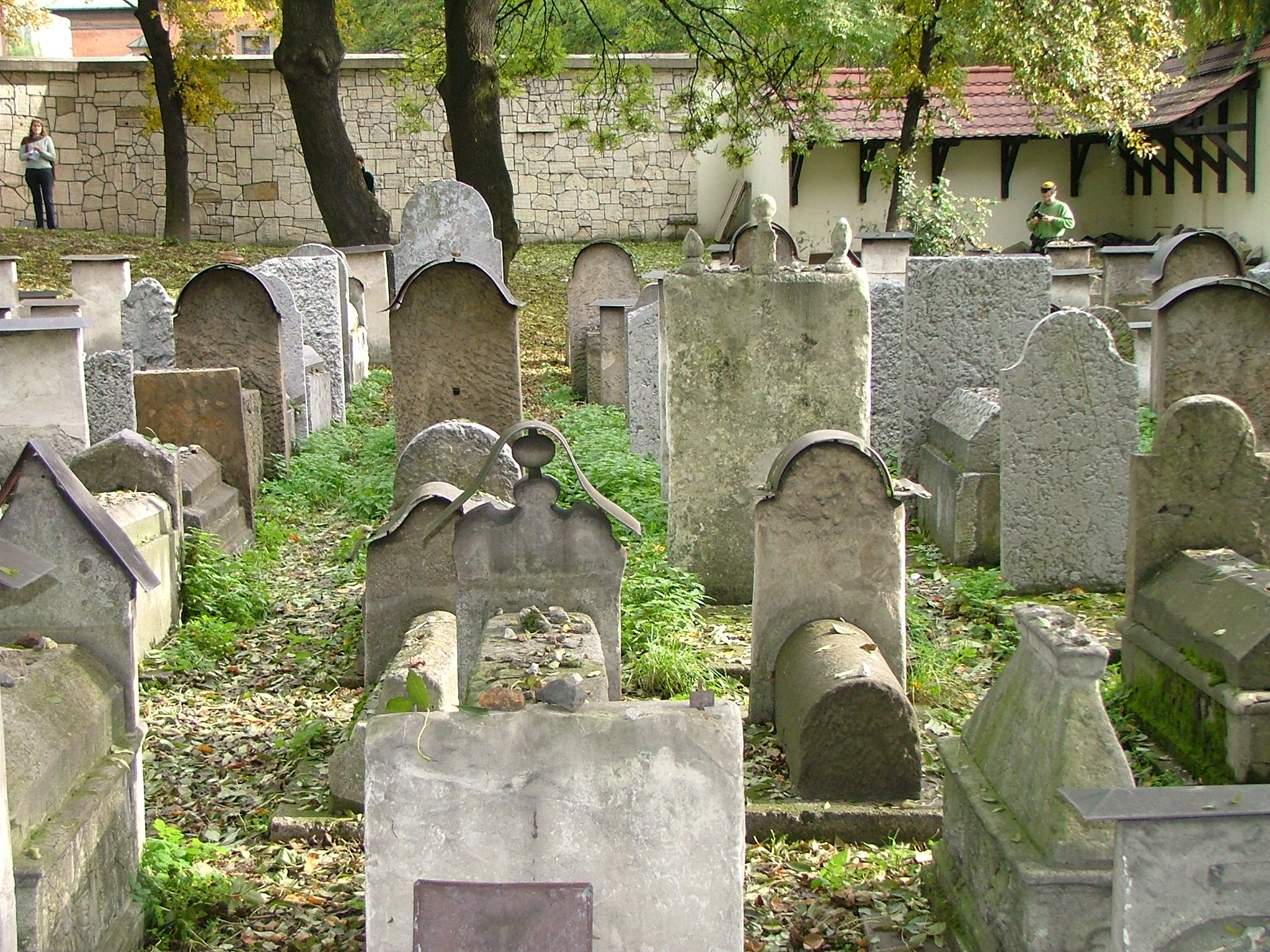
Remuh Cemetery
Old Synagogue in Kazimierz is the oldest of its kind in Poland and dates back to the fifteenth century. For centuries, it played a central role in the religious and social life of Krakow’s Jewish community. During the Second World War, the Nazis used it as a warehouse and, as a result, it avoided being destroyed. It now houses the Museum of Jewish History and Culture.
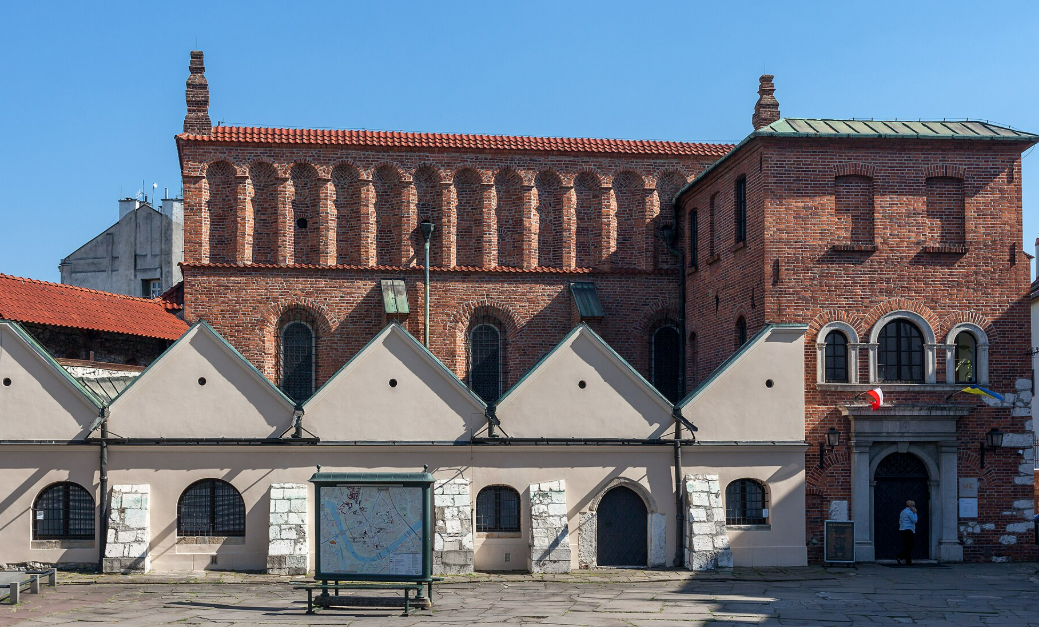
Old Synagogue, Kazimierz, Krakow
Lajkonik is a traditional parade that has taken place in the centre of Krakow on the Thursday of the week after Corpus Christi for the past 700 years. It involves a bearded man resembling a Tatar, dressed in Mongol clothing, riding a hobby-horse around the city streets. Its origins are uncertain; however, some believe that it is a celebration of a thirteenth-century defeat of the Tatars by the people of Krakow, although it is also possible that it was a pre-Christian rite as it was believed that the appearance of the horse would ensure a successful harvest.
People in traditional folk costumes accompany the horse, while others are dressed in oriental attire and hold horsetail insignia in their hands. When the procession reaches the Main Square, the mayor of the city awaits the Lajkonik with a pile of ransom money and a chalice with which they make a toast to the wellbeing of Krakow and its inhabitants.
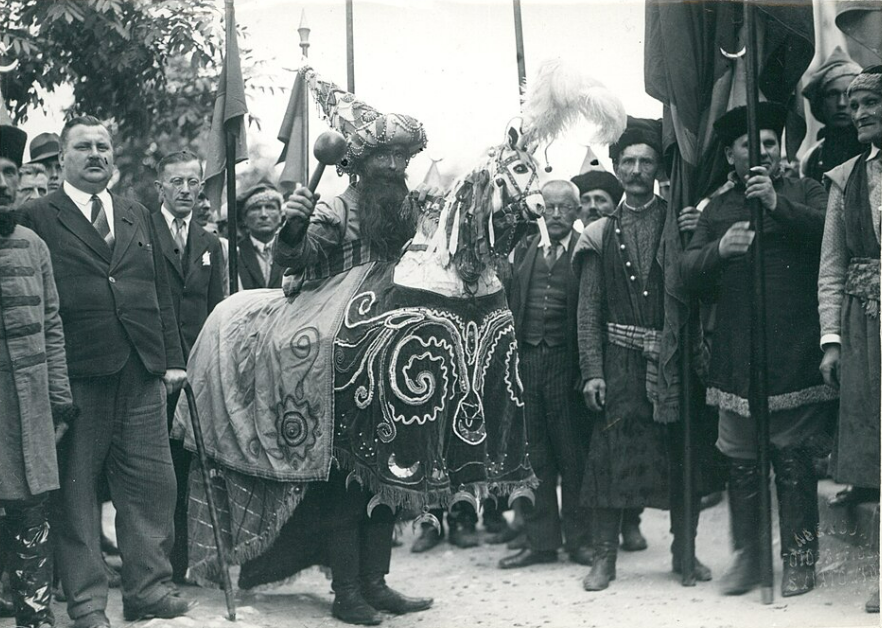
Lajkonik 1939
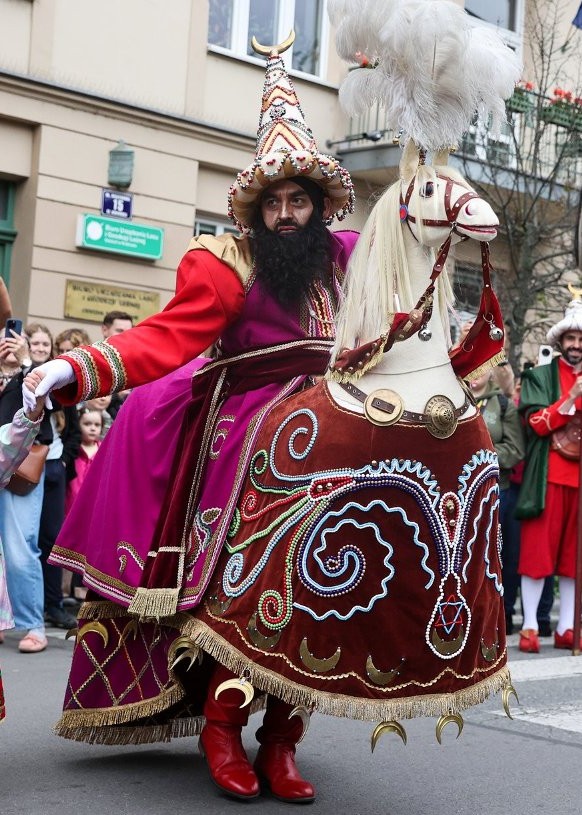
Lajkonik 2026

