For the first time, the Musée du Louvre has dedicated an exhibition to Cimabue, one of the most important artists of the thirteenth-century proto-Renaissance in Italy. The exhibition is the result of two important events for the Louvre relating to Cimabue: the restoration of the museum’s ‘Maestà’ and the acquisition of a previously unknown Cimabue panel, ‘Christ Mocked’, rediscovered in France in 2019.
As artists began to gradually move away from the relatively flat and highly-stylized Byzantine model, prevalent until the thirteenth-century, to be more naturalistic, figures were painted with more lifelike proportions and the use of shading gave them solidity. More than anyone else, Cenni di Pepo, known as Cimabue, is credited with this advance.
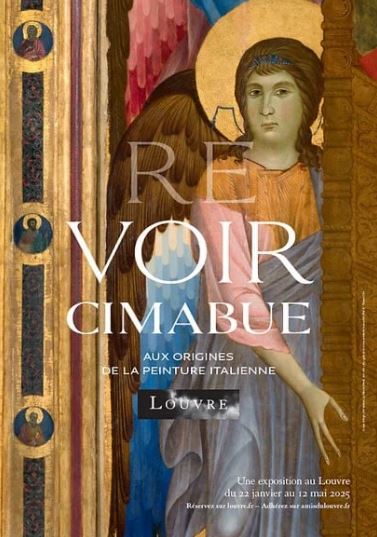
The Louvre exhibition shows the magnificent ‘Maestà’, together with other works by Cimabue and artists associated with him including Giotto and Duccio.
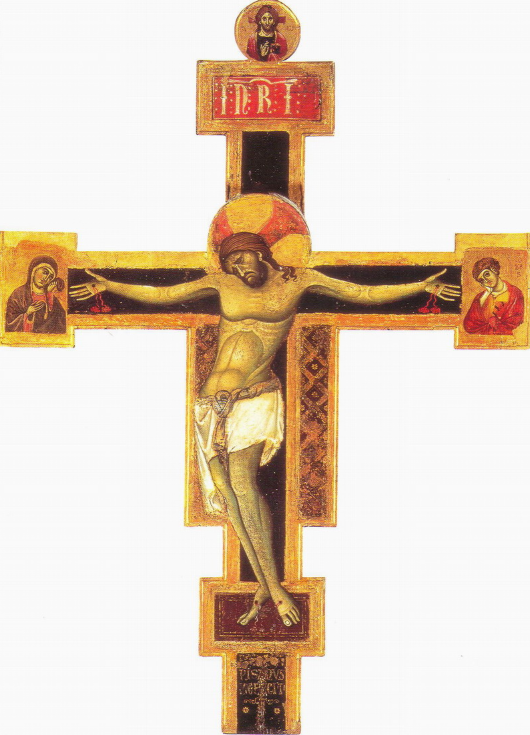
Giunta Pisano ‘Crucifix de San Ranierino’ (c.1240 – 50)
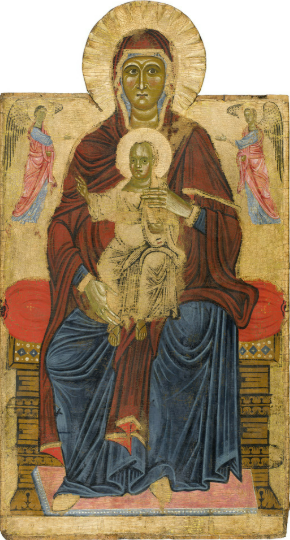
Master of Bigallo ‘Virgin and Child Enthroned with Angels” (c.1240 – 50)
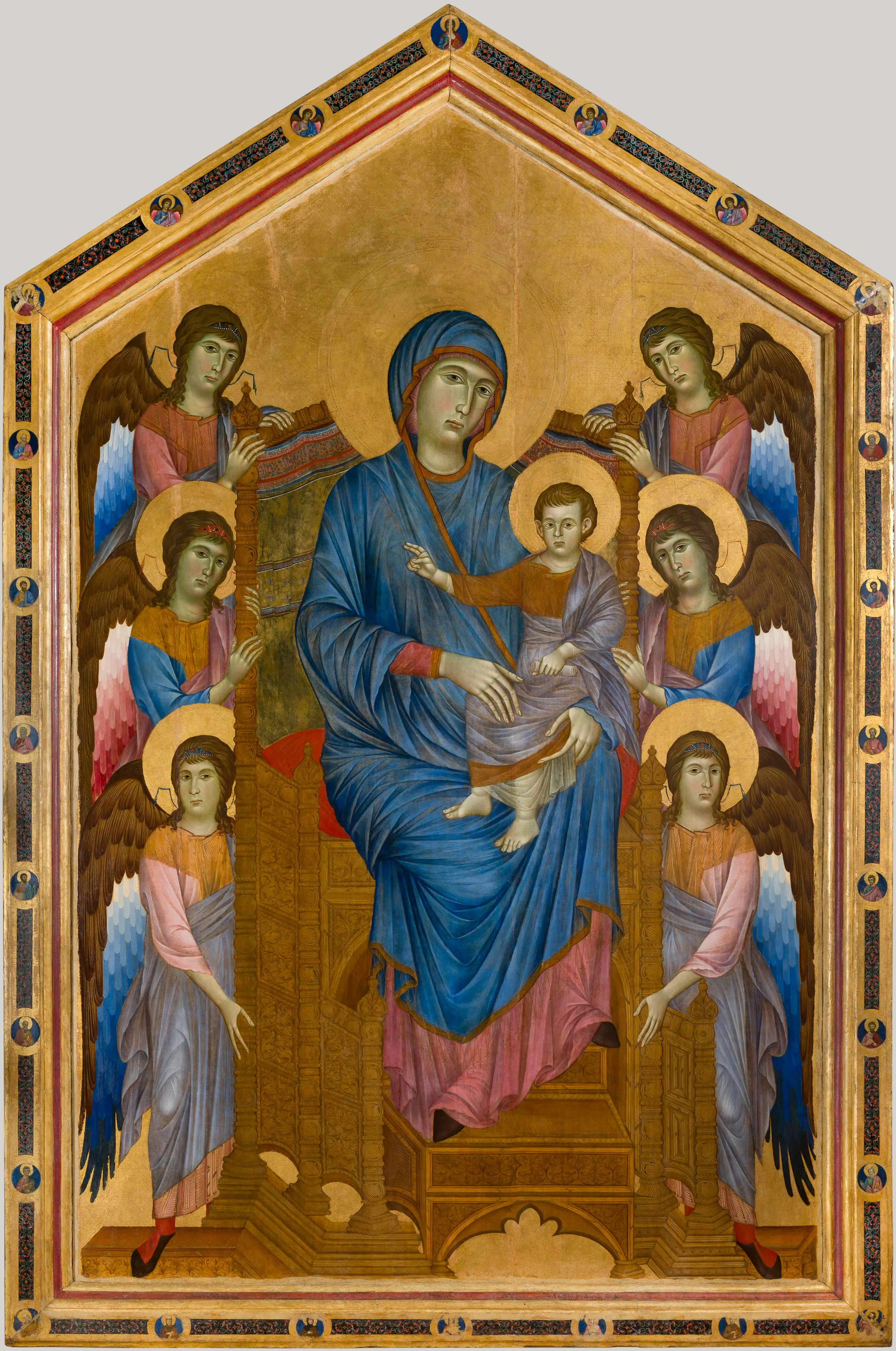
Cimabue ‘Maestà’ (1280 – 85)
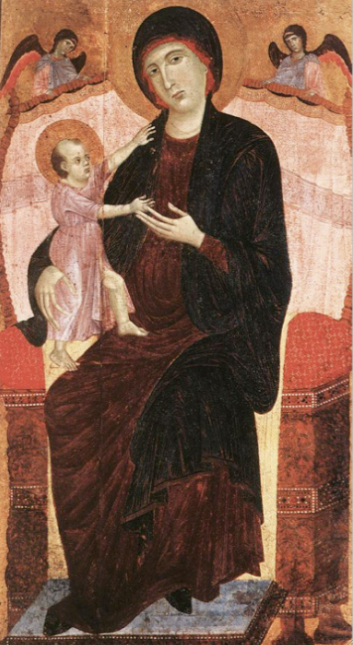
Cimabue ‘Gualino Madonna’ (c.1285)
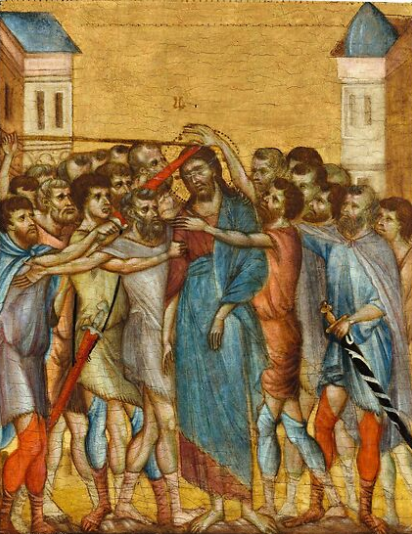
Cimabue ‘The Mocking of Christ’ (1285 – 90)
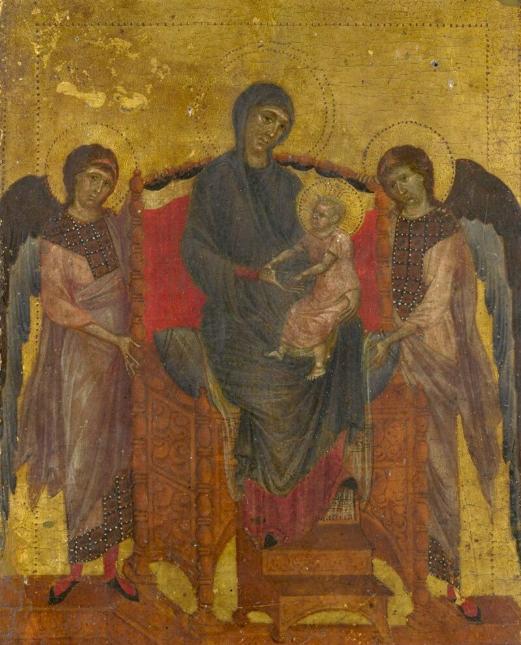
Cimabue ‘Virgin and Child with two Angels’ (1285 – 90)
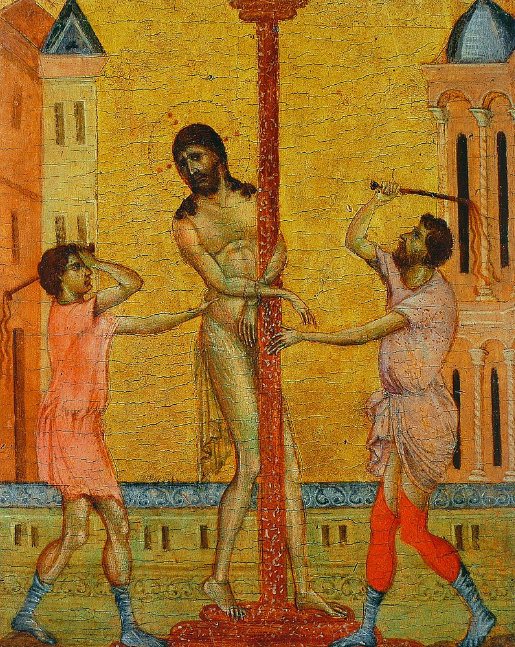
Cimabue ‘The Flagellation of Christ’ (1285 – 90)
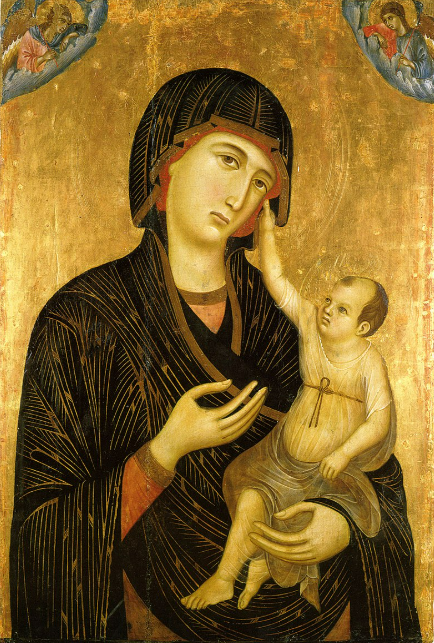
Duccio ‘Crevole Madonna’ (c.1280 – 85)
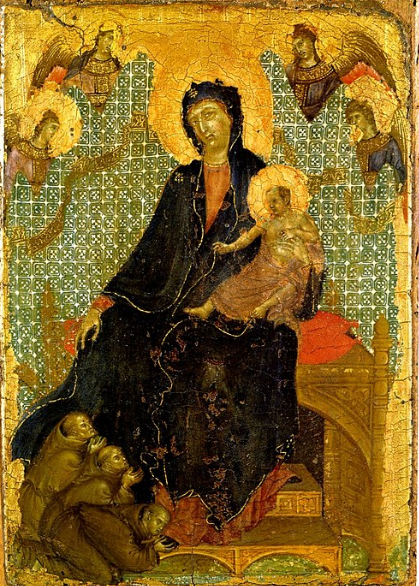
Duccio ‘Madonna of the Franciscans’ (1285 – 88)
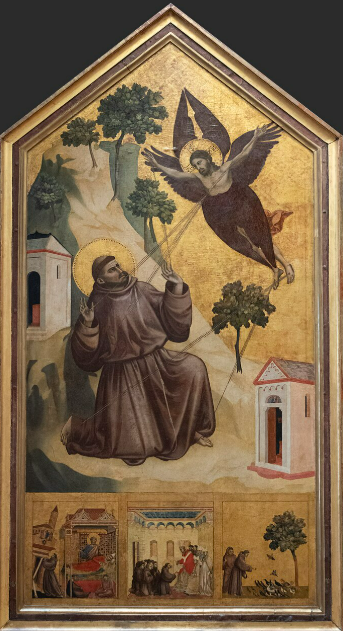
Giotto ‘Saint Francis receiving the Stigmata’ (c.1298)
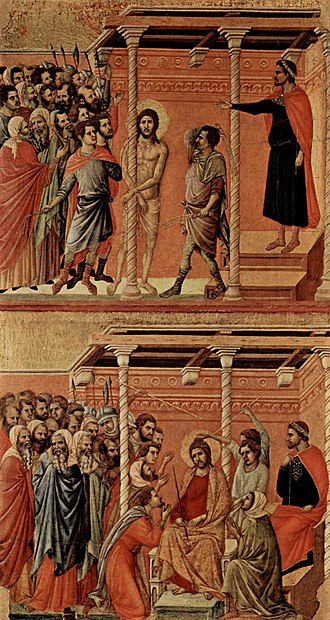
Duccio ‘Flagellation’ and ‘Crown of Thorns’ (1308 – 11)
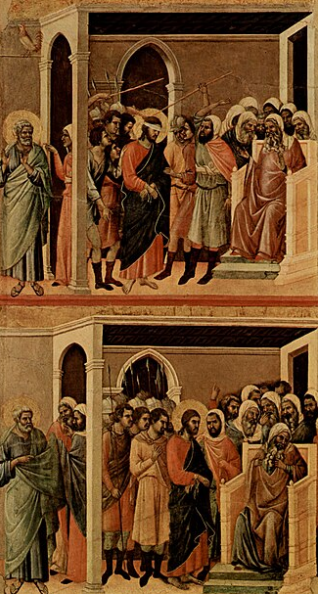
Duccio ‘Christ Mocked’ and ‘Christ before Caiaphas’ (1308 – 11)

