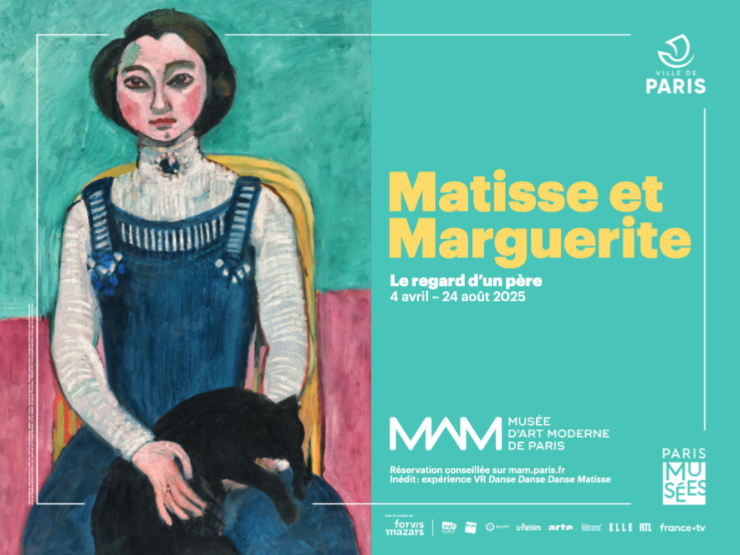
Henri Matisse was by any standards a prolific portrait painter but, incredibly, he painted well over one hundred portraits of his daughter Marguerite from her childhood to adulthood. These portraits bear witness not only to the talents of Matisse but also the bond between father and daughter. This chronologically-organised exhibition, at the Musée d’art Moderne de Paris, displayed around one hundred of these portraits which show a fascinating insight into the life of a woman who played a leading role in her father’s career.
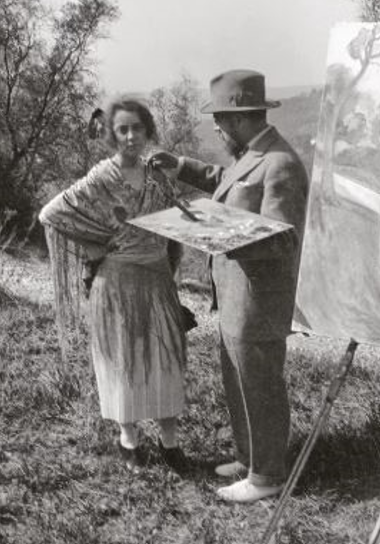
Marguerite and her father in 1921
Marguerite was born in 1894 in Paris, her mother being one of her father’s models. Matisse married Amélie Parayre in 1898 and they brought up Marguerite as part of their family. Marguerite was ill as a child and underwent a tracheotomy operation, the scar from which she often hid with a black ribbon, visible in many of her father’s portraits.
During World War II, Marguerite joined the Resistance without her father’s knowledge. She was arrested by the Gestapo in May 1944 and sent to Ravensbrück concentration camp. However, despite being tortured, she managed to escape.
Marguerite spent much of her life cataloguing her father’s work and had nearly completed the task when she died of a heart attack in 1982.
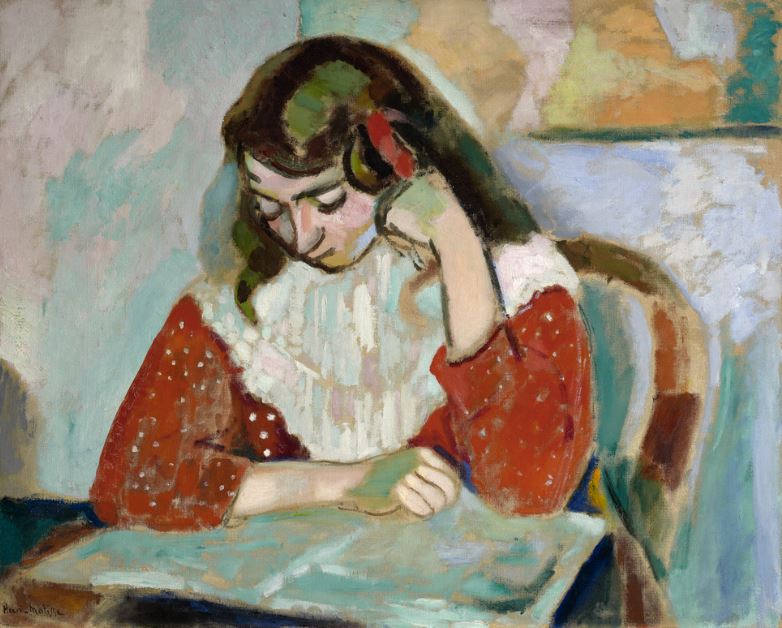
Henri Matisse ‘Marguerite lisant’ (1906)
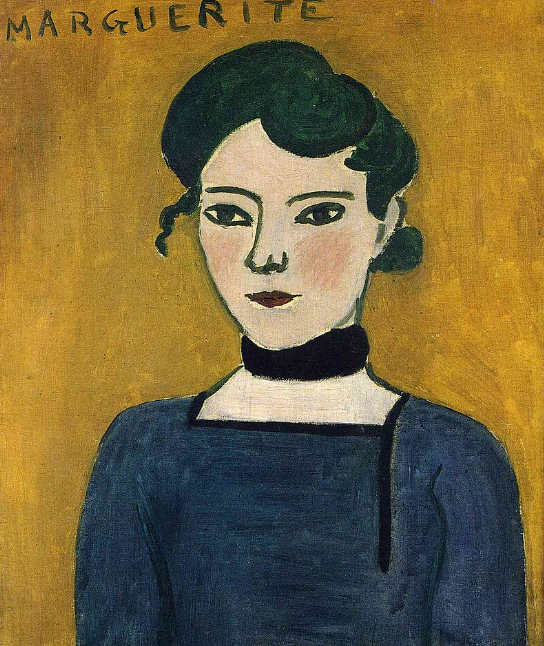
Henri Matisse ‘Marguerite’ (1906 -07)
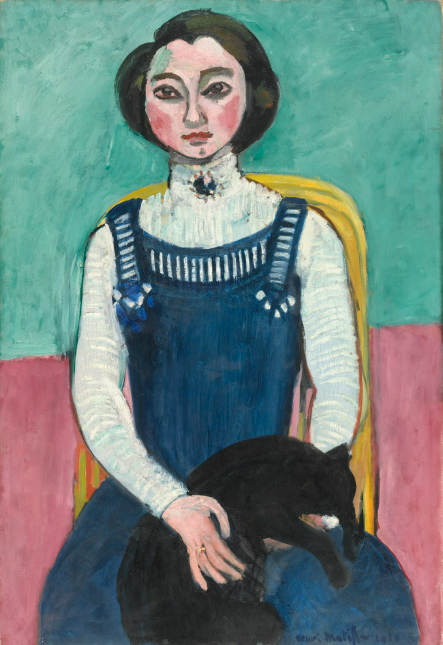
Henri Matisse ‘Marguerite au chat noir’ (1910)
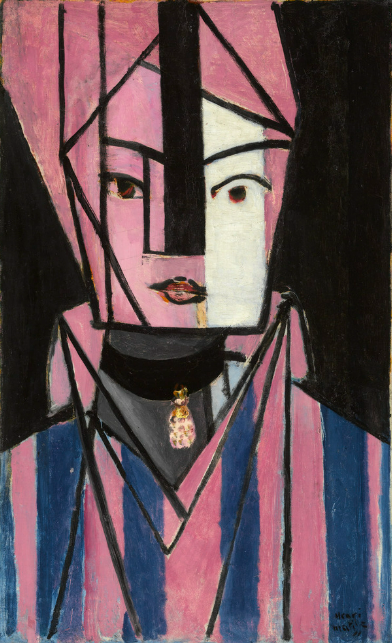
Henri Matisse ‘Tête blanche et rose’ (1914 – 15)
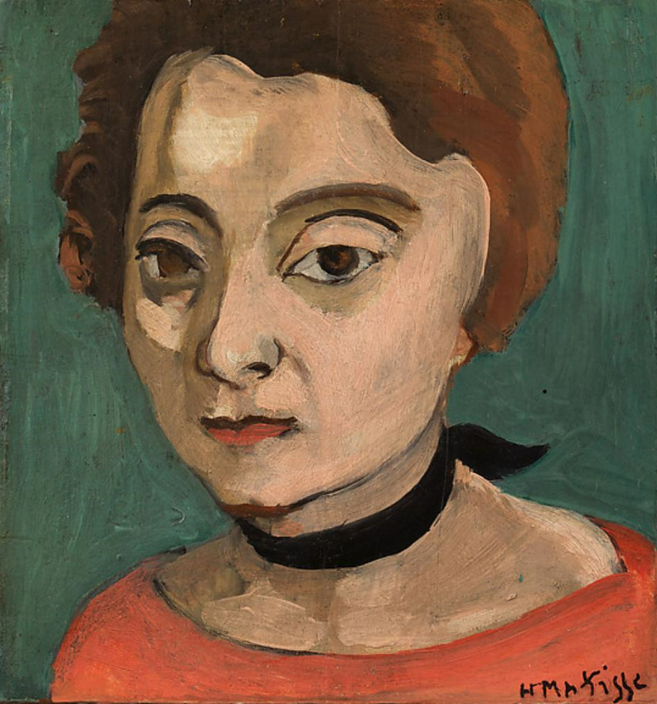
Henri Matisse ‘Marguerite au ruban de velours noir’ (1916)
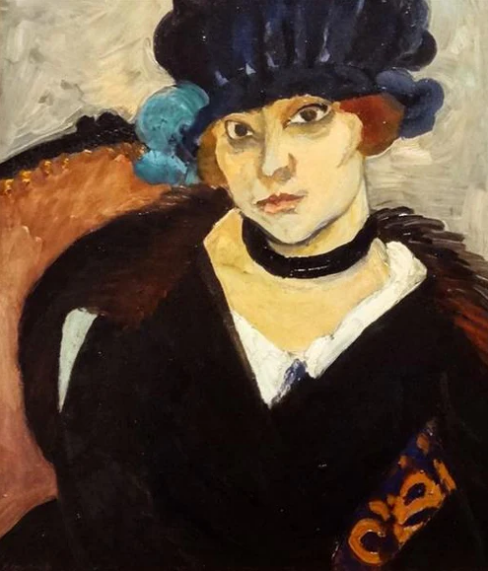
Henri Matisse ‘Portrait de Marguerite’ (1918)
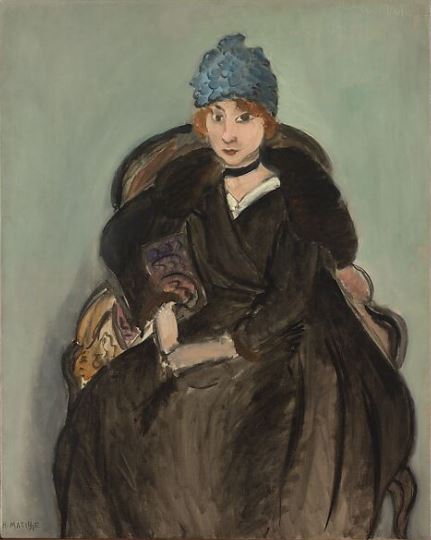
Henri Matisse ‘Marguerite au chapeau bleu’ (1918)
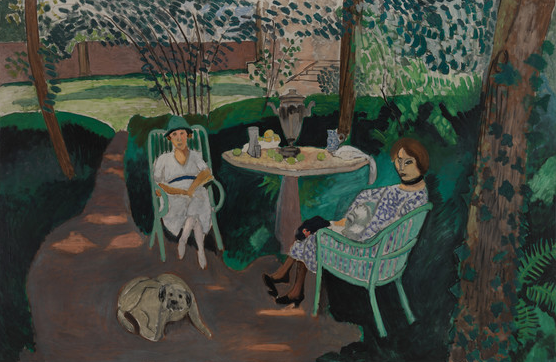
Henri Matisse ‘Le Thé (dans le jardin) (1919)
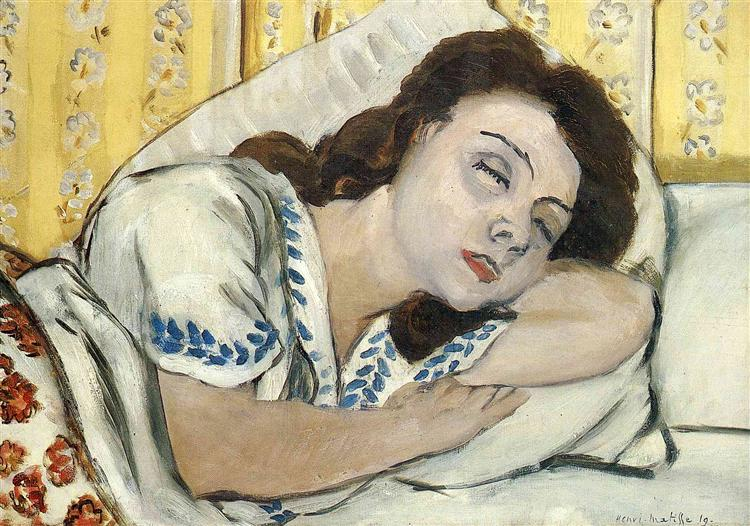
Henri Matisse ‘Marguerite endormie’ (1920)

Henri Matisse ‘Le paravent mauresque’ (1921)
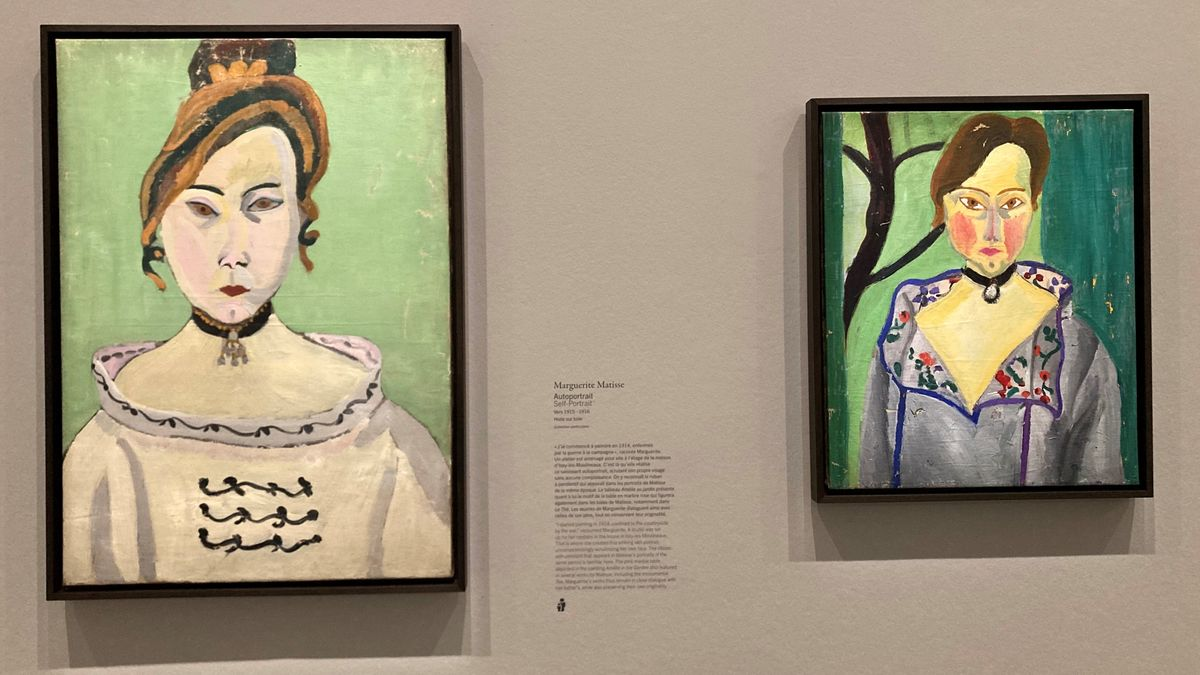
Marguerite Matisse Self-Portraits (1918)

