Spending a few days in the Charente and Charente Maritime regions of western France to visit the towns of Cognac, famous for its eponymous brandy, and Saintes, an ancient town founded around 20 BCE, which became the first Roman capital of Aquitaine during the reign of Emperor Augustus in the first century BCE.
Cognac
Cognac is located on the river Charente, on one of the pilgrimage routes through France to Santiago de Compostela. The town gives its name to one of the world’s best-known brandies, unique in that it is double-distilled. Cognac must be made to strict regulations in particular areas around the town to be granted the designation ‘Cognac’. Many famous producers such as Hennessy, Martel and Remy Martin are located in the town.
Porte Saint Jacques
The town’s medieval quarter runs from the fifteenth-century fortified gate known as Porte Saint-Jacques, located alongside the river, up to the twelfth-century Église Saint-Léger. Porte Saint-Jacques was originally part of the city walls, although since then it has had several uses. During the eighteenth century the towers housed military regiments, after which it was converted into a prison and was used as such from 1789 until 1864. After a recent renovation it now serves as a museum which tells its story.
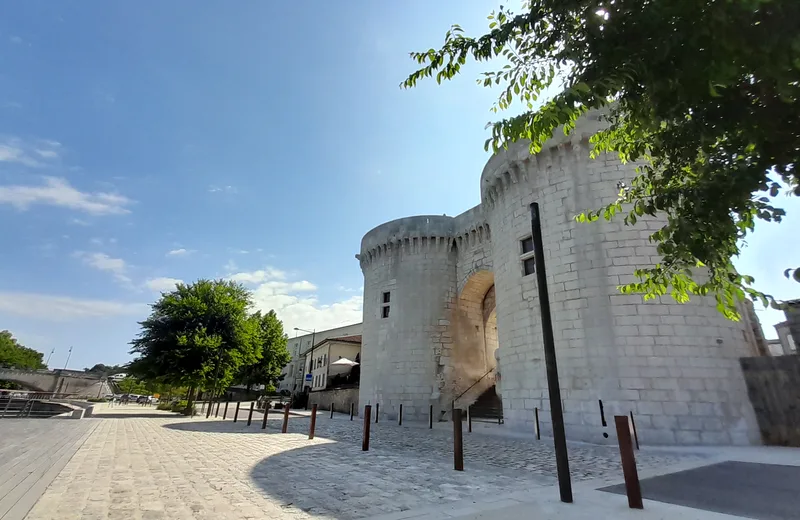
Porte Saint Jacques
Église Saint-Léger was formerly a Benedictine priory, construction of which began in 1130, since when it has had a chequered history: The Wars of Religion led to it becoming a Protestant temple from 1598 but in 1622 during the Counter-Reformation a community of Benedictine nuns took possession; however, they were expelled in 1792. The church suffered damage during the revolutionary period and was restored in the nineteenth century, although the façade, which is in the Saintonge Romanesque style, was left untouched. Over the main portal are the signs of the zodiac along with labours associated with each month.
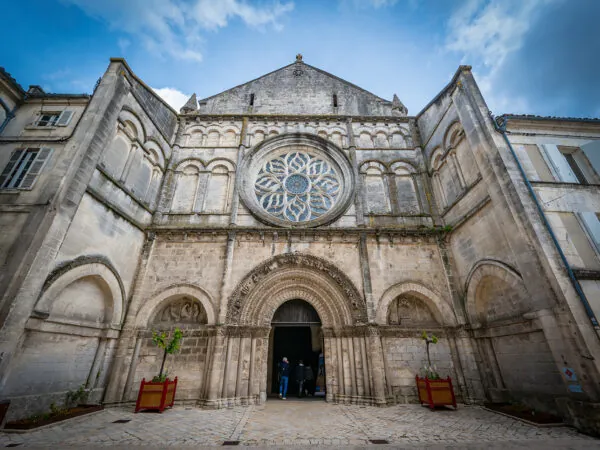
Église Saint-Léger, Cognac
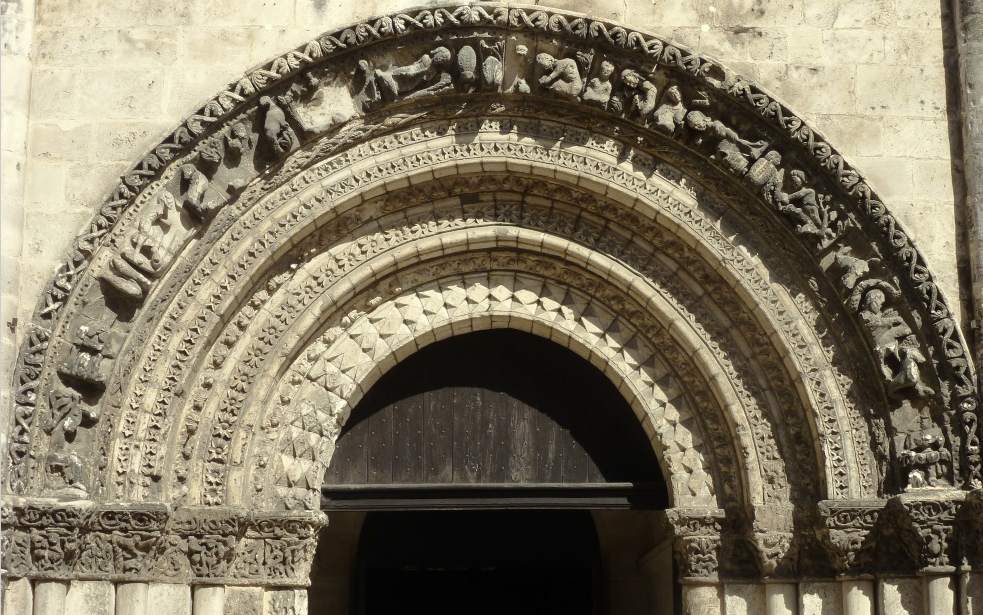
Zodiac carvings at Église Saint-Léger, Cognac
Chateau de Cognac was built around 1200 and was entrusted by King John of England to a French nobleman, Renaud II de Pons. From 1366 to 1370, the chateau was one of the main residences of Edward, Prince of Aquitaine and Wales, the son of King Edward III of England. In September 1494, it was the birthplace of Francis I of France, to whom there is a monument in the centre of the old town.
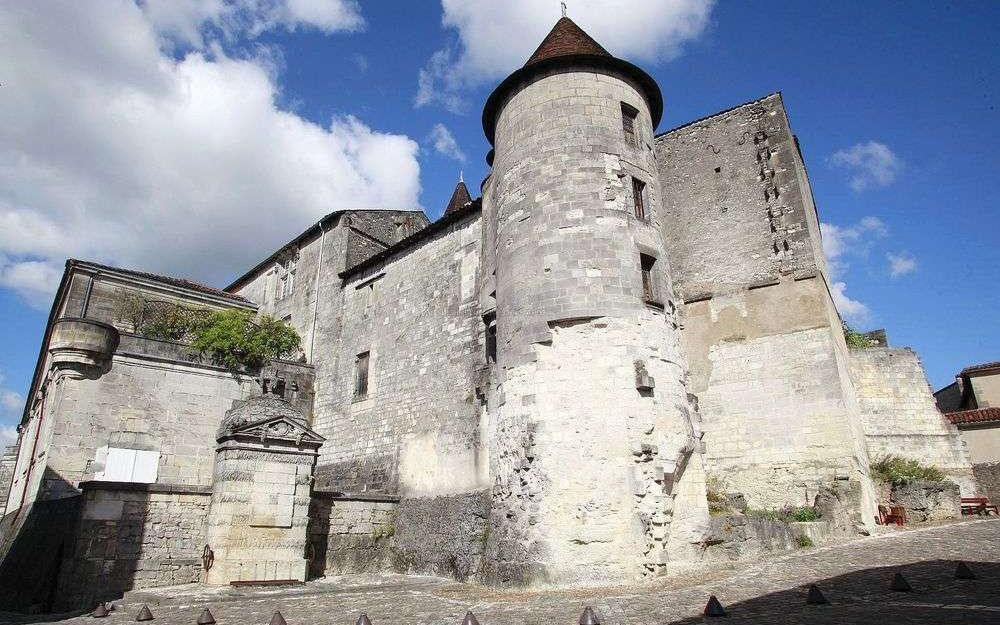
Chateau de Cognac
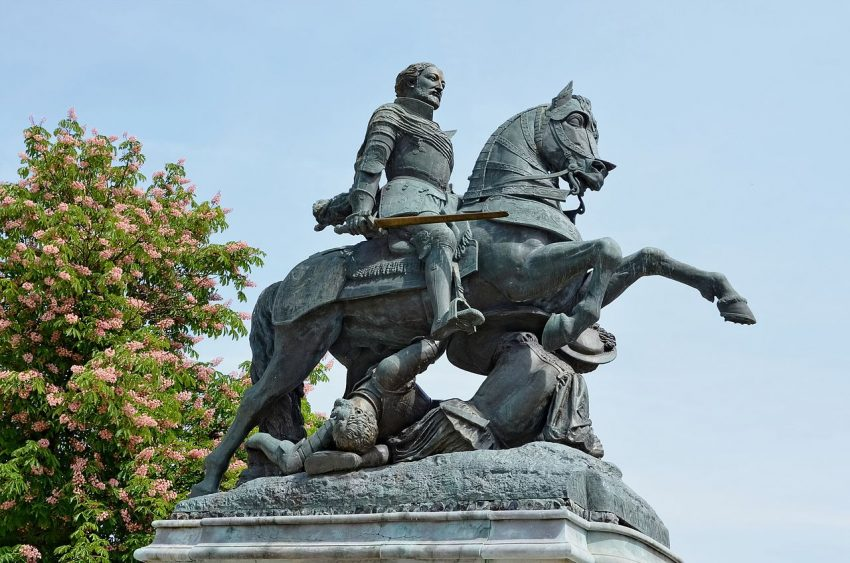
Monument to Francis I in the centre of Cognac
La maison de la Lieutenance is a timber-framed house at the start of Rue Grande in the old town. Although it has medieval origins, the house was rebuilt in the seventeenth century by Pierre de Lacombe, the town’s Lieutenant General. However, the sculpted wood on the façade probably dates from the fifteenth century and was reused during the rebuild.
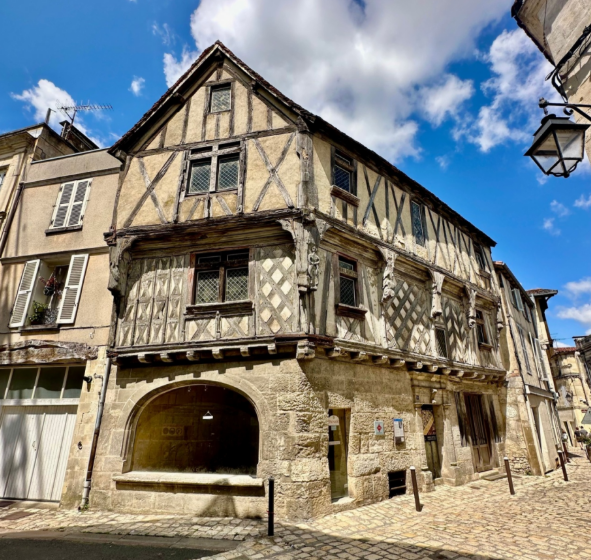
La maison de la Lieutenance, Cognac old town
Saintes
Saintes (Mediolanum Santonum) is home to some of the oldest Gallo-Roman monuments in France, examples of the skill of Roman engineers and builders. One of the main sites is the Amphitheatre, which was built between 40 and 50 CE under Emperor Claudius, making it one of the oldest surviving amphitheatres in Gaul.
It was built into a small valley to minimize the need for backbuilding a massive supporting structure and could hold over 15,000 spectators who came to watch gladiatorial combats and wild animal hunts.
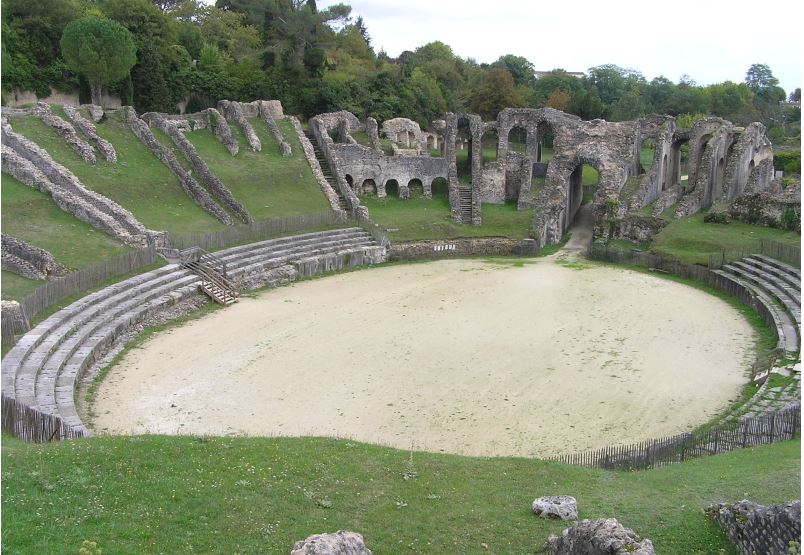
The Gallo-Roman Amphitheatre
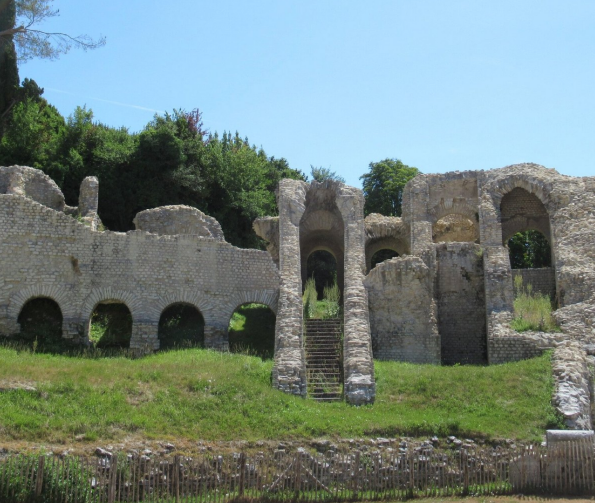
Remains of the walls, Amphitheatre, Saintes
The Arch of Germanicus is a monumental gateway which was erected in 18 or 19 CE. It was funded by a wealthy Romanized local citizen named Caius Julius Rufus to honour Emperor Tiberius, his son Drusus, and his adopted son Germanicus. It marked the main entrance to the city at the terminus of the Via Agrippa.
The arch originally spanned the Roman bridge over the river Charente, but when the bridge was demolished in 1843, it was dismantled and rebuilt on the riverbank.
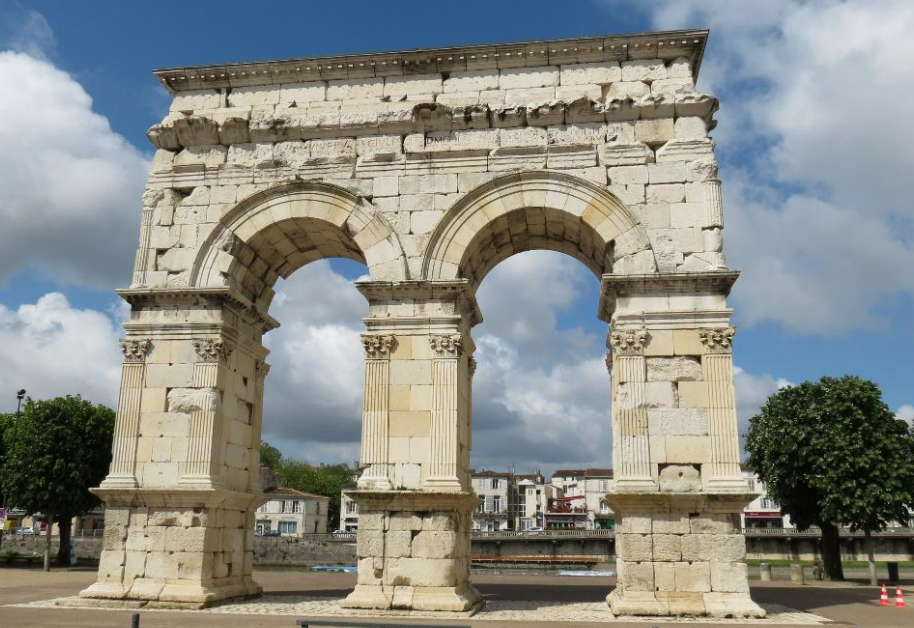
Arch of Germanicus, Saintes
Saintes is also home to several examples of Gothic and Saintonge Romanesque architecture. The UNESCO World Herirage site of the Basilica of Saint Eutrope is an eleventh-century church that served as a major stop on the Camino de Santiago pilgrimage route. It was consecrated in 1096 by Pope Urban II to house the relics of Saint Eutrope.
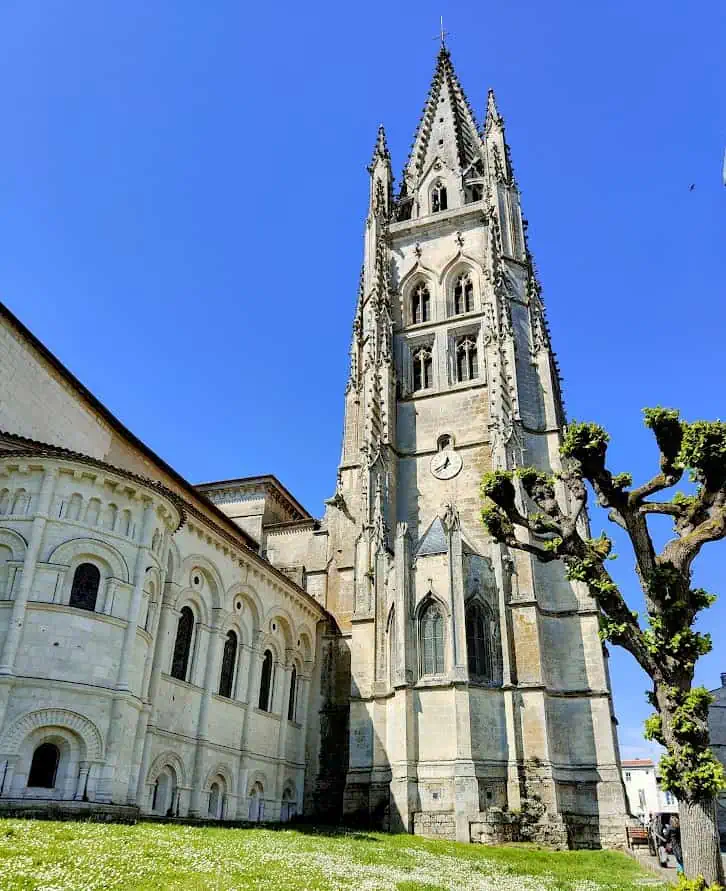
Basilica of Saint Eutrope, Saintes
The crypt is the oldest part of the building and with a length of 35 metres it is one of Europe’s largest. The fifty-three capitals which hold up the vaulted ceilings are adorned with plant-based compositions such as acanthus leaves. The crypt contains the stone sarcophagus of Saint Eutropius, the first bishop of Saintes, who was martyred in the first century.
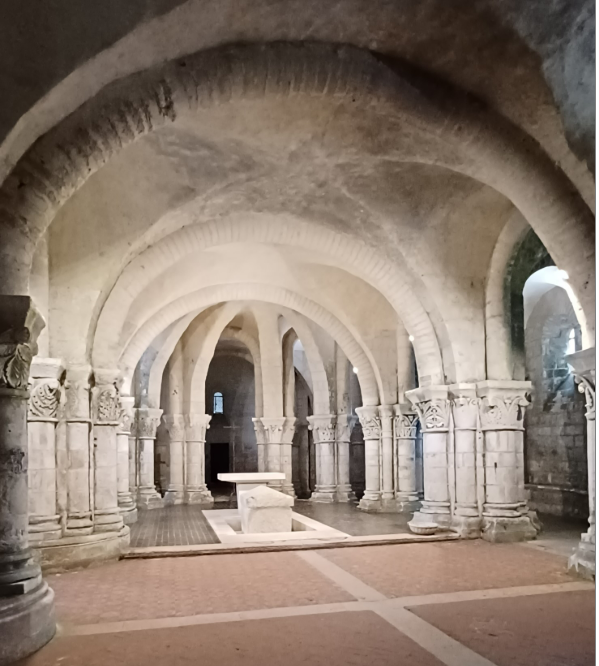
Decorated arches in the crypt with the tomb of Saint Eutropius in the centre
The Abbey of Sainte-Marie-des-Dames was a Benedictine nunnery founded in 1047 by Geoffrey II, Count of Anjou and his wife Agnes of Burgundy. It was mainly reserved for the daughters of high nobility. One of the donors to the abbey was Eleanor of Aquitaine, whose relative, Agnès of Barbezieux, was abbess in the twelfth century. Today the complex houses a music and dance conservatoire.
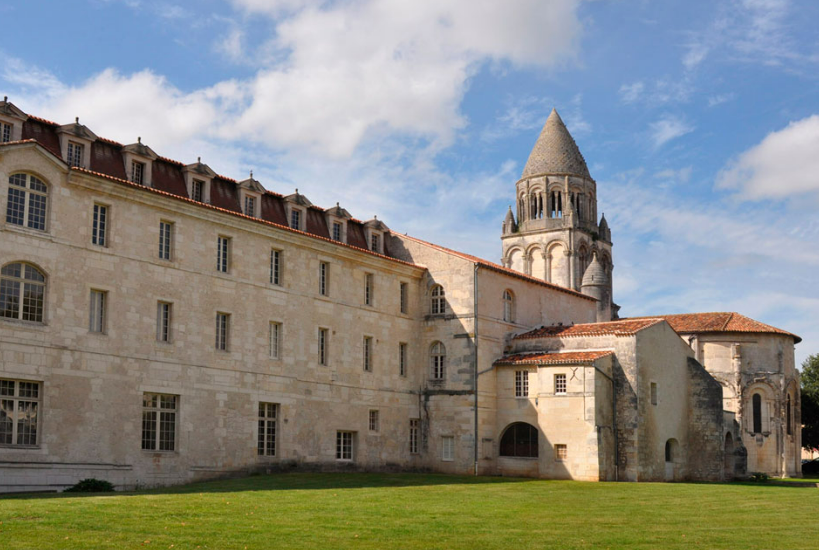
Abbey of Sainte-Marie-des-Dames, Saintes
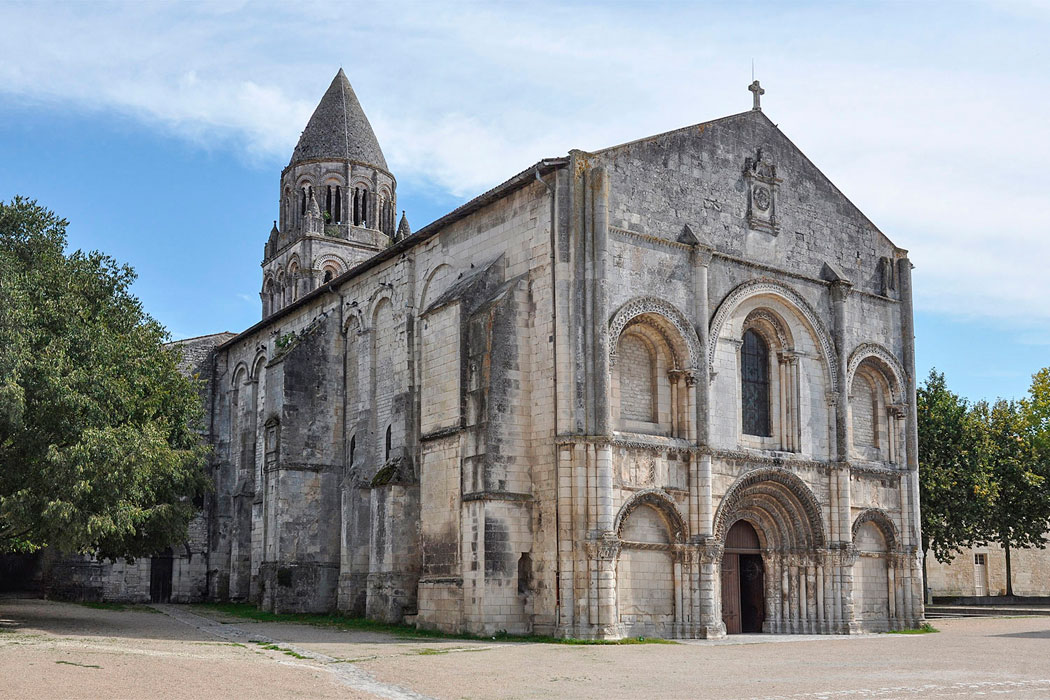
Church of Abbaye aux Dames, Saintes, with its ‘pine-cone’ bell tower
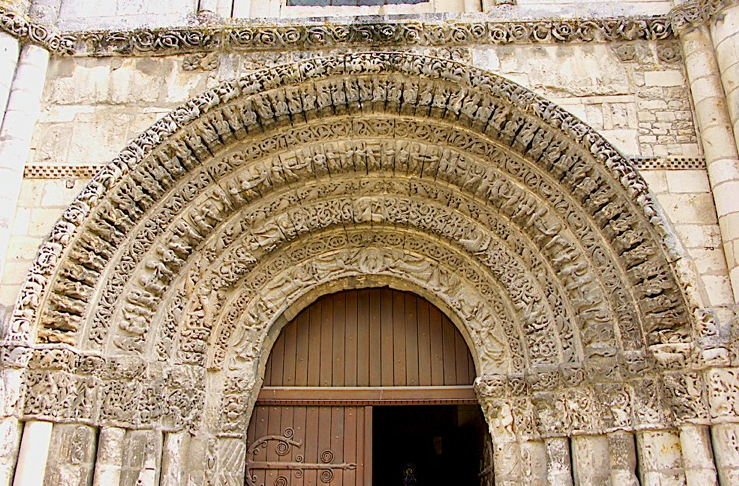
Central portal, Church of Abbaye aux Dames, Saintes
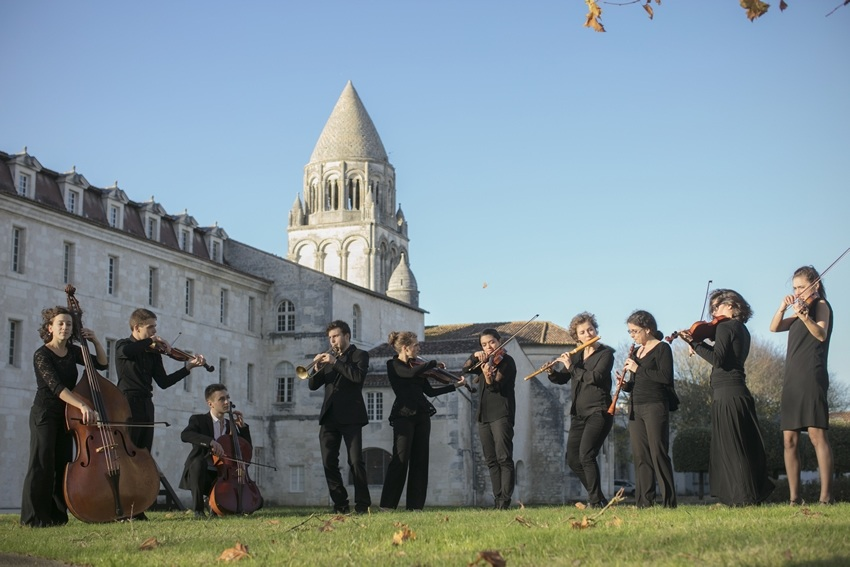
Music at the Abbaye aux Dames, Saintes (© Sébastien Laval)
Little remains of the twelfth-century Cathédrale Saint-Pierre de Saintes apart from a Romanesque arm, the crossing of the transept and the cloisters The present church was entirely rebuilt in the Flamboyant style from 1450. However, lack of funds meant that it was never completed as intended and the tower lacks the planned spire, giving it a rather heavy appearance.
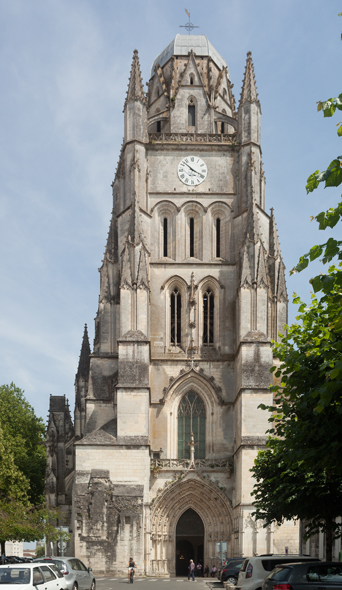
Tower of Saintes Cathedral
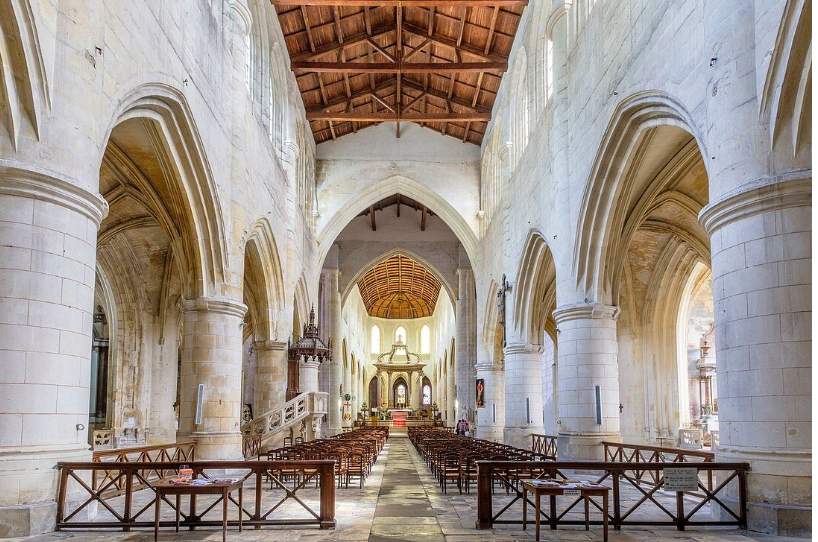
Nave of Saintes Cathedral

