Picasso ‘La Collection’

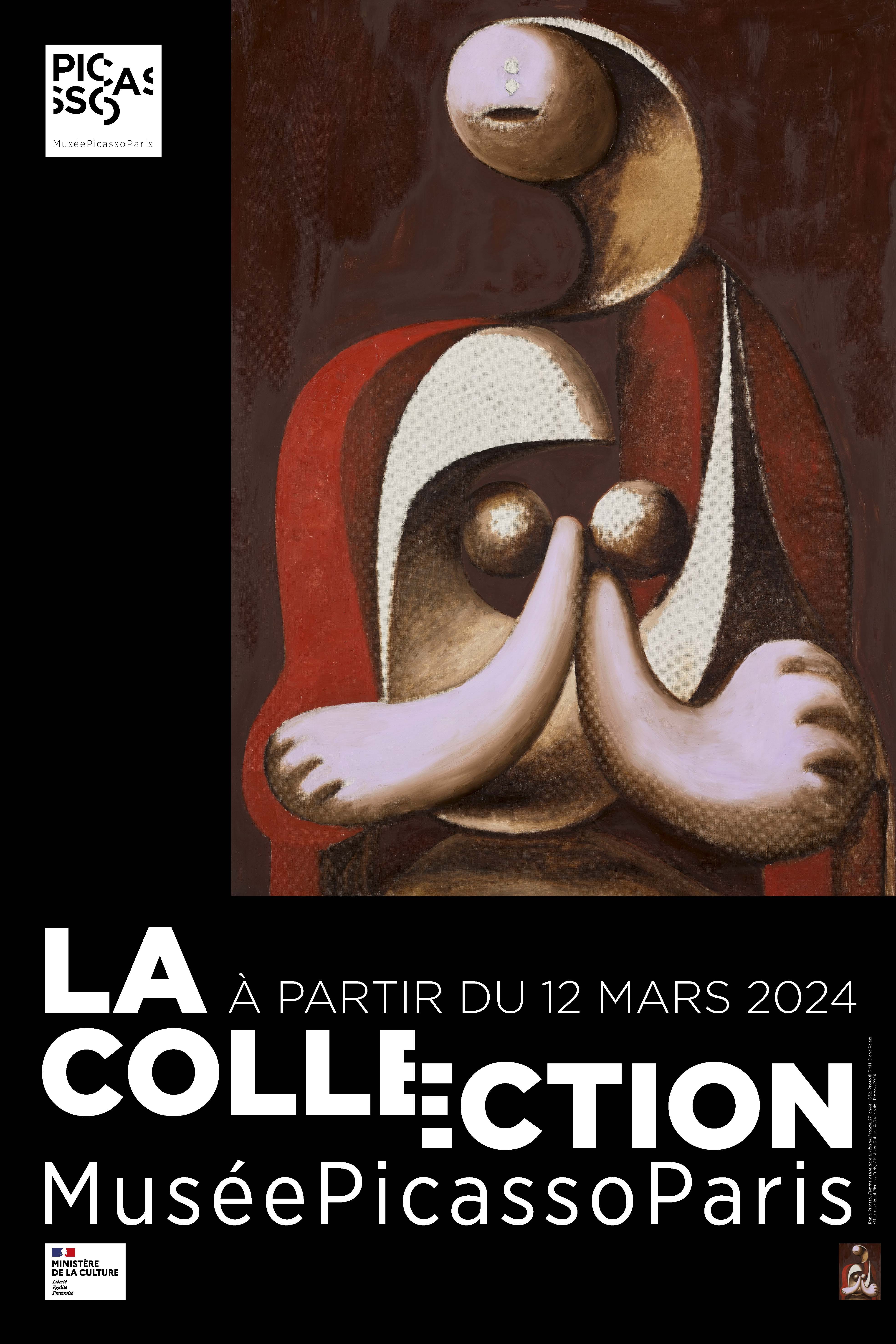
The exhibition ‘La Collection’ at the Musée Picasso is a re-presentation of the museum’s collection offering a comprehensive overview of the works of the artist. The museum collection was created thanks to two donations, successively made to the State by the heirs of Pablo Picasso in 1979 and then by those of Jacqueline Picasso in 1990, which have been supplemented by other collections. The museum now holds 5000 works, including 300 paintings.

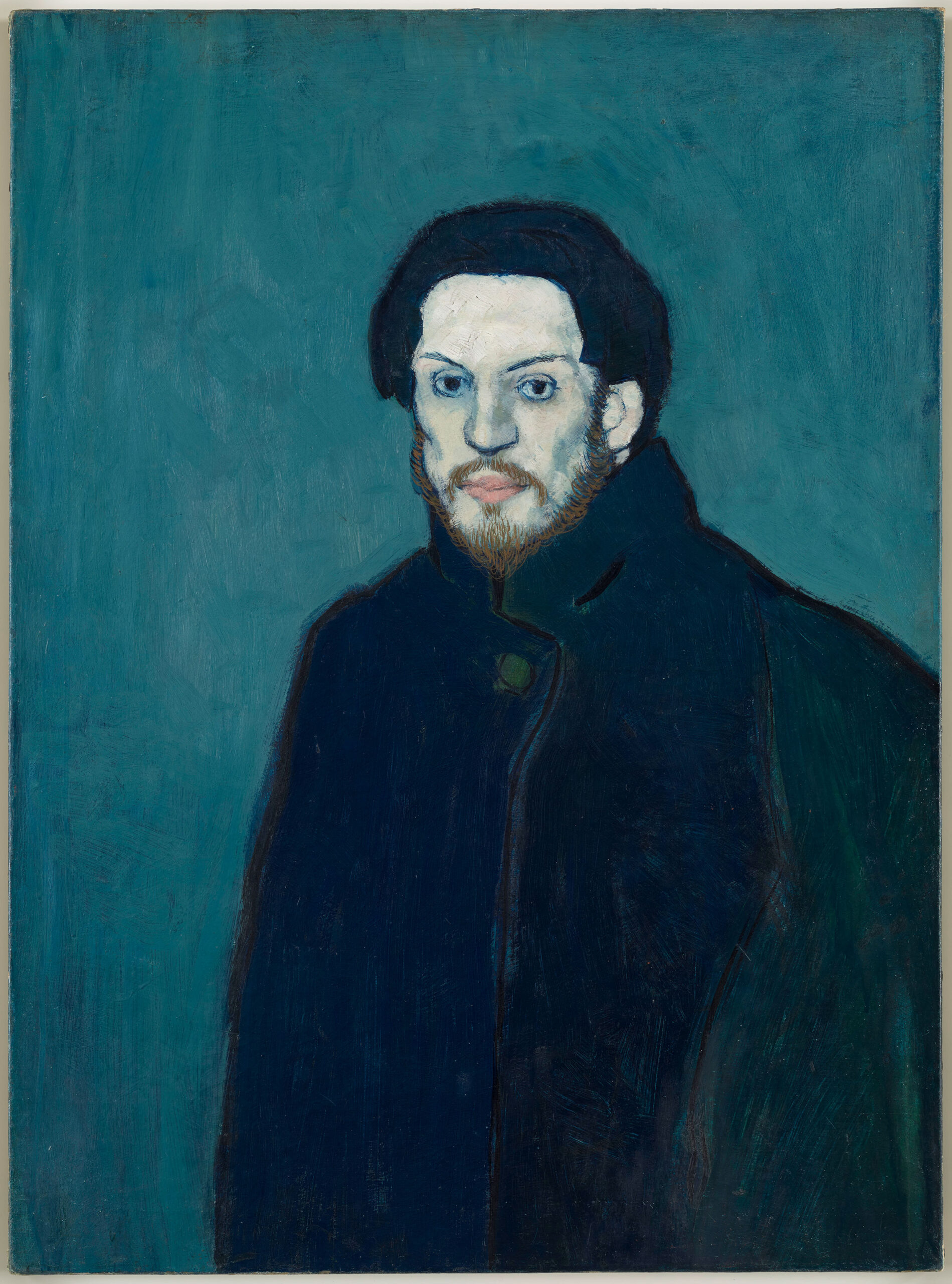
Pablo Picasso ‘Self-Portrait’ (1901)

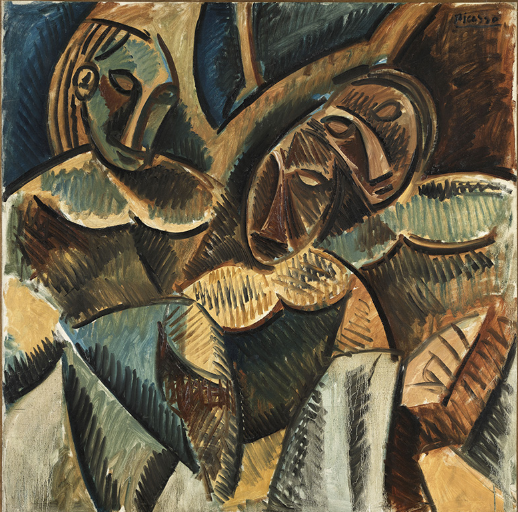
Pablo Picassoi ‘Trois figures sous un abre’ (1908)

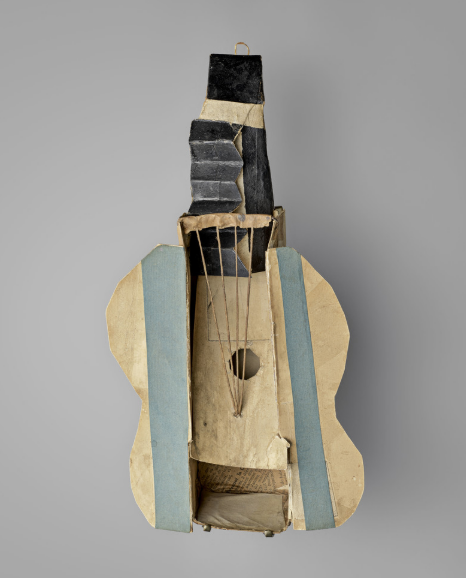
Pablo Picasso ‘Guitare’ (1912)

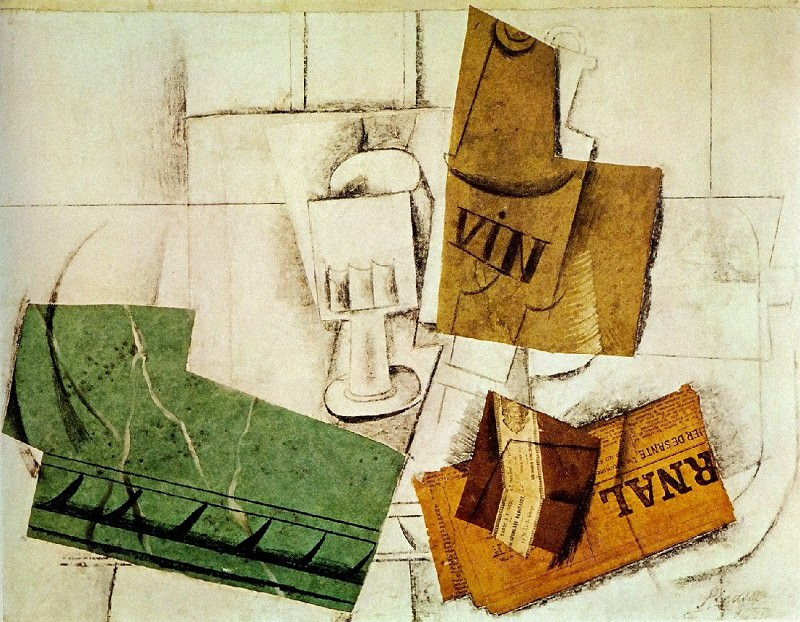
Pablo Picasso ‘Verre, bouteille de vin, paquet de tabac, journal’ (1914)

Pablo Picasso ‘Portrait d’Olga dans un fauteuil’ (1918)

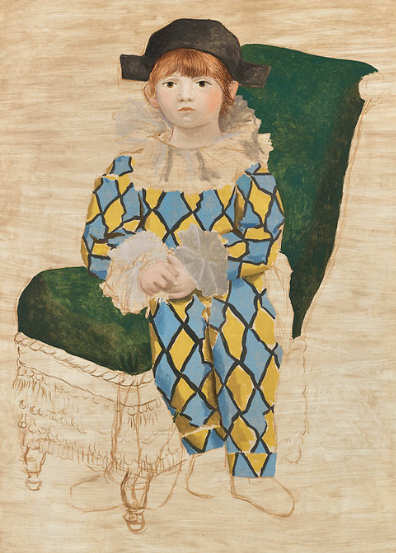
Pablo Picasso ‘Paul en Arlequin’ (1924)

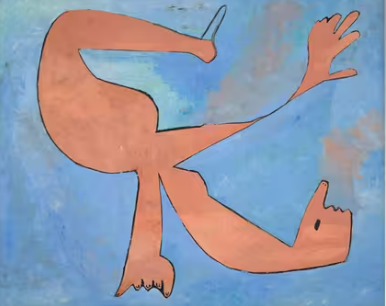
Pablo Picasso ‘La Nageuse’ (1929)

Pablo Picasso ‘Peintre à la palette et au chevalet’ (1928)

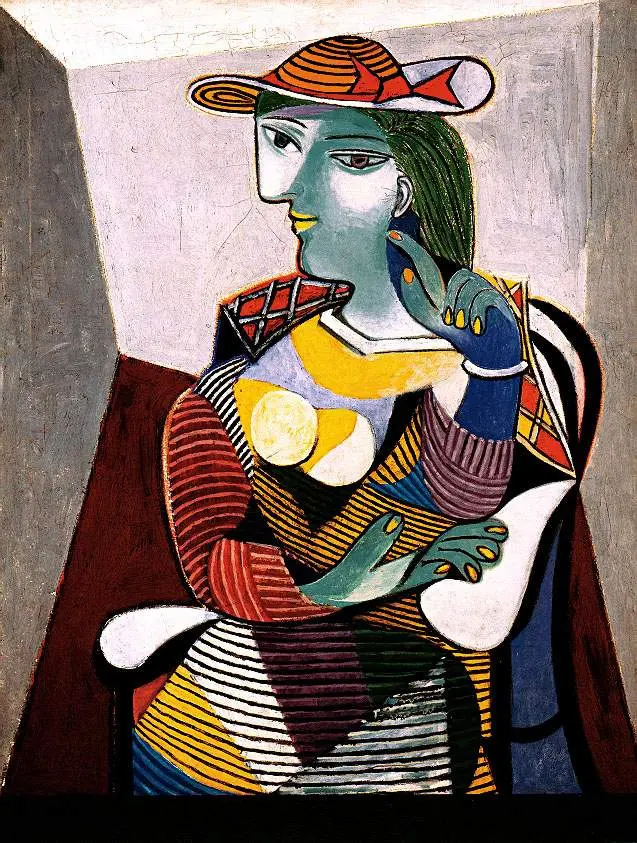
Pablo Picasso ‘Portrait de Marie-Thérèse Walter’ (1937)

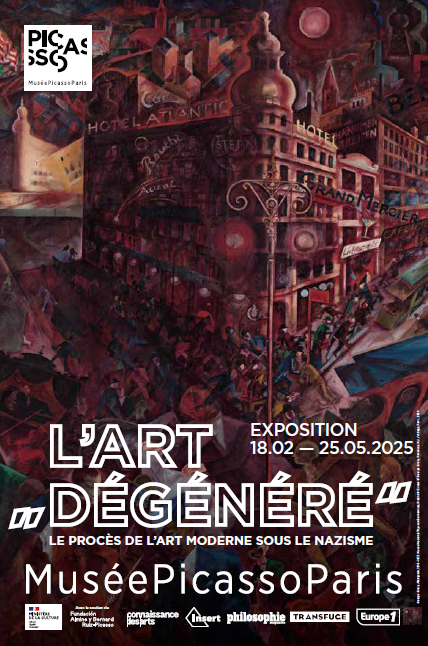
‘Degenerate Art’ at Musée Picasso

A busy few days in Paris with lots to see, starting with a fascinating exhibition at the Musée Picasso.

In 1937, Adolf Hitler had an exhibition set up in Munich to display all the art that he believed degenerate.. ‘Entartete Kunst’ (‘Degenerate Art’) showed more than 650 paintings, sculptures and prints that had, until a few weeks earlier, been in the possession of thirty-two German public museum collections. The works were assembled solely for the purpose of clarifying for the German public by defamation and derision exactly what type of art was unacceptable to the Reich.

When the National Socialists came to power they began a systematic campaign to remove modern art from public museum collections. For Hitler, an attack on modernism was an opportunity to use the average German’s distrust of avant-garde art to further his political objectives against Jews, Communists, and non-Aryans. The charge of ‘degeneracy’ was also levelled at avant-garde or ‘un-German’ practitioners of music, theatre, film and literature, and their works were confiscated to purify German culture.

During the four months that ‘Entartete Kunst’ was open in Munich it attracted more than two million visitors; over the next three years it travelled throughout Germany and Austria and was seen by nearly one million more. On most days twenty thousand visitors saw the exhibition, and records show that on one day, Sunday 2 August 1937, thirty-six thousand people saw it. According to newspaper accounts, five times as many people visited ‘Entartete Kunst’ as saw ‘The Great German Art Exhibition’, an exhibition also running in Munich at the same time which showed officially-approved art.

Weimar Republic Germany had witnessed an explosion of modern art, literature, music and film created by individuals who would be labelled ‘degenerate’ in the 1930s. The emergence of artists’ groups such as ‘Die Brücke’ and ‘Der Blaue Reiter’ and the publication of radical periodicals to which these artists contributed, characterized German Expressionism. These Expressionist artists were influenced by the exotic; for example, the carvings and wall hangings of African and Oceanic peoples in the Dresden Volkerkunde-Museum. This was all ‘proof’ that German art was being infiltrated and tainted by degenerates.

‘L’art dégénéré – le procès de l’art moderne sous le nazisme’ at the Musée Picasso is the first exhibition in France devoted to so-called ‘degenerate’ art, It explores and puts into perspective the methodical attack of the Nazi regime against modern art.

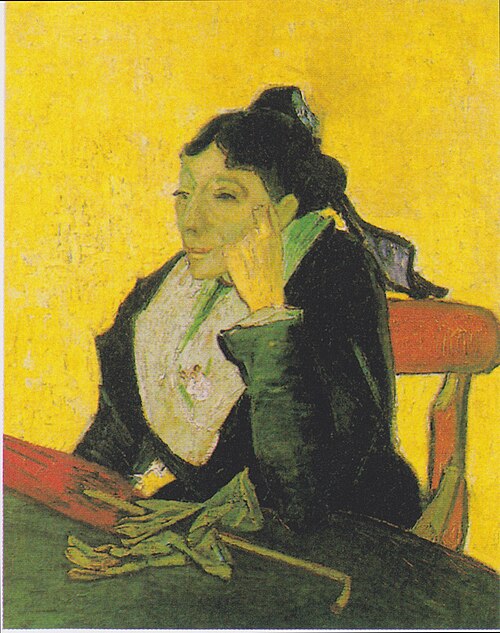
Vincent van Gogh ‘L’Arlésienne’ (1888)

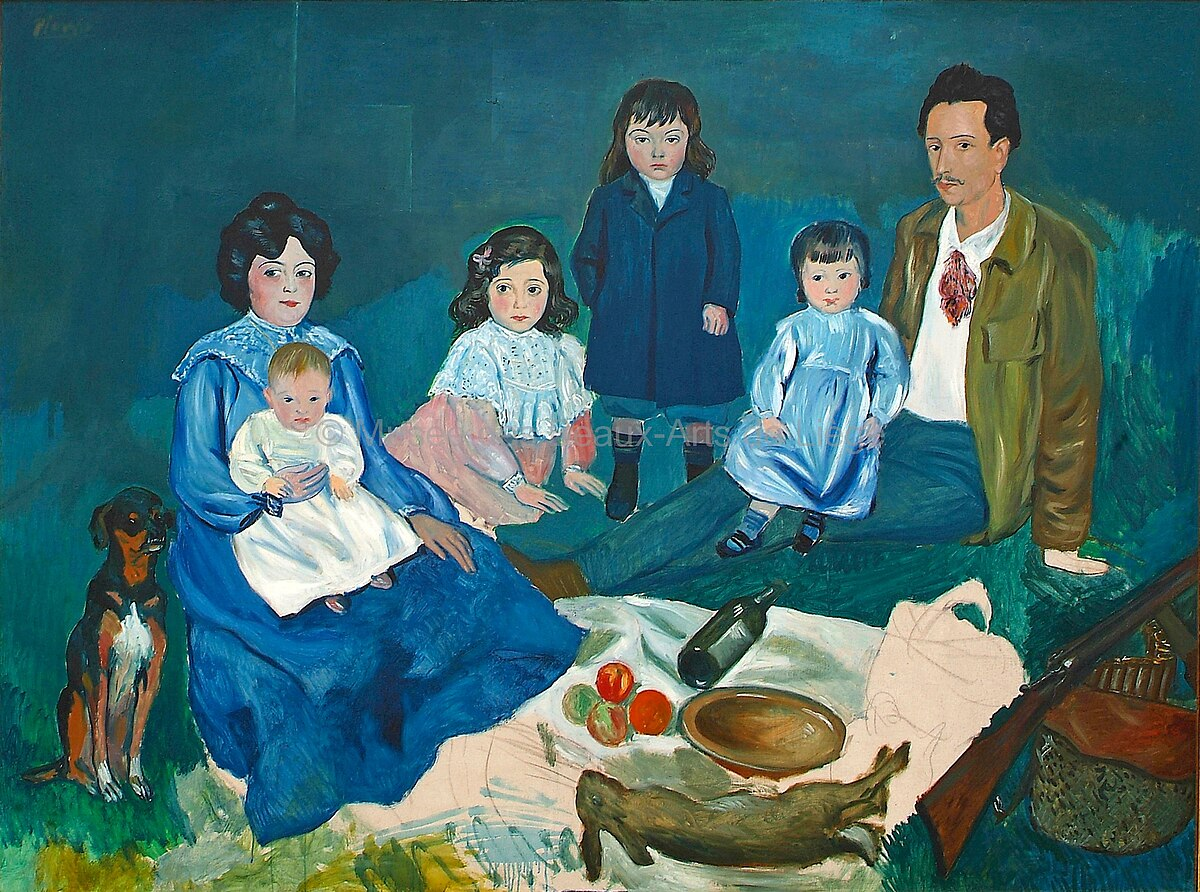
Pablo Picasso ‘La famille Soler’ (1903)

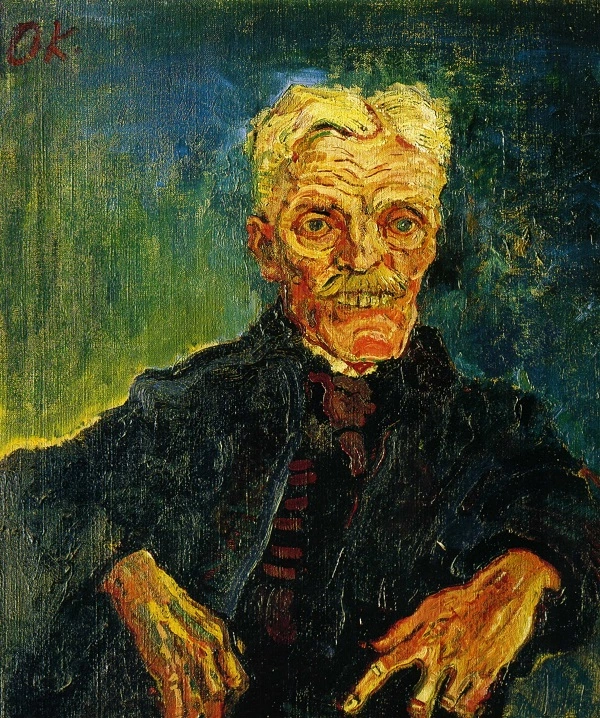
Oskar Kokoschka ‘La père Hirsch’ (1909)

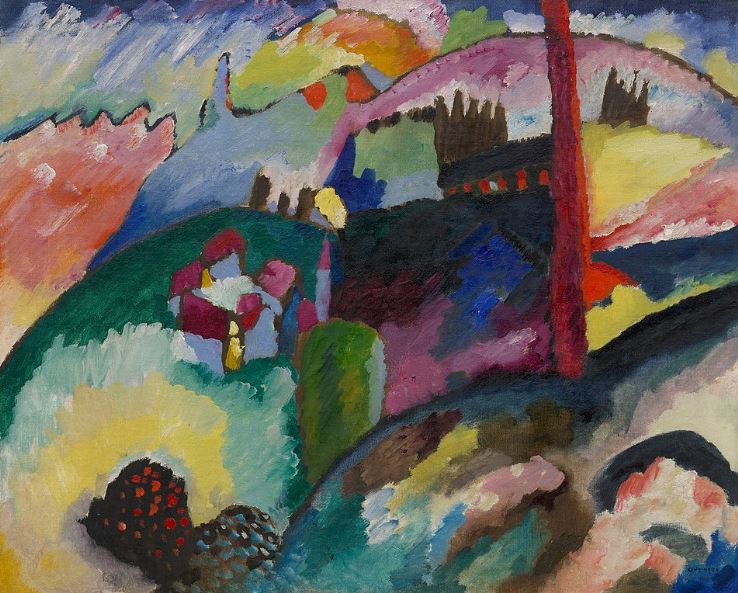
Wassily Kandinsky ‘Landscape with Factory Chimney’ (1910)

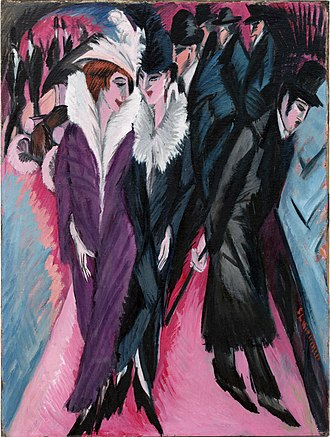
Ernst Ludwig Kirchner ‘Street, Berlin’ (1913)

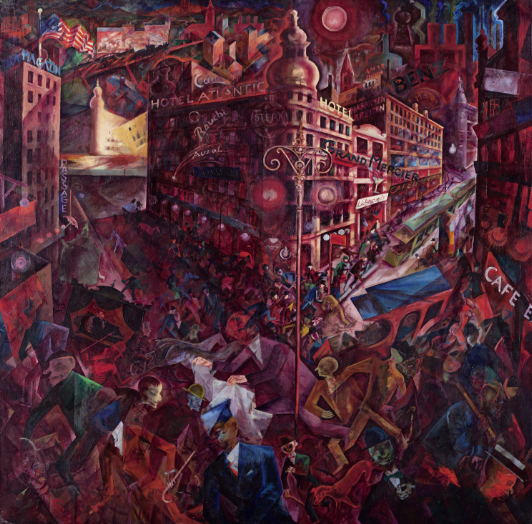
George Grosz ‘Metropolis’ (1916 – 17)

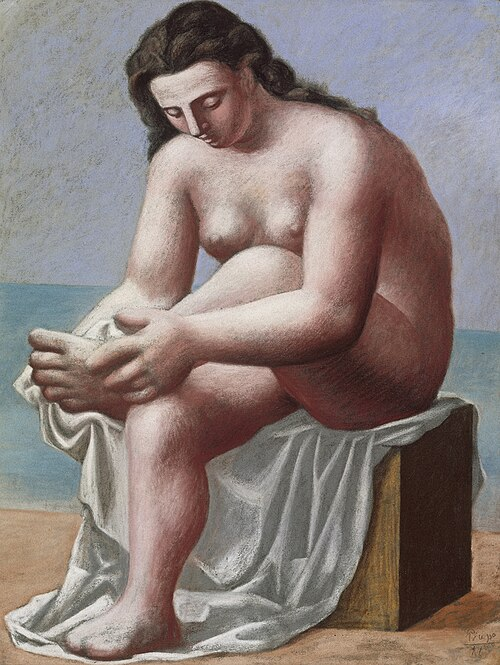
Pablo Picasso ‘Seated Nude drying her Foot’ (1921)

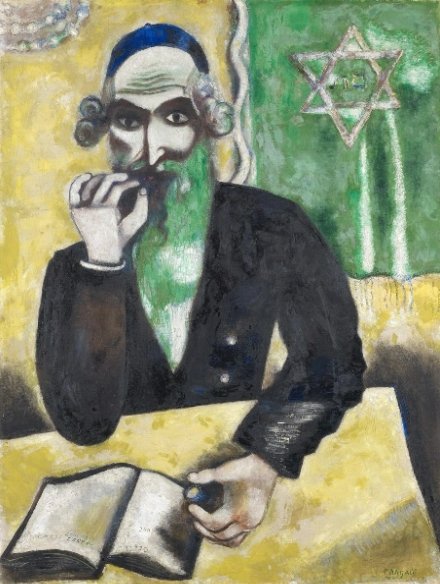
Marc Chagall ‘Le prise (Rabbin)’ (1923 – 26)

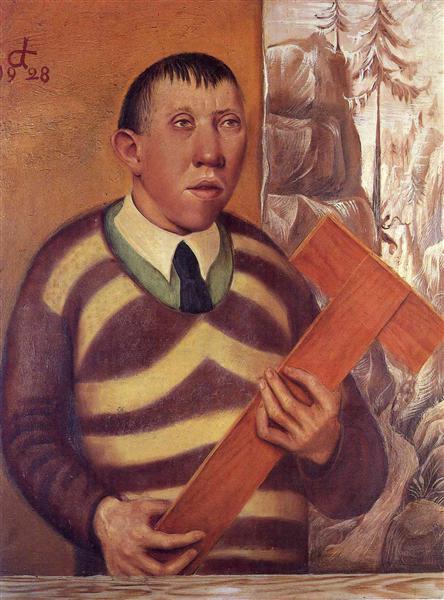
Otto Dix ‘Portrait of the painter Franz Radziwill’ (1928)

Debussy, Bloch and Mahler

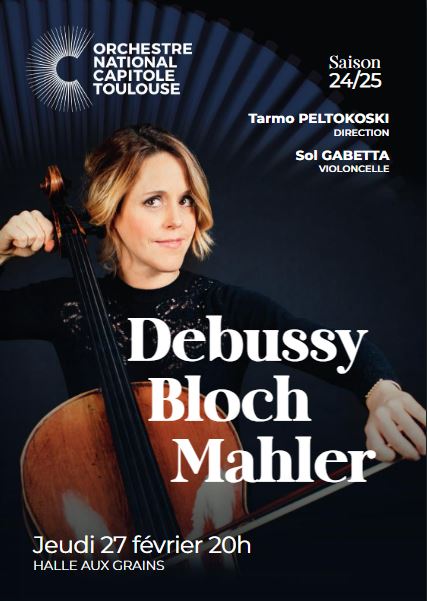
Back at the Halle aux Grains in Toulouse for a fascinating programme of works by Claude Debussy, Ernest Bloch and Gustav Mahler. I was particularly looking forward to seeing the performance of the wonderful Argentine cellist Sol Gabetta

The evening began with Debussy’s ‘Prelude à l’Après-midi d’un faun’. Inspired by Stéphane Mallarmé’s poem, it was composed in 1892 and premiered in 1894. It was originally intended to be part of a three-movement symphony but Debussy retained only the Prelude, which has since become a favourite part of the repertoire. It was beautifully played, with the flute part being particularly noteworthy.

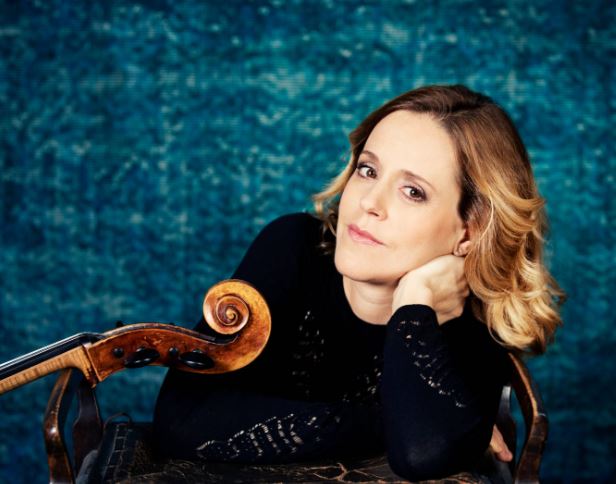
The first part of the evening was completed by Ernest Bloch’s ‘Schelomo – Rhapsodie hébraïque pour violincelle’. It draws on Bloch’s Jewish heritage and is inspired by the biblical figure of Solomon, whose voice is said to be represented by the cello. I had never seen this live before and it was a special treat to see it being performed by Sol Gabetta, who played it with great feeling, bringing an enthusiastic response from the audience.

Sol Gabetta (photograph Julia Wesely)

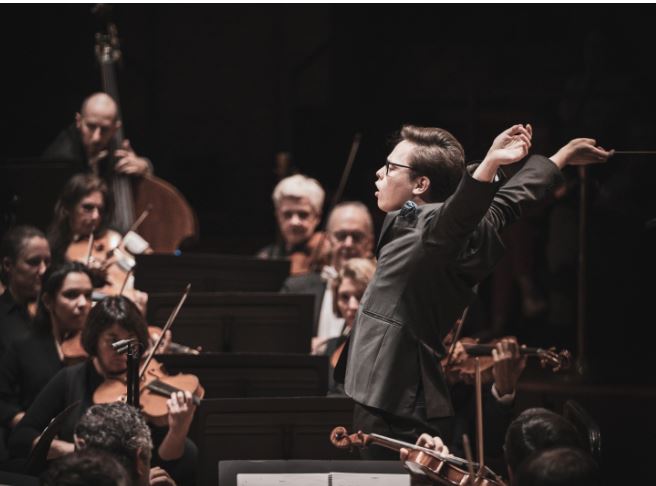
Tarmo Peltokoski and the Orchestre national du Capitole de Toulouse

Gustav Mahler’s Symphony no. 1 in D major, composed in 1888, is one of my favourite works to see in concert. I have seen it many times but tonight’s performance was possibly the best of all. The orchestra were really on fire and played superbly. Woodwinds and percussion were particularly impressive but all sections played really well and conductor Tarmo Peltokoski was called back several times.

Claude Debussy: ‘Prélude à l’après-midi d’un faune’; Ernest Bloch: ‘Schelomo, Rhapsodie hébraïque pour violoncelle et orchestre’; Gustav Mahler: ‘Symphony no. 1 in D major’.

Beethoven 9 to welcome the New Year

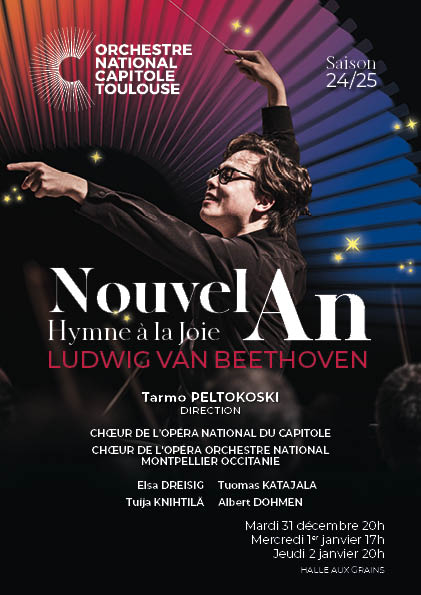
A great musical start to the new year with an excellent performance of Beethoven’s Ninth Symphony by the Orchestre Nationale de Toulouse under Tarmo Peltokoski, the joint choirs of l’Opera National du Capitole and l’Opera Orchestre National Montpellier and soloists Albert Dohmen (bass), Tuomas Katajala (tenor), Tuija Knihtilä (mezzo-soprano) and Elsa Dreisig (soprano).

The symphony was really well played throughout; however, I particularly enjoyed the joyous, fast moving second movement, one of my favourite scherzos, and, of course, the fourth, choral movement. The latter was well sung by all four soloists, with Albert Dohmen’s bass being clear and well-projected in introducing the Ode to Joy. However, it was the joint choirs of l’Opera National du Capitole and l’Opera Orchestre National Montpellier who stole the show – they sang wonderfully and with great intensity, bringing the work to a thrilling end.

Beethoven: Symphony no. 9 in D minor, Opus 125.

Natural History Museum, Toulouse

Giants

66 million years ago, all marine and flying reptiles as well as the dinosaurs, apart from the birds, were wiped out in a mass extinction caused by a meteorite colliding with Earth. This then allowed the development of small mammals who gradually filled the habitats left free. With few predators many of these grew to reach gigantic proportions. The Natural History Museum of Toulouse exhibition ‘Giants’ displays eight species from the Cenozoic era with a mixture of skeletons and 3D sculptures.  

Smilodon populator (Uruguay)

Although commonly known as the sabre-toothed tiger, Smilodon was not closely related to the tiger. It was one of the last-surviving machairodonts and lived during the Pleistocene epoch.

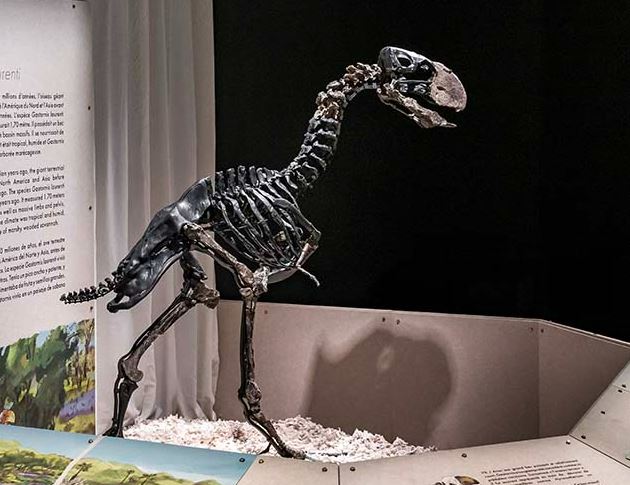
Gastornis laurenti (France)

Gastornis laurenti was a species of giant flightless bird that lived in the Early Eocene period, 52 million years ago.

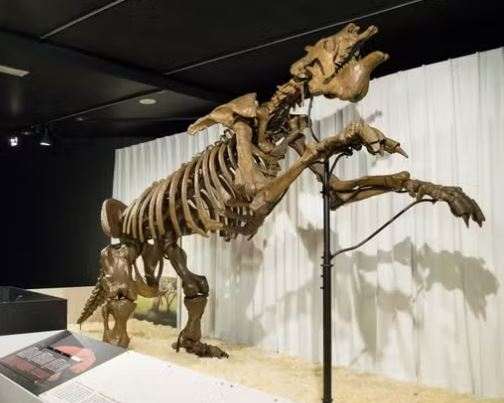
Megatherium americanum (South America)

Megatherium is an extinct genus of giant ground sloth that lived in South America around 25 million years ago.

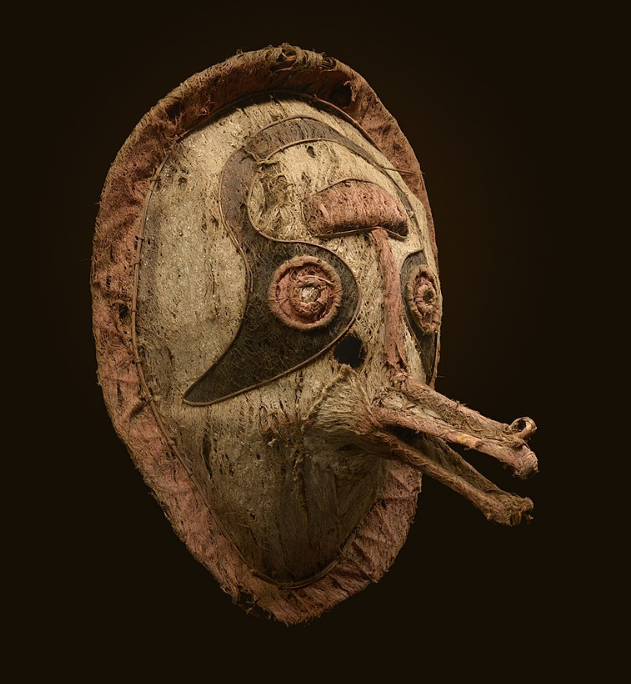
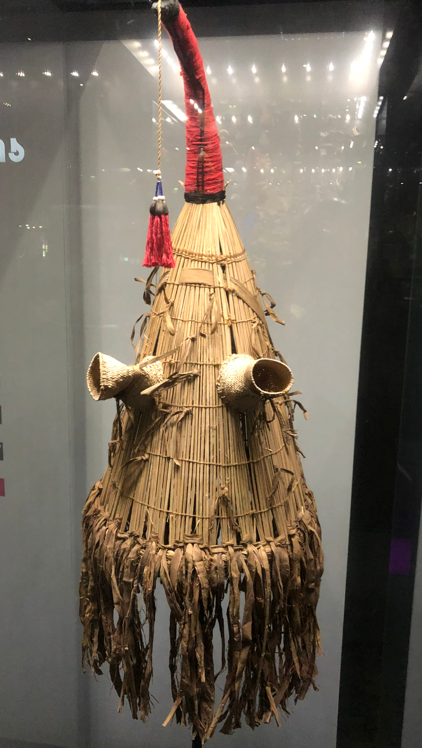
It was also an opportunity to see the Museum’s permanent collection celebrating the planet’s biodiversity. Particularly interesting was the collection of prehistoric fossils and an impressive display of tribal masks.

Fossils

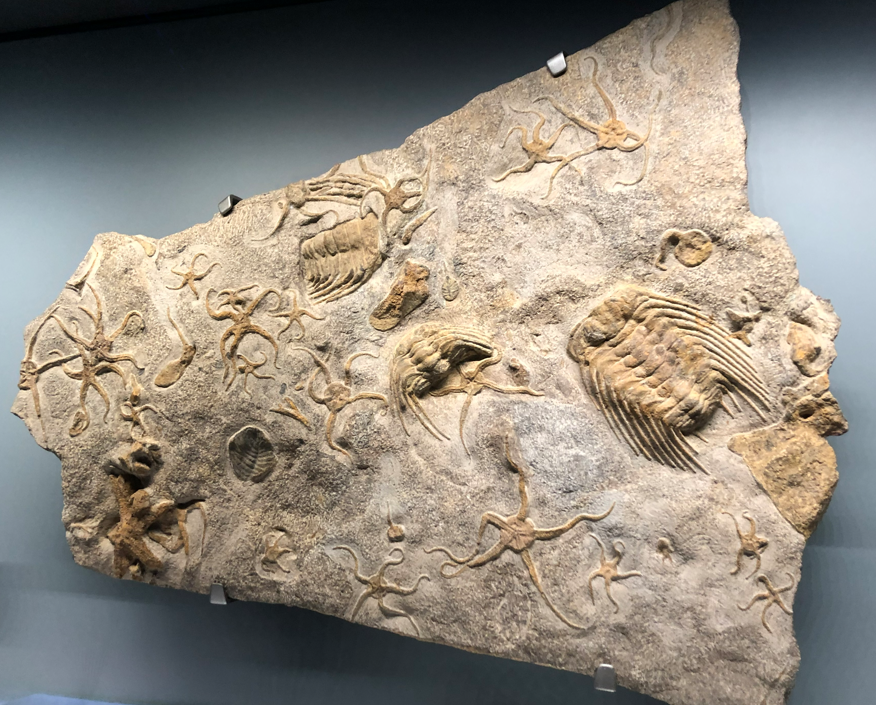
Echinoderms and trilobites (Morocco)

Crinoid Hapalocrinus frechi (Germany)

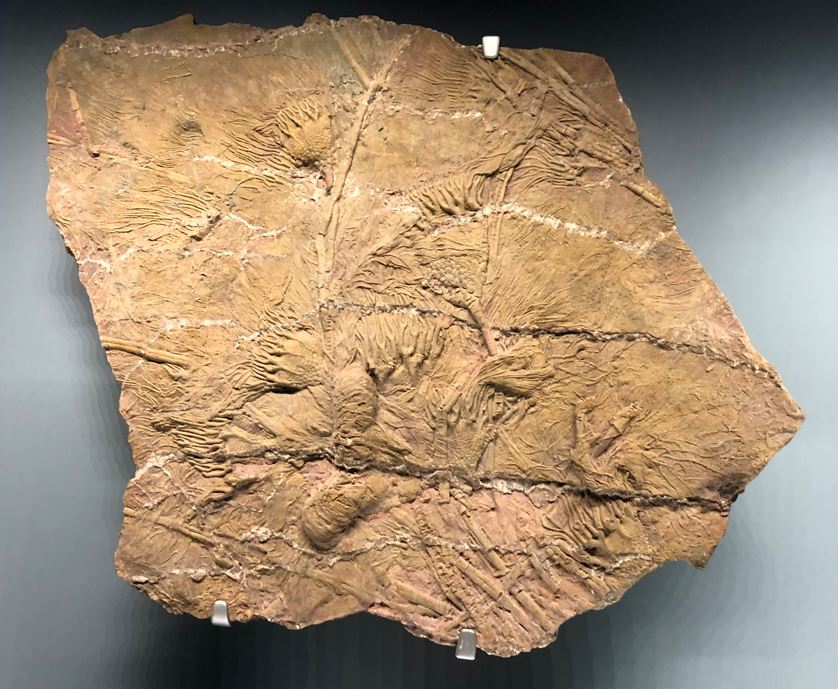
Crinoids Jimbacrinus bostocki (Australia)

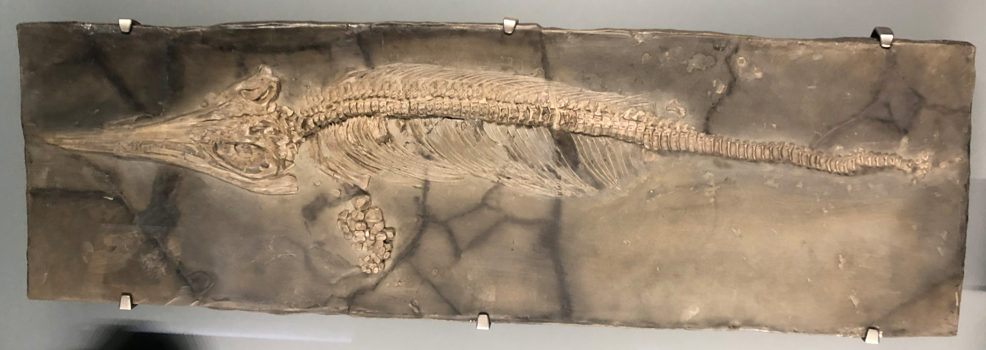
Ichthyosaur Ichthyosaurus tenuirostris (Germany)

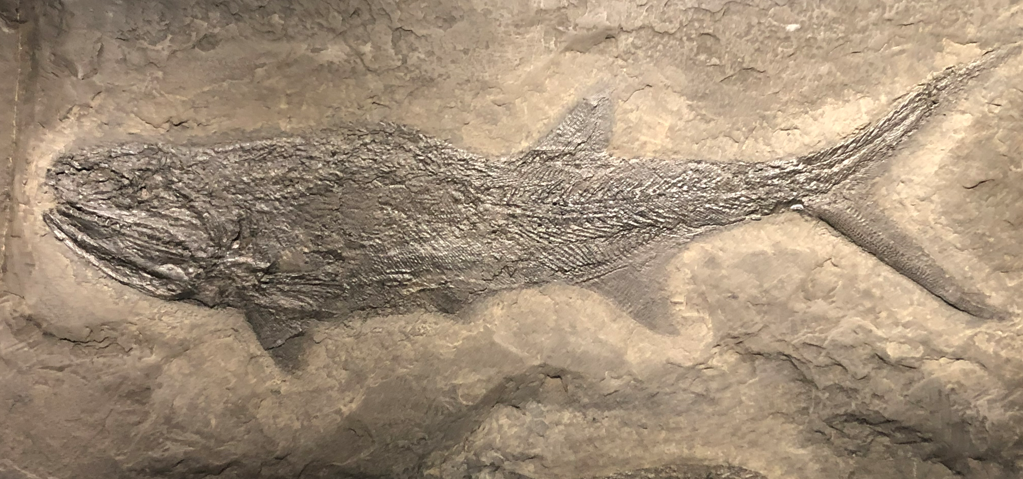
Pygopterus Pygopterus humboldti (Germany)

Masks

Ejumba mask (Diola culture, Sénégal)

Eharo mask (Elema culture, Papua New Guinea)

Tamanoir mask (Kayapo culture, Brazil)

Yaka mask (Democratic Republic of Congo)

‘Resurrection’ in Toulouse

At the Halle aux Grains, Toulouse, for the opening concert of the 2024 – 25 season, with the Orchestre national du Capitole de Toulouse under its new director, Finnish conductor Tarmo Peltokoski.

Gustav Mahler’s Symphony no. 2 is a massive work utilising an enormous orchestra, choirs and soloists that deals with massive subjects such as death and resurrection. In a way it is a continuation of the journey begun in his First Symphony, but on a much larger scale.

I found this evening’s first movement to be a bit patchy with the exposition lacking a little tension; however, things were not helped by a large section of the audience surprisingly deciding to applaud about three-quarters of the way through. At the end of the first movement Tarmo Peltokoski unusually took Mahler’s full stipulated pause before launching the Andante and from here on the performance was excellent and it got better as it went on. The inner movements were impeccably executed with the woodwinds, brass and percussion being particularly impressive.

The work gets its name, ‘Resurrection’, from the final movement when the choir enters singing “Aufersteh’n, ja aufersteh’n” (“Rise again, yes, rise again”). The joint choirs of l’Opéra national du Capitole and Radio France performed it superbly and the voices of the soloists, Finnish soprano Silja Aalto and German mezzo Wiebke Lehmkuhl, were clear and bright, even if their position in the middle of the orchestra meant that they didn’t soar above the brass as much as they might have done had they been at the front.

Overall, it was an extremely enjoyable beginning to the season and to Tarmo Peltokoski’s tenure, with much to look forward to.

Musée Zadkine, Les Arques

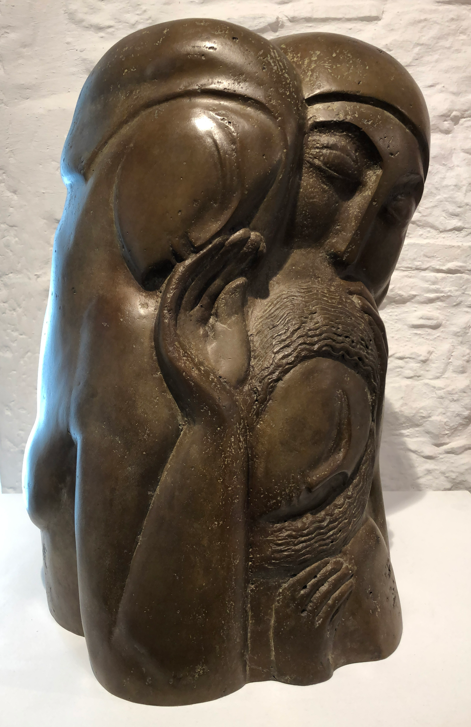
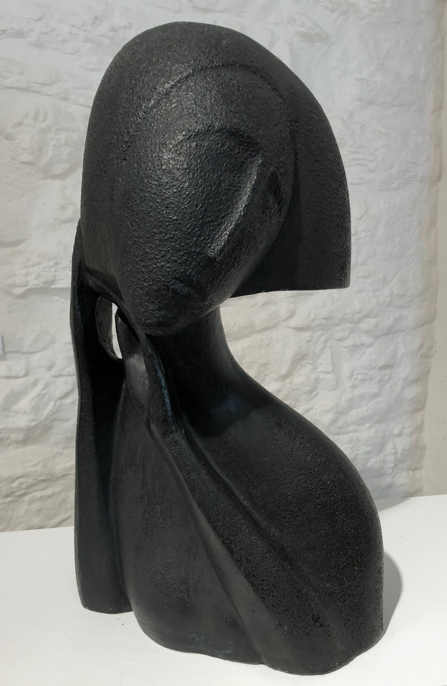
Musée Zadkine in Les Arques, Lot, France, holds a permanent collection of works, mainly sculptures, by the Russian-French artist Ossip Zadkine.

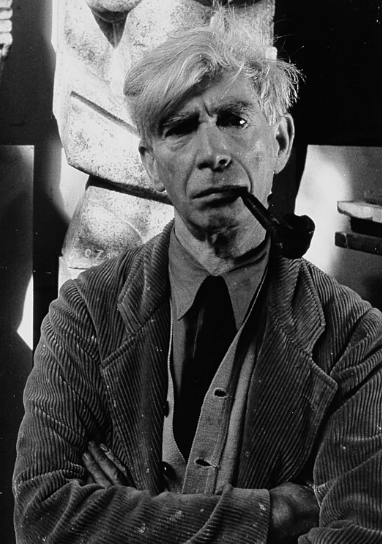
Ossip Zadkine

Ossip Zadkine was born in January 1888 in the city of Vitsebsk in the Russian Empire. Interestingly, at the age of fifteen, he was sent by his father to Sunderland, England, to learn English and ‘good manners’, before moving to London and attending lessons at Regent Street Polytechnic. In 1910 he moved to Paris where he studied for six months at the École des Beaux-Arts. He then joined the Cubist movement, working in that style from 1914 to 1925, before developing his own technique, which was influenced by African and Greek art.

In Paris, Zadkine lived in Montparnasse, where his neighbours included author Henry Miller, who based the character of Borowski in ‘Tropic of Cancer’ on him, and artists Chaïm Soutine and Tsuguharu Foujita.

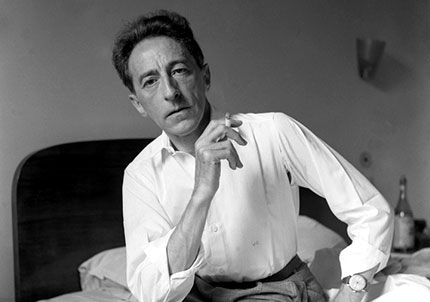
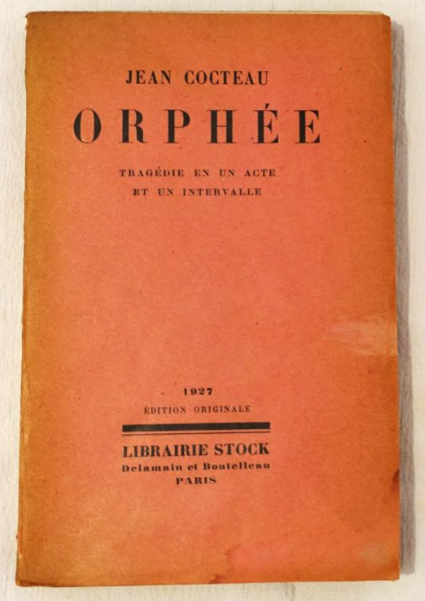
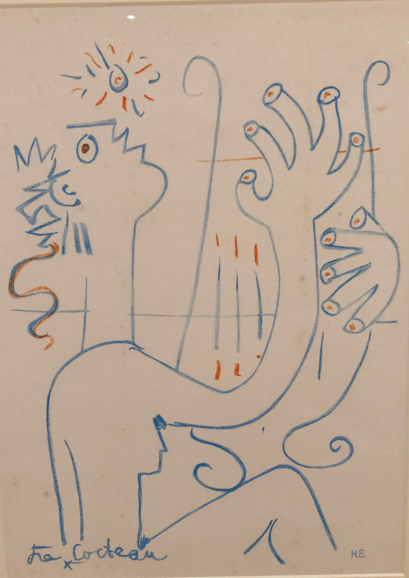
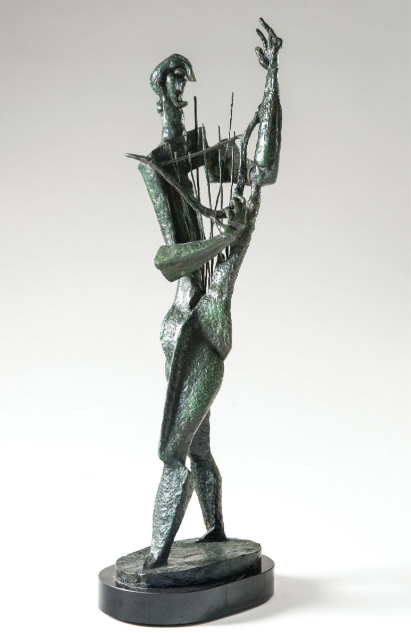
As well as its permanent collection, Musée Zadkine also holds temporary exhibitions, the current one examining Zadkine’s shared interest with Jean Cocteau in the legend of Orpheus. It is likely that their interest in the legendary figure came from their mutual friend, poet Guillaume Apollinaire who published a collection of poems, illustrated by Raoul Dufy, entitled ‘Le Bestiaire ou Cortège d’Orphée’ in 1911. Zadkine made at least ten sculptures of Orpheus, whilst Cocteau adapted the story for the stage in 1926 and used it in two films: ‘Orpheus’ (1950) and ‘Testament of Orpheus’ (1960).

Jean Cocteau

Guillaume Apollinaire (ill. Raoul Dufy) ‘Le Bestiaire ou Cortège d’Orphée’ (1911)

Jean Cocteau ‘Orphée. Tragédie en un acte’ (published 1927)

Jean Cocteau ‘Musicien à la lyre’ (1961)

Ossip Zadkine ‘Orphée’ (1960)

From the permanent collection:

Ossip Zadkine ‘La Sainte Famille’ (1912 – 13)

Ossip Zadkine ‘Buste de femme’ (1914)

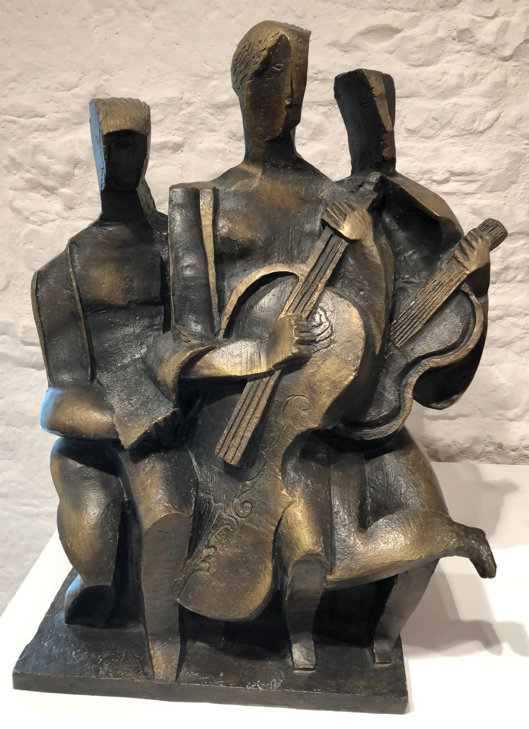
Ossip Zadkine ‘Trio musical’ (1930)

Ossip Zadkine ‘La Prisonnière’ (1943)

Ossip Zadkine ‘Le Retour de Fils prodique’ (1950)

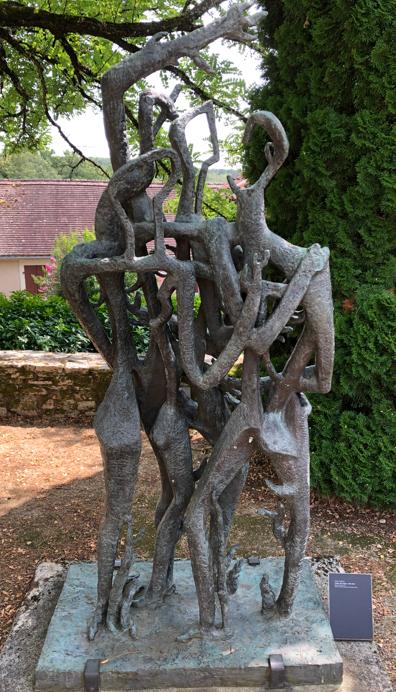
Ossip Zadkine ‘L’Arbre des Grâces’ (1962 – 63)

Exploring the Gers

Spending a few days exploring some of the picturesque towns and villages in the Gers department of south-west France. The Gers is in the centre of the region formerly known as Gascony, once ruled by the English after the marriage of Henry II and Eleanor of Aquitaine in 1152. It is now renowned for its gastronomy and especially for the production of Armagnac.

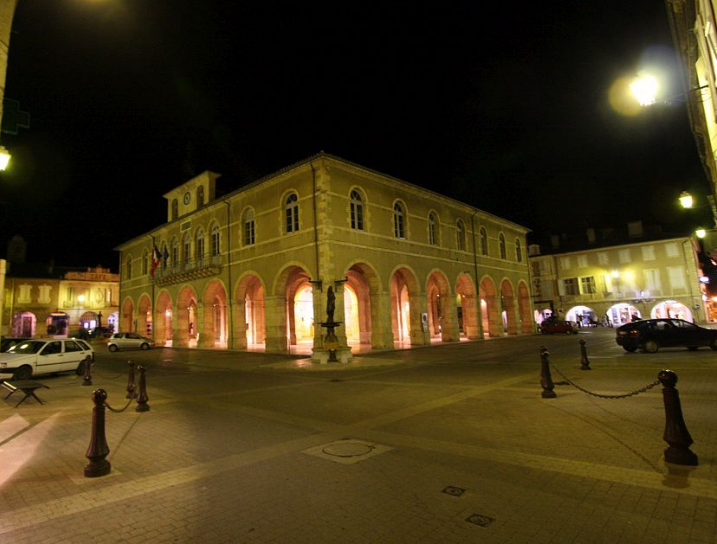
Fleurance was founded as a fortified town in the thirteenth century. It has a central square with arcades and originally had a medieval wooden market hall but this was replaced in the nineteenth century by the present covered stone hall.

Fleurance market hall

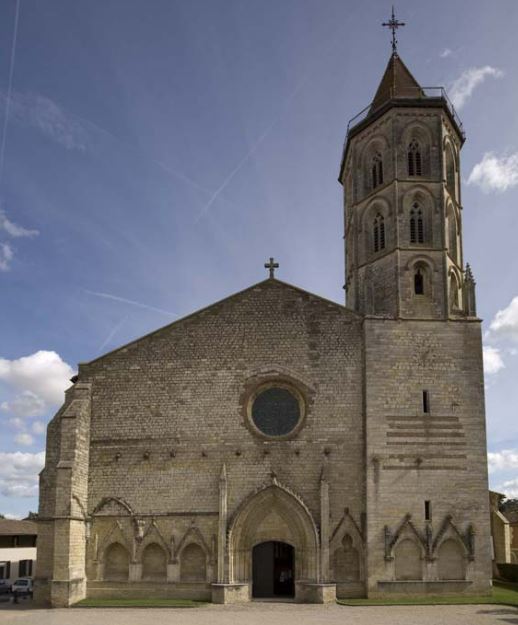
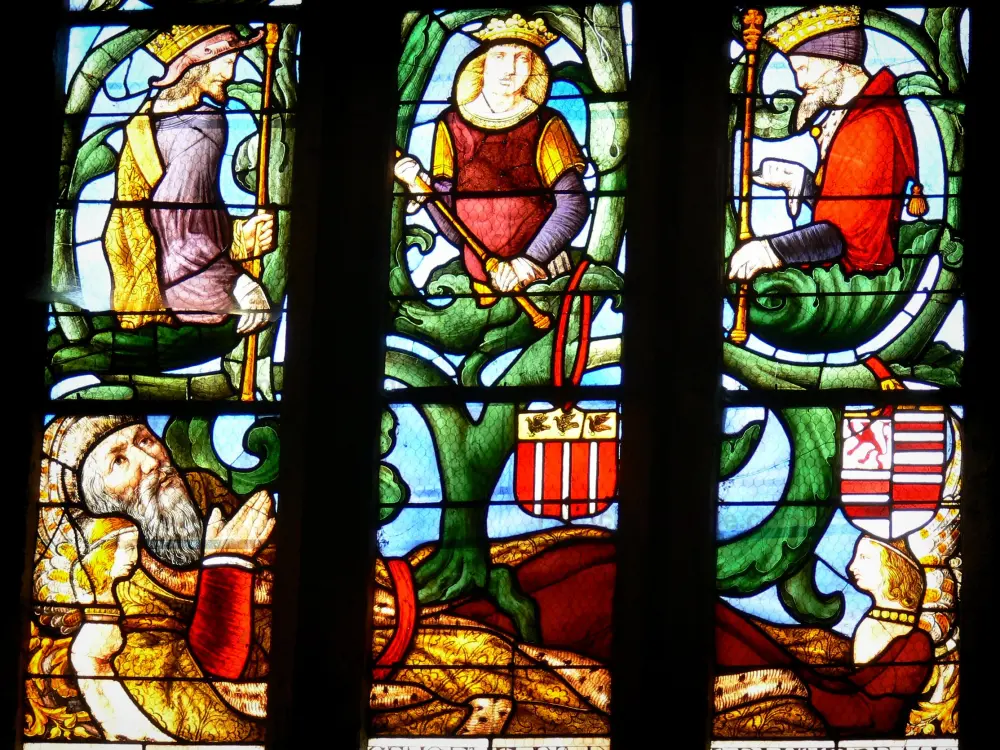
The town’s Church of St. Laurent is in the meridional gothic style with an octagonal bell tower. Its apse has three magnificent Renaissance stained-glass windows dated 1507 – 1513 by Arnaud de Moles. They depict the Holy Trinity, scenes from the lives of saints and the tree of Jesse.

Eglise Saint-Laurent de Fleurance

Detail from ‘Tree of Jesse’ window, Eglise Saint-Laurent de Fleurance

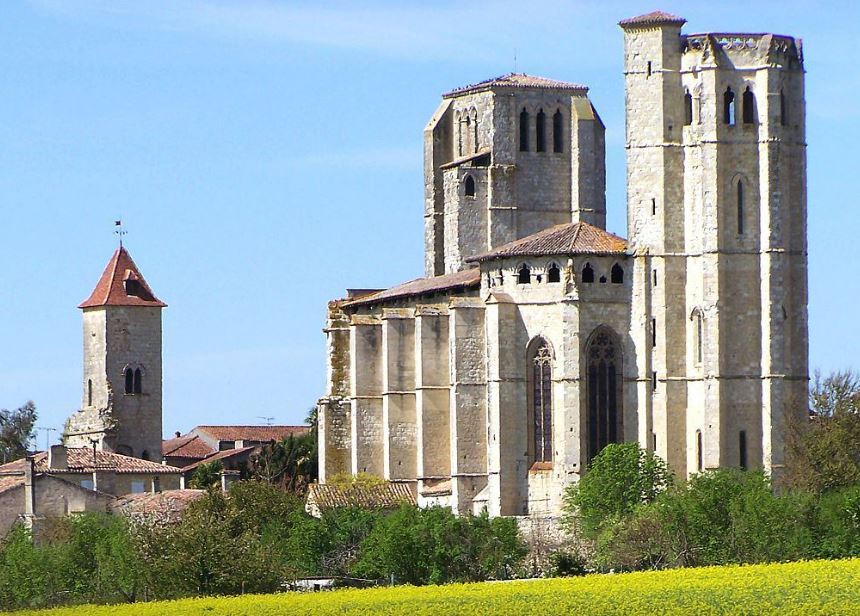
La Romieu is designated as one of Les Plus Beaux Villages de France and its collegiate complex has been classified as a UNESCO World Heritage Site. Its foundation began in 1062 when monks returning from a pilgrimage to Rome and en-route to Santiago de Compostela, settled in the region and founded a priory around which the village grew.

La Romieu

Collégiale Saint-Pierre, La Romieu

Cloître de Collégiale Saint-Pierre, La Romieu

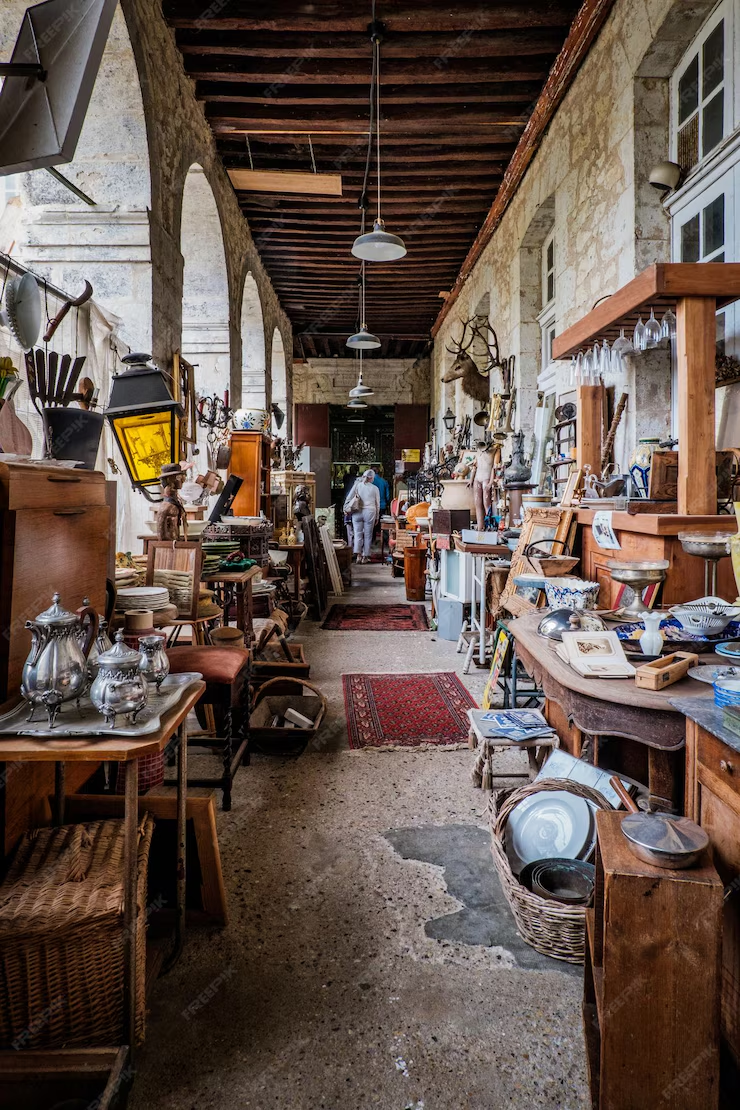
Lectoure is situated at the eastern end of the Armagnac region of the Gers. The town is on the ancient Via Podiensis, classified as a Unesco World Heritage Site as part of the pilgrimage route to Santiago di Compostella. Today it is a busy market town famous for its antiques centre and spa baths..

Cathédrale Saint-Gervais – Saint-Protais and the town of Lectoure

Antiques arcade in Lectoure

Larressingle

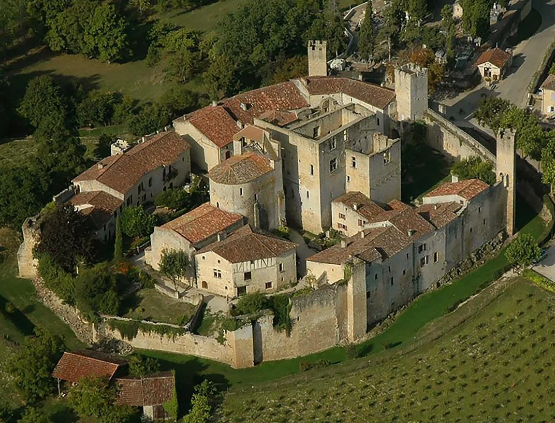
Larressingle is the smallest fortified village in France and is designated as one of Les Plus Beaux Villages de France. The fortifications and chateau were built in the thirteenth century and it once had a population of three hundred, but now there are just a few inhabitants within the inner fortified village.

The church of Saint Sigismund was built before the village and dates to the twelfth century. It is unusual in that the entrance is on the first floor to deter invaders. The chateau, now privately owned, was the residence of the Bishops of Condom in the thirteenth century. After the French Revolution the village was abandoned and only rediscovered in 1920, since when there has been much restoration work.

The fortified village of Larressingle

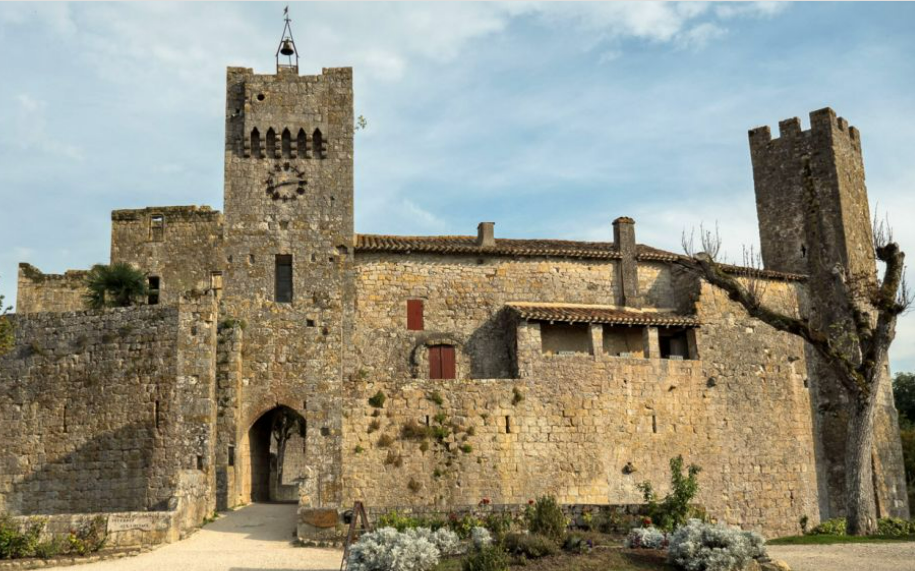
The entrance to Larressingle

Condom

The market town of Condom is a sub-prefecture of the Gers department and is now mainly known for the production and distribution of Armagnac.

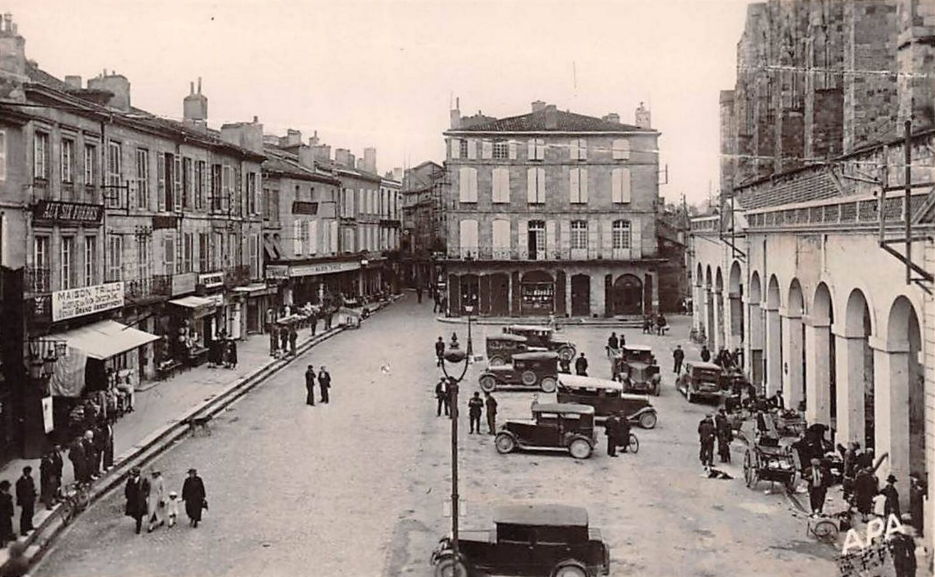
Place Verdun (now Place Saint-Pierre) Condom (1947)

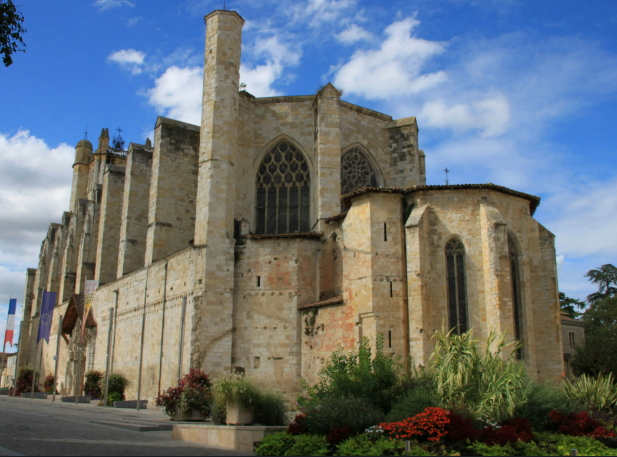
Cathédrale Saint-Pierre de Condom

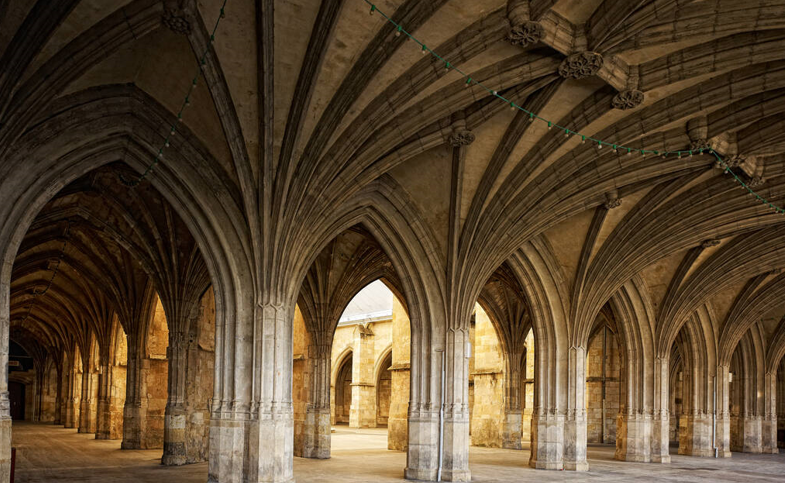
The town’s cathedral, the second to occupy the site, was built between 1506 and 1531, then substantially rebuilt in the following century, mostly in the gothic meridional style.The tympanum above the west door has a central figure of Christ surrounded by the symbols of the four Evangelists. The cathedral cloister, which is also in the gothic style, has a series of impressive pointed stone arches.

Tympanum above the west portal of Cathédrale Saint-Pierre de Condom

Cloître de Condom

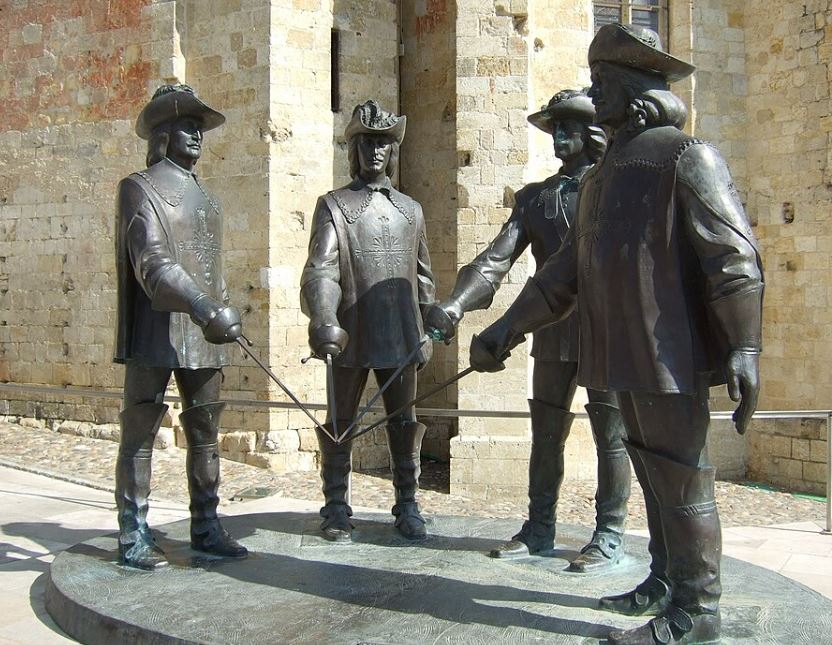
D’Artagnan and the Three Musketeers, Place Saint-Pierre, Condom
R.I.P. John Mayall (1933 – 2024)

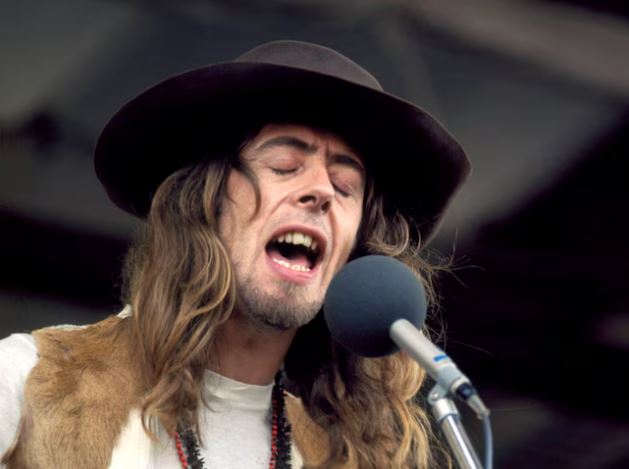
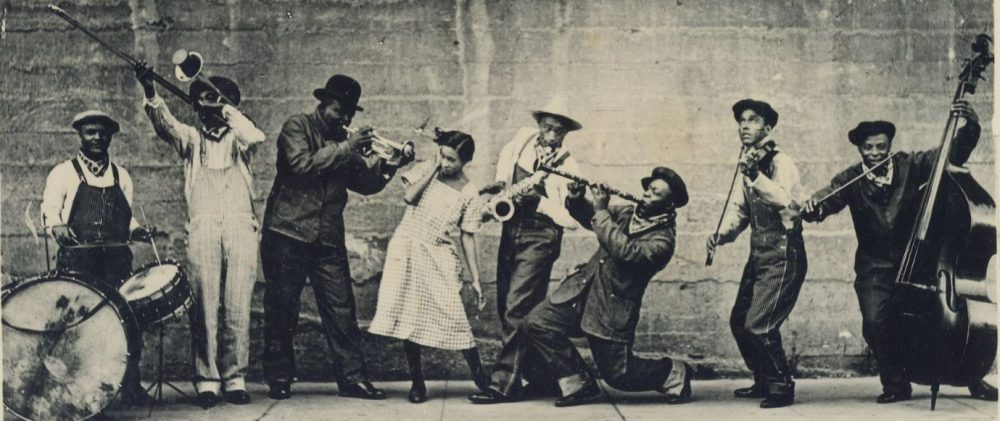
John Mayall at Newport Jazz Festival, 1966

John Mayall, known as the ‘godfather of British Blues’, died at his home in California on 22 July 2024, aged 90.

He formed his band, the Bluesbreakers, in the early 1960s and it became a platform for the development of many great musicians, including Eric Clapton, John McVie, Peter Green, Jack Bruce and Mick Taylor. He was a wonderful musician and bandleader and I have very happy memories of seeing him perform.

Postcards from Carcassonne

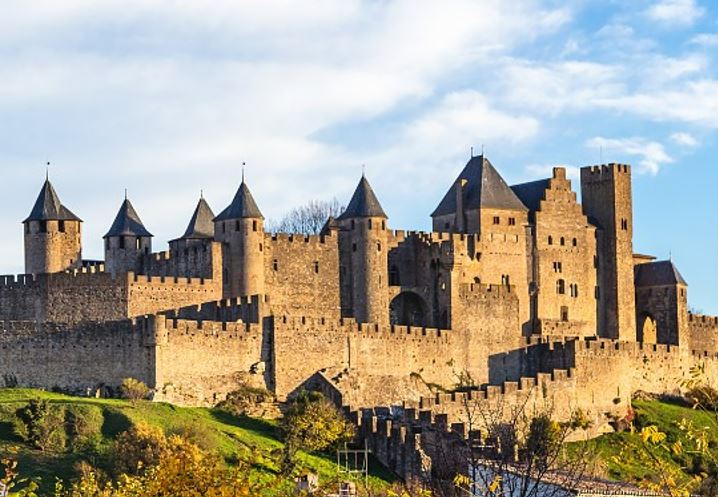
The citadel of Carcassonne in the Aude department of southern France is one of the largest surviving medieval walled cities in Europe and is listed as a UNESCO World Heritage Site. A fortified settlement has existed on the site since pre-Roman times, although in the fifth century the site was taken over by the Visigoths, who founded the current city as part of the newly-established Visigothic Kingdom.

Carcassonne was a stronghold of the Occitan Cathars during the Albigensian Crusades of the early thirteenth century but in 1209 its citizens were forced to surrender and the city submitted to the rule of the kingdom of France in 1247. It became a border fortress between France and the Crown of Aragon in 1258 and and King Louis IX and his successor Philip III built the city’s outer ramparts.

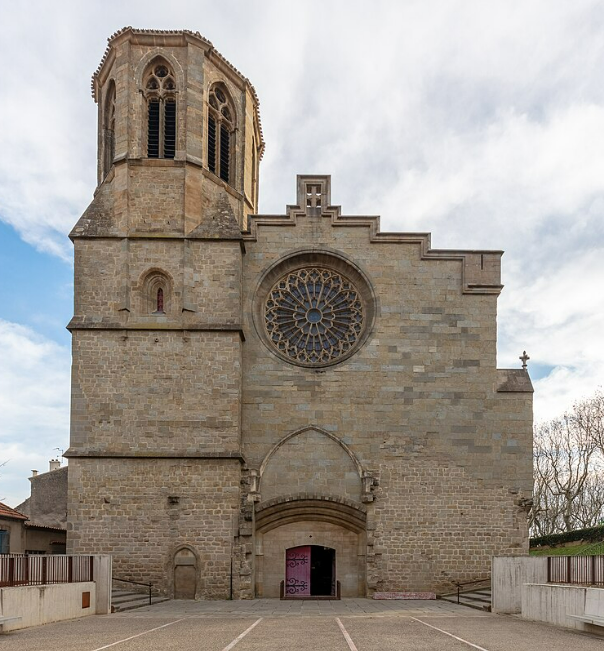
The city’s Gothic Cathédrale Saint-Michel de Carcassonne also dates from the thirteenth century, although following war damage in the fourteenth century it was rebuilt as a fortified church. It was elevated to cathedral status in 1803.

Carcassonne with its double defensive walls.

Cathédrale Saint-Michel de Carcassonne