‘Soutine/De Kooning: Painting Embodied’

A fascinating exhibition at the Musée de l’Orangerie of around fifty paintings by the Russian-born artist Chaïm Soutine, who worked in Paris from 1913 until his tragic death in 1943, and the Dutch-born American Abstract Impressionist, Willem de Kooning.

De Kooning was heavily influence by Soutine after seeing his paintings in the Museum of Modern Art’s 1950 retrospective. The Orangerie exhibition highlights the association between the two artists, showing the influence of Soutine, especially on De Kooning’s ‘Woman’ paintings.

Hill at Ceret by Chaim Soutine | Chaim soutine, Chaim, Ceret

Chaïm Soutine ‘The Hill at Céret’ (1921)

Reproduction painting by Willem De Kooning Amityville 1971

Willem de Kooning ‘Amityville’ (1971)

Chaim Soutine | Portrait of Madeleine Castaing | The Metropolitan Museum of  Art

Chaïm Soutine ‘Portrait of Madeleine Castaing’ (1929)

Woman V, 1953 by Willem de Kooning

Willem de Kooning ‘Woman V’ (1953)

Chaim Soutine (1893-1943)

Chaïm Soutine ‘La Communiante’ (1924)

Willem de Kooning. Woman, II. 1952 | MoMA

Willem de Kooning ‘Woman II’ (1952)

Chaim Soutine (January 13, 1893 — August 9, 1943), Russian painter | World  Biographical Encyclopedia

Chaïm Soutine ‘Le Garçon d’étage’ (1927)

Chaïm Soutine ‘Enfant de choeur’ (1927 – 28)

Fichier:Chaïm Soutine - Le Petit Pâtissier.jpg — Wikipédia

Chaïm Soutine ‘Le petit Pâtissier’ (1922 – 23)

Woman 1953 by Willem de Kooning | Willem de kooning, De kooning, De kooning  paintings

Willem de Kooning ‘Woman’ (1953)

‘Ilya Repin’ at the Petit Palais

Ilya Repin was one of the most-renowned Russian artists of the nineteenth and early twentieth centuries. The exhibition at the Petit Palais in Paris was a major retrospective covering his whole career from paintings completed during his studies at the Saint Petersburg Academy, works displayed as part of the Peredvizhniki group and his portraits of himself, his family and major Russian composers and writers.

Ilya Repin ‘Preparation for the Examination’ (1864)

Ilya Repin ‘Barge Haulers on the Volga’ (1870 – 73)

Ilya Repin ‘Religious Procession in the Province of Koursk’ (1881 – 83)

File:Sadko.jpg

Ilya Repin ‘Sadko in the Underwater Kingdom’ (1876)

Self-Portrait, 1887 - Ilya Repin - WikiArt.org

Ilya Repin ‘Self-Portrait’ (1887)

Ilya Repin ‘Portrait of Yuri Repin’ (1882)

Ilya Repin ‘Portrait of Nadia Repin’ (1881)

Ilya Repin ‘Modest Mussorgsky’ (1881)

Ilya Repin ‘Leo Tolstoy’ (1887)

Shostakovich and Stravinsky

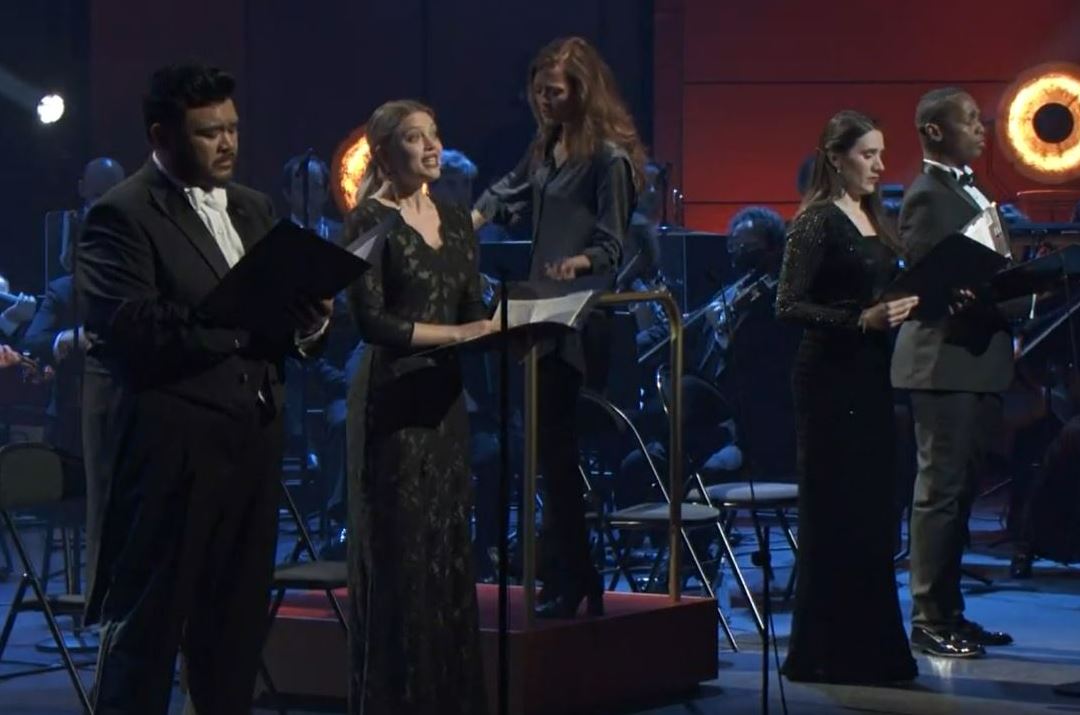
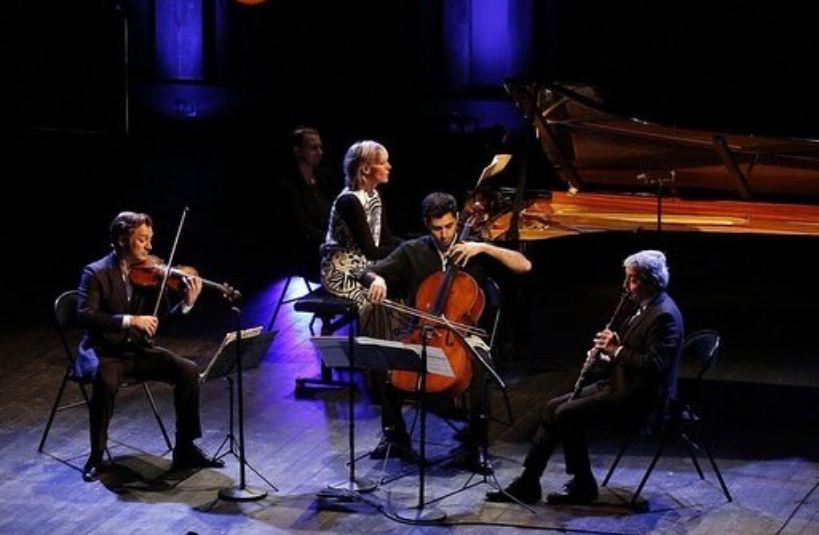
An excellent concert at Maison de la Radio France began with an extremely well-played rendition of Stravinsky’s short classical composition ‘Septet’, with strings, woodwinds and piano all performing superbly. Next was, for me, the highlight of the evening, Karen Gomyo as soloist in Shostakovich’s ‘Concerto for Violin and Orchestra no. 1’. It was an intensive, whirlwind performance that was also sensitive and technically brilliant that deservedly brought endless applause and an encore.

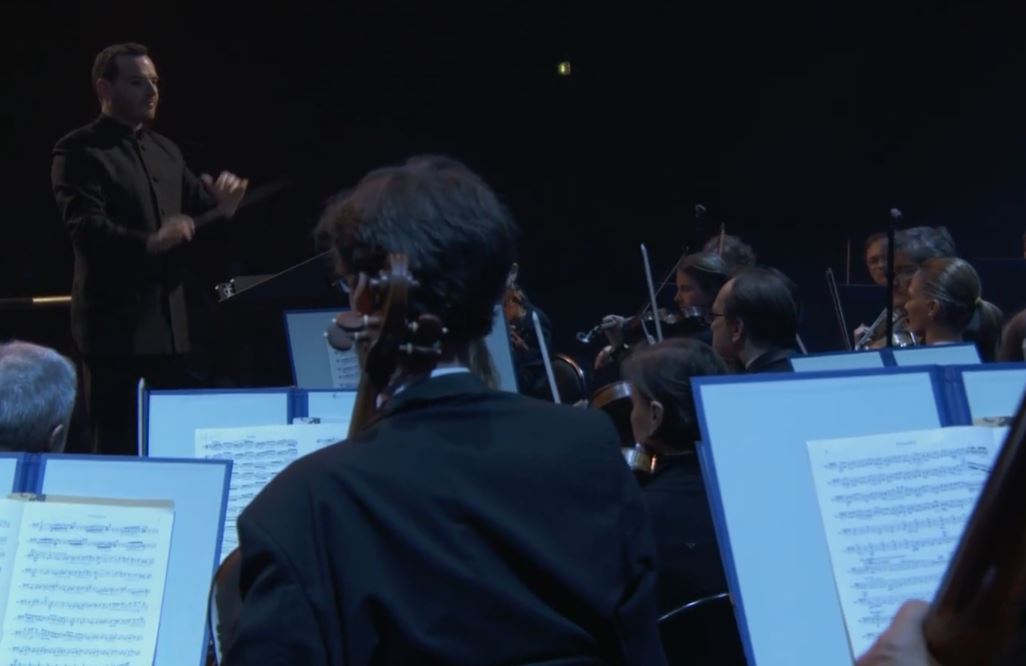
The second half was no less exciting as the Radio France Philharmonique under Mikko Franck performed a magnificent ‘Sacre du Printemps’, with the strings, winds and percussion all on top form. It was a memorable evening.

Karen Gomyo with Mikko Franck and the Orchestre Philharmonique de Radio France

Stravinsky: ‘Septuor’; Shostakovich ‘Concerto for Violin and Orchestra no. 1; Stravinsky ‘Le Sacre du Printemps’ (‘The Rite of Spring’)

‘Chagall, Modigliani, Soutine … Paris as a School, 1905-1940’

The School of Paris was not a school at all but the name subsequently given to the artists, many of whom were Jewish, who mostly came from Eastern Europe and the Russian Empire, arriving in Paris between 1904 and 1914. They included Marc Chagall, Amedeo Modigliani, Chaim Soutine, Jules Pascin, Sonia Delaunay, Jacques Lipchitz, Moïse Kisling and Ossip Zadkine.

The exhibition at the Musée d’art et d’histoire du Judaïsme in the Marias district of Paris is devoted to these artists and their participation in the artistic scene in what was then the capital of modern art.

Exposition "Chagall, Modigliani, Soutine… Paris pour école, 1905-1940"

Sonia Delaunay ‘Philomène’ (1907)

Jules Pascin ‘Portrait of Hermine David’ (1908)

Marc Chagall ‘Le Père’ (1911)

Sonia Delaunay ‘Prismes électriques, no. 41’ (1913 – 14)

Amedeo Modigliani ‘Portrait of Dédie’ (1918)

Chaïm Soutine ‘Garçon d’honneur’ (1924)

Chaïm Soutine ‘Young English Girl’ (1934)

Back in Italy … Siena

After a year and a half of Covid restrictions it is wonderful to be back in Italy at last, especially to be in Tuscany, in Siena, one of my favourite towns. Although I was very much looking forward to some Tuscan gastronomy, the pappardelle al ragù di cinghiale and Brunello di Montalcino had to wait a little while longer as I headed straight to the Museo dell’opera del Duomo in Siena to be reacquainted with Duccio di Buoninsegna’s magnificent ‘Maestà’.

The ‘Maestà’, more properly ‘The Virgin and Christ Child in Majesty with Angels and Saints’, was painted by Duccio and his studio between 1308 and 1311, when it was installed in the Duomo amid great celebrations. A contemporary account records that “on the day [the Maestà] was carried to the Duomo the shops were shut, and the bishop conducted a great and devout company of priests and friars in solemn procession … and they accompanied the said picture up to the Campo, as is the custom, all the bells ringing joyously, out of reverence for so noble a picture.”

The altarpiece was two sided, although it was later sawn into two separate parts so that now the front and back are displayed separately. The front has a large enthroned Madonna and Child with angels and saints, including John the Evangelist, Saint Paul, Catherine of Alexandria, John the Baptist, Saint Peter, Mary Magdalene and Saint Agnes, as well as Siena’s own patron saints. The predella, originally below the main panel, depicts the Childhood of Christ with prophets, whilst the reverse consists of a combined cycle of twenty-six scenes from the Life of the Virgin and the Life of Christ. However, when the altarpiece was dismantled in 1771 some of the panels were damaged and others sold, resulting in many ending up in museums around the world.

Duccio di Buoninsegna ‘Maestà’ (front panel)

Duccio di Buoninsegna ‘Maestà’ (reverse)

Duccio di Buoninsegna ‘Maestà’ (reconstruction)

The Museum’s collection also includes another Duccio, the ‘Madonna di Crevole’, from the parish church of Santa Cecilia in Crevole, and Pietro Lorenzetti’s masterpiece, ‘Nativity of the Virgin’ from 1342, which originally decorated the altar of St. Sabinus in the Duomo. Other important works in the collection include Giovanni Pisano’s original sculptures from the façade and sides of the Cathedral.

Duccio di Buoninsegna ‘Madonna di Crevole’ (1283 – 84)

Pietro Lorenzetti ‘Nativity of the Virgin’ (1342)

Giovanni Pisano Sculptures from Siena Cathedral

September is a good time to visit Siena Cathedral as it is one of the months during which the ‘pavimenti’, the superb marble mosaic floor, is uncovered.

The central nave of Siena Cathedral

Opposite the Cathedral is the Ospedale Santa Maria della Scala, an enormous medieval hospital complex, built on the Via Francigena to provide shelter and care to pilgrims en route from Northern Europe to Rome. Particularly impressive is the extraordinary ‘Pellegrinaio’ or Pilgrim’s Hall, decorated in the 1340s with frescoes by Lorenzo di Pitro, Domenico di Bartolo and Priamo della Quercia, depicting subjects such as ‘Caring and Healing of the Sick’ and ‘Almsgiving’.

Pelegrinaio, Santa Maria della Scala, Siena

Domenico di Bartolo ‘Care of the Sick’ (1341 – 42)

Domenico di Bartolo ‘Almsgiving’ (1342 – 1343)

Pinacoteca Nazionale di Siena

There is still much debate about the development of early Italian painting. That it was influenced by Byzantine art is not disputed but what happened after the innovations of artists such as Cimabue, Giotto and Duccio is much less clear. In fact, the precise roles of these artists in these innovations is argued about; for example, many art historians now have doubts about the involvement of Giotto at Assisi. These debates will, of course, continue and many of the questions will likely remain unanswered, but this is part of what makes it such an interesting subject. What is unquestionable is that the Pinacoteca Nazionale di Siena is one of the most important art museums in Italy and that it contains a wonderful collection of early Sienese paintings. My visit there was one of the most rewarding of this trip.

The oldest documented work of the Sienese school on display is ‘The Saviour Blessing and Stories of the True Cross’ dated 1215, a tempera and gold painting on wood by the Master of Tressa, who was active in Siena between 1215 and 1240. It was an antependium (in Italian ‘paliottoan’), an ornament that would have been placed on the front of the altar table.

Master of Tressa ‘The Saviour Blessing and Stories of the True Cross’ (1215)

Other thirteenth-century works include Guido da Siena’s dossal, (an ornamental panel hung behind the altar) consisting of three scenes, the Transfiguration, the Entry of Christ into Jerusalem, and the Resurrection of Lazarus, from the 1270s.

Guido di Siena ‘Altarpiece’ (1270s)

From the beginning of the fourteenth century there are works by Duccio and his assistants, including what is known as ‘Polyptych no. 28’ and ‘Madonna of the Franciscans’.

Duccio ‘Polyptych no. 28’ (1300 – 05)

Duccio ‘Madonna of the Franciscans’ (c.1300)

From one of my favourite artists, Simone Martini, there is the excellent ‘Blessed Agostino Novello Altarpiece’, with illustrations of his miracles including saving a child falling from a window and bringing life back to a child who has been savaged by a dog, and the Duccio-influenced ‘Madonna of Mercy from Vertine’.

Simone Martini ‘Blessed Agostino Novello Altarpiece’ (1324)

Simone Martini ‘Madonna of Mercy’ (1308 – 10)

There are several works by the Lorenzetti brothers, Pietro and Ambrogio. From the former there is the beautiful ‘Madonna with Angels between St Nicholas and Prophet Elisha’, whilst from Ambrogio there is the equally delightful ‘Annunciation’, his last known work.

Pietro Lorenzetti ‘Madonna with Angels between St Nicholas and Prophet Elisha’ (1328 – 29)

Ambrogio Lorenzetti ‘Annunciation’ (1344)

Tuscan postcards … 1. Montepulciano

Montepulciano is a medieval hilltop town in the province of Siena. It is surrounded by vineyards and is known for its vino nobile red wine. The main square, the Piazza Grande, contains both the fourteenth-century Palazzo Comunale and the Duomo, which is normally home to an impressive triptych altarpiece, the ‘Assumption of the Virgin’, painted by Taddeo di Bartolo in 1401; however, unfortunately it had been removed for renovation.

Montepulciano

Tuscan postcards … 2. Pienza

Pienza is a UNESCO-listed town in the Val d’Orcia region of central Tuscany. It is known as the first ‘ideal Renaissance town’ and its development was the idea of Enea Silvio Piccolomini, who would later become Pope Pius II. He hired the architect Bernardo Rossellino who used the principles of Renaissance town planning set out by his mentor, Leon Battista Alberti, in his treatise on architecture.

Pienza Cathedral

Tuscan postcards … 3. Montalcino

Montalcino had been under the influence of Siena since the Battle of Montaperti in 1260 and as such became involved in the conflicts between Siena and Florence in the fourteenth and fifteenth centuries. After Siena had been conquered by Florence under the rule of the Medici in 1555, rebels from Siena settled in Montalcino where they held out for almost four years before eventually falling to the Florentines.

Today Montalcino is known for its famous Brunello wine made from the sangiovese grosso grapes grown within the commune. Brunello, which must be aged for at least five years before release, was the first wine to be awarded Denominazione di Origine Controllata e Garantita (DOCG) status.

Montalcino

Fra Angelico and more in Cortona

Although Cortona has an Etruscan background it eventually became a Roman colony before becoming an independent city-state in the thirteenth century. However, after being conquered by Ladislaus, King of Naples, in 1409, Cortona was sold to the Medici in 1411.

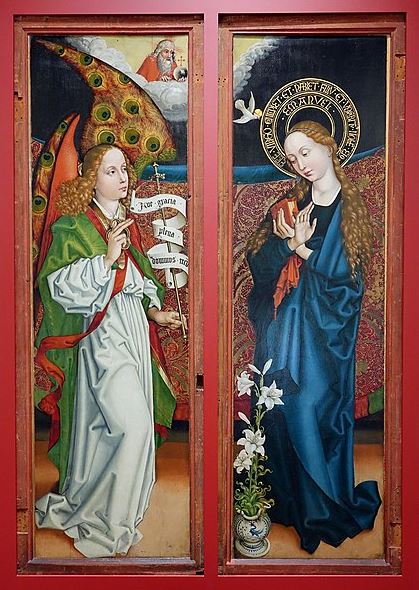
More recently its picturesque, steep narrow streets have provided the backdrop for the film ‘Under the Tuscan Sun’, based on Frances Mayes’ book. However, I was here to see the collection of the town’s Diocesan Museum, especially a most beautiful ‘Annunciation’ by Fra Angelico.

The altarpiece was originally executed for the church of San Domenico in Cortona. Amongst the columns and arches of a loggia, the Angel Gabriel appears to Mary, uttering the words “the Holy Ghost shall come upon thee, and the power of the highest shall overshadow thee”, from the Gospel of Saint Luke. To the left of the loggia, above a delicately painted garden, can be seen a depiction of Adam and Eve being expelled from Paradise.

The predella depicts scenes from the Life of the Virgin, including a ‘Visitation’, which is said to include the first identifiable landscape in Italian art.

Fra Angelico ‘Annunciation’ (1433 – 34)

The Museum’s collection includes a second Fra Angelico, ‘Madonna and Child with Saints’, known as the Cortona Triptych, also painted for the church of San Domenico in Cortona. Its predella depicts scenes from Saint Dominic’s life.

Fra Angelico ‘The Cortona Triptych’ (1436 – 37)

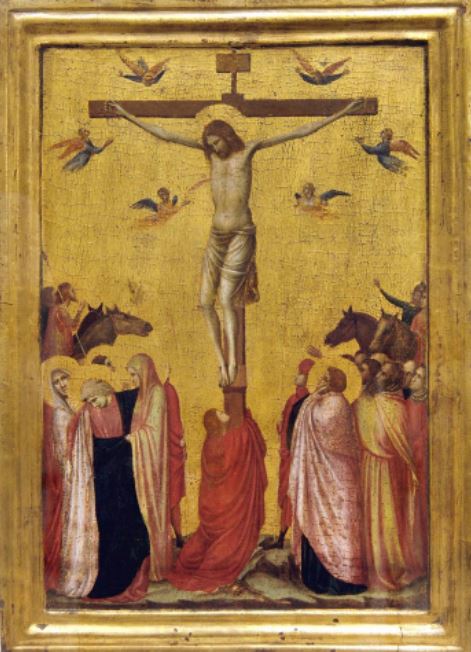
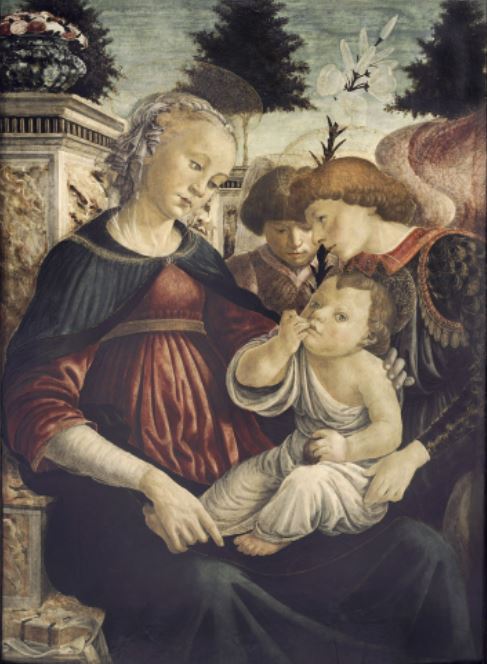
Other works include a ‘Madonna with Child Enthroned and Four Angels’ by Pietro Lorenzetti and a large ‘Crucifix’ by the same artist.
Pietro Lorenzetti ‘Madonna and Child Enthroned and Four Angels’ (c.1320)
Pietro Lorenzetti ‘Crucifix’ (1320s)

Luca Signorelli, best known for his frescoes of the ‘Last Judgment’ in Orvieto Cathedral, was born in Cortona and has his own room in the Museum.

Luca Signorelli ‘Lamentation over the Dead Christ’ (1501 – 02)

Luca Signorelli ‘Communion of the Apostles’ (1512)

Surprisingly, amongst the collection of Renaissance masterpieces is a collection by the Italian Futurist, Gino Severini. However, Severini was born in Cortona in 1883, where his father was a junior court official. After meeting fellow artists Umberto Boccioni and Giacomo Balla he was invited by Filippo Tommaso Marinetti to join the Futurist movement and was a co-signatory, with Balla, Boccioni, Carlo Carrà, and Luigi Russolo, of the ‘Manifesto of the Futurist Painters’ in February 1910.

The Diocesan Museum has an impressive collection of cartoons for Severini’s ‘Stations of the Cross’ mosaics.

Gino Severini cartoon for ‘Stations of the Cross’