‘Vienna – Berlin: Art of Two Cities’ in Vienna

Easter in Vienna for the superb exhibition ‘Vienna – Berlin: Art of Two Cities’ at the Lower Belvedere. The Exhibition starts with the Secession movements of both cities and continues through World War I to the ‘New Objectivity’ of the 1920s, illustrating the connections and differences between the art of the two metropolises.

It was a wonderful opportunity to see art of the Viennese ‘Jugendstil’ alongside examples of German Expressionism from Kirchner, Beckmann, Dix, et al.

Image

Egon Schiele ‘Portrait of the Publisher Eduard Kosmack’ (1910)

Image

Ernst Ludwig Kirchner ‘Women on the Street’ (1915)

Image

George Grosz ‘Daum Marries her pedantic automaton George …’ (1920)

Image

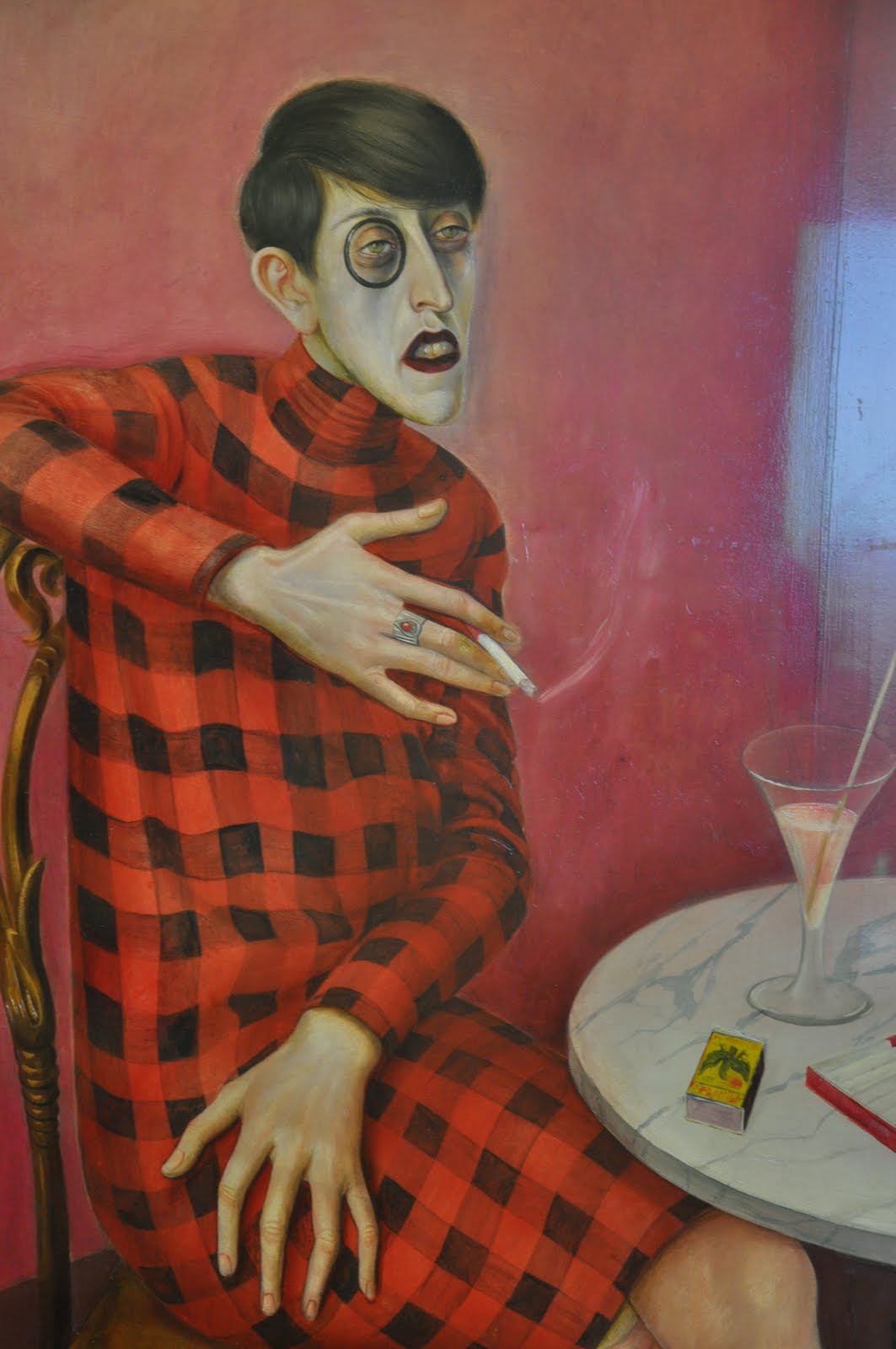
Hannah Hoch ‘The Journalists’ (1925)

Image

Christian Schad ‘Lola’  (1927 – 28)

Image

Jeanne Mammen ‘Music Hall Girls’ (1928 – 29)

‘Gustav Klimt’ at The Belvedere

Also a visit to the Upper Belvedere to look at the permanent collection, especially the wonderful works of Gustav Klimt.

Klimt Kiss

Gustav Klimt ‘The Kiss’ (1907 – 08)

Klimt A

Gustav Klimt ‘Amalie Zuckerkandl’ (1917 – 18)

Klimt The Bride

Gustav Klimt ‘The Bride’ (1917 – 18)

‘The Beethoven Frieze’

It was also a great opportunity to visit the Secession Building to view Klimt’s ‘Beethoven Frieze’, originally painted in 1902 as a decorative frieze for the 14th Vienna Secessionist exhibition.

Image

The Secession Building, Vienna

Image

Gustav Klimt ‘Beethoven Frieze’ (1902)

Image

Gustav Klimt ‘Beethoven Frieze’ (1902)

‘Monet to Picasso’ at The Albertina Museum

The Albertina Museum’s new permanent display under the title ‘Monet to Picasso’ contains an impressive collection of works primarily from the Batliner Collection. The paintings range from Impressionism and Fauvism to German Expressionism, the Bauhaus, and the Russian avant-garde, concluding with works by Picasso.

Image

Amedeo Modigliani ‘Young Woman in a Shirt’ (1918)

Image

Marc Chagall ‘The Kite’ (1926)

 Image

Joan Miro ‘Birds and Insects’ (1938)

Image

Pablo Picasso ‘Sylvette’ (1954)

‘Vienna 1900’ at the Leopold Museum

The Leopold Museum’s collection of art, designs and furniture from Vienna in the early years of the twentieth century has been totally reconfigured under the title ‘Vienna 1900’.  It begins with Vienna’s Art Nouveau movement, the Jugendstil, represented by Gustav Klimt, Koloman Moser and Josef Hoffmann. It then moves through Expressionism to the end of the First World War, with works by Egon Schiele, Oskar Kokoschka  and many others. There are also fascinating examples of Wiener Werkstätte designs for furniture, glass and jewellery .

Image

Art Nouveau furniture

Image

Gustav Klimt ‘Death and Life’ (1910 – 15)

Image

Egon Schiele ‘Reclining Boy – Erich Lederer’ (1913)

Image

Oskar Kokoschka ‘The Croci – Dolomite Landscape’ (1913)

Matisse in Ferrara

In Ferrara for the excellent exhibition ‘Matisse La Figura’ which follows the theme of the figure throughout his career. Henri Matisse (1869 – 1954) was one of the most influential artists of the 20th century and his stylistic innovations altered the course of modern art. .

He was always experimenting, abandoning conventional perspective and form in favour of simplified areas of pure colour, flat shapes and decorative patterns. The figure was important throughout his career despite his stylistic changes. In 1942 Matisse affirmed “the model is the source of my energy”. This exhibition contains over 100 works including sculptures, portraits and other paintings containing figures.

Image

Image

Henri Matisse ‘Seated Nude, Back Turned’ (1917)

Image

Henri Matisse ‘Odalisque with Grey Trousers’ (1926 – 27)

Image

Henri Matisse ‘The Yellow Hat’ (1929)

Image

Henri Matisse ‘Still Life with a Sleeping Woman’ (1940)

Image

Henri Matisse ‘Blue Interior with Two Girls’ (1947)

‘Verso Monet’ in Vicenza

In the beautiful Palladian city of Vicenza for the excellent exhibition ‘Verso Monet’, which showed landscape art from the seventeenth to the early twentieth century. On display were paintings by Canaletto, Courbet, Cézanne, Manet, Renoir, van Gogh and Monet among others. The exhibition was held in the magnificent Basilica Palladiana.

Basilica Palladiana

Basilica Palladiana, Vicenza

Image

Gustave Courbet ‘Waves’ (1869)

Image

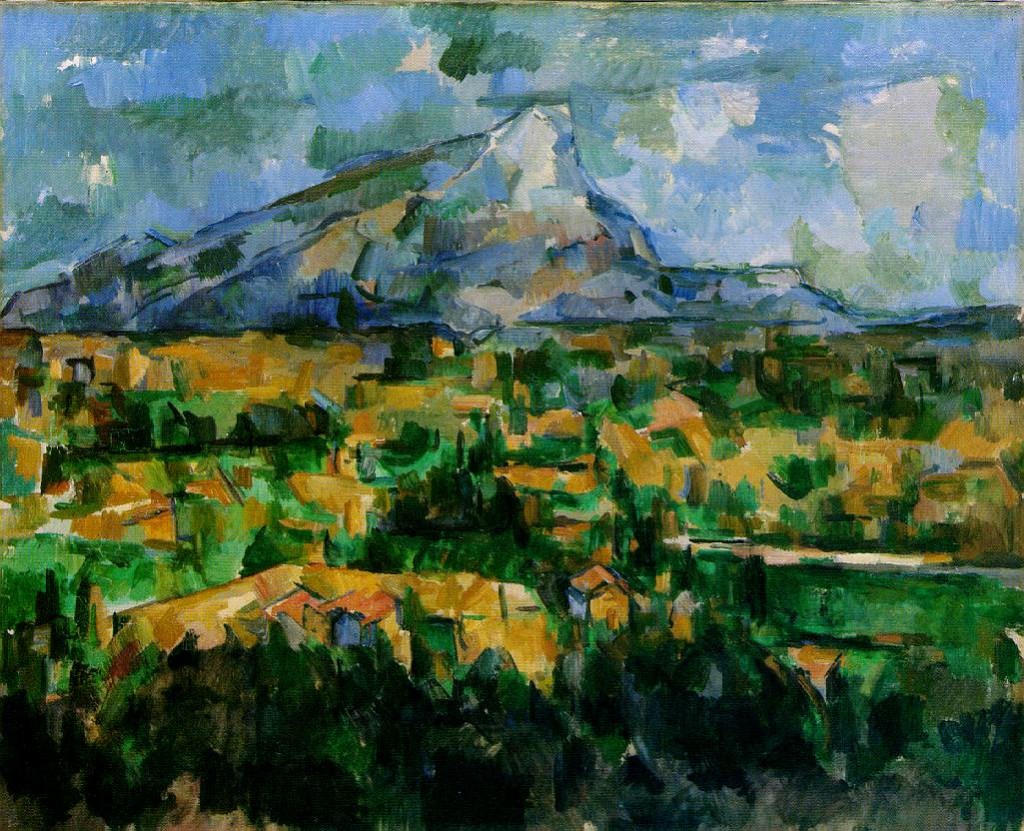
Paul Cézanne ‘Mont Sainte-Victoire’ (1885 – 87)

Image

Claude Monet ”The Sheltered Path’ (1873)

Image

Edouard Manet ‘Boats at Argenteuil’ (1874)

A_Meadow_in_the_Mountains

Vincent van Gogh ‘A Meadow in the Mountains’ (1889)

El Lissitzky, Mario Radice and Fortunato Depero in Rovereto

Museo d’arte Moderna e Contemporaneo di Trento e Roverto was host for exhibitions by two very different artists, El Lissitzky and Mario Radice. El Lissitzky (1890 – 1941) was an influential Russian avant garde painter and designer who helped develop Suprematism, together with his mentor Kazimir Malevich.He also developed a Suprematist style of his own, which he called Proun. His graphic design work influenced both the Bauhaus and the Constructivists. His most famous work is possibly his 1919 propaganda poster Beat the Whites with the Red Wedge. The MART exhibition included paintings, graphic design work, photographs and magazine designs.

Image

El Lissitzky ‘The Constructor’ – self portrait (1924)

Image

El Lissitzky ‘About two squares’ (1922)

Image

The second artist exhibited at MART was the Italian abstract painter and architect Mario Radice (1898 – 1987). He was one of the first Italian artists to change from figurative to abstract art, much of his work then involving geometric shapes.

Image

Mario Radice ‘La Partita di Pallone’ (1933)

Image

Mario Radice ‘Crollo’ (1939 – 42)

Being in Rovereto for these exhibitions meant there was a great opportunity to also visit the house of the Italian Futurist artist Fortunato Depero (1892 – 1960), which holds an extensive collection of his work. Together with Giacomo Ballo, Depero wrote the Futurist manifesto Ricostruzione futurista dell’universo in 1915. Depero founded the ‘Casa d’arte futurista’ in Rovereto in 1919, which specialised in producing furniture, tapestries and toys in the Futurist style.

Image

Shostakovich in Trieste

In Trieste for a very enjoyable performance of Shostakovich’s 7th Symphony – the ‘Leningrad’. Much of it was written during the Nazi’s 872 day siege of the city which resulted in the death of 600,000 people. The score of the symphony was smuggled out of Russia on microfilm so that it could be performed in the west. Tonight’s performance, under Oleg Caetani, was extremely moving.

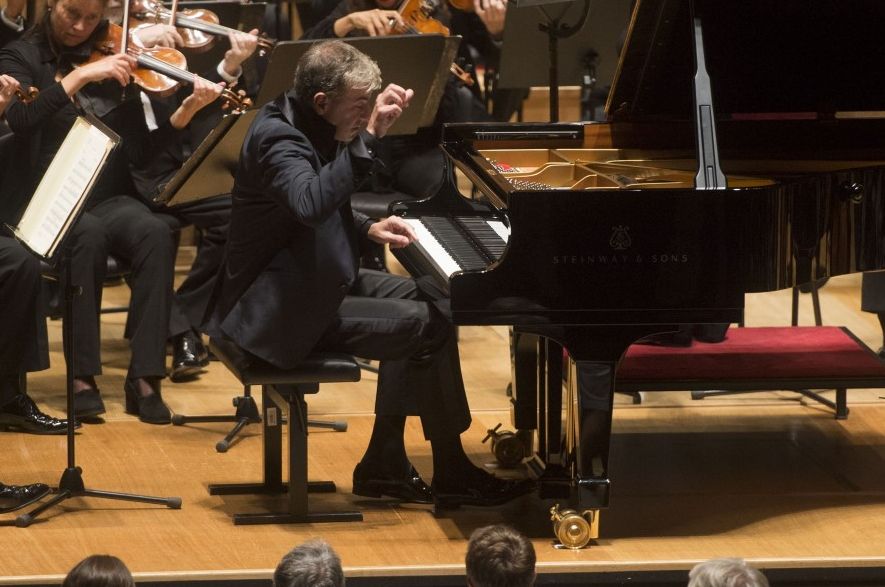
Also on the programme was Tchaikovsky’s Piano Concerto no. 1, expertly played by the young Russian pianist Nikolay Khozyainov. A really enjoyable Russian double bill.

Image

Dmitri Shostakovich

Image

Nikolay Khozyainov

Georges Braque and Félix Vallotton in Paris

At the Grand Palais in Paris for the Georges Braque retrospective. A wonderful exhibition covering the whole of his career from his brief involvement with the Fauves, through his invention of Cubism and its development alongside Pablo Picasso, his later collage works and his final landscapes.

Image

Braque (1882 – 1963) was one of the most important artists of the twentieth century and changed his style throughout his career. His greatest achievement was undoubtedly the development of Cubism together with Pablo Picasso.

Image

Georges Braque ‘Le port de La Ciotat’ (1907)

Image

Georges Braque ‘Grand nu’ (1907 – 8)

Image

Georges Braque ‘Femme à la guitare’ (1913)

Image

Georges Braque ‘Atelier VIII’ (1954 – 55)

Image

Georges Braque ‘L’oiseau noir et l’oiseau blanc’ (1960)

A real bonus was that also at the Grand Palais was an exhibition of the Nabis artist Félix Vallotton (1865 – 1925) – an excellent opportunity to see works from throughout his career.

Image

Image

Félix Vallotton ‘Self Portrait’ (1885)

Image

Félix Vallotton ‘Le Bain turc’ (1907)

Image

Félix Vallotton ‘Le Chapeau violet’ (1907)

Image

Félix Vallotton ‘Orphée dépecé par les Ménades’ (1914)