The Gallo-Roman settlement of Vesunna

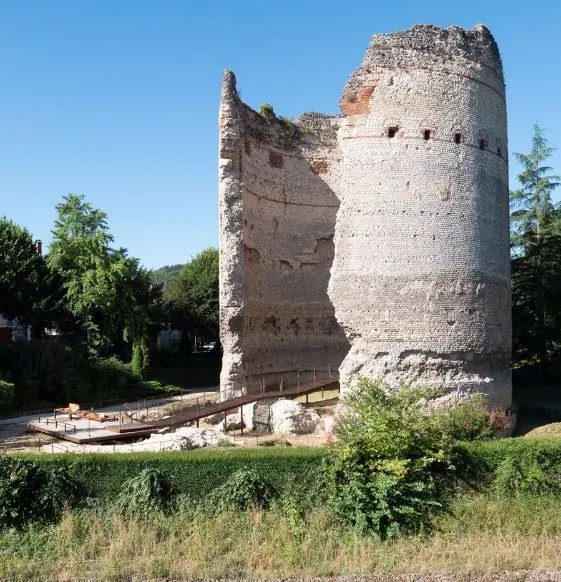
Périgueux was founded around 16 B.C. when the Romans settled in the area near the river Isle and created the town of Vesunna. By around 40 B.C. the town already had a forum and the amphitheatre was under construction. The temple, known today as the Tour de Vésone, dates back to the beginning of the second century. 

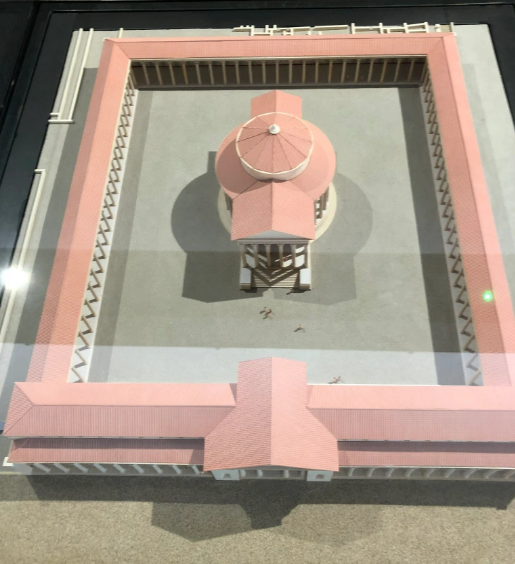
The Vesone domus, the home of a wealthy aristocratic family, was erected in the first century, and its remains were uncovered in 1959 during an archaeological excavation. Since 2003, the site has been housed in a contemporary building, which now forms the Vesunna Museum.

Domus base, Vesunna Museum, Périgueux

Model of the original domus construction

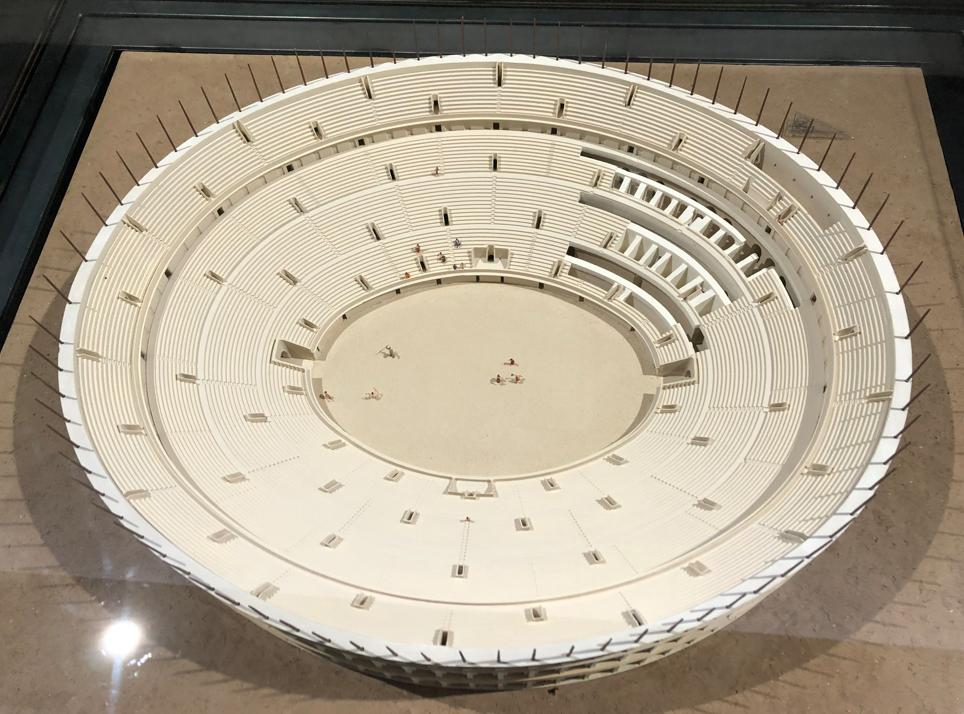
The Vesunna amphitheatre was one of the largest in Gaul at 140 metres x 116 metres, a similar size to those in Arles and Nimes. It seated approximately 20,000 spectators. Illustrations discovered at the site show gladiators fighting in the arena.

Model of the amphitheatre

Columns decorated with a seascape frieze and a collection of weaponry (2nd century)

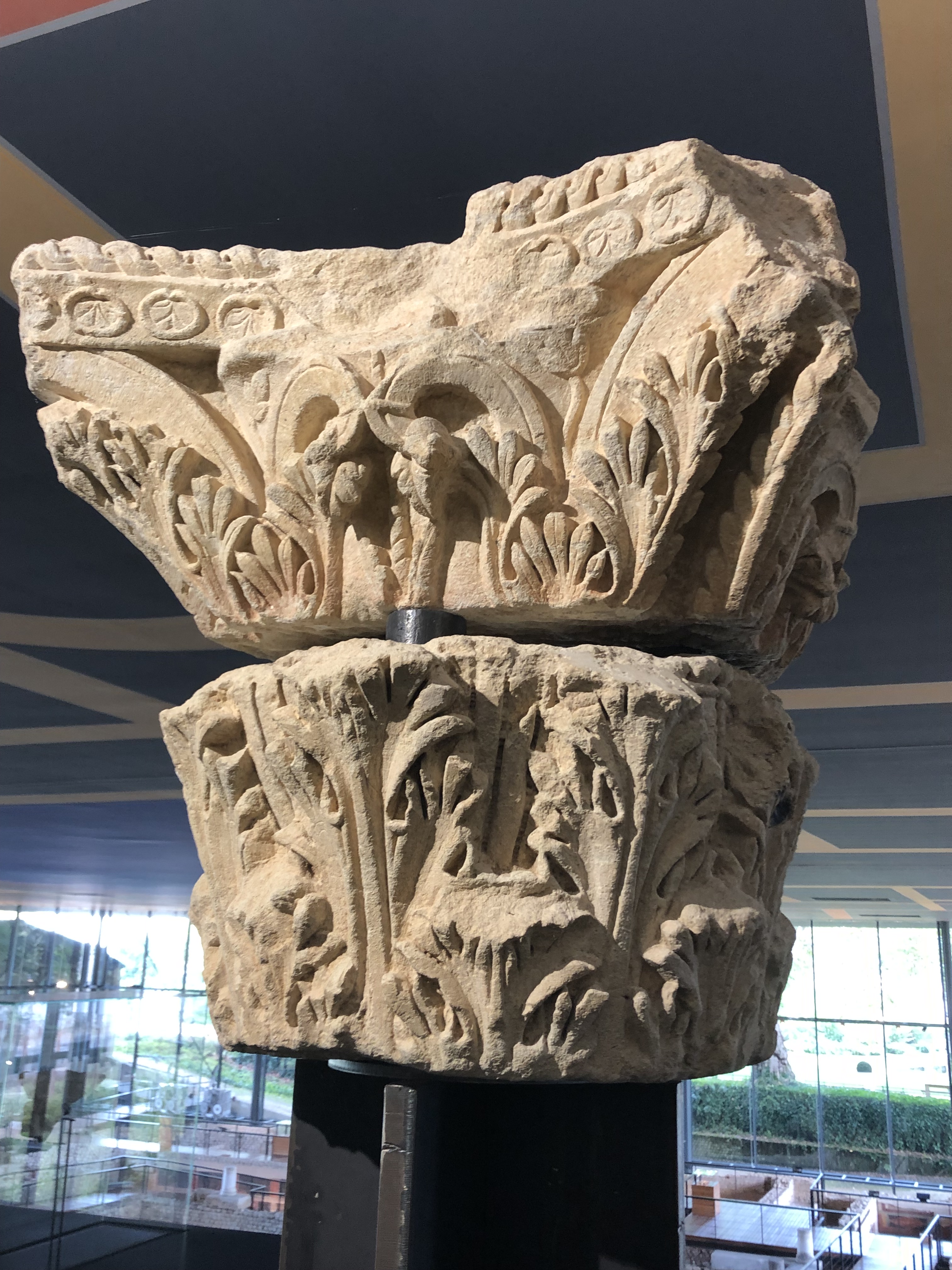
Corinthian capital (2nd century)

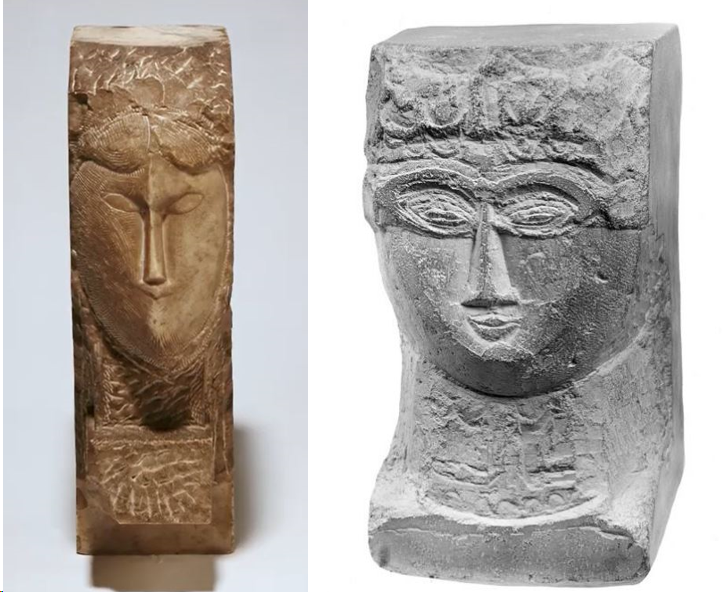
Heads of Bacchus and a mother-goddess

Tour de Vésone (2nd century)

Périgueux

A visit to the fascinating city of Périgueux, capital of the Dordogne department in France, where there is much to explore.

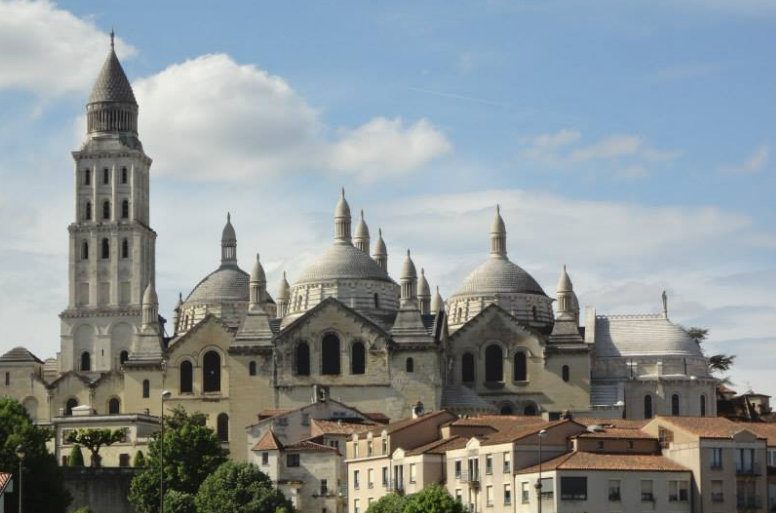
The cathedral of Saint Front was built around 1120. The site originally had a church, built by Bishop Chronope between 500 and 536, before becoming an abbey. In order to accommodate more pilgrims, the abbey was enlarged by the addition of a domed church, claimed to have been modelled on Saint Mark’s Basilica in Venice. It became a cathedral in the sixteenth century, taking its name, Saint Front, from the man who was, according to legend, the first bishop of Périgueux.

It has been classified as a historic monument since 1840 and was made a World Heritage Site in 1998, as part of the routes to Saint-Jacques-de-Compostelle in France. 

Saint Front Cathedral, Perigueux

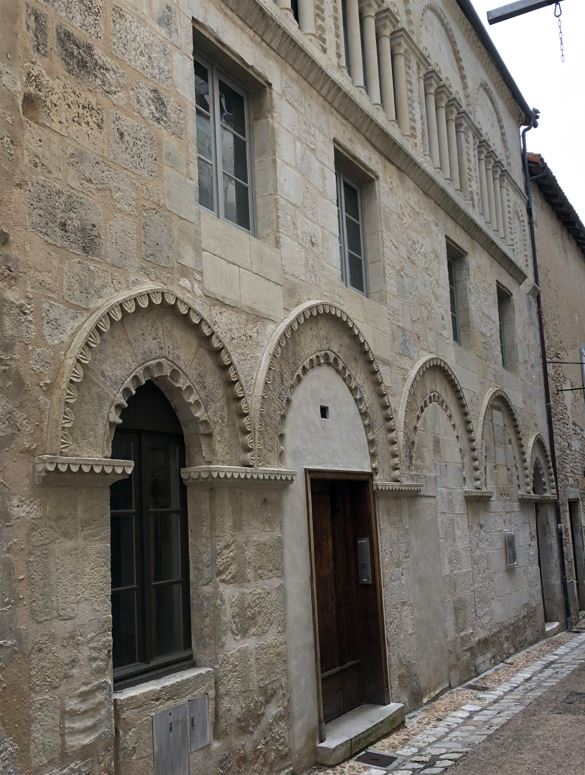
Amongst other religious buildings in the city is the Couvent des Dames de la Foi, which has an interesting Romanesque façade The house was built in the twelfth century and was a private residence before being given in 1680 to the congregation of the Ladies of the Faith which had been introduced to Périgueux in 1670. They established a convent there, intended for the conversion of young Protestant women.

The Romanesque façade of the Couvent des Dames de la Foi, Périgueux

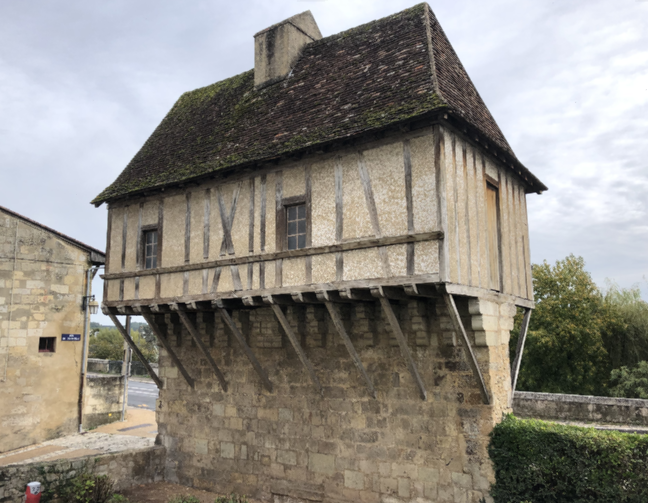
Another fascinating building in the city is the Eschif, which was built in 1347 as a lookout post to allow surveillance of the Tournepiche bridge. It was built on the now-demolished ramparts of Puy-Saint-Front, the medieval city which corresponds to the historic center of Périgueux.

Eschif, Perigueux

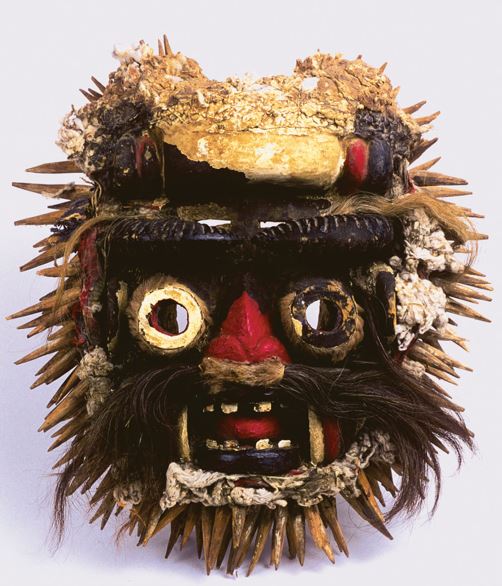
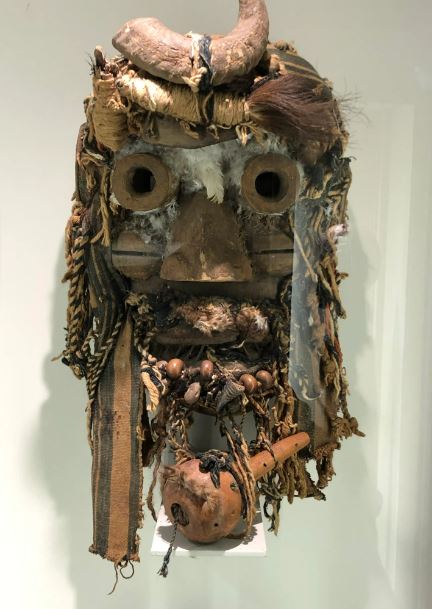
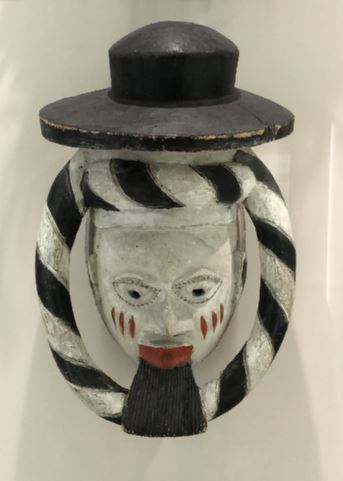
The city’s ‘Musée d’art et d’archéologie du Périgord‘ has an interesting collection of African and Oceanic art and artifacts.

‘Warrior’s mask’ (Ivory Coast, early 20th century)

Sacred mask (Ivory Coast)

‘Gelede mask’ (Nago-Yoruba, Benin, late 19th century)

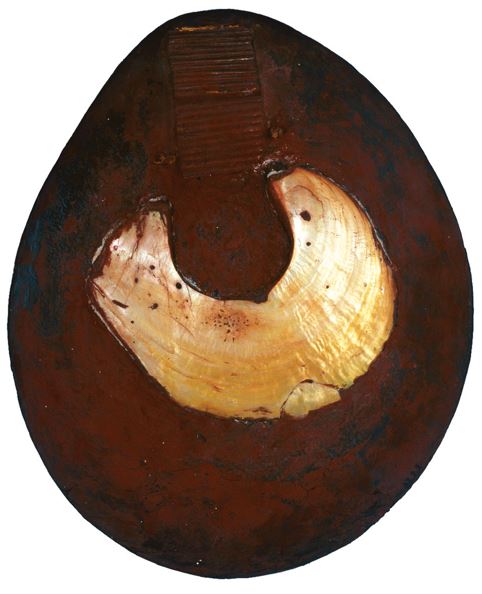
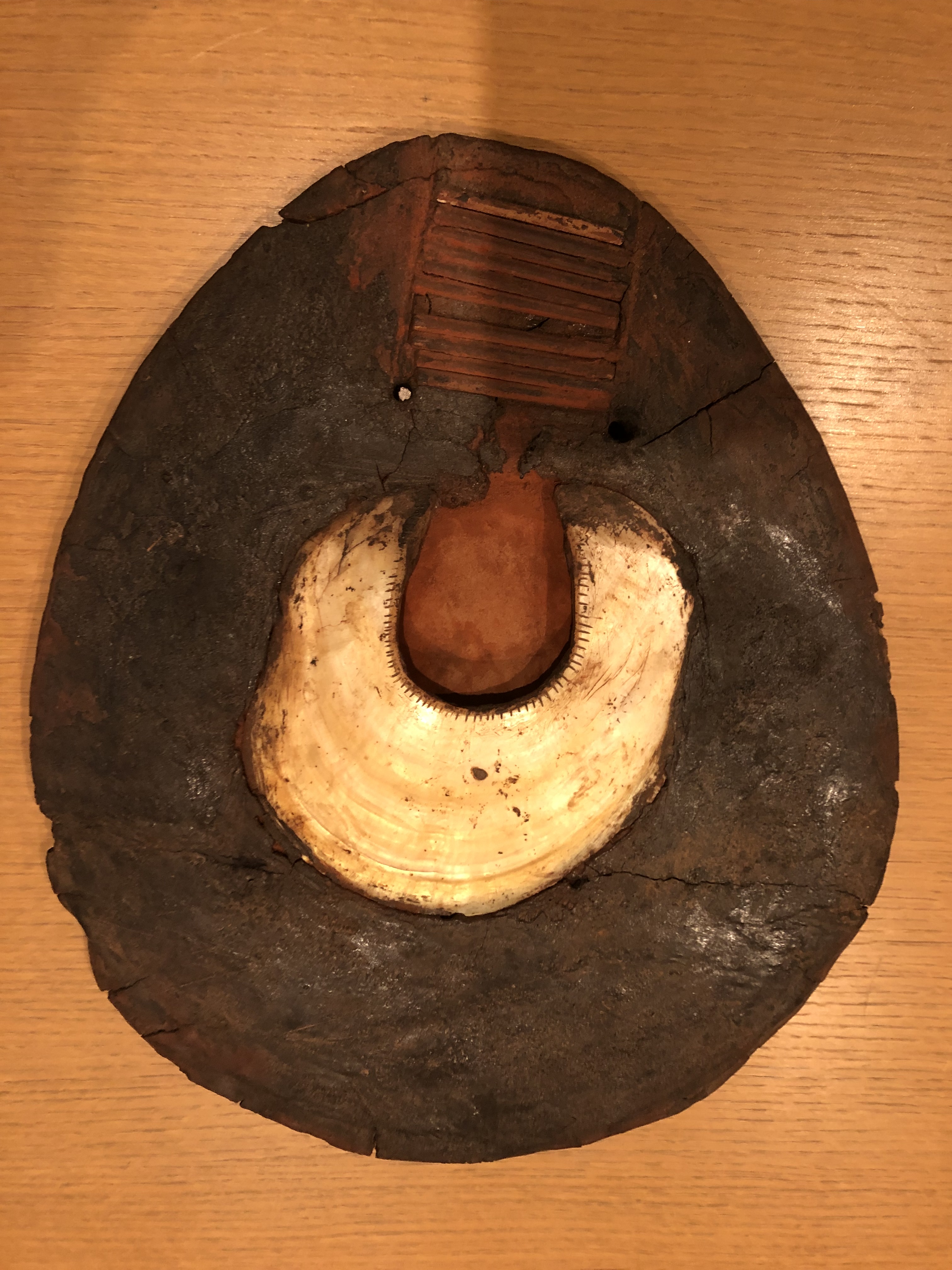
I was particularly interested to see this ceremonial breastplate used in a ‘mokka’ ceremony in the Mendi region of the Western Highlands in Papua New Guinea, as I have my own example that I bought from the Bishop Museum in Hawaii when I was there in 1987.

‘Mokka’ breastplate, purchased in Ohahu, Hawaii, 1987

Baroque concerti in Les Arques

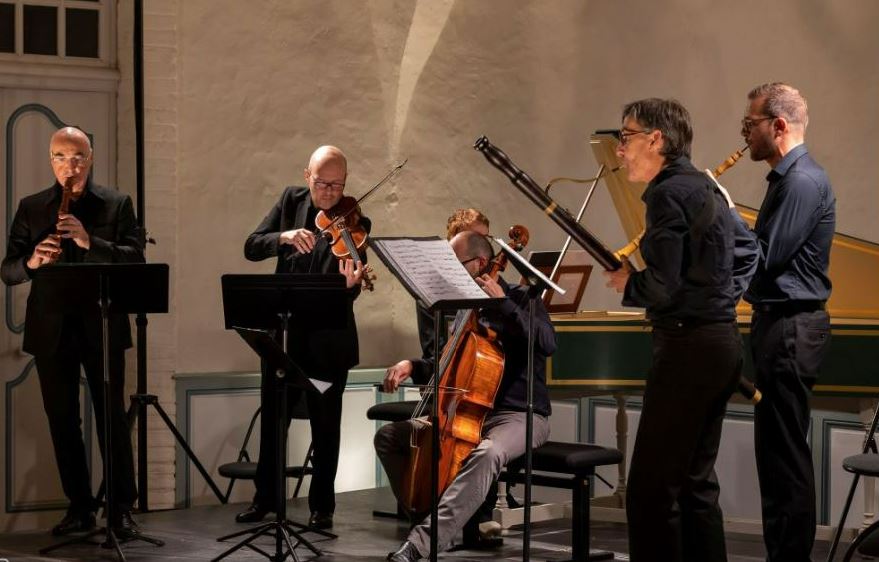
Back in the Lot department, this time at the twelfth-century Eglise Saint-Laurent in Les Arques, and, for the second time recently, a concert by ‘Les Passions’, the Orchestre Baroque de Montauban. On this occasion, soloists from the orchestra provided a very enjoyable evening of Baroque concerti.

Orchestra leader Jean-Marc Andrieu, playing recorder, was accompanied by Flavio Losco, violin, Xavier Miquel, oboe, Etienne Mangot, cello, Laurent Le Chenadec, bassoon, and Yvan Garcia on harpsichord.

Jean-Marc Andrieu (left) with soloists from Les Passions

The concert began with two works by French composer Joseph Bodin de Boismortier: ‘Concerto in E minor for recorder, oboe, bassoon, violin and basso continuo’, and ‘Concerto in D major for cello, strings and basso continuo’. Both were new to me; they were very well performed and they provided a pleasant start to the evening.

They were followed by the ‘Chaconne’ by Henry Purcell from his semi-opera ‘King Arthur’ which was played with great enthusiasm and energy. Johann Christian Bach’s ‘Quintet in D major’ was also very well performed, especially by the recorder and oboe sharing the treble part. Excellent playing from the harpsichord ensured an extremely entertaining interpretation.

The concert really came to life with Telemann’s ‘Concerto in A minor’, with flamboyant playing from all, especially from the violin in the ‘vivace’ fourth movement – a very lively and joyful performance. The evening finished with Vivaldi’s ‘Concerto in G minor’ which was perfectly executed, especially by the oboe and bassoon, which were both played with great vituosity.

Joseph Bodin de Boismortier: ‘Concerto in E minor for recorder, oboe, bassoon, violin and basso continuo’, opus 37 no. 6
Joseph Bodin de Boismortier: ‘Concerto in D major for cello, strings and basso continuo’
Henry Purcell : ‘Chaconne’, from King Arthur
Johann Christian Bach: ‘Quintet in D major for recorder, violin, oboe, cello and obbligato harpsichord’, opus 22 no. 1, W B76
Georg Philipp Telemann: ‘Concerto in A minor for flute recorder, oboe, bassoon, violin and basso continuo’
Antonio Vivaldi: ‘Concerto in G minor for recorder, oboe, bassoon, violin and basso continuo’, RV107

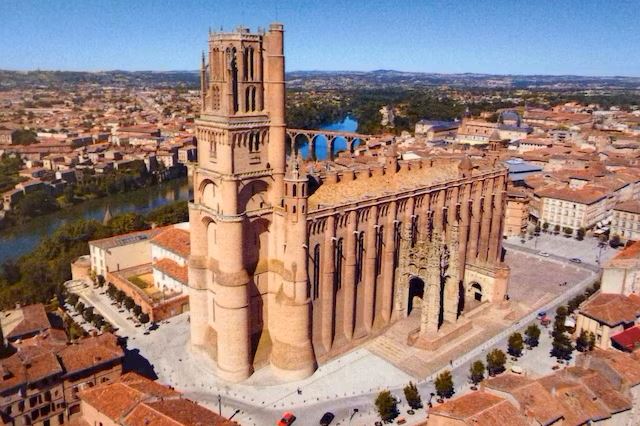
The Cathedral Basilica of Saint Cecilia, Albi

In Albi, in the Tarn region of southern France, where the Cathedral is claimed to be the largest brick building in the world. It was designated a UNESCO World Heritage Site in 2010. Whilst it has quite an austere exterior, the inside is richly decorated with frescoes and sculpures in the Southern French Gothic style (gothique méridional), which arose in the early thirteenth century following the victory of the Catholic Church over the Cathars. The main part of the cathedral was constructed between 1282 and 1300, with the 78 metre tall bell tower being added between 1355 and 1366. Much of the interior decoration was completed in the fifteenth century.

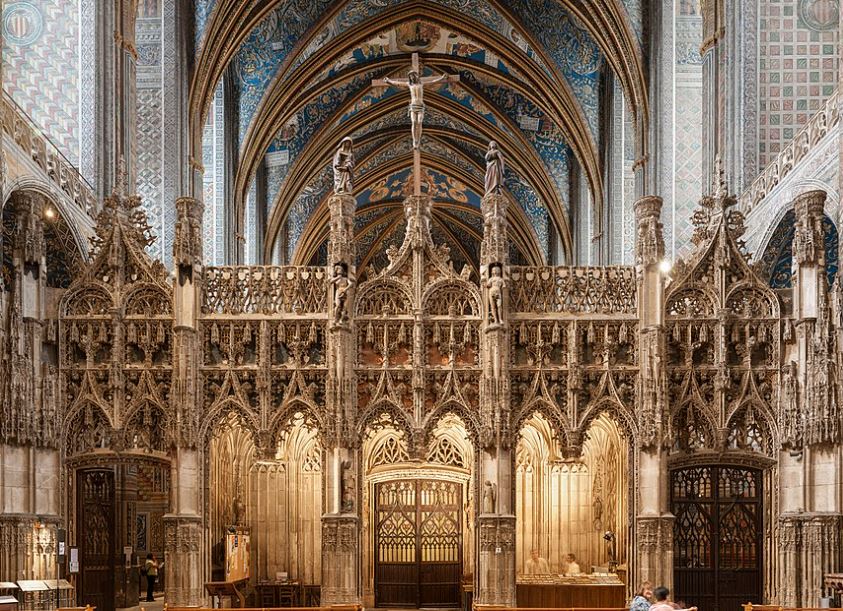
The rood screen, which separates the chancel and the nave, was made of filigree stone between 1474 and 1483. It is highly ornamental and surrounds the entire choir. Whilst it was threatened with destruction during the French Revolution and many of the statues on its outer face were smashed, fortunately the screen itself survived.

The fifteenth-century rood screen

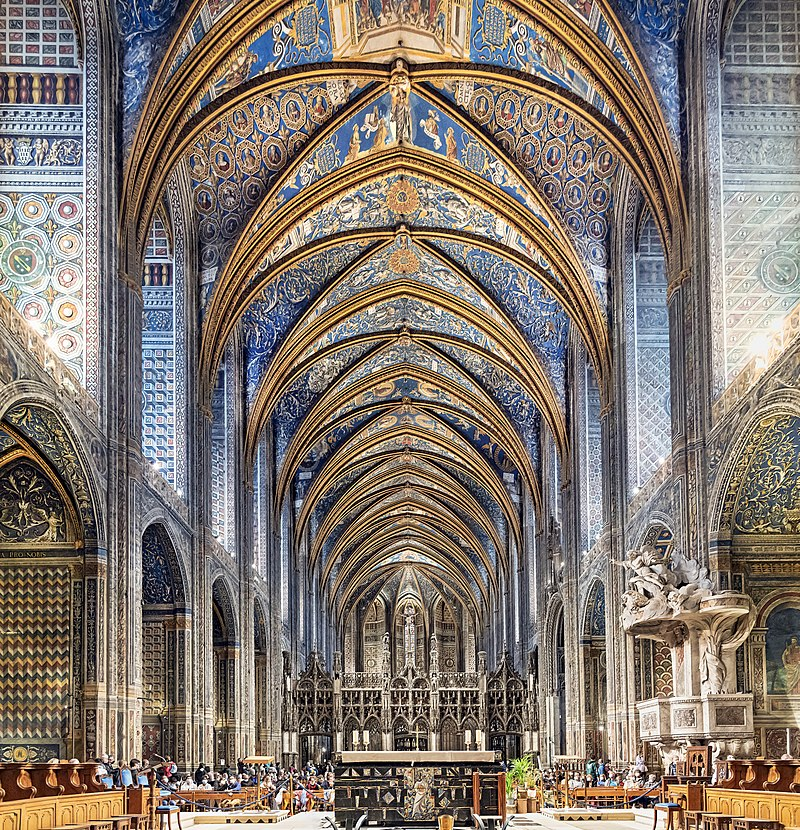
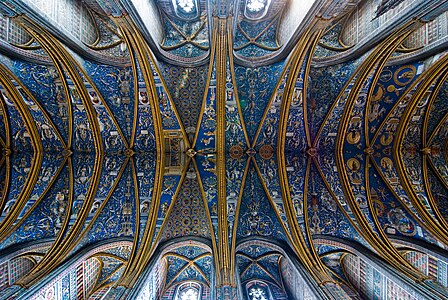
The nave is 97 metres long, 30 metres high, and 19 metres wide and its walls and vaults are entirely covered with decoration.

The nave with its decorated vaults

The vaults of the choir

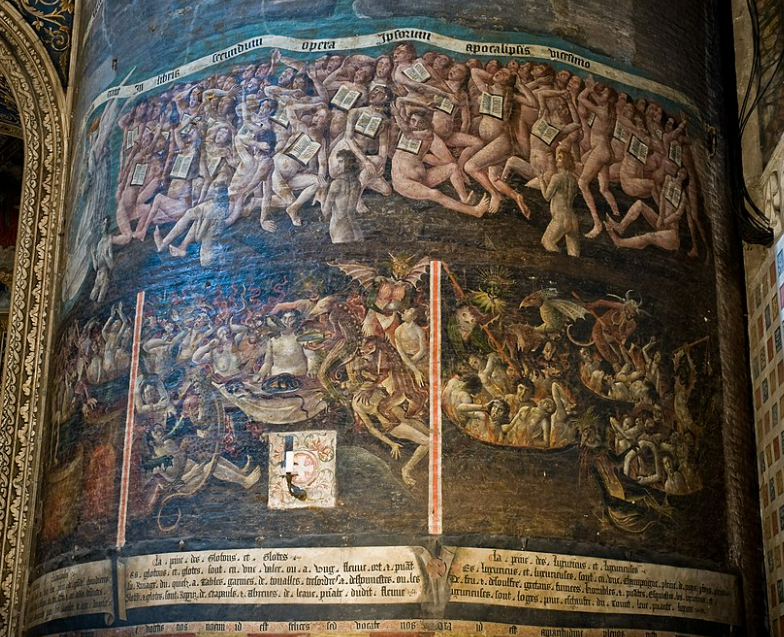
The mural of the ‘Last Judgement’ on the interior of the western front was painted at the end of the fifteenth century. Most of it is now in two parts as some of the central figures, including Christ and Archangel Michael, were removed in 1693 to make a doorway into the Chapel of Saint Clair. The upper part of the fresco depicts sinners awaiting judgement, whilst below are the torments of those condemned.

‘Last Judgement’ fresco (Fifteenth century)

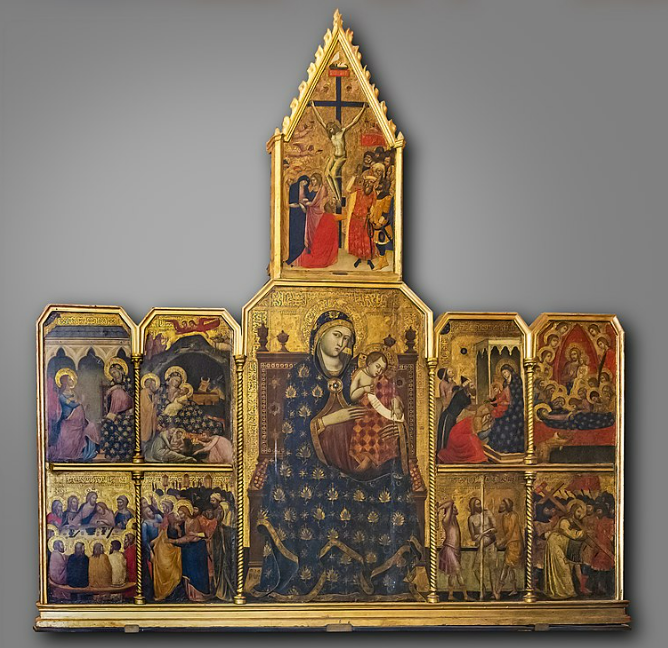
The Treasury is a vaulted chamber attached to the ambulatory on the north side of the cathedral. It was constructed in the late thirteenth century and used to keep precious objects as well as the church archives.

‘Life of the Virgin and Child’ polyptych (Fourteenth century)

Chest containing relics of Saint Ursula (Fourteenth century)

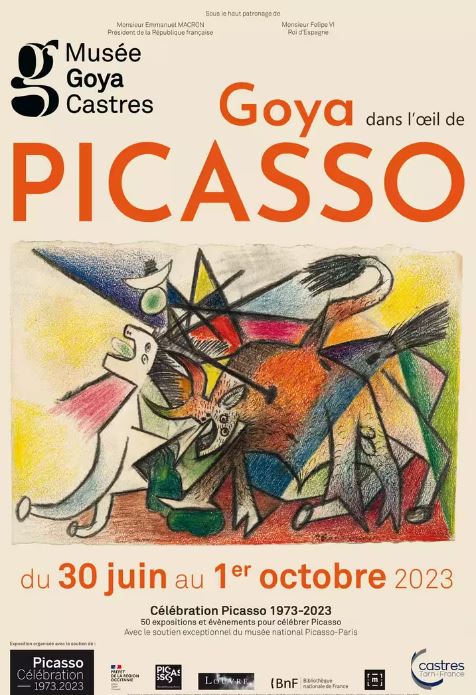
‘Goya dans l’œil de Picasso’ in Castres

At the Musée Goya in Castres for the exhibition ‘Goya dans l’œil de Picasso’, part of a series of fifty exhibitions being held throughout Europe to mark the fiftieth anniversary of Picasso’s death in 1973. This exhibition celebrates the links between the two great Spanish masters and in particular shows the influence of Francisco Goya on the career of Pablo Picasso.

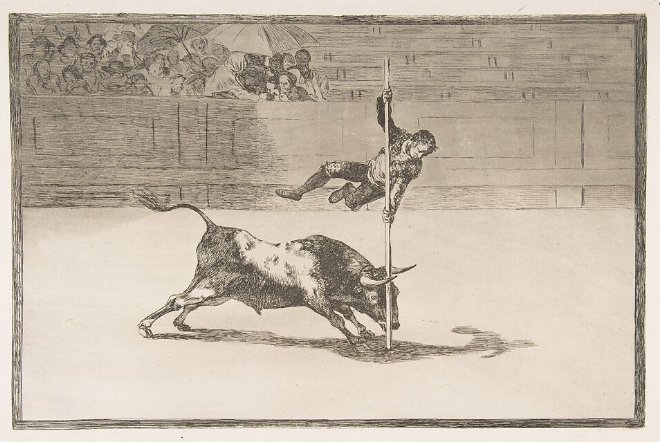
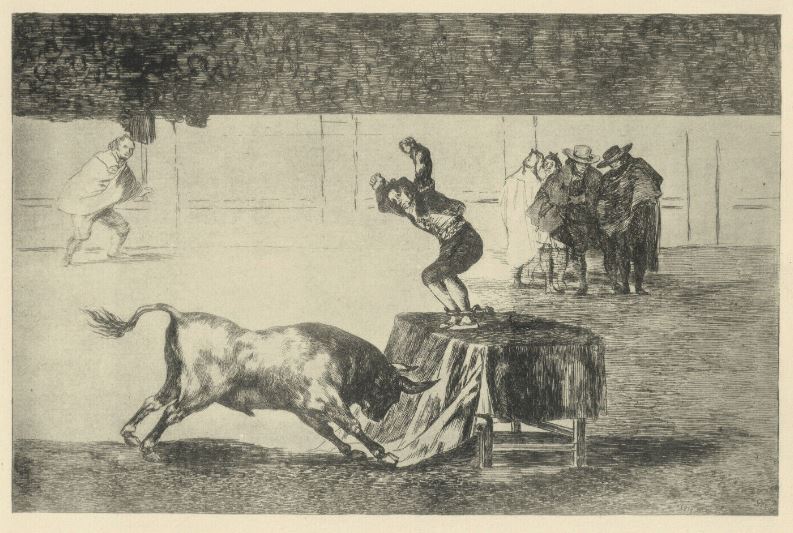
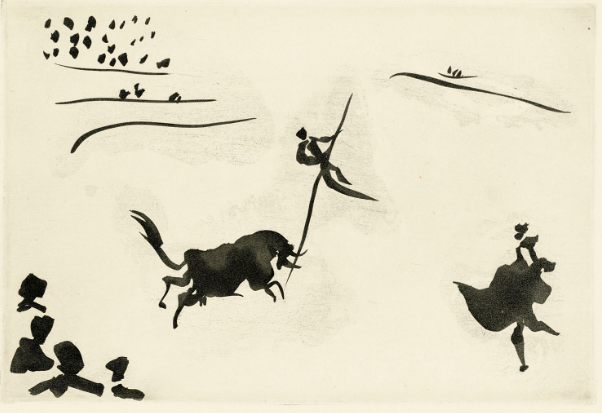
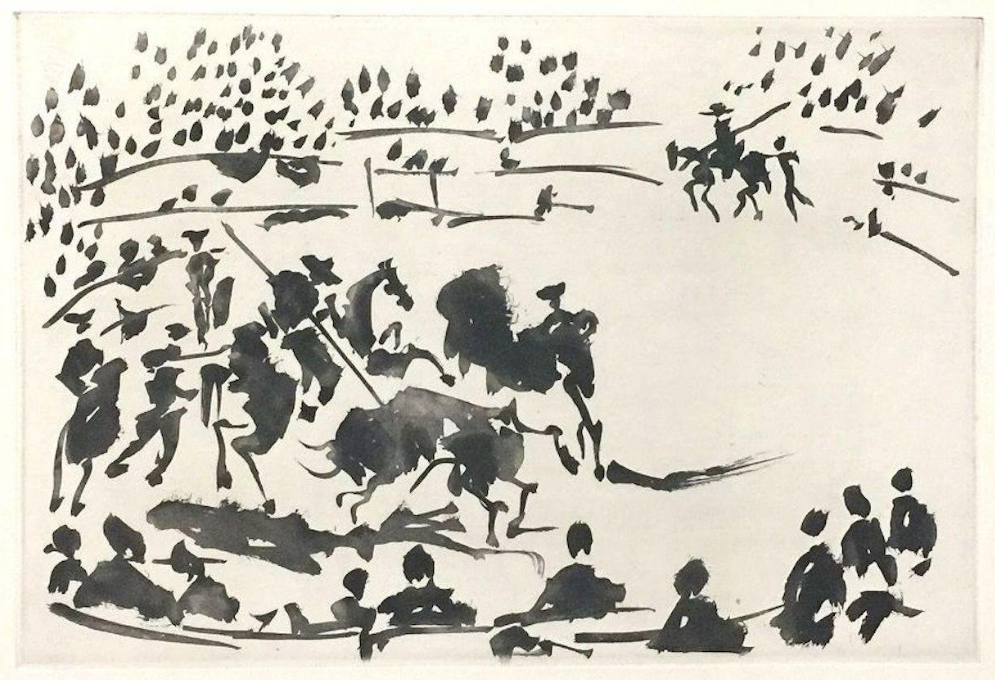
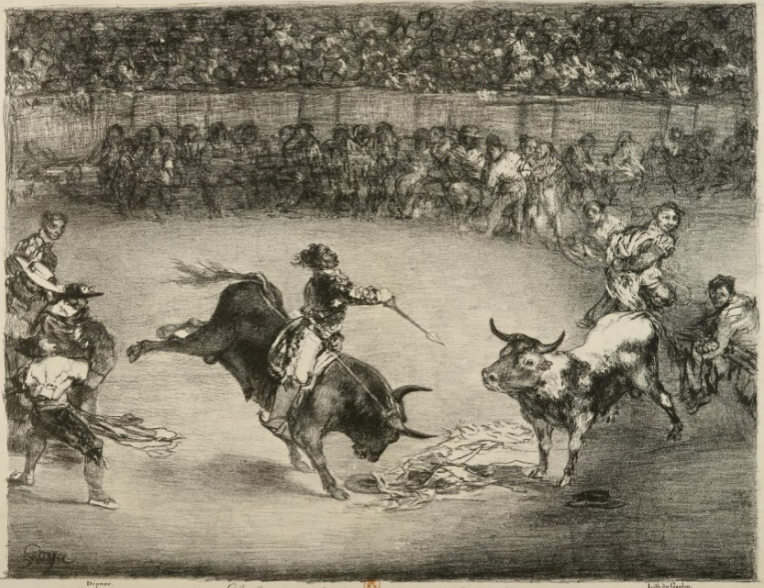
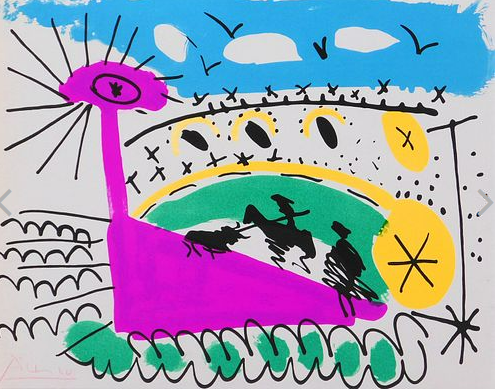
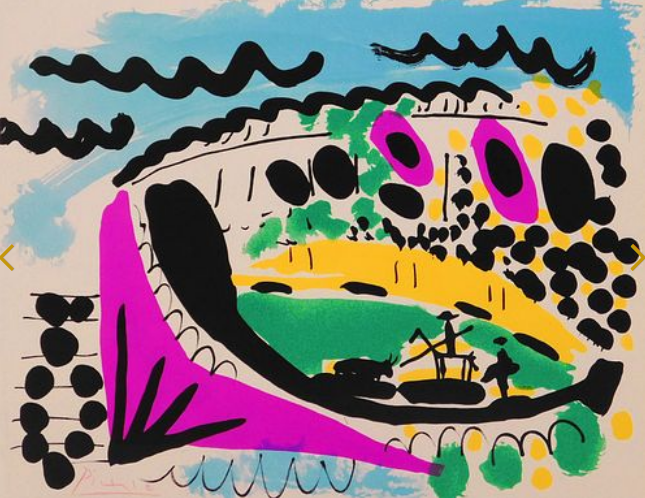
Both artists shared a fascination with the tradition of bullfighting in Spain and both depicted it in their drawings, engravings and paintings and some of these form the main part of the exhibition. Examples of Goya’s print series ‘La Tauromaquia’, which consisted of thirty-three works completed between 1815 and 1816, were displayed alongside some of the twenty-six aquatints produced by Picasso for the 1957 republication of the bullfighting manual ‘La Tauromaquia’.

Francisco Goya ‘The Agility and Audacity of Juanito Apiñani in the Ring at Madrid’ (1816)

Francisco Goya ‘Another madness of his in the same ring’ (1816)

Pablo Picasso ‘Salto con la Garrocha’ (Pole Vault) (1959)

Pablo Picasso ‘El Picador Obligando al Toro con su Pica’ (1959)

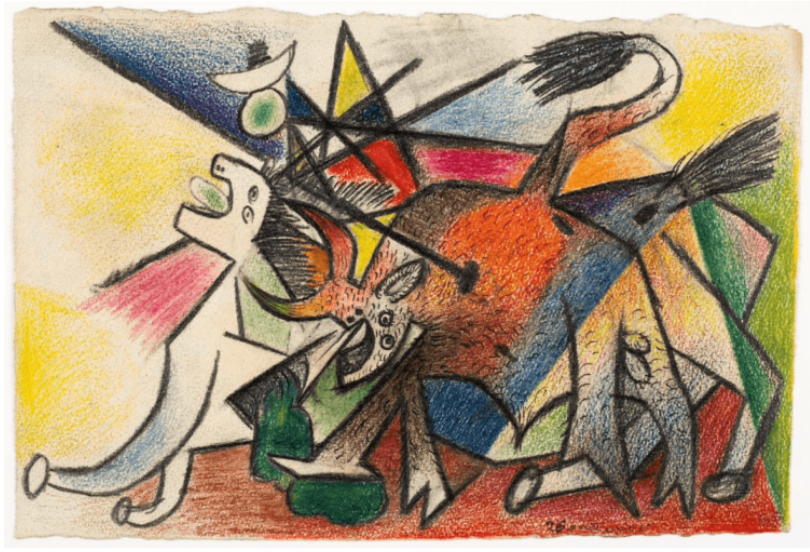
Towards the end of his life, when almost blind, Goya produced four large lithographs, ‘The Bulls of Bordeaux’, which focussed on the bullrings and the attending crowds. Picasso also concentrated on the bullring in three coloured tracing papers produced for the documentary film ‘The Mystery of Picasso’ in 1956. Also displayed was Picasso’s more abstract depiction, ‘Corrida’, from 1935.

Francisco Goya ‘ El Famoso Americano, Mariano Ceballos’ (1825)

Pablo Picasso ‘Corrida’ (1955)

Pablo Picasso ‘Corrida’ (1955)

Pablo Picasso ‘Corrida’ (1935)

Both Goya and Picasso created hybrid, monstrous beings, possibly evoking the times they had lived through. Goya went into exile in Bordeaux after engraving ‘The Disasters of War’ and ‘Los Disparates’ and, now deaf, shut himself away in a world where he created his irrational monsters. Picasso had lived through two world wars and the Spanish Civil War and depicted his life through the figure of the Minotaur, which embodies his alter ego.

Pablo Picasso ‘Winged Bull Watched by Four Children’ (1934)

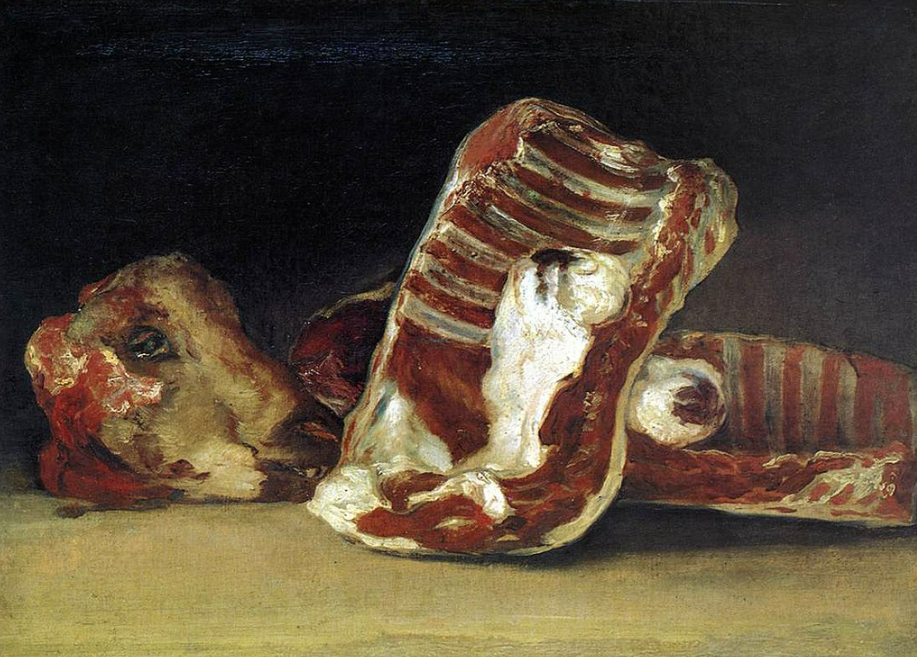
The exhibition ends with a section entitled ‘Death’, which explores the representation of death in the work of both artist through the genre of still-life, Goya is represented by ‘Still Life with Lamb’s Ribs, Loin and Head’ (1808 – 12) which is displayed alongside Picasso’s ‘Still Life with a Ram’s Head’ (1939). 

Francesco Goya ‘Still Life with Lamb’s Ribs, Loin and Head’ (1808 – 12)

Quatuor Modigliani in Monpazier

I have been fortunate enough to see the excellent Quatuor Modigliani twice in the last three weeks – first in Montpellier and now in Monpazier in the Dordogne department of south-west France. Tonight’s performance in l’église de Monpazier was part of the Festival Eté musical en Bergerac.

Two of the three pieces in the first half of the concert, Haydn’s ‘String Quartet in G major, opus 54’ and Hugo Wolf’s ‘Italian Serenade’, were also played in Montpellier and tonight were performanced at the same high standard. The first half also contained Puccini’s ‘Crisantemi’, originally written as an elegy for the 1890 death of Puccini’s friend the Duke of Aosta, formerly King Amadeo I of Spain. It is a work full of emotion and was movingly played.

The highlight of the evening was Schubert’s ‘String Quartet no. 13 in A minor’, known as ‘The Rosamunde’. It was superbly played, as you might expect from a quartet whose latest CD release was a box set of all fifteen string quartets by Schubert. It was the only quartet to be published during the composer’s lifetime and takes its name from the play ‘Rosamunde, Princess of Cyprus’, for which Schubert composed incidental music, one of its themes reappearing in the quartet’s second movement. The beautifully melancholic main theme was played with great emotion and the Minuet was extremely elegant. It was an excellent performance to end a memorable concert.

Joseph Haydn ‘String Quartet in G Major op. 54 n°1; Hugo Wolf ‘Italian Serenade in G Major’; Giacomo Puccini ‘Crisantemi for String Quartet’; Franz Schubert ‘String Quartet no. 13 in A minor, The Rosamunde’.

‘Pensées premières – Maîtres du dessin’ at Château de Biron

At Château de Biron in the Dordogne for the periodic exhibition of works from the Maeght Foundation. This year’s exhibition, ‘Pensées premières – Maîtres du dessin’, also contains a selection of twentieth-century art from the Brache–Bonnefoi collection.

The exhibition shows how graphic expression has developed from the sixteenth to the twentieth century, with examples of engravings, preparatory designs for larger works, and paintings.

Abrecht Durer ‘Adam and Eve’ (1504)

Henri Matisse ‘Portrait de Fabiani’ (1943)

Georges Braque ‘Théière et Pommes’ (1946)

Marc Chagall ‘La Bastille’ (1954)

Georges Braque ‘Les Amaryllis’ (1958)

Marc Chagall ‘Paravent’ screen (1963)

Jean Dubuffet ‘Monument II (à l’oiseau)’ (1967)

Alexander Calder ‘Dimanche dans le jardin’ (1974)

Joan Miró ‘La Meneuse de Lune’ (1975)

Pergolesi and Scarlatti

Ensemble ‘Les Passions’, the Montauban Baroque Orchestra, under the direction of Jean-Marc Andrieu performed a programme of Baroque music in the abbey church of Saint-Cyprien in the Dordogne. This was a concert I had been particularly looking forward to as the third piece performed, Pergolesi’s ‘Stabat Mater’ is one of my favourite works from the Baroque repertoire.

The concert began with two works by Alessandro Scarlatti, ‘Salve Regina’ and the ‘Recorder Concerto in A minor’. The first was performed beautifully by both musicians and singers, with the voices working well off each other. Jean-Marc Andrieu played the solo in the ‘Recorder Concerto’ and whilst he played with great gusto, the acoustics of the high-ceiling abbey church were probably not the best for appreciating the nuances of the instrument.

Les Passions

The ensemble certainly did justice to the final work, the ‘Stabat Mater’. Giovanni Pergolesi composed it in 1736, finishing it just before his tragic death from tuberculosis at the age of only 26. It became one of his most celebrated sacred works, achieving great popularity after his death. ‘Les Passions’ performed it superbly, especially soprano Magali Léger and counter-tenor Paulin Bündgen, who both have voices wonderfully suited to Baroque choral works. A standing ovation brought the ensemble back for a repeat perfomance of the final two parts.

Soprano Magali Léger and counter-tenor Paulin Bündgen

Alessandro Scarlatti: ‘Salve Regina for two voices, two violins and continuo’;
Alessandro Scarlatti: ‘Concerto in A minor for recorder, 2 violins and continuo;
Giovanni Battista Pergolesi: ‘Stabat Mater for two voices, strings and continuo’.

Fauré, Saint-Saëns and Weill

The excellent Orchestre National du Capitole de Toulouse (voted French Orchestra of the Year in 2022) under conductor Roberto Fores Veses performed a varied and extremely entertaining programme at La Prade Cultural Hall, Pradines, in the Lot department, as part of the Festival ClassiCahors.

Roberto Fores Veses

The evening beagn with Gabriel Fauré’s ‘Masques et Bergamasques’, commissioned in 1918 by Prince Albert I of Monaco. Fauré reworked and expanded his 1902 ‘Fête Galante’ by linking together previously composed instrumental and choral pieces and it has become his most frequently performed stage work. Containing a charming Menuet and a lively Gavotte, it was an entertaining concert opener.

The first half continued with Camille Saint-Saëns’ ‘Cello Concerto no.1’, composed in 1872. Although the concerto has three sections it is played as one continuous movement. It was wonderfully performed by soloist Sarah Iancu. Iancu trained at the National Conservatory of Music in Paris and was named Principal Cellist of the Toulouse Orchestra in 2002. She played the Concerto with elegance and great feeling, especially the demanding third section. An appreciative audience brought her back for an encore.

Sarah Iancu

The second half saw a wonderfully rousing performance of Kurt Weill’s ‘Symphony no. 2’, known as ‘Fantaisie symphonique’. Composed in 1933 – 34, it was commissioned by Princesse de Polignac, heir to the Singer sewing machine fortune. It is a modernist, well-crafted work in three movements. The first begins quite slowly before adopting a lively allegro molto with distinctive rhythmic motif, whilst the second takes the form of a slow march, although towards the end it builds to a climax before finally fading out. The finale, allegro vivace, goes back to the pace of the opening movement, several times building to a theatrical intensity before a joyful ending. The orchestra performed superbly and, as in the first half, a well-deserved encore was the result.

Gabriel Fauré: Masks and Bergamasques, Suite op. 112; Camille Saint-Saëns: Cello Concerto no. 1 in A Minor, Op. 33; Kurt Weill: Symphony no. 2

Musée Fabre, Montpellier

At the Musée Fabre in Montpellier to see the nineteenth- and early twentieth-century collection. Thanks to an exceptional donation by Montpellier collector Alfred Bruyas (1821 – 1877) the Museum boasts an excellent collection of the works of Gustave Courbet. Montpellier artist Frédéric Bazille is also heavily featured.

Gustave Courbet ‘L’homme la pipe’ (c.1849)

Gustave Courbet ‘Les Baigneuses’ (c.1853)

Gustave Courber ‘Bonjour Monsieur Courbet’ (1854)

Frédéric Bazille ‘Vue de Village’ (1868)

Frédéric Bazille ‘La toilette’ (1870)

Frédéric Bazille ‘Jeune femme aux pivoires’ (1870)

Berthe Morisot ‘Jeune femme près d’une fenetre’ ou ‘L’Eté’ (1879)

Edouard Manet ‘Portrait d’Antonin Proust’ (1881)

Paul Serusier ‘Nature morte dans l’atelier de l’artiste’ (1891)

Henri Matisse ‘Nature morte aux couteaux noirs’ (1896)

Sonia Delaunay ‘Philomène’ (1907)

Kees van Dongen ‘Fernande Olivier’ (1907)