‘Giovanni Bellini. Influences croisées’, at the Musée Jacquemart-André, is the first exhibition of the artist’s works to be held in France.
Giovanni Bellini, born c.1435, belonged to a family workshop of Venetian artists together with his father Jacopo and his older brother Gentile. His sister, Nicolosia, married Andrea Mantegna in 1453, so Giovanni’s young life was immersed in art and he had the opportunity to master all aspects of painting, sculptural forms and perspective. He also benefitted from the opportunity to study the works of the Florentine sculptor Donatello who spent a decade working in nearby Padova. After the arrival in 1475 of much-travelled Sicilian artist Antonella da Messina in Venice, Giovanni learned the techniques of oil painting, allowing him to move in a new direction.
Giovanni and his workshop became extremely influential both in Venice and further afield, so much so that when Albrecht Durer stayed in the city in 1506, he declared that Giovanni, although by then old, was the greatest painter of all time.
The exhibition presents his work in the context of these influences, with paintings by his family and contemporaries as well his students, in particular Giorgione.
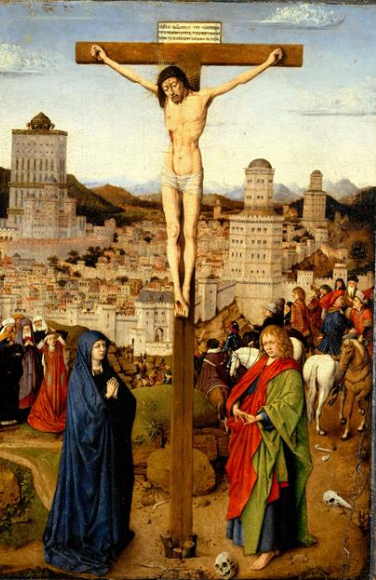
Jan van Eyck and workshop ‘Crucufixion’ (c.1425)
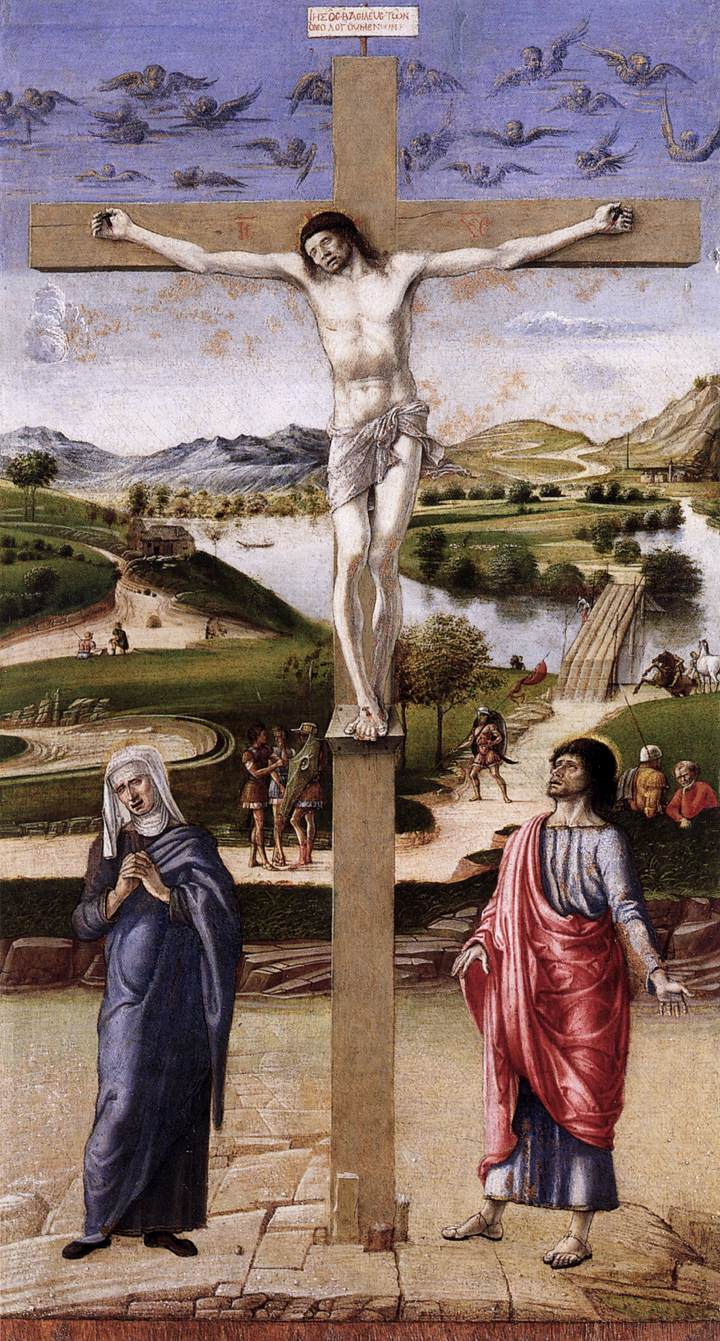
Giovanni Bellini ‘Crucifixion’ (c.1459)
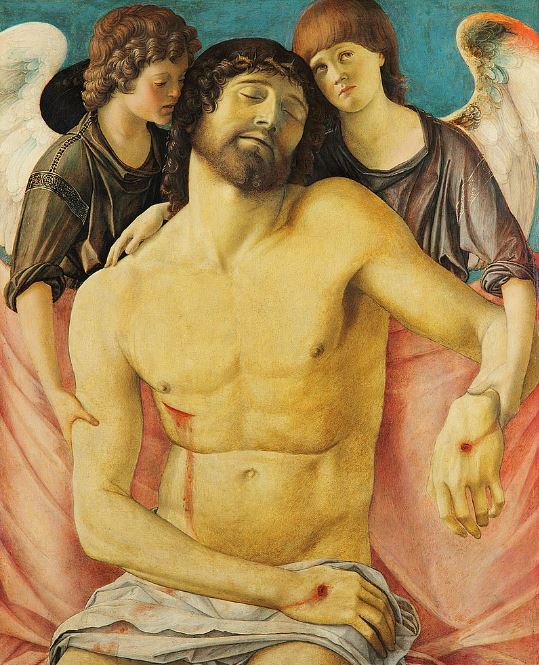
Giovanni Bellini ‘Dead Christ supported by two Angels’ (c.1479 – 75)
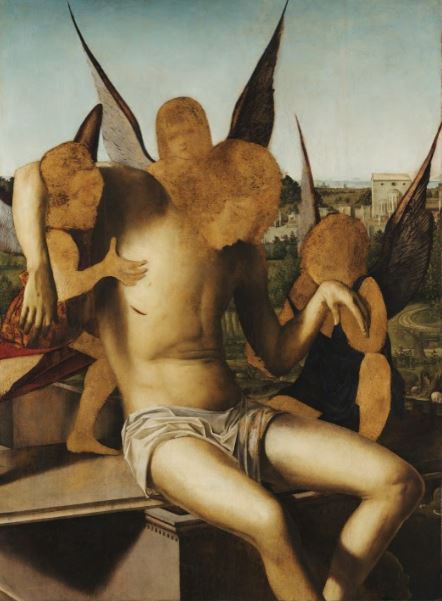
Antonella da Messina ‘Dead Christ supported by three Angels’ (1476)
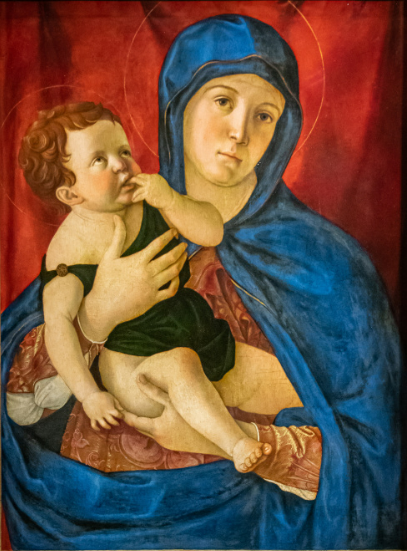
Giovanni Bellini ‘Virgin and Child’ (1475 – 80)
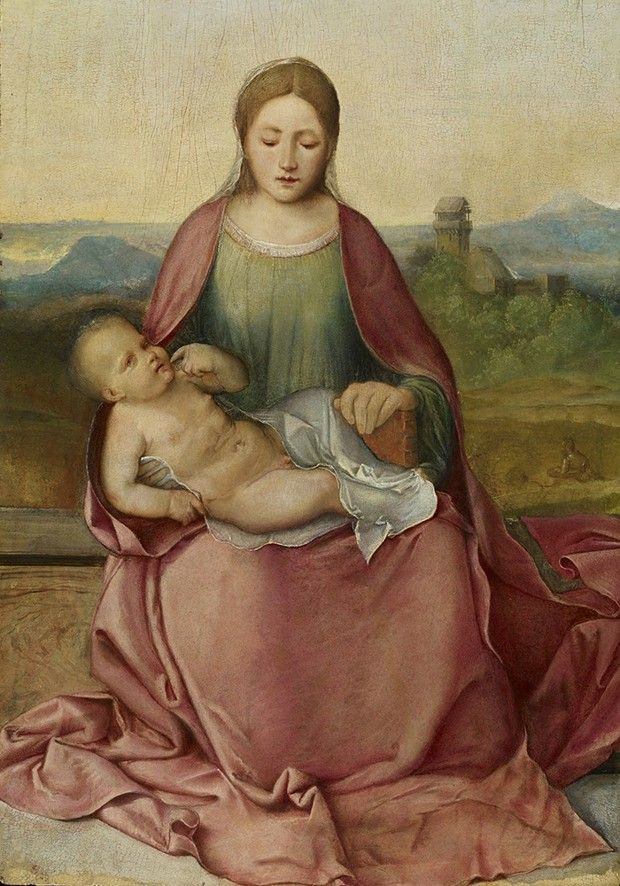
Giorgione ‘Madonna and Child’ (c.1500)
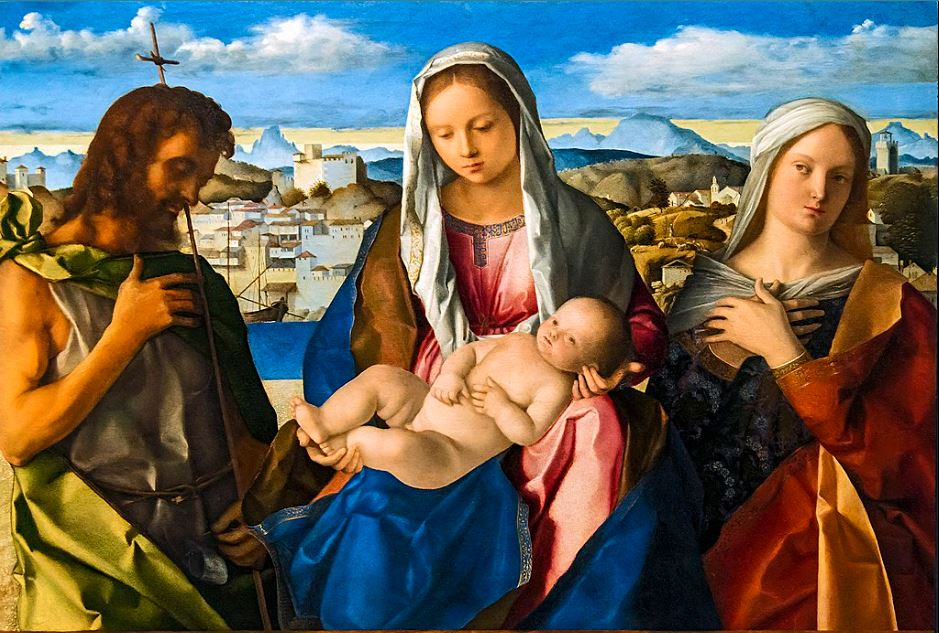
Giovanni Bellini ‘Virgin and Child with John the Baptist and female saint’ (c.1500)
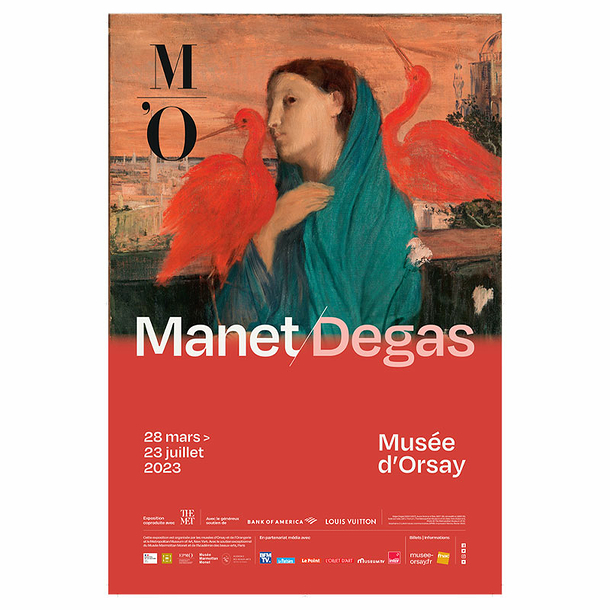
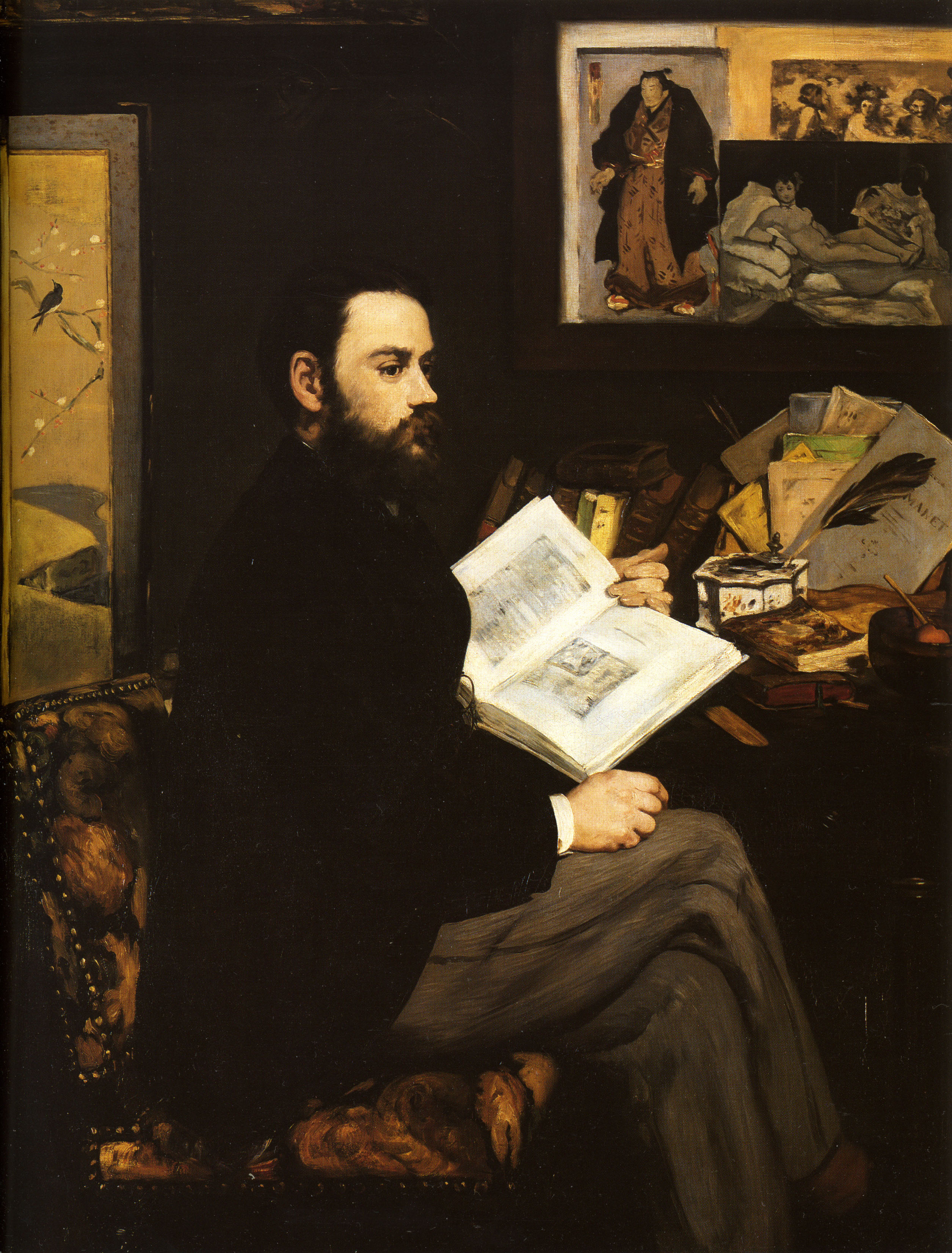
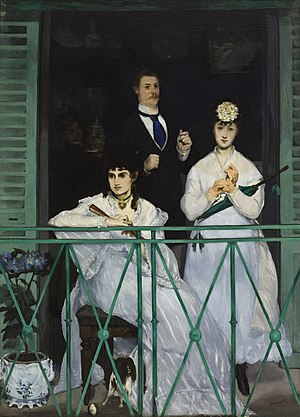
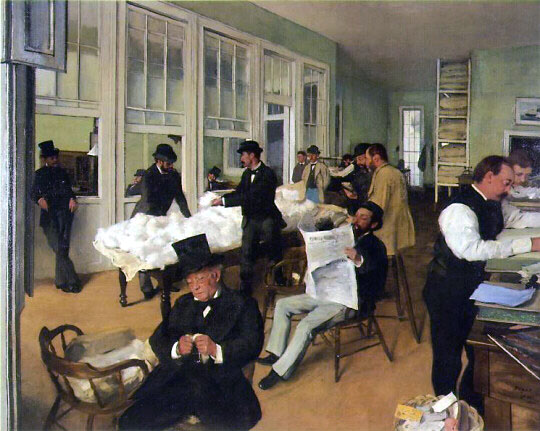
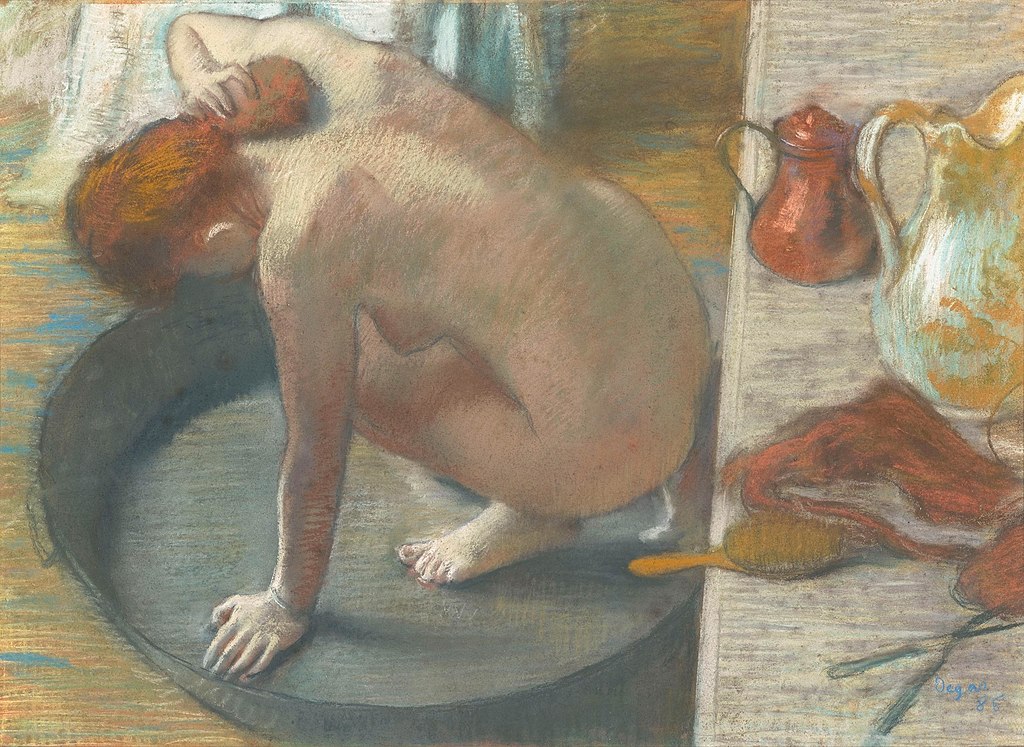
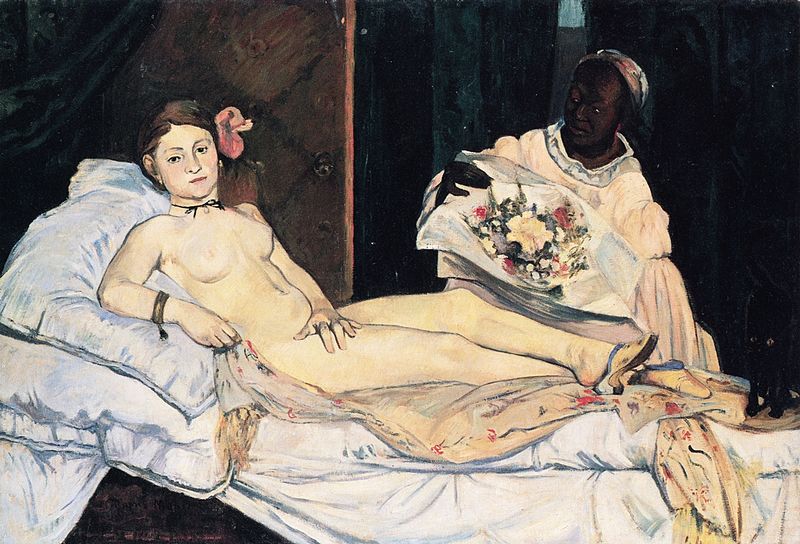
In Paris for the exhibition ‘Manet/Degas’ at the Musée d’Orsay, which examines both the similarities and differences between the two artists who both played a pivotal role in the new painting styles of the 1860s – 1880s.
They had many similar experiences; both being involved in the Franco-Prussian War of 1870 – 71 and both frequenting the same places in Paris with mutual friends. However, whilst Degas exhibited with the Impressionists, Manet refused to do so, despite similarities in their subject matter.
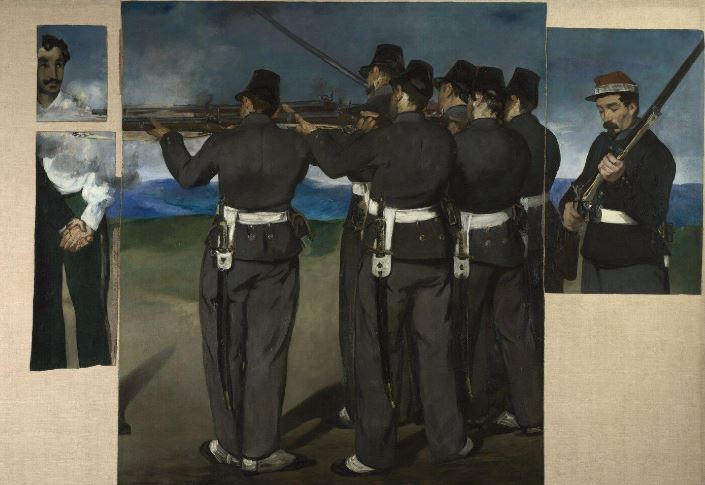
Despite their differences there was a mutual admiration and respect. After Manet died in 1883, one of his heirs cut up one of the versions of ‘The Execution of Maximilian’ to sell the parts separately; however, Degas bought the fragments in order to reassemble the painting and then went on to collect many more of Manet’s works.
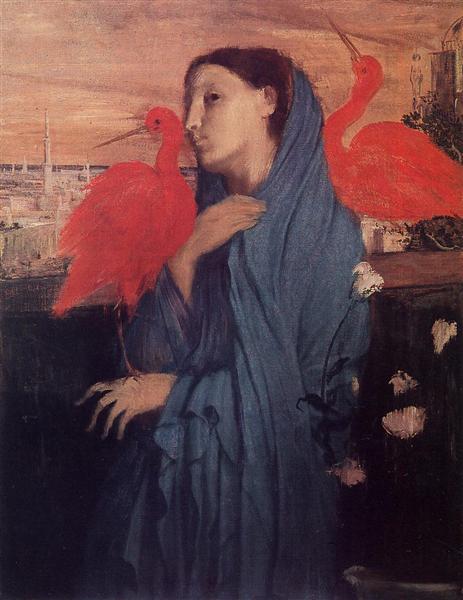
Edgar Degas ‘Woman on a Terrace’ (1857)
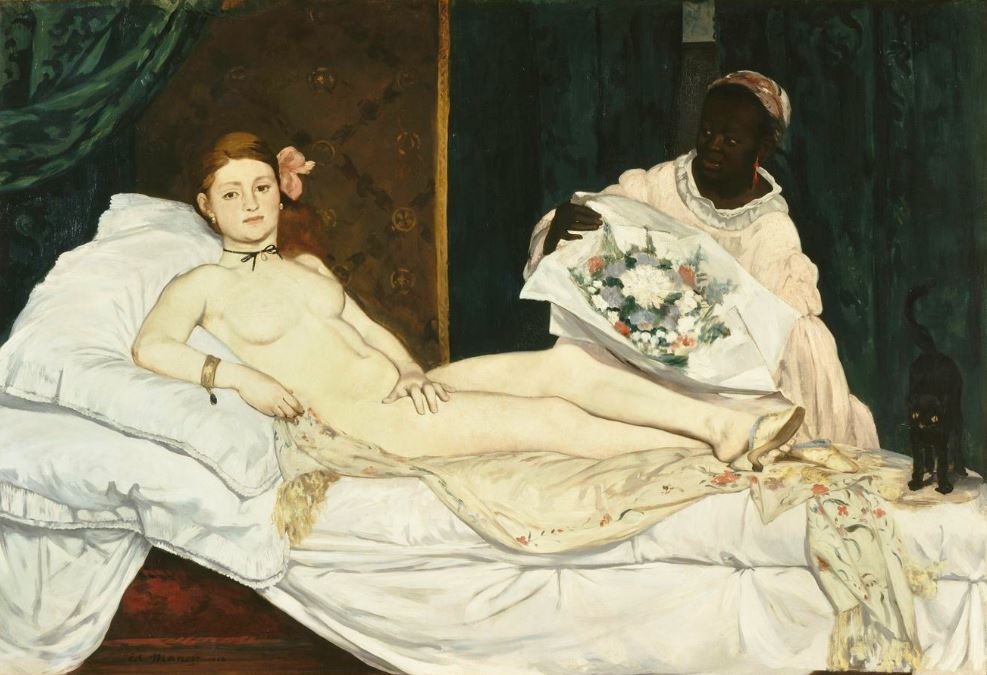
Edouard Manet ‘Olympia’ (1863)
Edouard Manet ‘The Execution of Maximilian’ (1867 – 68)
Edouard Manet ‘Portrait of Emile Zola’ (1868)
Edouard Manet ‘The Balcony’ (1868 – 69)
Edouard Manet ‘Berthe Morisot with Bouquet of Violets’ (1872)
Edgar Degas ‘A Cotton Office in New Orleans’ (1873)
Edgar Degas ‘In a Café (L’Absinthe)’ (1875 – 76)
Edgar Degas ‘The Tub’ (1886)
Paul Gauguin ‘Olympia (after Manet)’
Both Edouard Manet and Edgar Degas, particularly the latter, also feature in the Musée d’Orsay’s other current exhibition, ‘Pastels from Millet to Redon’.
Pastel is a technique that brings together both line and colour without being either drawing or painting. Pastels are versatile, enabling blended shading and hatching as well as textured finishes and bright colouring.
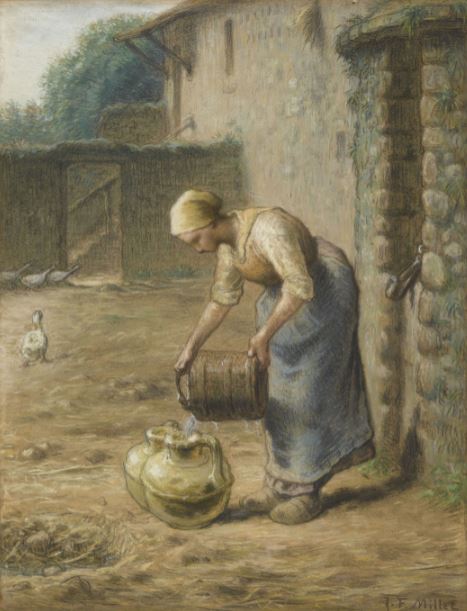
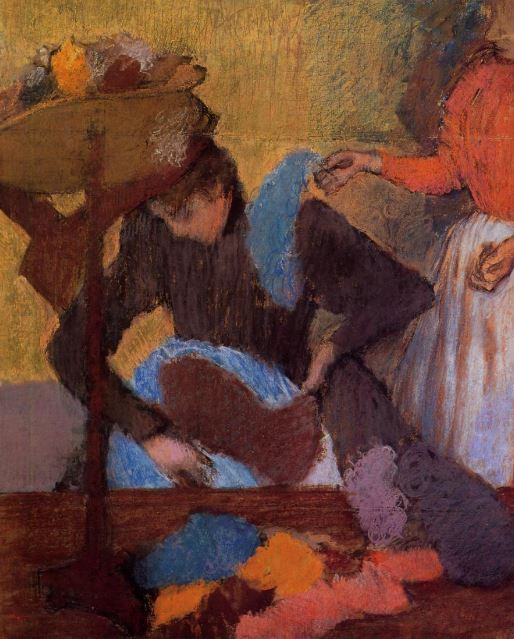
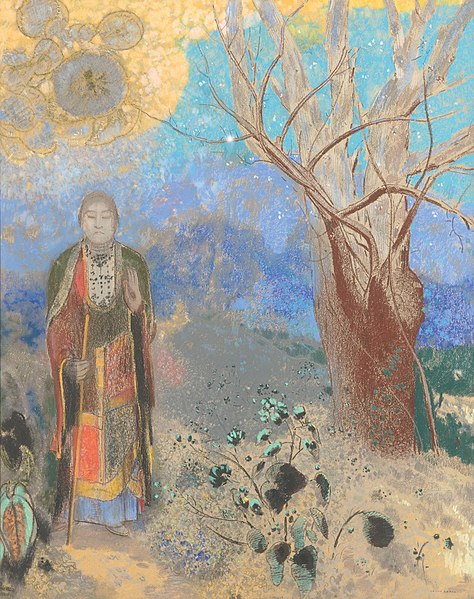
Pastel was first used in the sixteenth century, notably by Leonardo da Vinci, but underwent a resurgence in the eighteenth and nineteenth centuries. Jean-François Millet often used pastel in his depictions of rural life. Edgar Degas became particularly skilled in the use of pastels, placing complementary and contrasting hues side by side to produce rich tapestries of colour. Odilon Redon was another artist who used pastels to produce extremely colourful effects.
Jean-François Millet ‘The Woman at the Well’ (c.1866 – 68)
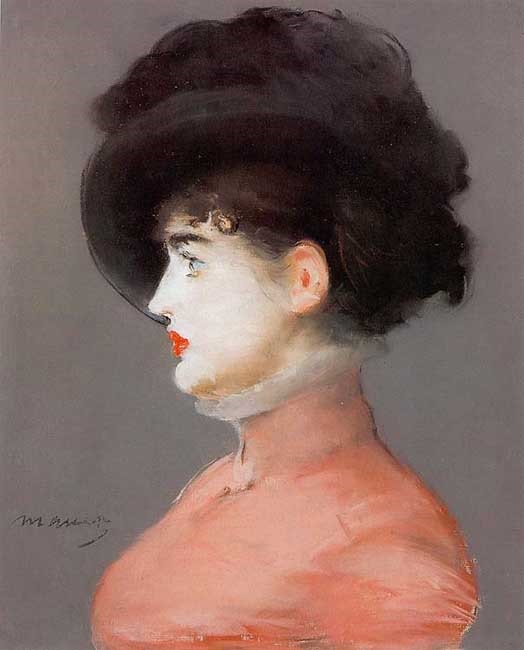
Édouard Manet ‘Portrait of Irma Brunner’ (1880 – 82)
Edgar Degas ‘Seated Dancer’ (1881 – 83)
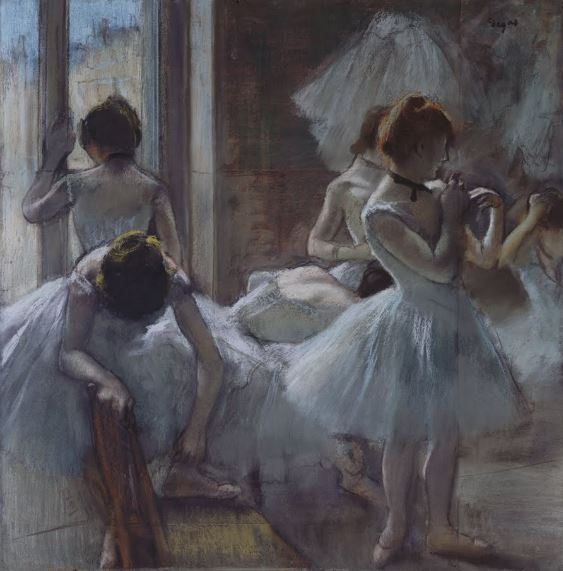
Edgar Degas ‘Dancers’ (1884 – 85)
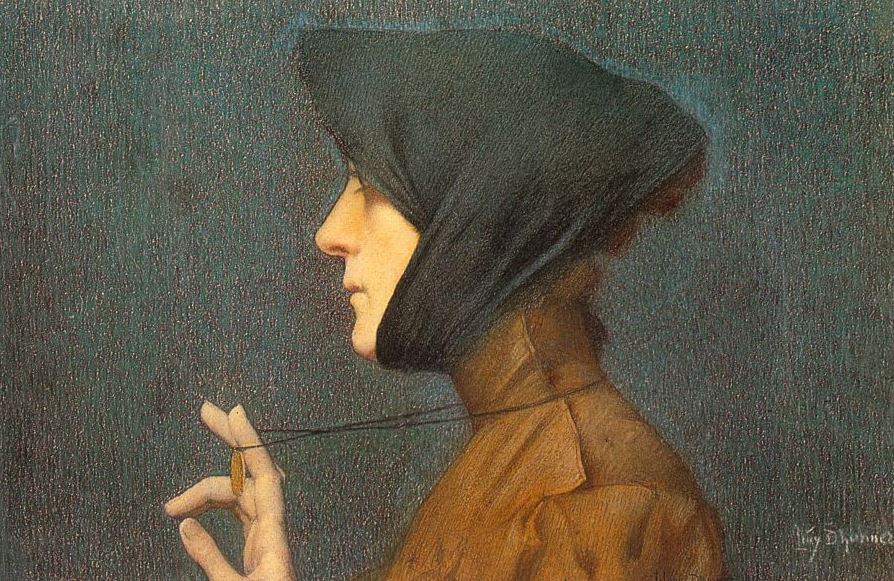
Lucien Levy-Dhurmer ‘Woman with a Medallion’ (1896)
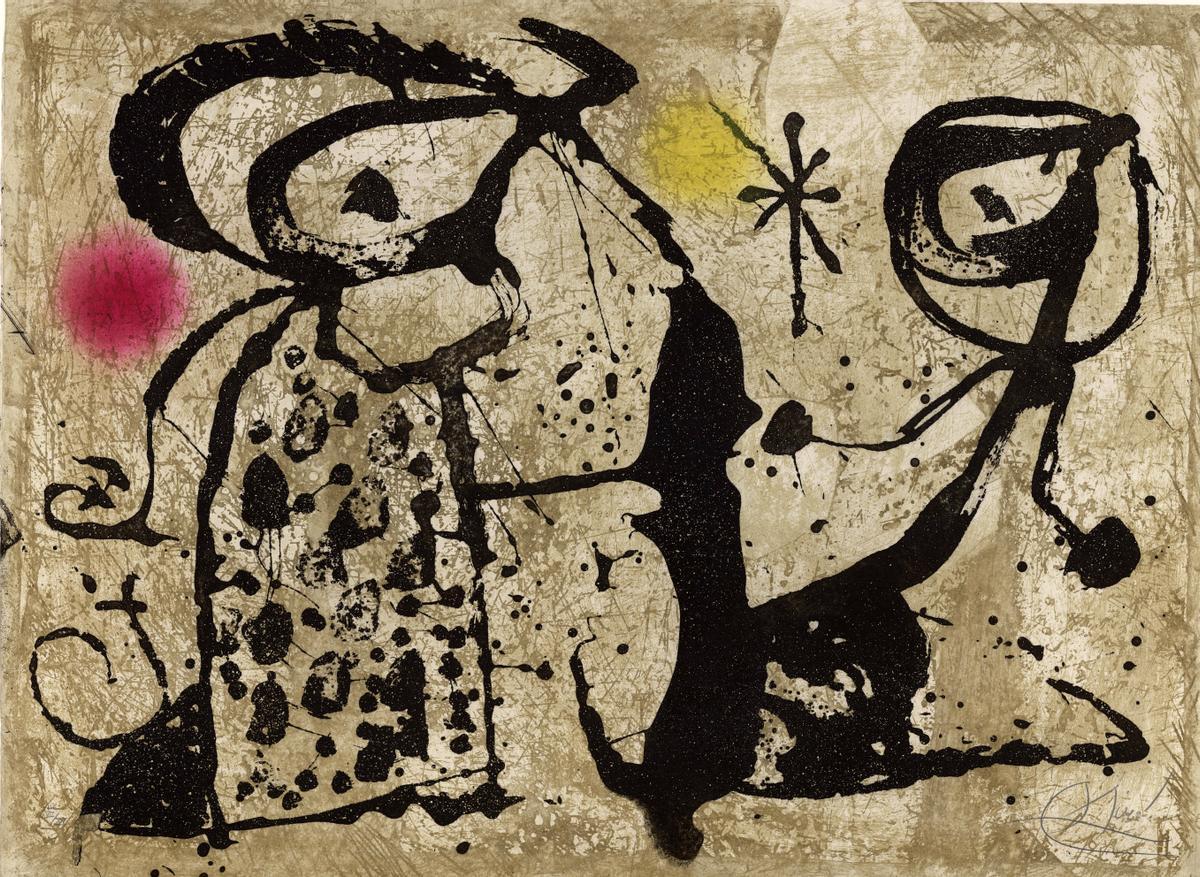
At Musée Goya in Castres, south-west France, for the exhibition ‘Miró, hommage à Gaudí’, on the occasion of the reopening of the museum after a two-year refurbishment.
Miró’s admiration for the work of the Catalan architect Antoni Gaudí began during his childhood in Barcelona, when he was particularly impressed by the enormous and extravagant church known as Sagrada Familia, as well as the original and colourful Parc Guëll. The two men met in 1910, when Gaudí was already a recognized architect and Miró was just beginning his career.
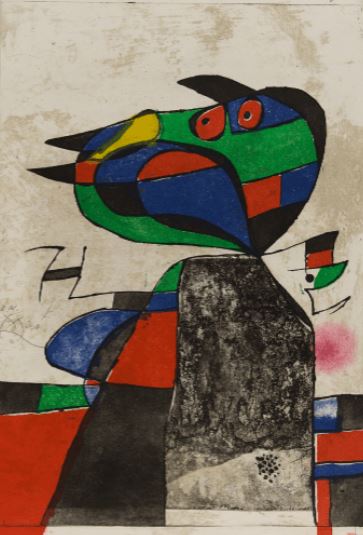
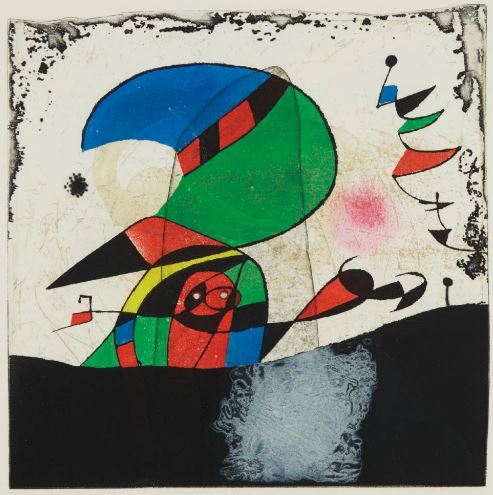
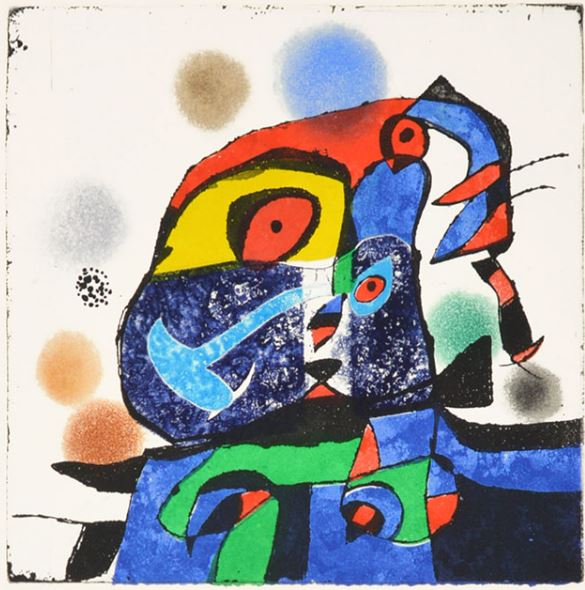
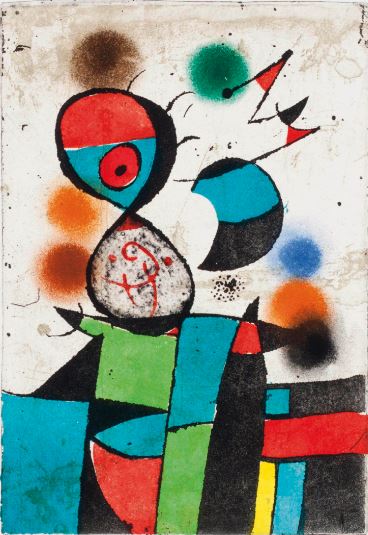
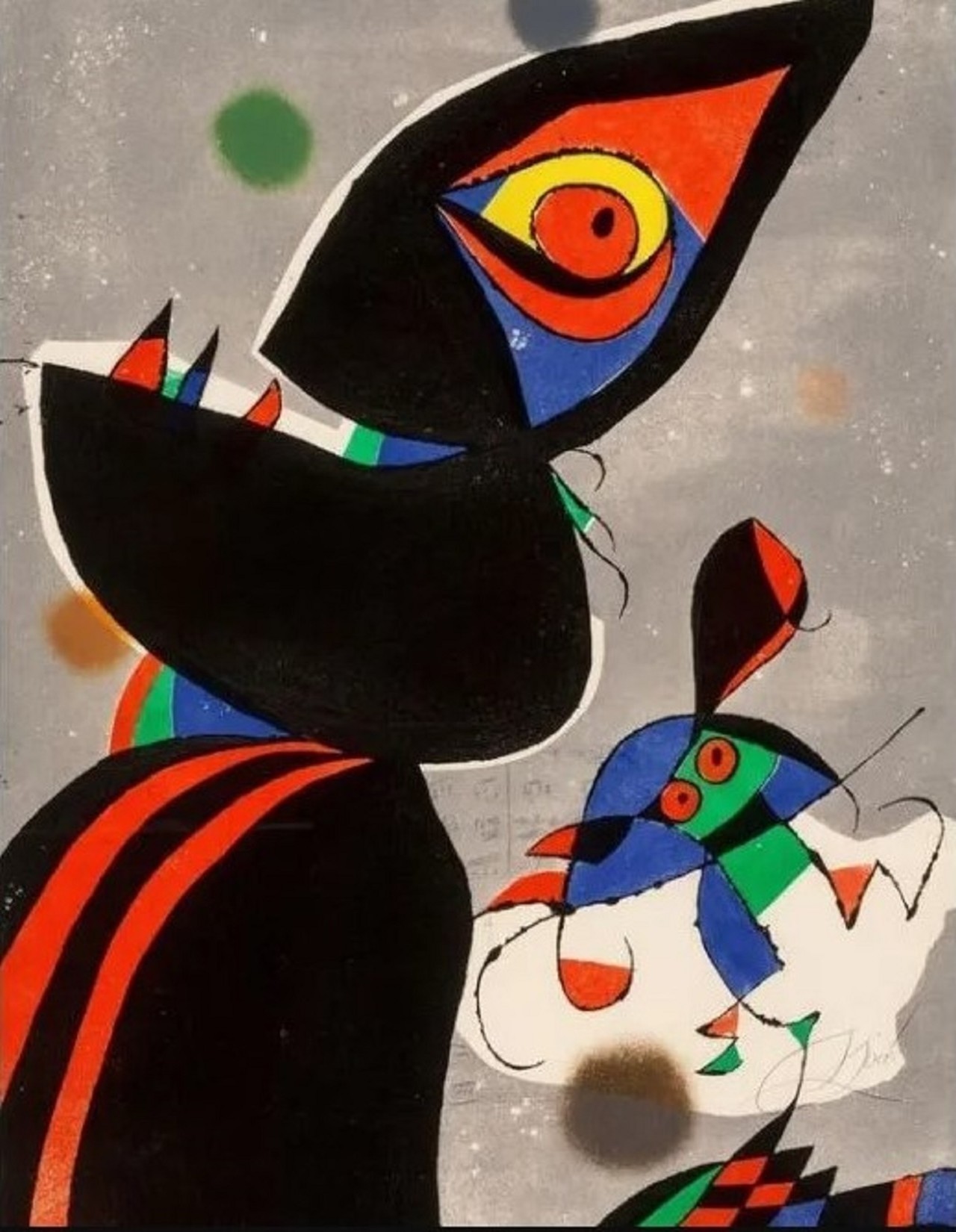
Between 1975 and 1979, when Miró was in his 80s, he produced a series of twenty-one engravings as a homage to Gaudi. Musée Goya has been collecting them over the past twenty years and is now able to present the complete series for the first time.
Miró was always attracted to one of Gaudí’s favorite techniques, the ‘Trencadís’, compositions made from broken tiles, and the colourful designs on the engravings evoke this technique.
Joan Miró ‘Gaudi III’ (1979)
Joan Miró ‘Gaudi IV’ (1979)
Joan Miró ‘Gaudi V’ (1979)
Joan Miró ‘Gaudi VIII’ (1979)
Joan Miró ‘Gaudi XVII’ (1979)
Joan Miró ‘Gaudi XIX’ (1979)
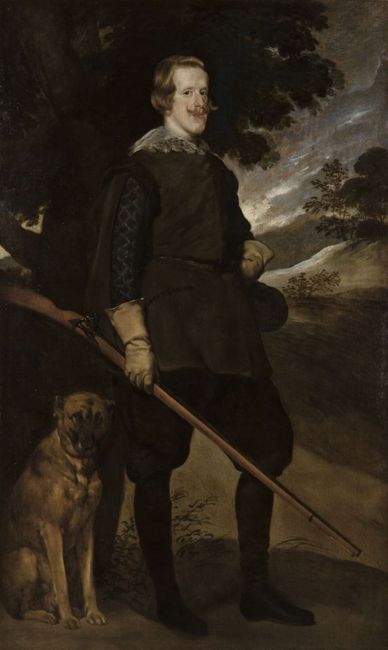
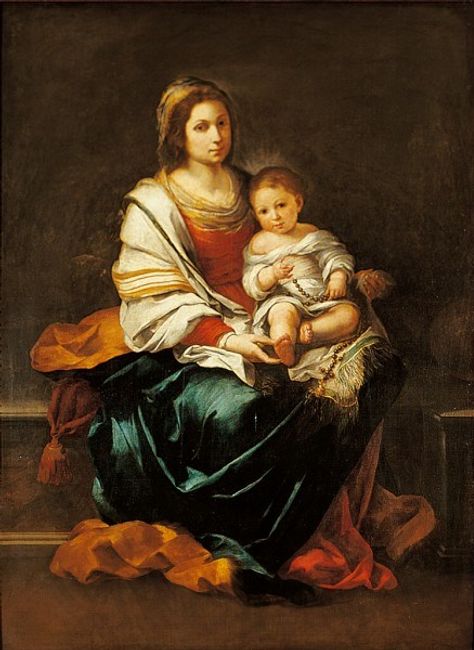
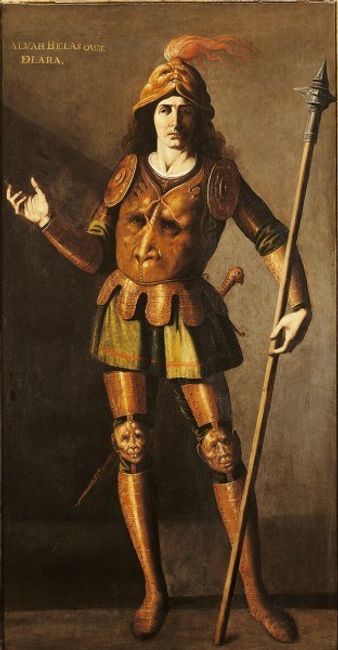
Musée Goya also has an excellent permanent collection of more than two hundred Spanish paintings from the middle ages to the twentieth century. The collection was originally built up around three Goya paintings bought by Marcel Briguiboul in Madrid and bequeathed to the city of Castres by his son Peter in 1894.
Diego Velasquez ‘Portrait de Philippe IV en chasseur’ (c.1634 – 36)
Bartolome Estaban Murillo ‘La vierge au Chapelet’ (c.1650)
Francisco de Zurbaran ‘Portrait d’Alvar Belasquez de Lara’ (c.1650)
José de Ribera ‘Martyr de Saint André’ (17th century)
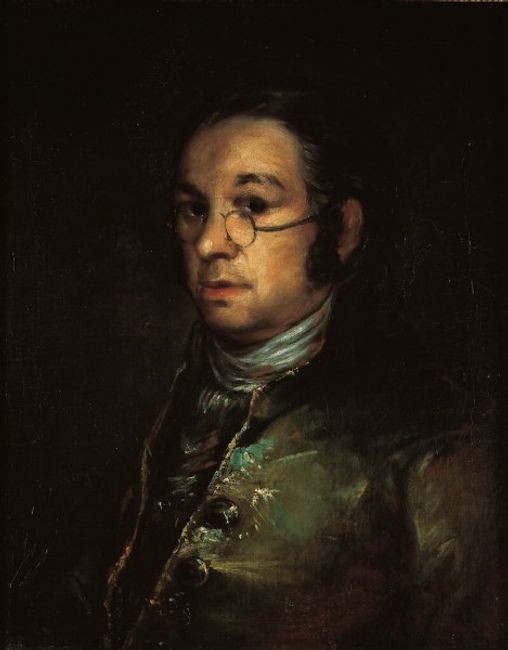
Francisco Goya ‘Autoportrait aux lunettes’ (c.1800)
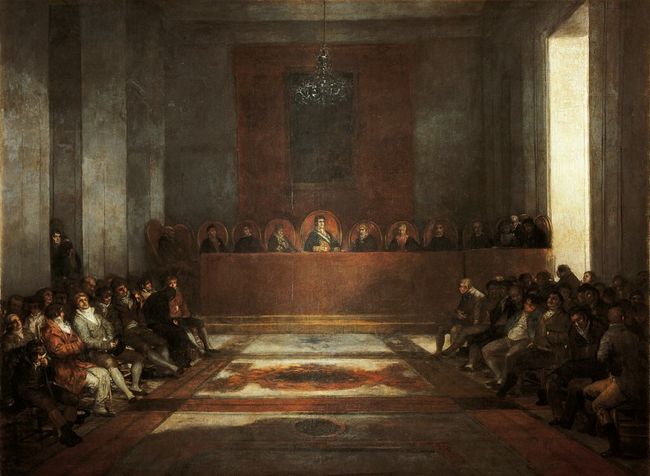
Francisco Goya ‘La Junte des Philippines’ (1815)
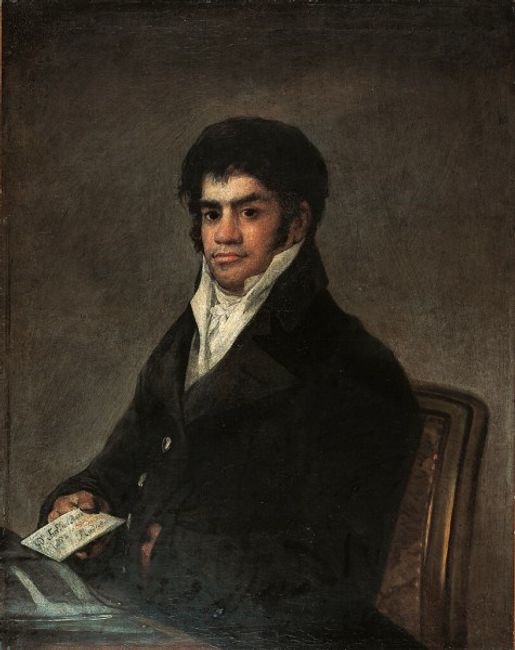
Francisco Goya ‘Portrait de Francisco del Mazo’ (c.1815 – 20)
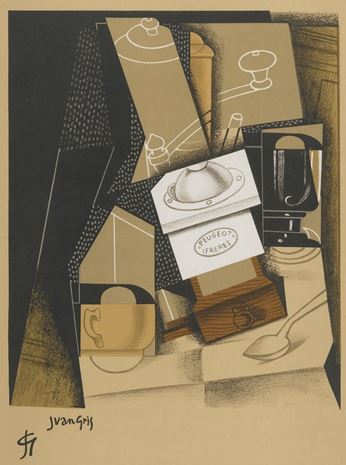
Juan Gris ‘Au Soleil du plafond’ (c.1916 – 19)
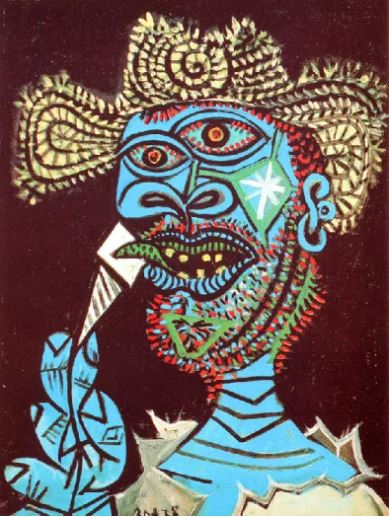
Pablo Picasso ‘Homme au chapeau de paille et cornet de glace’ (1938)
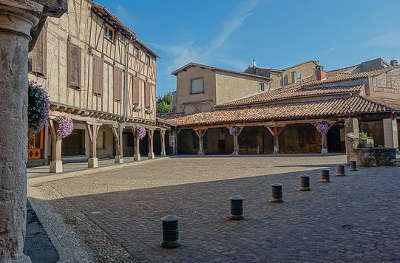
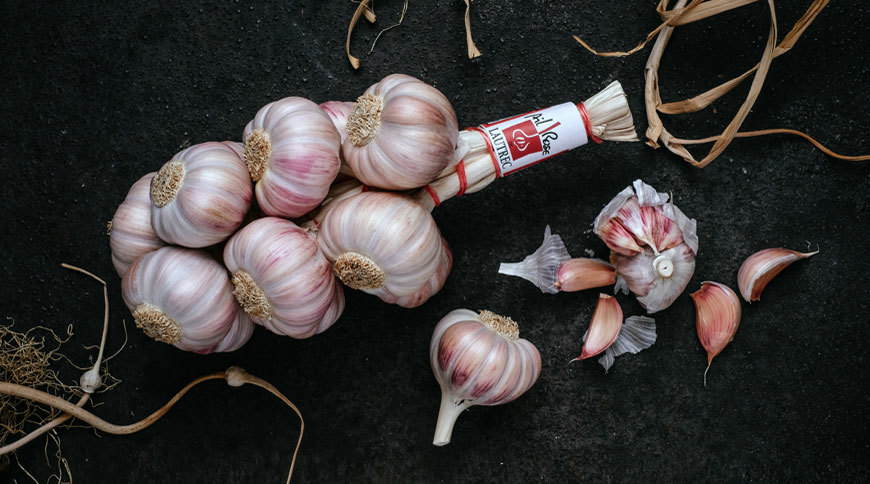
The medieval village of Lautrec, in the Tarn region of France, is designated one of the ‘Plus Beaux Villages de France’. The region was the home of the family of the artist Henri Toulouse-Lautrec. It is also famous for being the capital of pink garlic production in France.
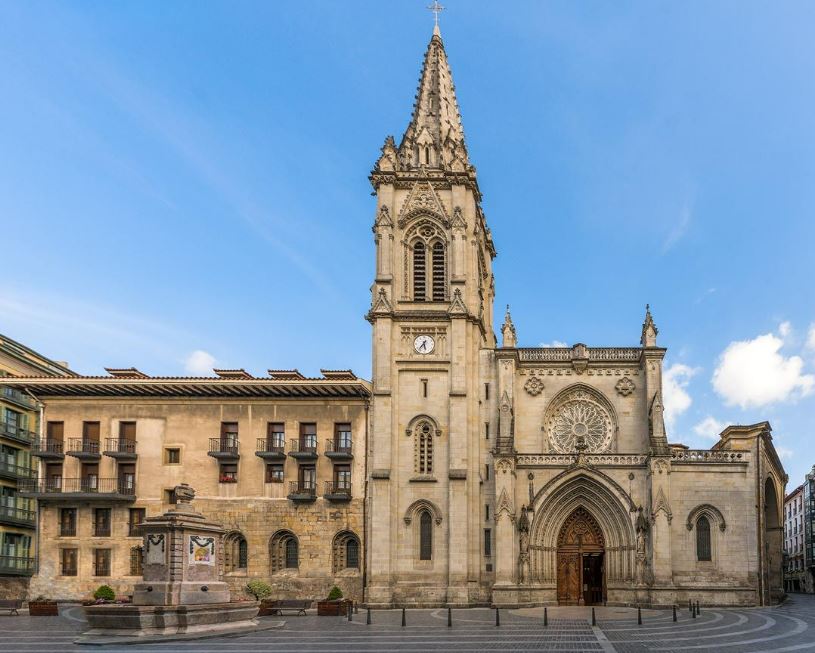
Bilbao’s Gothic Cathedral, dedicated to Saint James, was originally built as the city’s parish church during the fourteenth and fifteenth centuries. It was only concecrated as a cathedral in 1950 after the Roman Catholic Diocese of Bilbao had been officially created.
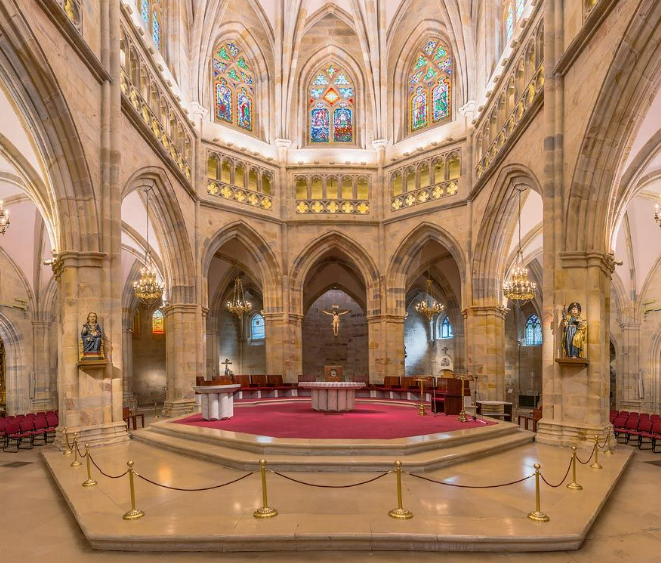
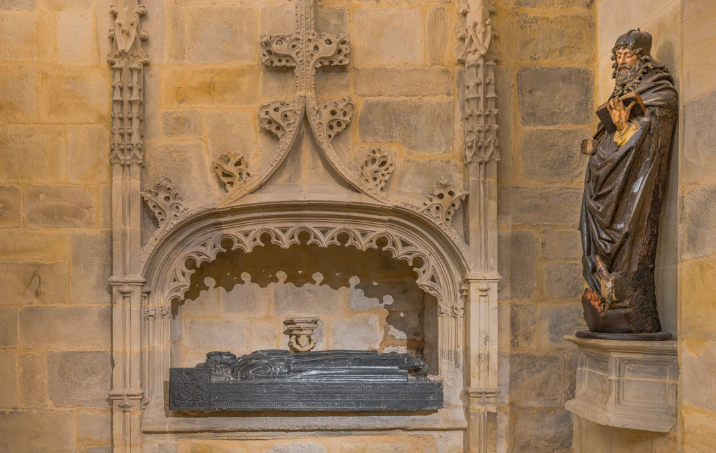
It has a Latin cross plan with three naves, separated by cylindrical pillars, which lead to the main chapel, the Presbytery. This was remodelled in 2000 and has a simple layout, containing the bishop’s seat and the altar, which is presided over by a late Gothic figure of Christ dating from around 1515. The Presbytery is surrounded by an ambulatory which gives access to fifteen chapels, all originally financed by wealthy parishioners, many containing ornate baroque altarpieces. The Chapel of San Antón contains a magnificent polychrome carving of the saint from the fifteenth century, as well as the tomb of the Arbieto family of merchants from Bilbao.
Presbytery, Bilbao Cathedral
Chapel of San Antón
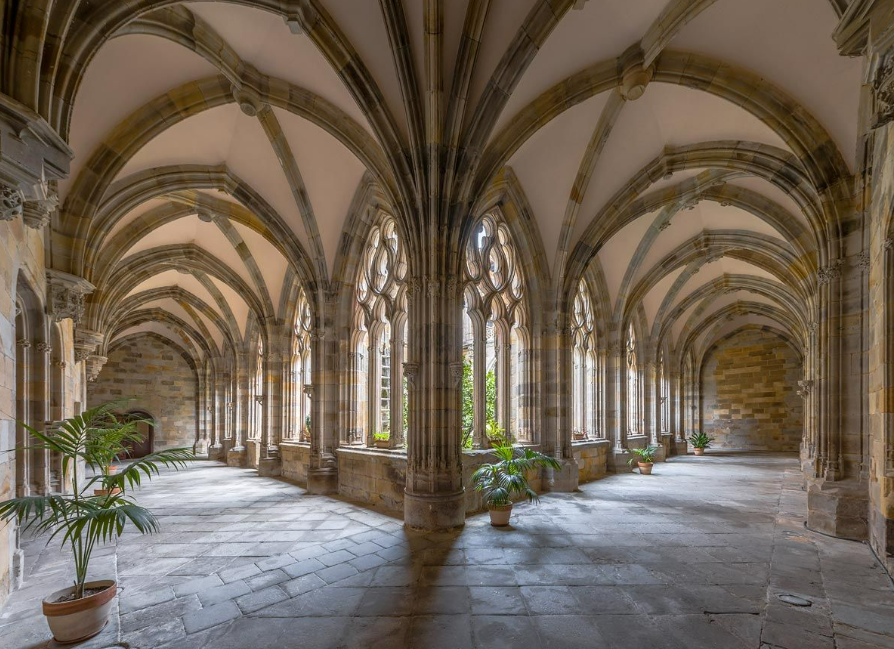
The cathedral also contains an impressive cloister, again in the Gothic style. It has a central garden surrounded by four vaulted bays, around which there are several tombstones from the sixteenth and seventeenth centuries.
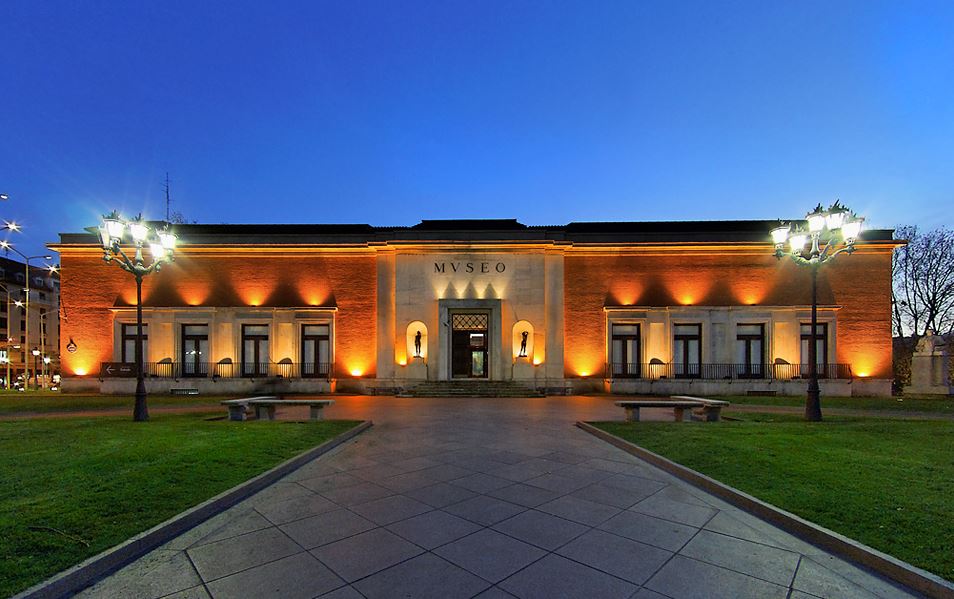
Bilbao’s Museum of Fine Arts, now housed in an impressive Neo-Classical building, was formed in 1945 by combining the original Fine Arts museum with the Modern Art Museum, hence the comprehensive range of paintings from the twelfth century to the present day in its permanent collection.
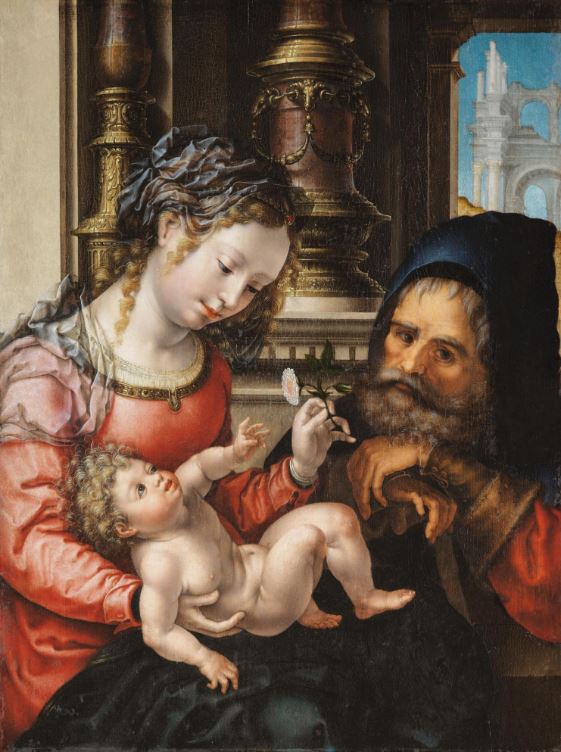
Jan Gossaert ‘La Sagrada Familia’ (1525 – 30)
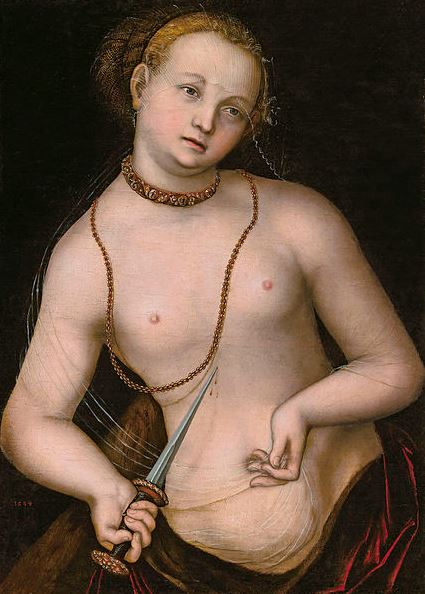
Lucas Cranach the Elder ‘Lucretia’ (1534)
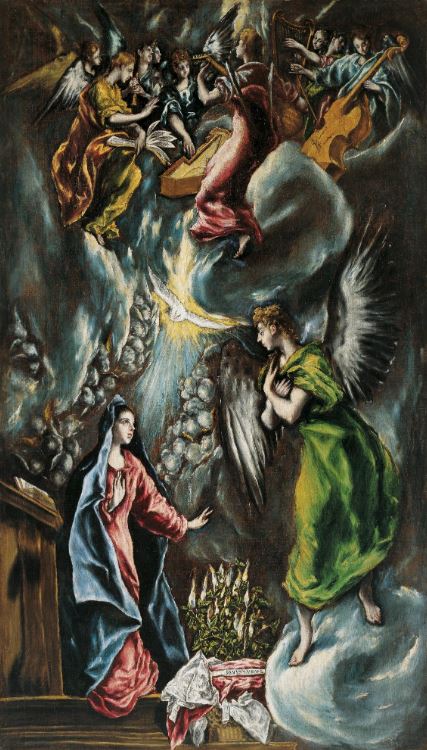
El Greco ‘The Annunciation’ (c.1596 – 1600)
Francisco de Goya ‘Portrait of Martin Zapater’ (1797)
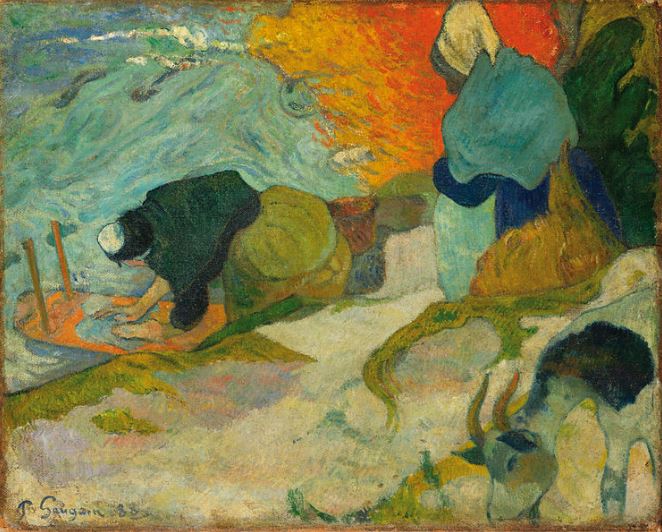
Paul Gauguin ‘Washerwomen in Arles’ (1888)
Mary Cassatt ‘Seated Woman with a Child in her Arms’ (c.1890)
‘Oskar Kokoschka – a Rebel from Vienna’ is a major retrospective of the Austrian modernist artist’s work. Kokoschka was associated with both Gustav Klimt and Egon Schiele in Vienna and achieved international renown with his revolutionary style of figurative art.
Kokoschka, who was born in 1886 in Pochlarn, Austria, was trained at the University of Applied Arts in Vienna. His early works were expressive experiments in depicting the human form that shocked the Viennese public but influenced other artists. His aim was to reveal the inner self of the subject rather than to produce a conventional portrait..
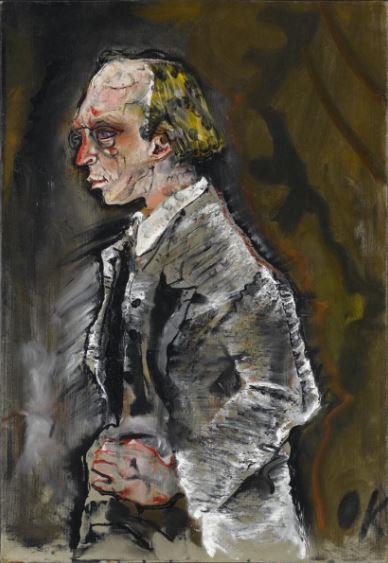
Oskar Kokoschka ‘Herwarth Walden’ (1910)
From 1912 to 1914, Kokoschka’s muse was Alma Mahler, with whom he became obsessed, to the extent that when their relationship came to an end he famously had a life-size doll made of her.
Oskar Kokoschka ‘Alma Mahler’ (1913)
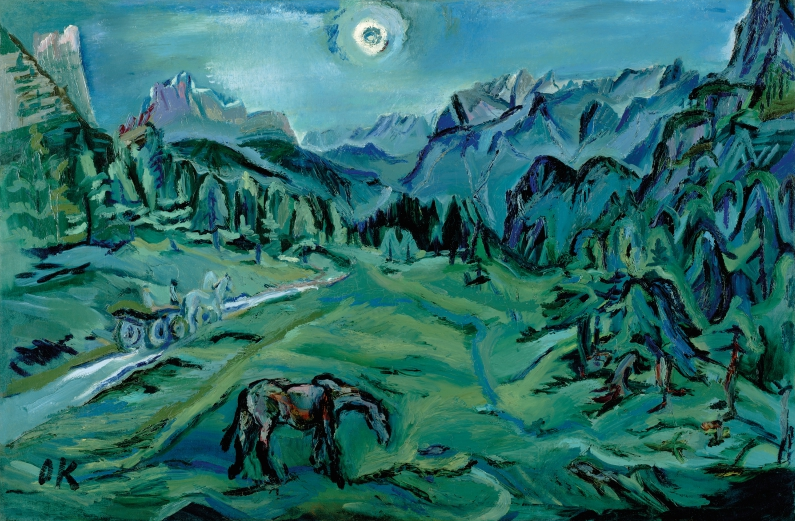
Oscar Kokoschka ‘Tre Croci, Dolomite Landscape’ (1913)
Kokoschka joined the army at the outbreak of the First World War but was seriously wounded twice. Whilst receiving care for depression in a convalescent home in Dresden he became a professor in the city’s Academy of Fine Arts. The paintings he produced there were brightly coloured and extremely expressive.
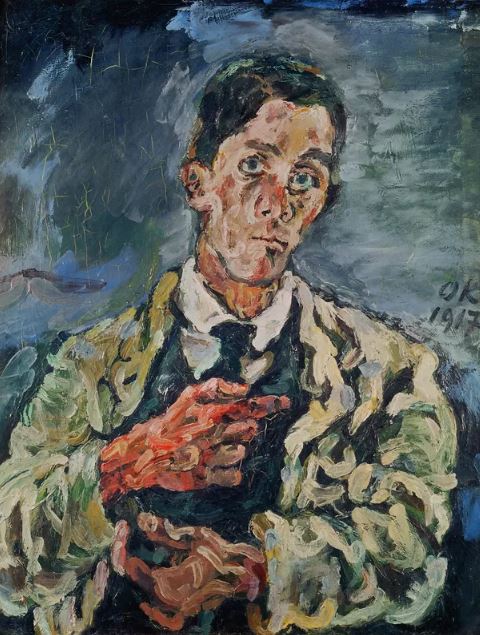
Oskar Kokoschka ‘Self-Portrait’ (1917)
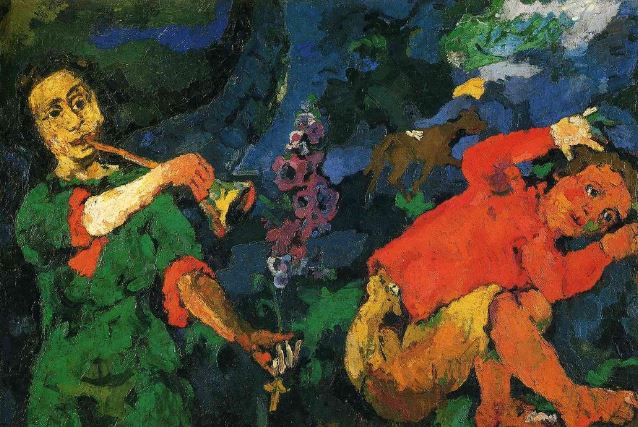
Oskar Kokoschka ‘The Power of Music’ (1918)
Oskar Kokoschka ‘The Painter II (Painter and Model II)’ (1923)
He then travelled extensively throughout Europe, North Africa and the Middle East, but after the death of his sponsor, Paul Cassirer, he had financial problems and returned to Vienna. Two years later, he moved to Prague where he met and married Olda Palkovska. However, from Czechoslovakia he saw the rise of the Nazi party, which classified his art as ‘degenerate’, and he fled to England in 1938. After the end of the war he obtained British citizenship and this enabled him to continue his career in Europe.
Oskar Kokoschka ‘Self-Portrait of a Degenerate Artist’ (1937)
He eventually settled in Switzerland from where he confirmed his position as a leading international painter, becoming extremely influential for the next generation of artists, especially after his founding of the ‘School of Vision’ in Salzburg in 1953. It was not a school in the conventional sense but rather Kokoschka’s attempt to revive humanist ideals after the horrors of the war. He explained that the school, which was open to all, did not “strive towards technical skill, nor towards photographic imitations of nature, and not at all towards abstract art … I want to teach my students the art of vision”.
Kokoschka died in Montreux, Switzerland in February 1980.
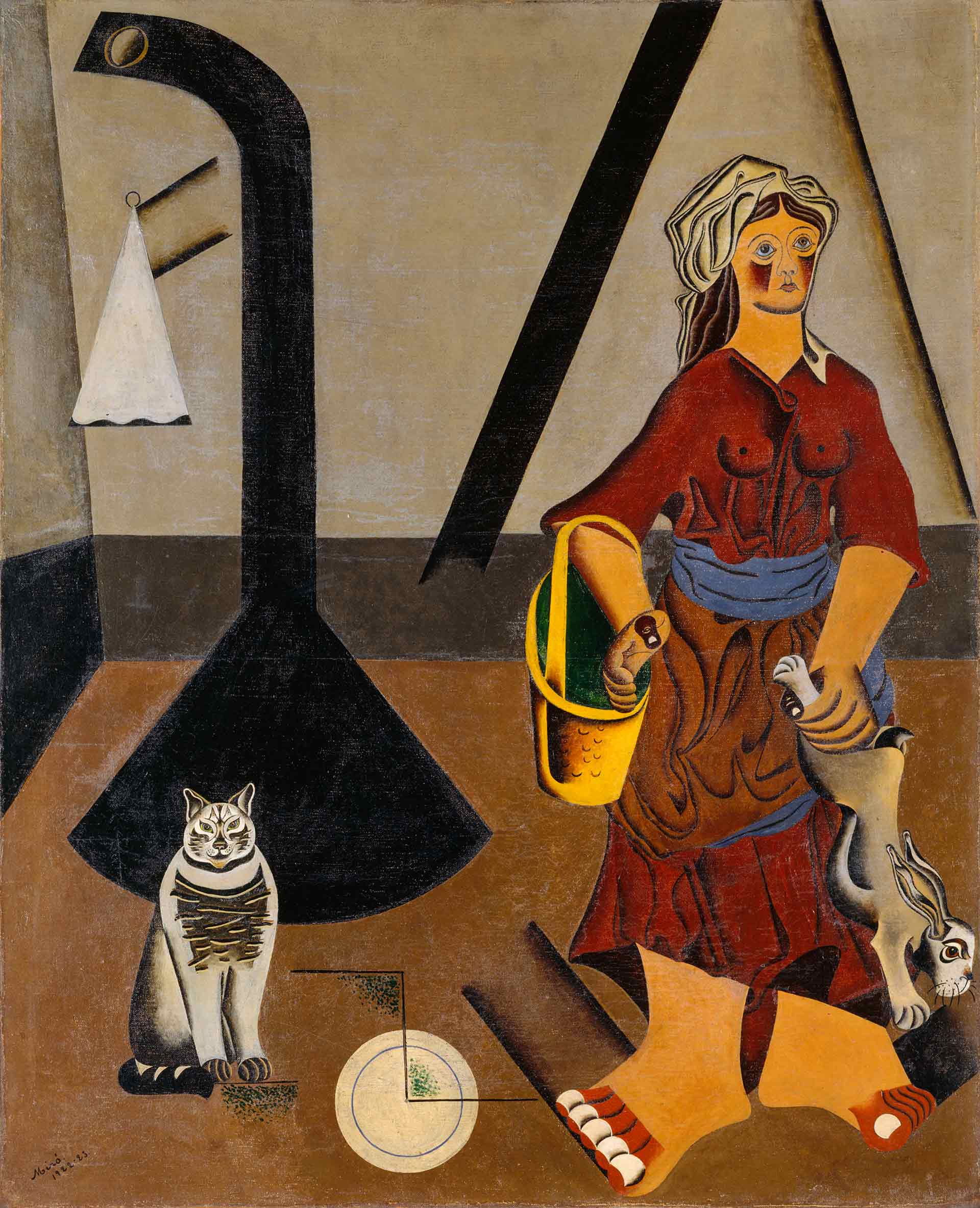
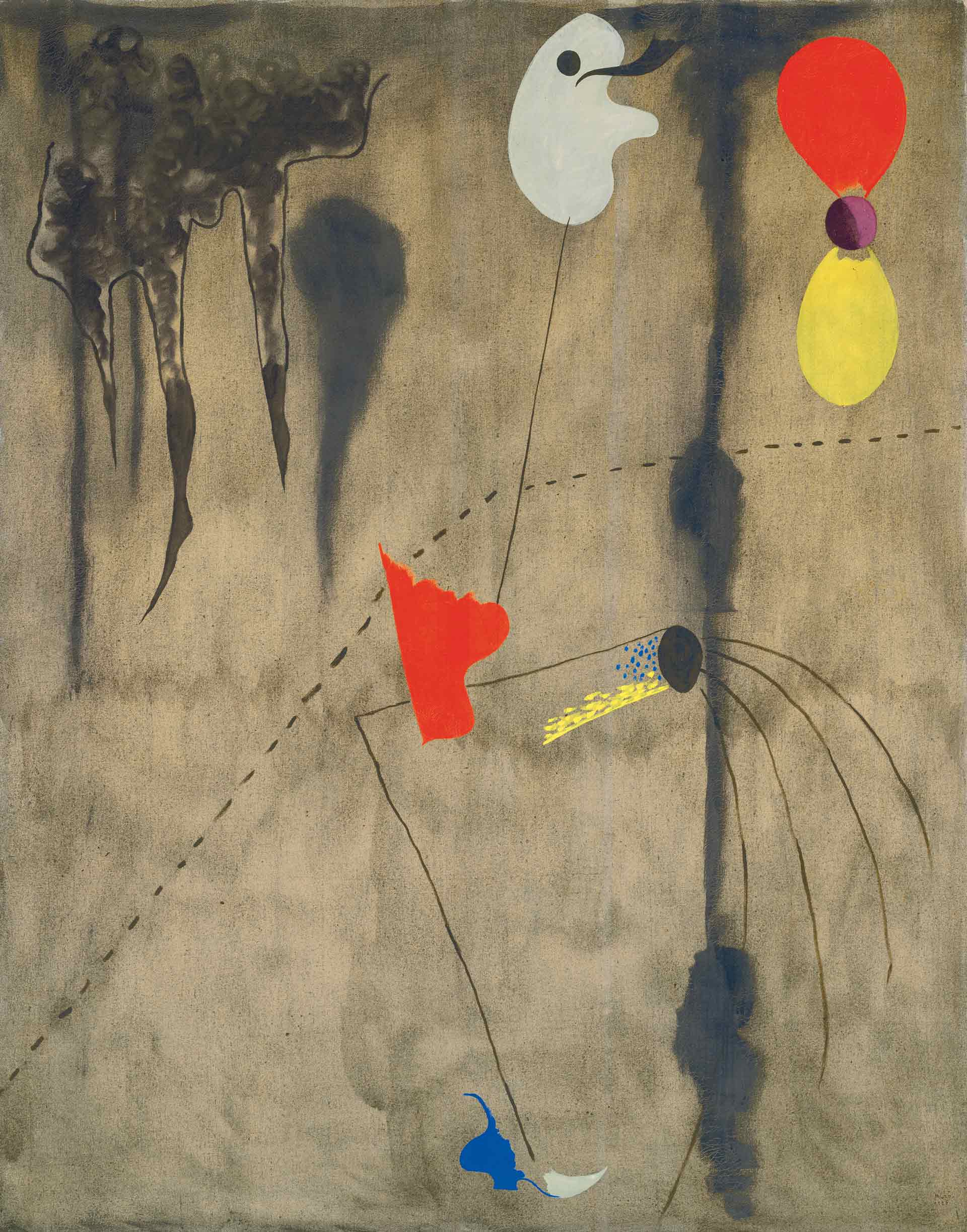
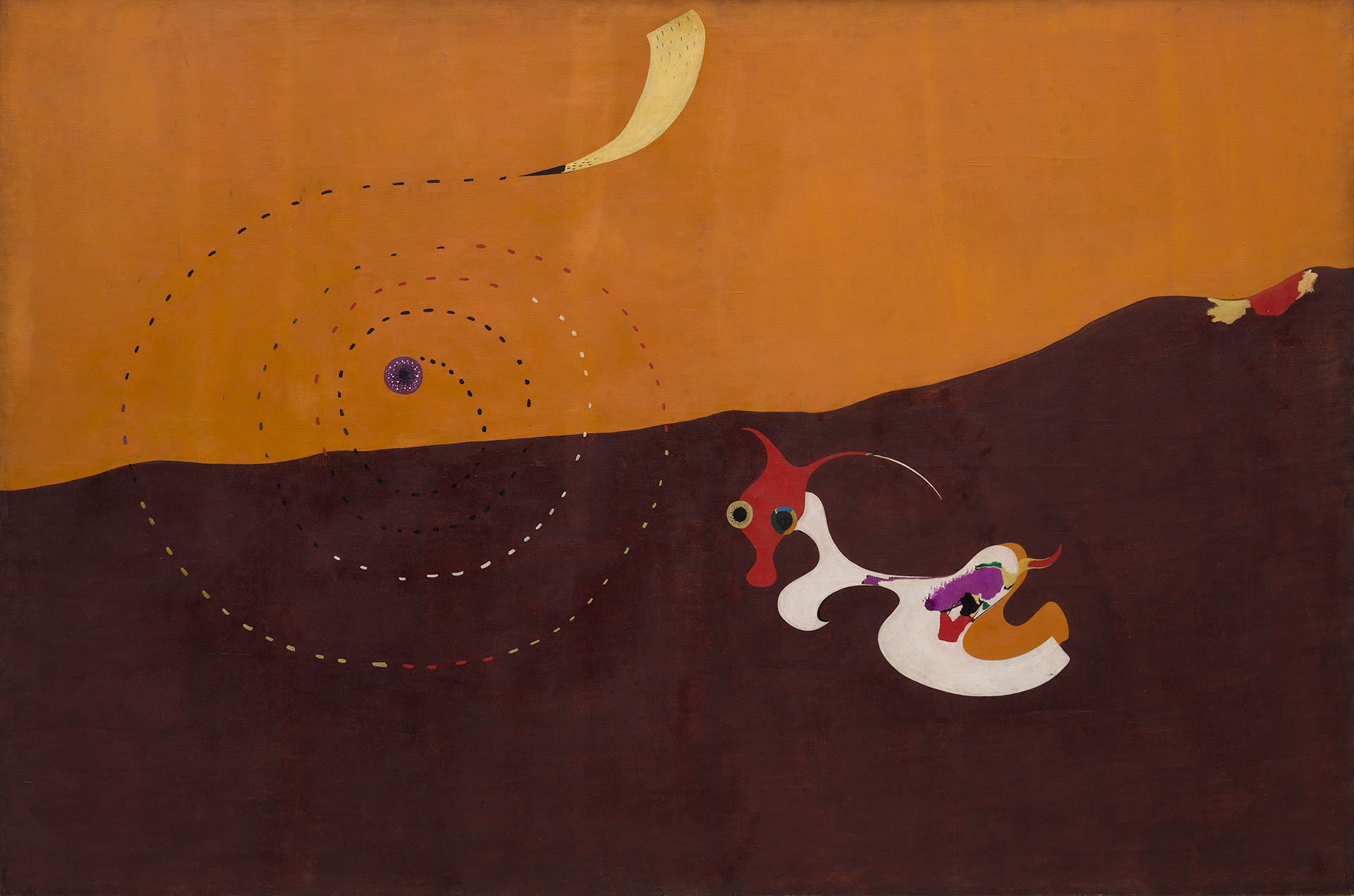
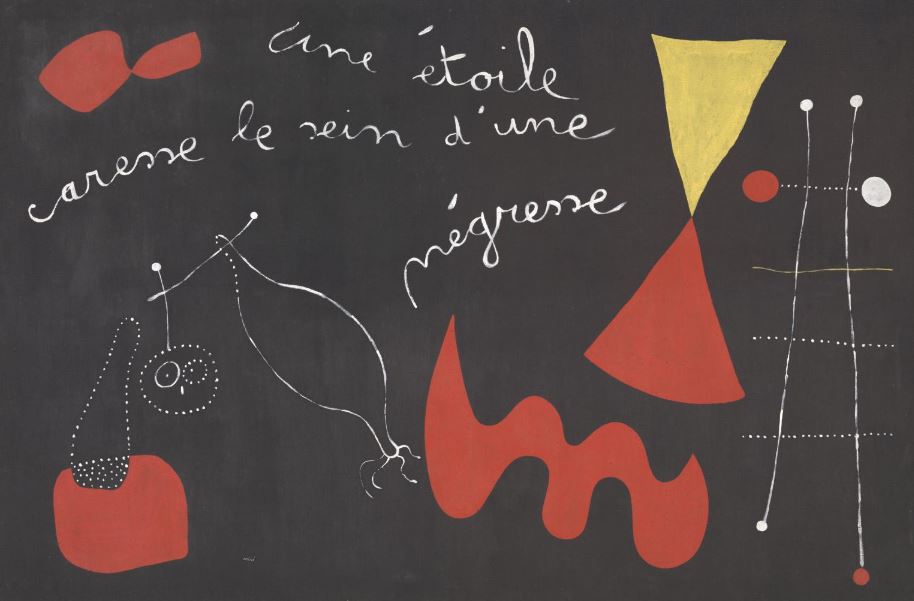
The Guggenheim’s exhibition explores one of the most important periods of Miró’s career, from 1920, when he first went to Paris, to 1945.
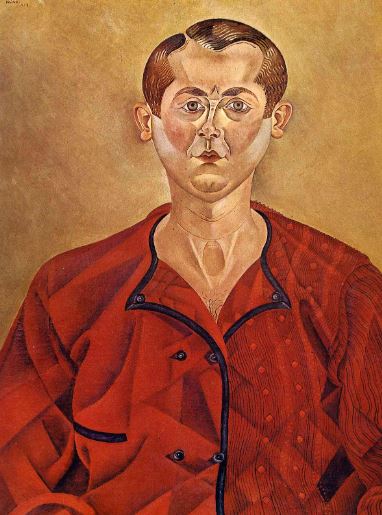
Joan Miró ‘Self-Portrait’ (1919)
Joan Miró was born in Barcelona in 1893 and studied at the city’s Higher School of Industrial and Fine Arts. His early paintings, which were influenced by both the Fauves and Cubists as well as Catalan art, had bold outlines and bright colours, much in the Fauve style. In 1920 he made his first trip to Paris where he met Pablo Picasso.
Joan Miró ‘Interior’ (The Farmer’s Wife) (1922 – 23)
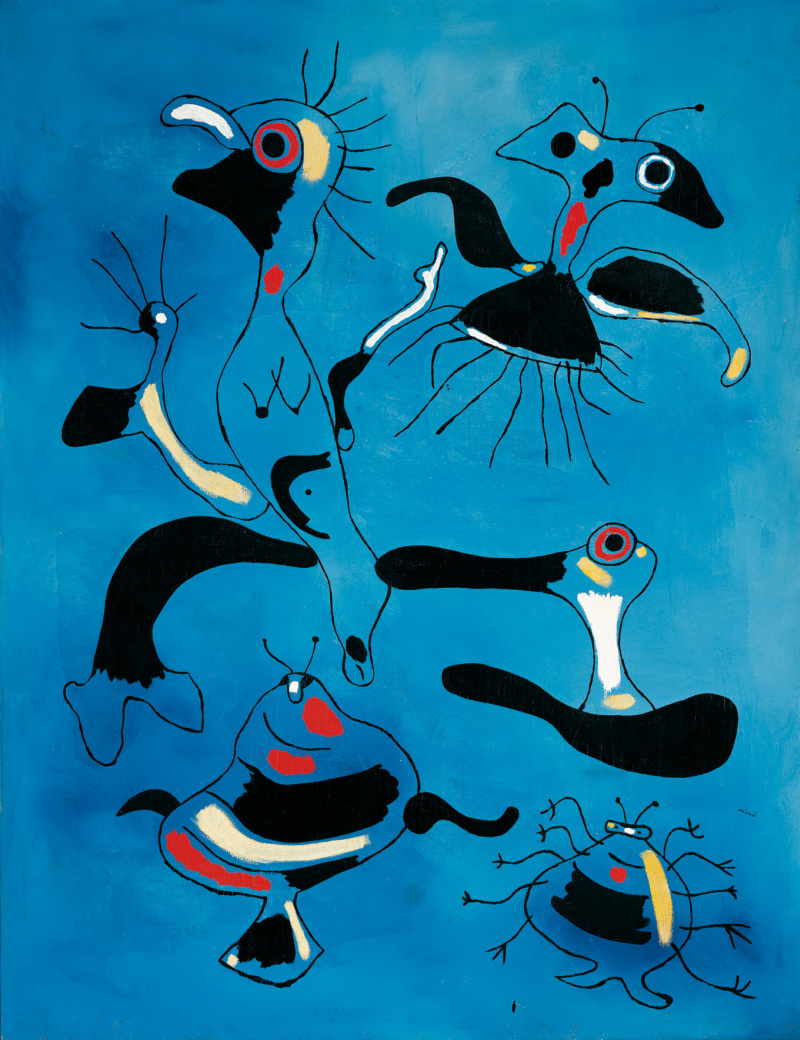
In Paris he also came into contact with André Breton, André Masson, the poet, Max Jacob and other members of the surrealist circle, Miro joined the Surrealist group and was included in its first exhibition, ‘La Peinture Surrealiste’, at the Galerie Pierre in Paris. His style changed from realism to experimental fantasy, combining a mixture of signs and vivid colours.
Joan Miró ‘Painting’ (1925)
Joan Miró ‘Landscape (The Hare)’ (1927)
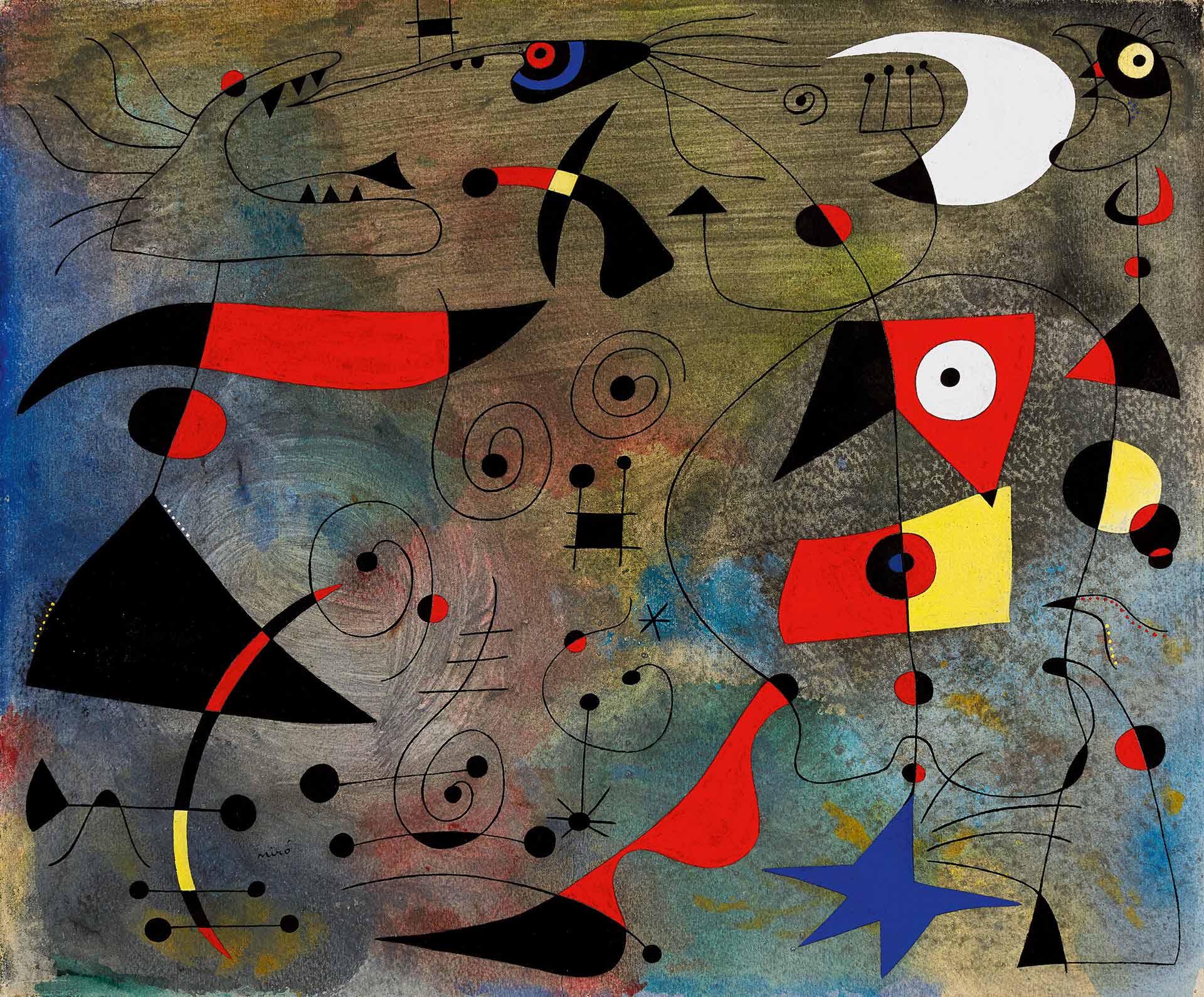
He painted a series of gouaches called ‘Constellations’ and these works were probably the high point of his creativity. Stars, moons, birds, animals and human figures can all be seen in such works as ‘Woman and Birds’ from 1940.
Joan Miró ‘A Star Caresses the Breast of a Negress’ (1938)
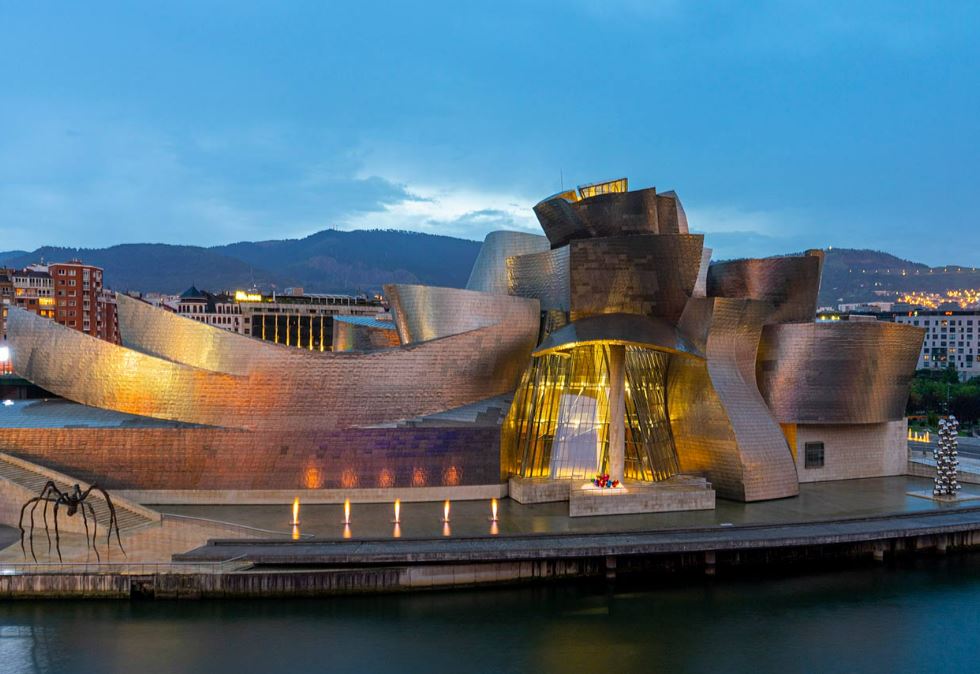
In the Basque city of Bilbao, Spain, for two exhibitions at the Guggenheim Museum: ‘Oskar Kokoschka. A Rebel from Vienna’ and ‘Joan Miró. Absolute Reality. Paris, 1920–1945’. Also an opportunity to visit the Museum of Fine Arts and the city’s impressive Gothic Cathedral.
43 decorated columns hold up the buildings of the Azkuna Zentroa arts centre
A tour of the Occitania region of southern France in search of Romanesque ecclesiastical architecture.
Romanesque architecture appeared in France at the end of the tenth century and was particularly associated with the spread of the monastic orders who built many abbeys and monasteries in the style. It was characterised by thick walls with vertical buttresses, small windows with semicircular arches, side aisles, barrel or groin vaults to support the roof, and often one or more large towers. The Romanesque style dominated religious architecture until the appearance of the Gothic in the Ile de France in the middle of the twelfth century.
Occitania is particularly rich in Romanesque ecclesiastical buildings and over the past few months I have travelled through the Aveyron, Lot, Tarn et Garonne, Haute Garonne and Aude departments to visit some of the most important examples, especially those with outstanding tympana.
This was the age of pilgrimages and churches were built on the main routes from France to Santiago da Compostela. Two of the most important are in the Occitania region, in Conques and Toulouse.
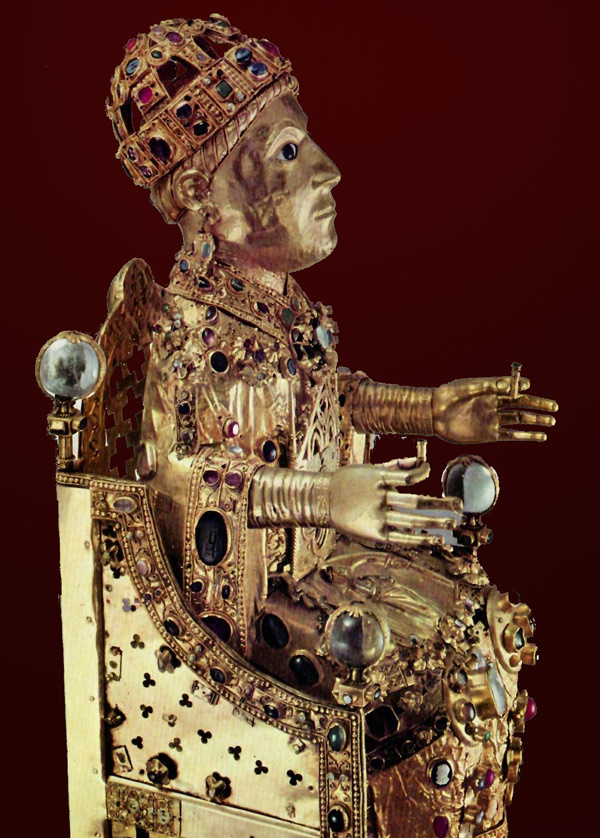
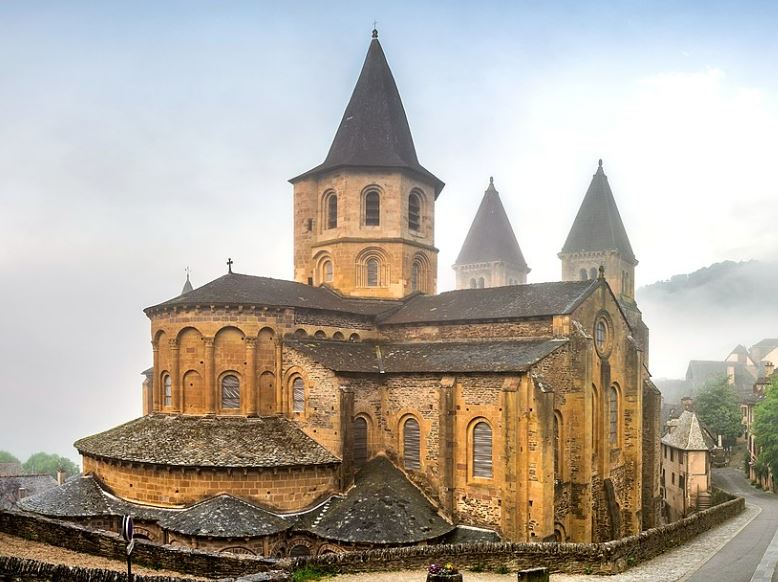
L’Abbaye Sainte-Foy de Conques, Aveyron, was an attraction for pilgrims because it held the relics of Sainte-Foy, a young woman from Agen who was martyred by being burned with a red-hot brazier during the persecution of Christians by the Roman Empire. It is said that her relics were taken to Conques in 866 after being stolen from Agen by a monk. A ninth-century golden reliquary in the church contains a piece of her skull.
Reliquary of Sainte-Foy, Abbaye Sainte-Foy de Conques
The construction of the church, which began in 1041, included the building of five radiating chapels, an ambulatory, choir and nave. Galleries were later added over the aisle and the roof was raised over the transept.
Abbaye Sainte-Foy de Conques
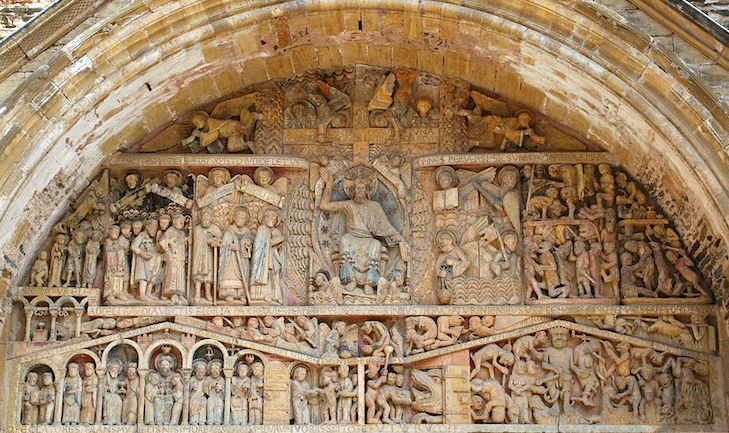
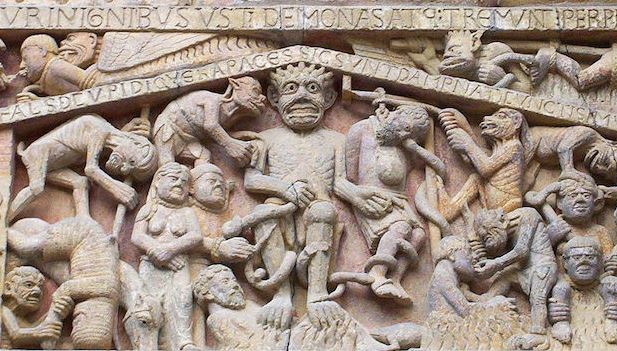
The tympanum is particularly impressive, with scenes from the Last Judgement. It depicts Christ in Majesty presiding over the judgment of the souls of the deceased as Archangel Michael and a demon weigh the souls on a scale. The righteous go to Christ’s right while the dammed go to His left where they are eaten by a Leviathan and excreted into Hell. The depictions of the tortures of Hell include poachers being roasted by the rabbit they poached from the monastery.
Tympanum, Abbaye Sainte-Foy de Conques
Gates of Heaven and Hell, Tympanum, Abbaye Sainte-Foy de Conques
Hell (detail) Tympanum, Abbaye Sainte-Foy de Conques
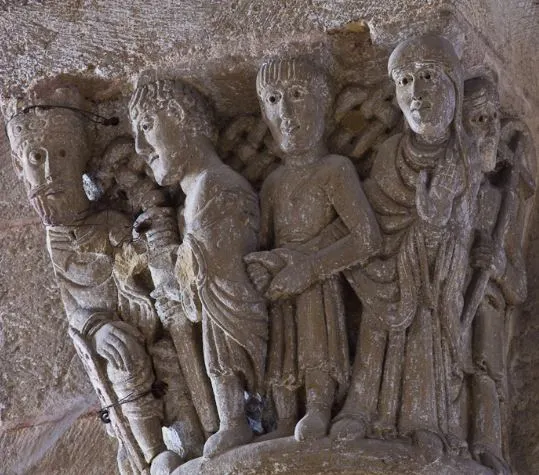
There are 212 columns in the church, the capitals of which are decorated with scenes from the life of Sainte-Foy, as well as floral and biblical motifs.
Capital detail – the arrest of Sainte Foy
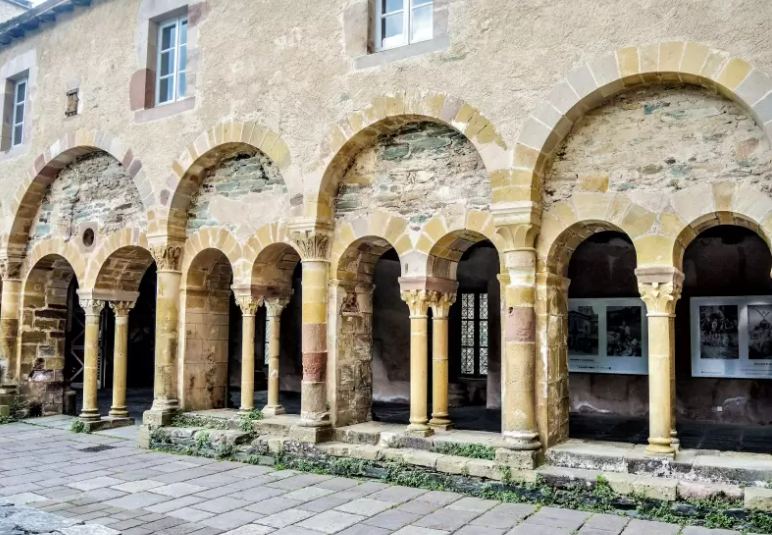
Cloister, Abbaye Sainte-Foy de Conques
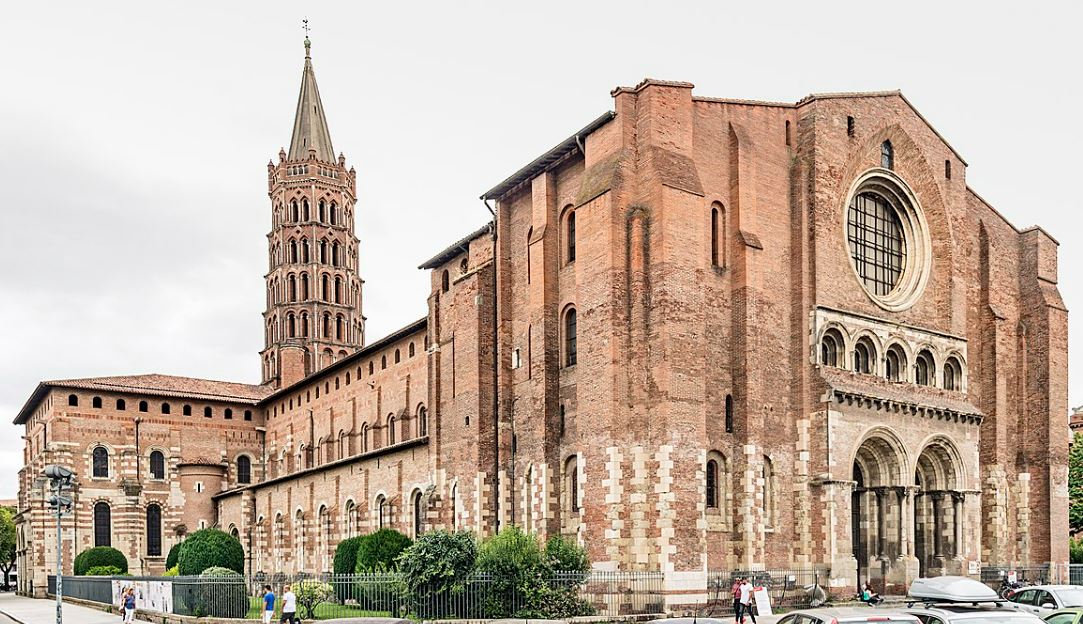
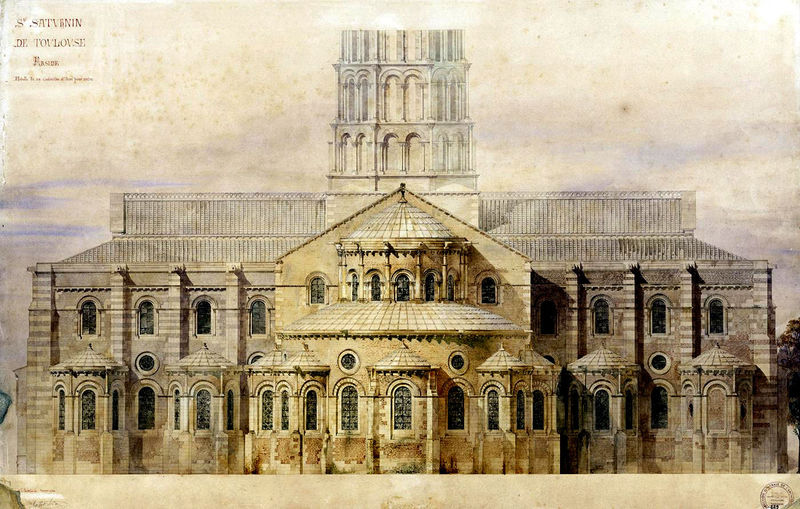
La Basilique Saint-Sernin de Toulouse, the largest Romanesque church in France, was built between 1080 and 1220 on the site of a fifth-century church which contained the body of Saint Sernin, also known as Saint Saturnin, the first bishop of Toulouse, who was put to death in 250. He was accused of being the cause of the silence of the oracles and was tied by the feet to a bull and then torn to pieces as he was dragged along the ground.
The original architectural plan of the church was inspired by that of Sainte-Foy in Conques, both being constructed to allow for the passage of crowds of pilgrims at the same time that the monks carried out their service.
Basilique Saint-Sernin de Toulouse, showing the nine chapels at the east end
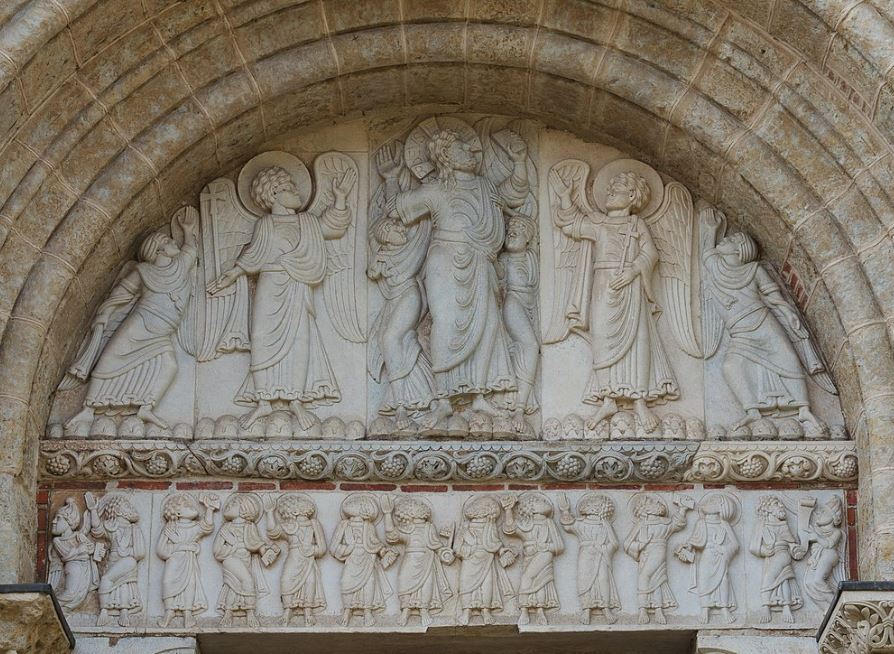
The church was constructed mainly in brick and is particularly notable for its impressive bell tower (the two Gothic-style upper levels were added in the fourteenth century and the spire in the fifteenth century). The west façade has two entrances, as does the façade of the south transept, the double-doored Porte des Comtes, with columns depicting the salvation – damnation dichotomy, and the Porte Miègeville, with a remarkable tympanum depicting the ascending Christ surrounded by angels.
‘Soul of Lazarus taken to heaven’ and ‘Miser made to carry heavy purse forever’
Porte des Comtes
Tympanum above the Miègeville door, Basilique Saint-Sernin de Toulouse
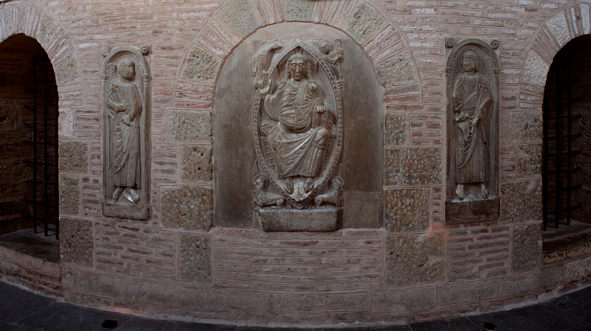
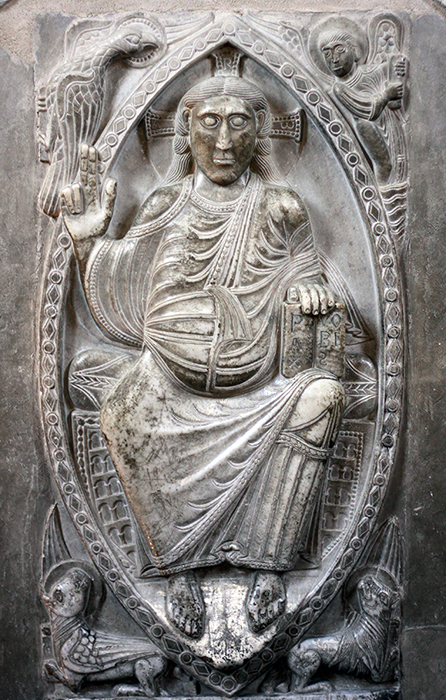
Inside the church, the chapels and the ambulatory are rich in artwork. Particularly notable is a large-scale bas-relief of Christ in Majesty dating from 1096. It depicts Christ in a mandorla, his right hand raised in a gesture of blessing while his left hand holds a gospel with the words Pax Vobis inscribed. The attributes of the four Evangelists fill the four corners.
‘Christ in Majesty’ (bas-relief, c.1096) Basilique Saint-Sernin de Toulouse
The ambulatory has a total of nine chapels – five radiating chapels and four apsidioles – which are said to contain around two hundred relics, the largest collection in the world after the Vatican. They include a thorn said to have been take from the Holy Crown, given by Alphonse de Poitiers in 1251, the shrine of the True Cross, dating from the twelfth century, and the shrine of Saint Sernin, from the thirteenth century. The reliquary chests also contain the remains of Saints Lawrence, Boniface, Anthony the Abbott, Vincent of Saragossa, Etienne, Bernadette Soubirous and Therese of Lisieux.
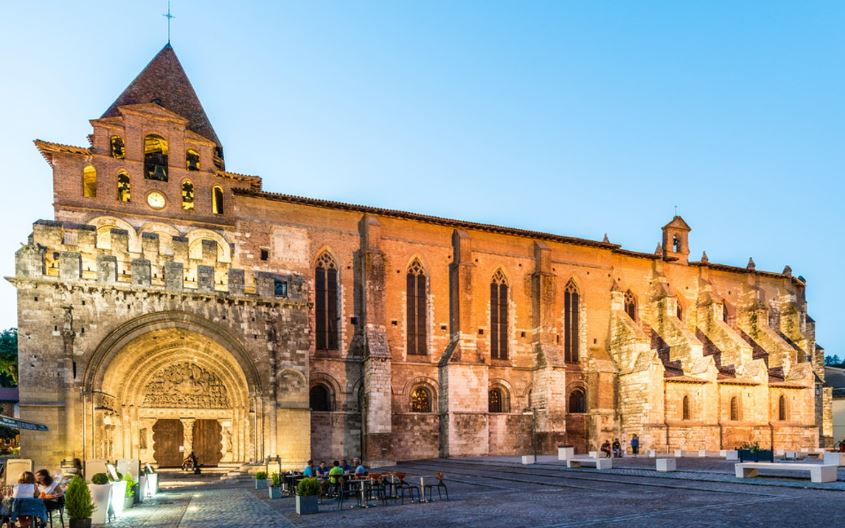
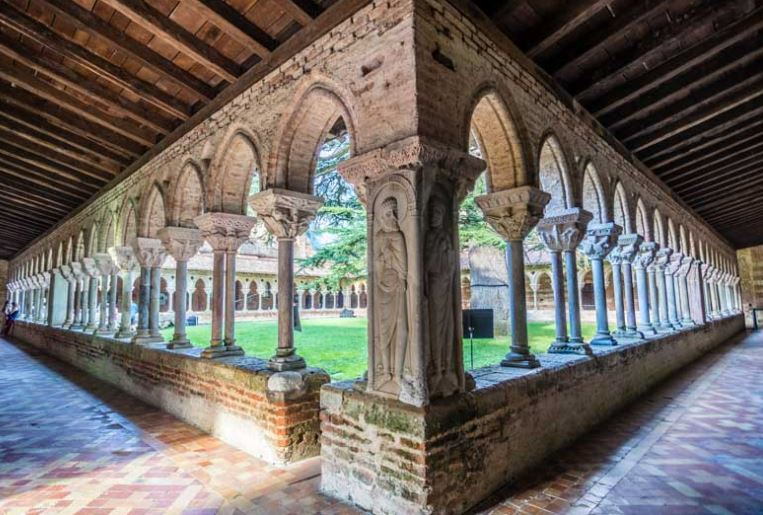
L’Abbaye Saint-Pierre de Moissac, Tarn et Garonne, dating from 1115 – 30, is one of the most impressive Romanesque structures of the twelfth century. Not only does it have one of the most elaborate Romanesque portals but also one of the largest and best-preserved cloisters from the period.
Abbaye Saint-Pierre de Moissac
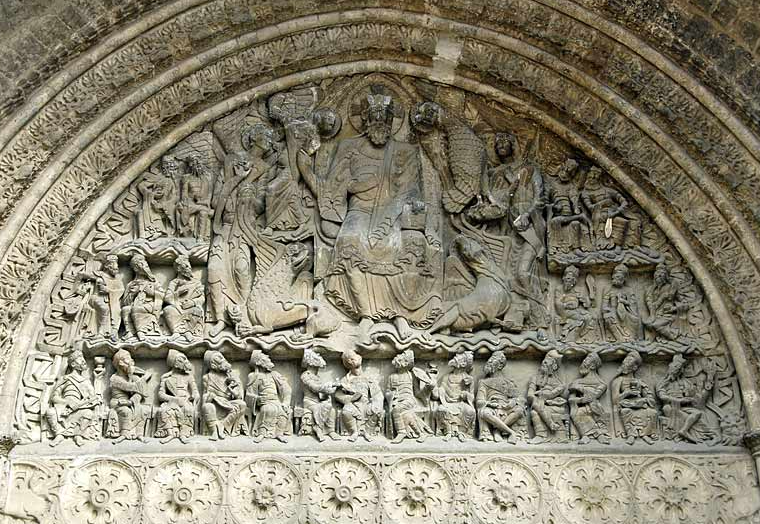
The southern portal of the church opens on the main square of the town of Moissac. The tympanum, inspired by the Book of Revelation, depicts Christ enthroned in majesty, blessing the world. He is surrounded by the symbols of the four Evangelists: the eagle of John, the bull of Luke, the lion of Mark and the man of Matthew. Along the bottom of the tympanum is a row of elders, all turning their heads towards the figure of Christ.
Tympanum, Abbaye Saint-Pierre de Moissac
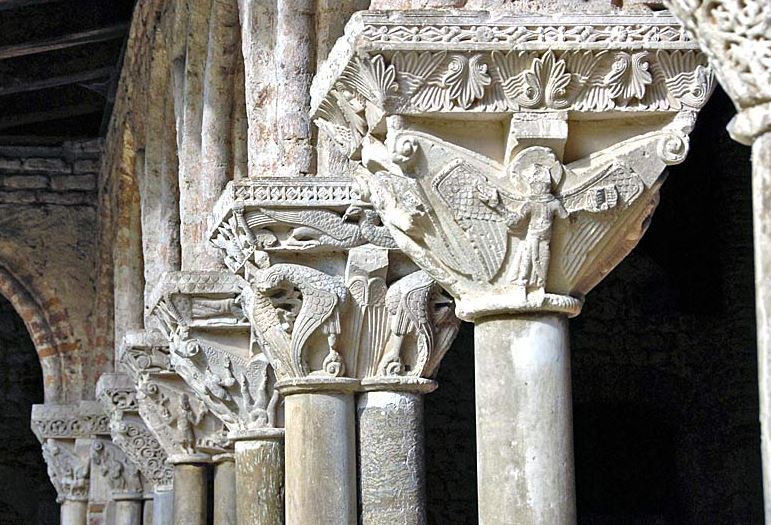
The impressive Abbey cloister still contains most of the original sculptures, both the seventy-six historiated capitals and eight pillars. Forty-six of the cloister capitals have biblical themes, whilst others depict plants and animals.
Cloister, Abbaye Saint-Pierre de Moissac
Column capitals, Abbaye Saint-Pierre de Moissac
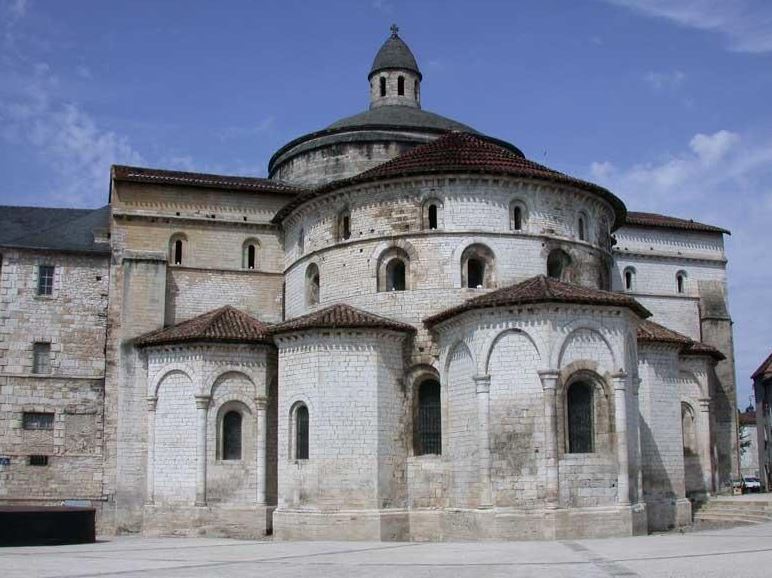
L’Abbaye Sainte-Marie de Souillac, Lot, was originally built by Benedictine monks from Aurillac who settled there. It was consecrated in 1140 and dedicated to Our Lady of the Assumption. Whilst it suffered damaged during the Hundred Years War, under Henri de la Mothe Houdancourt it was rebuilt.
Abbaye Sainte-Marie de Souillac
It was built in the shape of a Latin cross with a large nave topped with three cupolas. The apse has three radiating chapels and two other smaller chapels. The porch tower houses a necropolis with sarcophagi closed by two plaques from the Carolingian period.
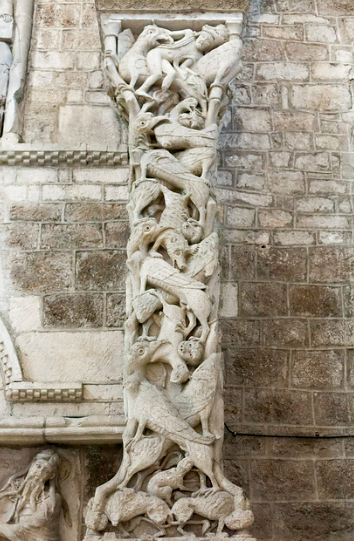
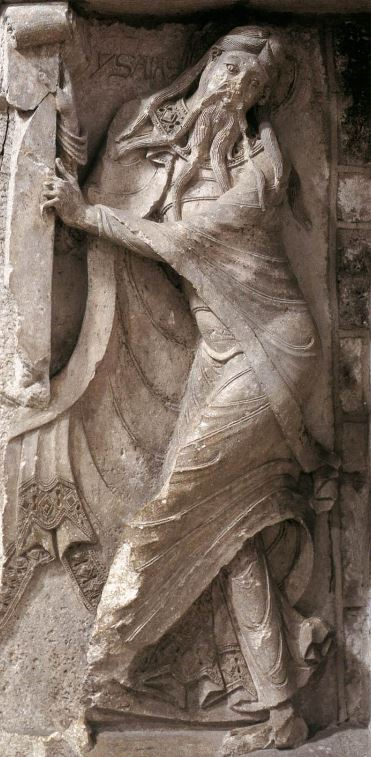
The Abbey contains a number of interesting sculptures, many of which were moved inside after the external portal suffered damage during the Huguenot wars. They include a tympanum, which dates from 1130, depicting scenes from the story of Theophilus. To its right there is an extremely curious sculpture known as the ‘pillar of Souillac’ with a strange tangle of monsters. Also on the inner west wall is a relief carving of the prophet Isaiah, again dating from around 1130.
Tympanum, Abbaye Sainte-Marie de Souillac
‘Pillar of Souillac’, Abbaye Sainte-Marie de Souillac
Relief carving of Isaiah, Abbaye Sainte-Marie de Souillac
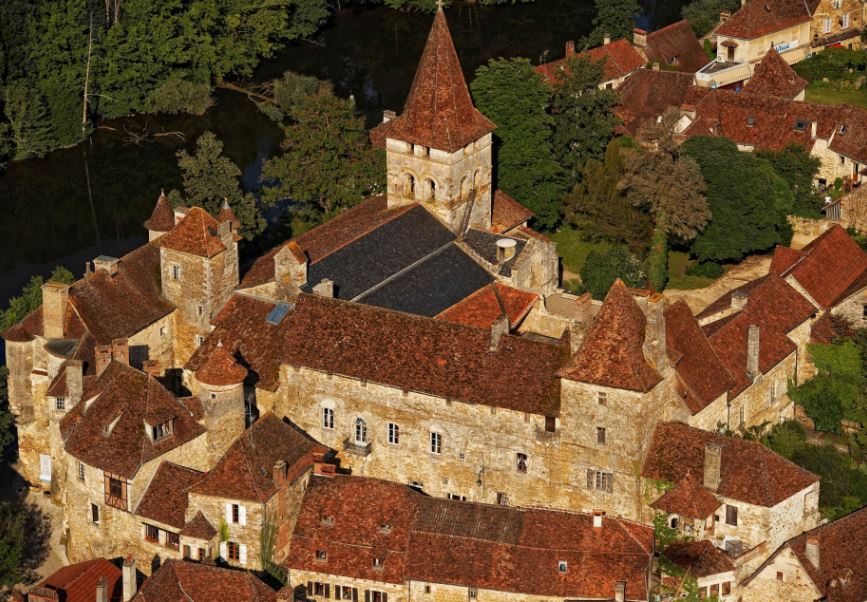
L’Eglise Saint-Pierre de Carennac is located in the centre of Carennac village, near the Lot border with the Dordogne. Construction of the abbey church began towards the end of the eleventh century in the Romanesque style. Donations to the Abbey in the twelfth century made it quite wealthy and allowed embellishments to be added to the church, including a west porch and portal, constructed around 1150.
L’Eglise Saint-Pierre de Carennac
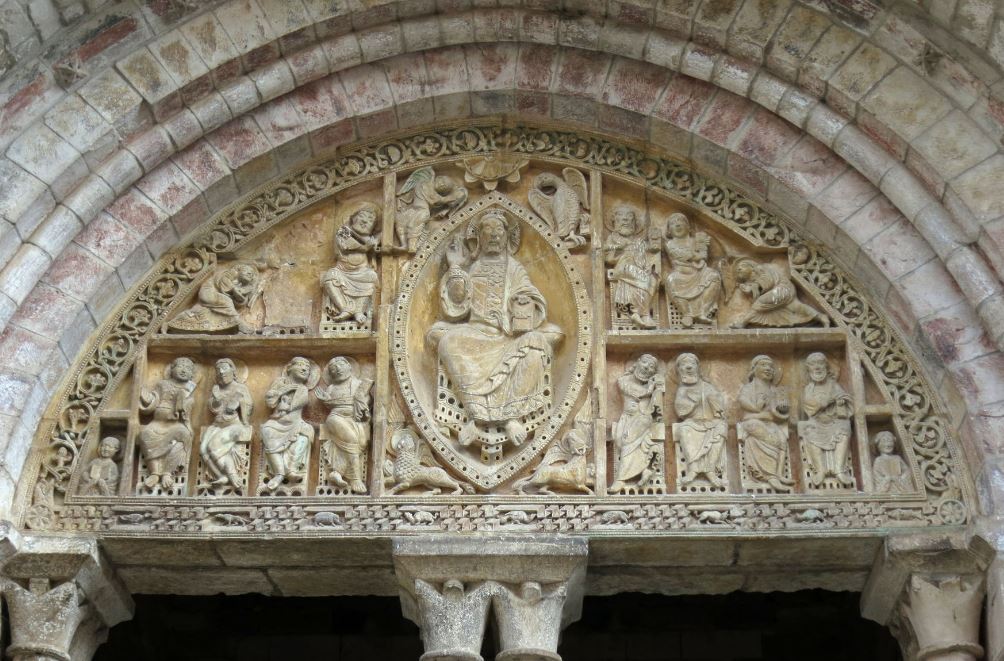
The tympanum above the portal is particularly splendid. It portrays Christ in majesty in a mandorla, holding a book and blessing the world. He is surrounded by the Tetramorph (the angel of Matthew, the eagle of John, the lion of Mark and bull of Luke) as well as the the apostles and prostrating angels. The base of the tympanum has a row of animals, including a dog, a peacock and a fish, whilst the arch above has flowers and fruits.
Tympanum, Eglise Saint-Pierre de Carennac
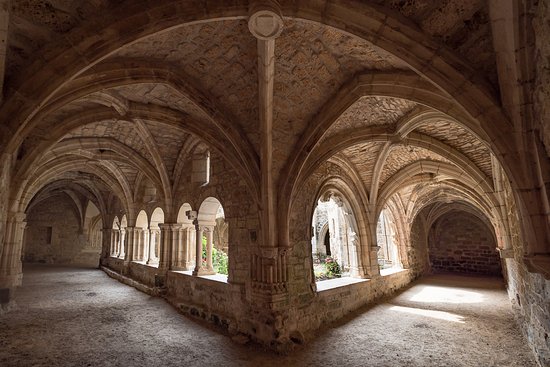
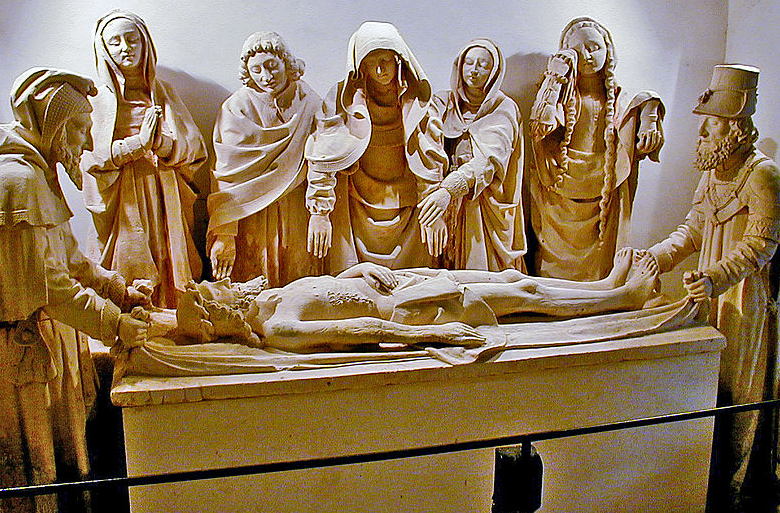
The cloister is part Flamboyant Gothic after being rebuilt in the fifteenth century due to damage sustained during the Hundred Years War. It contains a wonderful example of a fifteenth-century sculpture of the Mise au Tombeau.
Cloister, Eglise Saint-Pierre de Carennac
Mise au tombeau, Eglise Saint-Pierre de Carennac
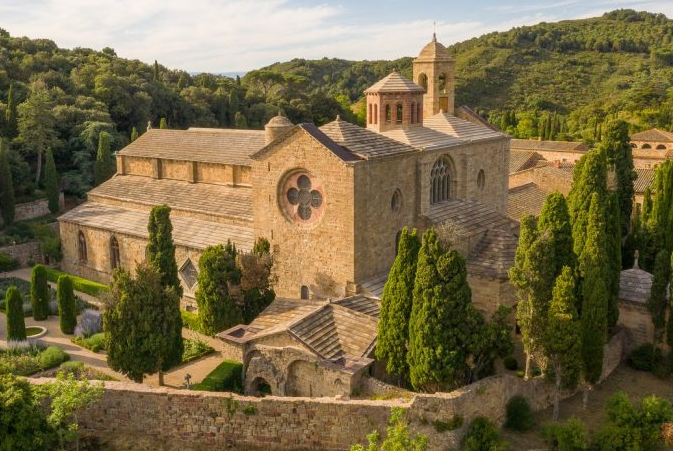
L’Abbaye de Fontfroide, near Narbonne, Aude, has had a turbulent history. It was founded in 1093 by Aimery I, Viscount of Narbonne. However, after poor beginnings it needed to be refounded by Ermengarde, Vicountess of Narbonne and it joined the Cistercian order in 1145. Grants of land from the Counts of Barcelona and Vicountess Ermengard secured the wealth and status of the abbey and for a while it became one of the most powerful Cistercian abbeys in Europe, playing a crucial role during the crusade against the Cathars.
L’Abbaye de Fontfroide
However, the Black Death, which reached Narbonne in 1348, decimated almost the entire community. Whilst it recovered for a while, by the sixteenth century the commendatory abbots were taking more and more of the Abbey’s income until the number of monks significantly decreased and the Abbey became incredibly poor. By the time of the French Revolution, it had been abandoned. The Abbey is now in private ownership and open to the public.
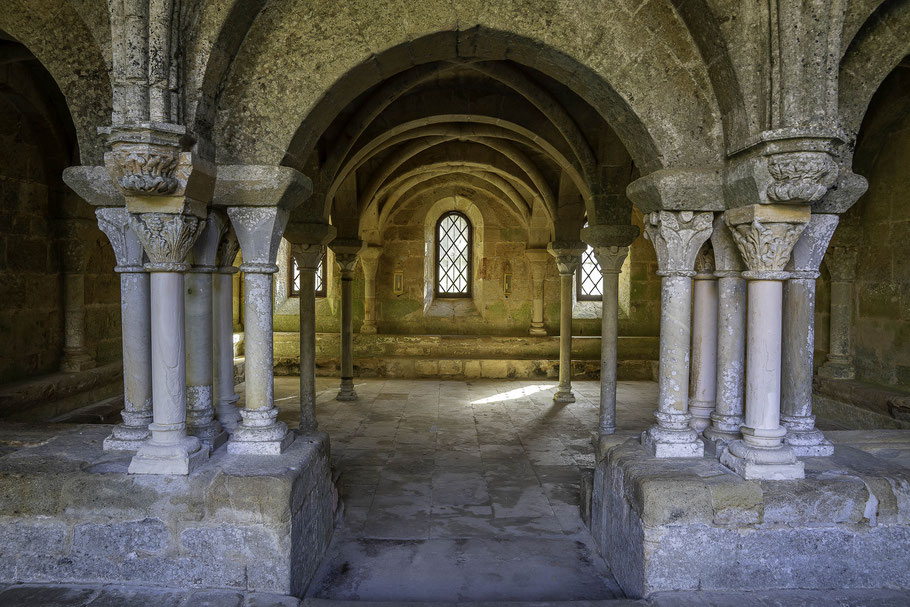
The cloister seen from the chapter house, Abbaye de Fontfroide
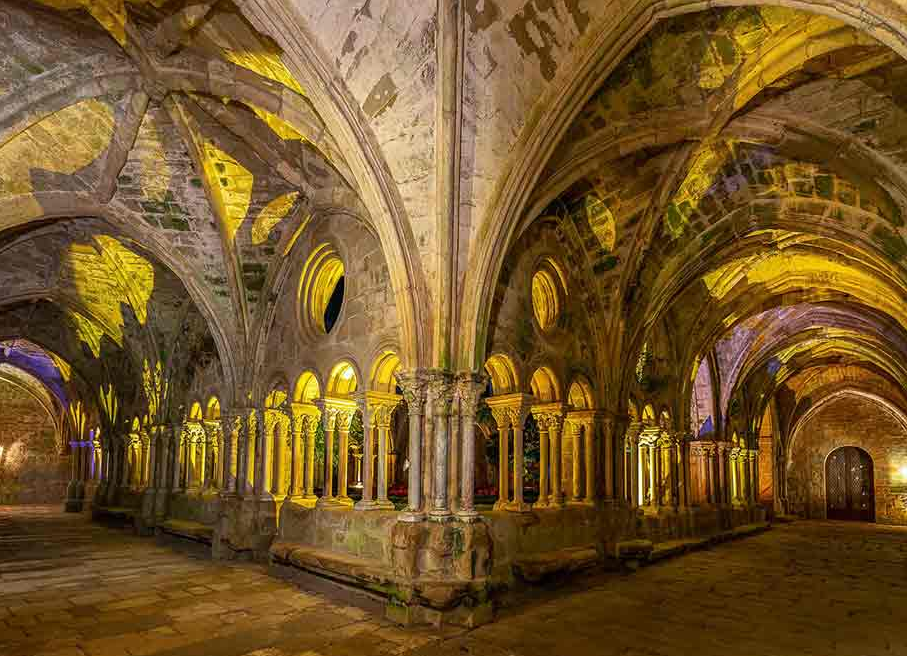
Cloister, Abbaye de Fontfroide
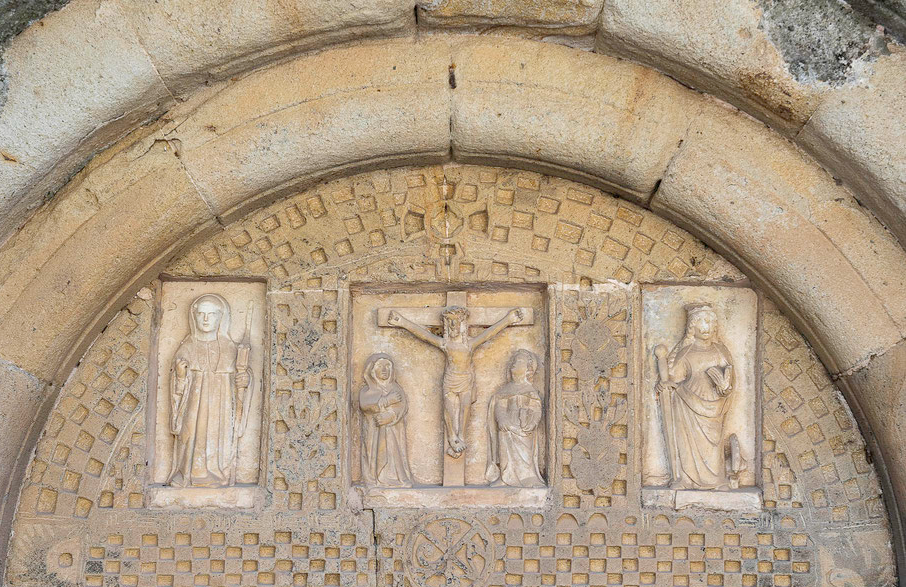
Tympanum above the monastery entrance, Abbaye de Fontfroide
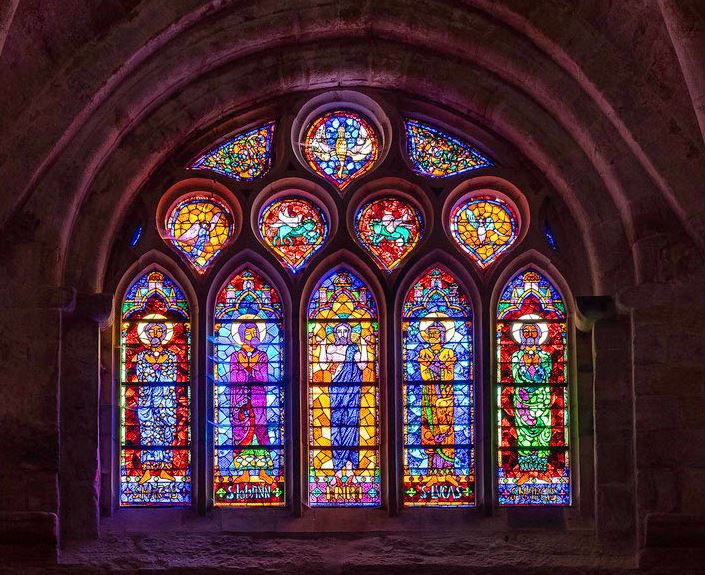
Stained-glass window in the choir, Abbaye de Fontfroide
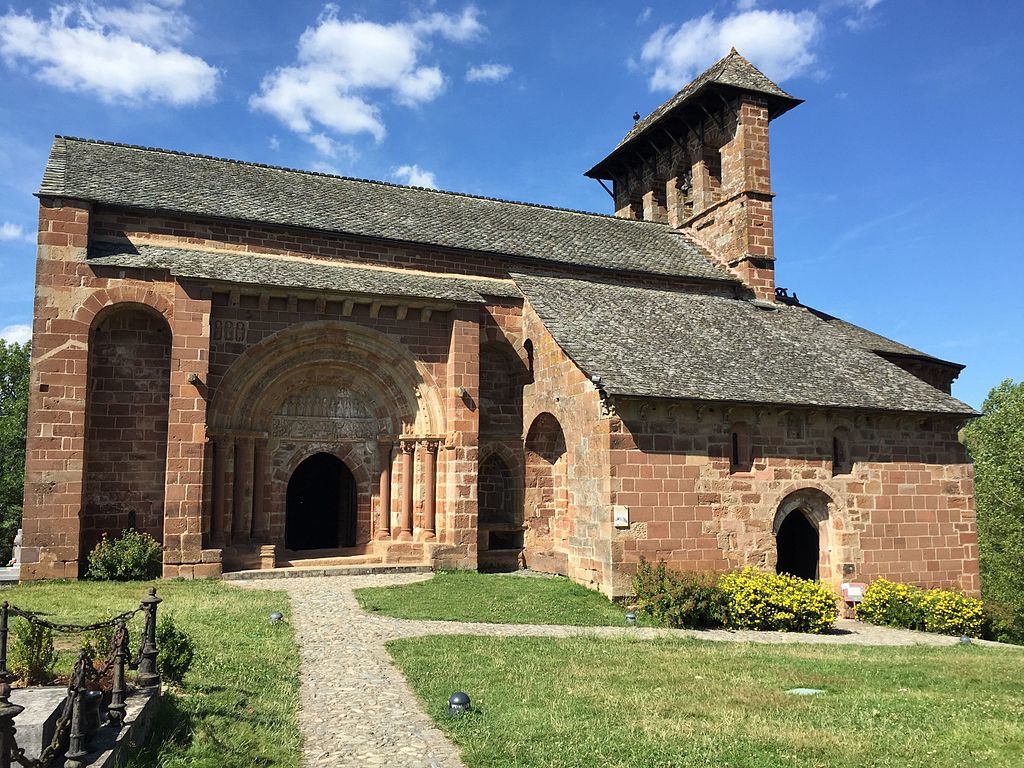
L’Eglise Saint-Hilarian-Sainte-Foy de Perse, Espalion, Aveyron, was originally dedicated to Saint Hilarian, Sainte Foy being added when, in 1060, Hugh de Calmont, gave the monastery of Perse to the Abbey of Conques.
Little is known of the history of the church. In 1312 there were only five monks and the abbot had to unite the priory with a neighbour. However, this obviously had little effect as a century later there were just two monks.
L’Eglise Saint-Hilarian-Sainte-Foy de Perse, Espalion
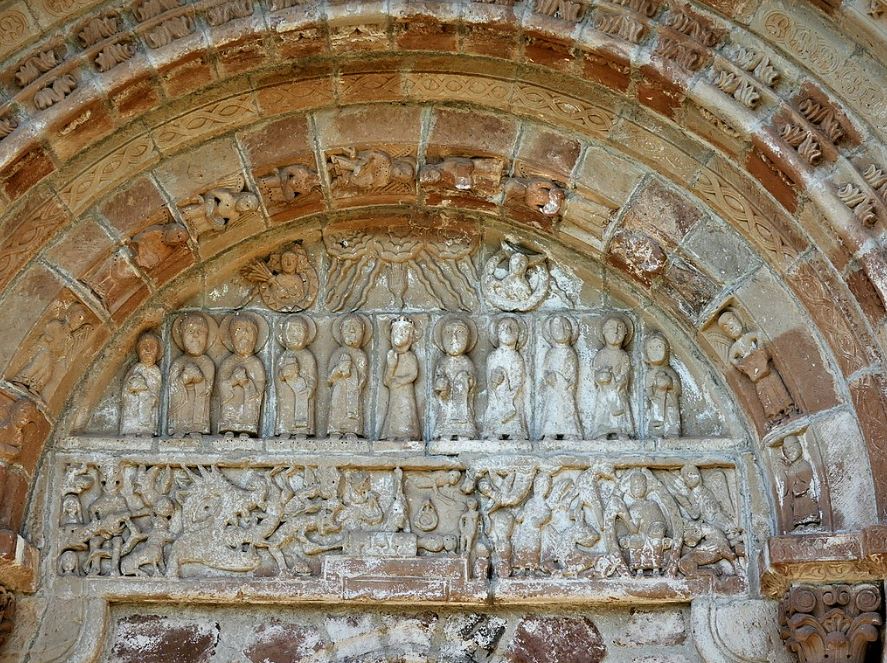
The western portal of the church is impressive, with columns and a well-sculpted tympanum. The upper part of the tympanum evokes Pentecost, with, below, the Virgin Mary, surrounded by ten Apostles, receiving the Holy Spirit in the form of a dove. The lower part of the tympanum represents the Last Judgement with, in the centre, souls being weighed. On the right an angel takes a child to Heaven, whilst on the left the Leviathan is devouring a man head first.
Tympanum, Eglise Saint-Hilarian-Sainte-Foy de Perse
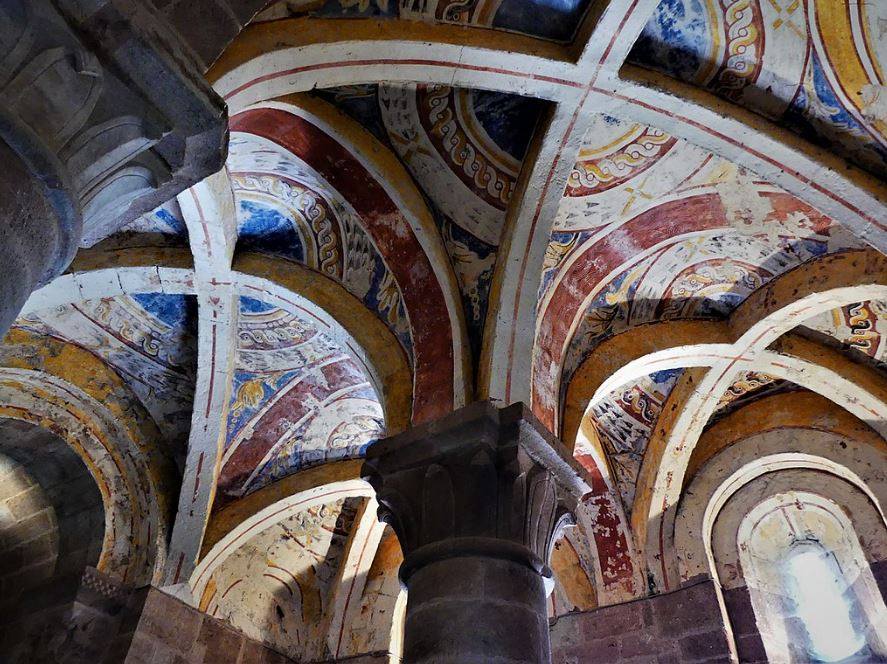
Inside the church, the vault of the transept has richly-painted decoration.
Cross ribs of the vault of the transept, Eglise Saint-Hilarian-Sainte-Foy de Perse
L’Eglise Saint Pierre de Bessuéjouls, near Espalion, Aveyron, owed its importance to being on the Chemin de St Jacques de Compostelle pilgrimage route. Whilst part of the church was rebuilt in the sixteenth century the Romanesque section under the bell tower is still intact.
L’Eglise Saint-Pierre de Bessuejouls
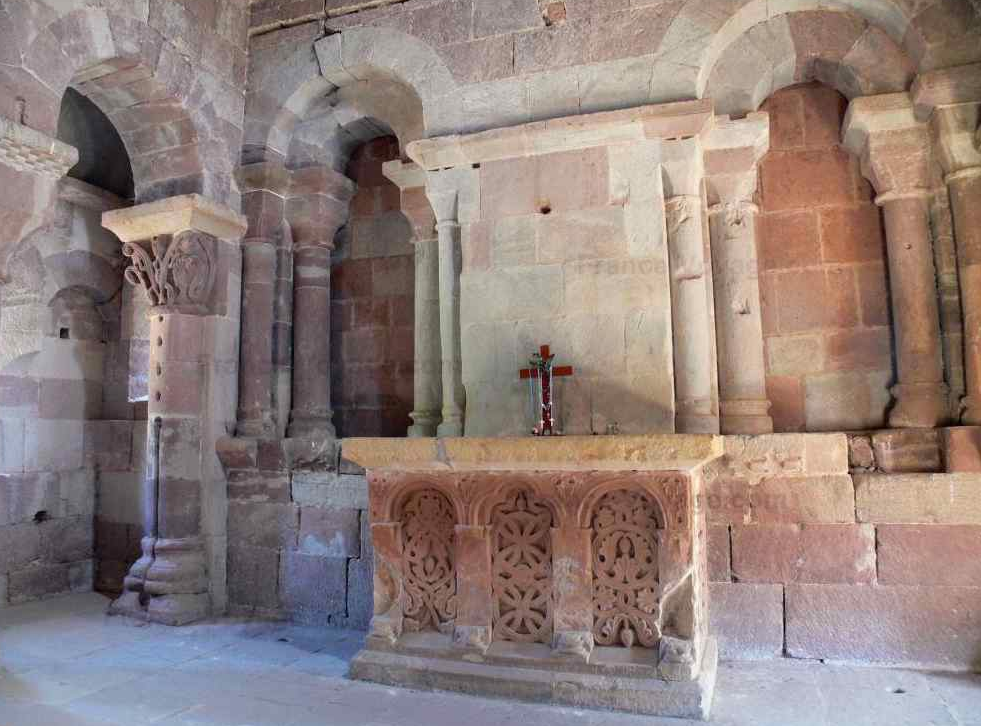
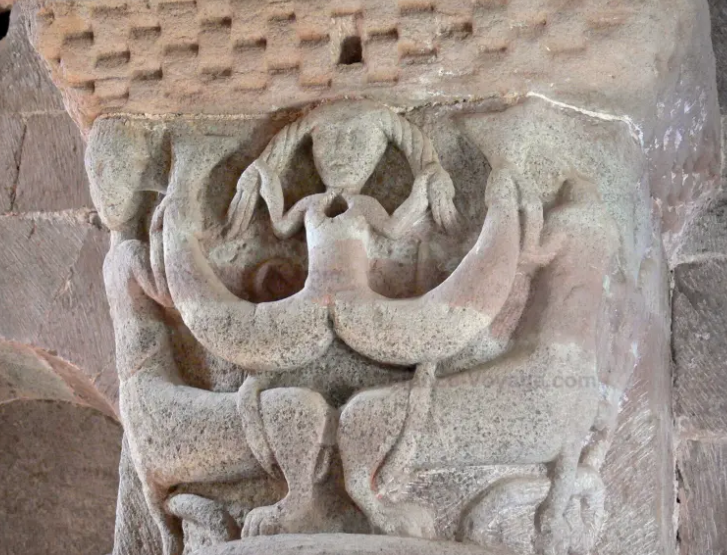
The unusual upper chapel in the bell tower section, dedicated to Saint Michael, dates from the eleventh century. Inside is a rare twelfth-century altar, lintels carved with tracery, and figured capitals including a twin-tailed siren flanked by two centaurs.
Saint Michael Chapel, Eglise Saint-Pierre de Bessuejouls
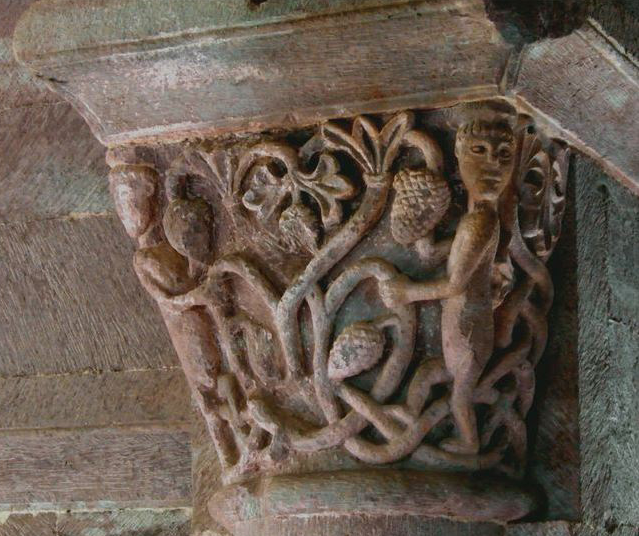
Column capital, depicting two fruit pickers
Column capital, depicting twin-tailed siren flanked by two centaurs
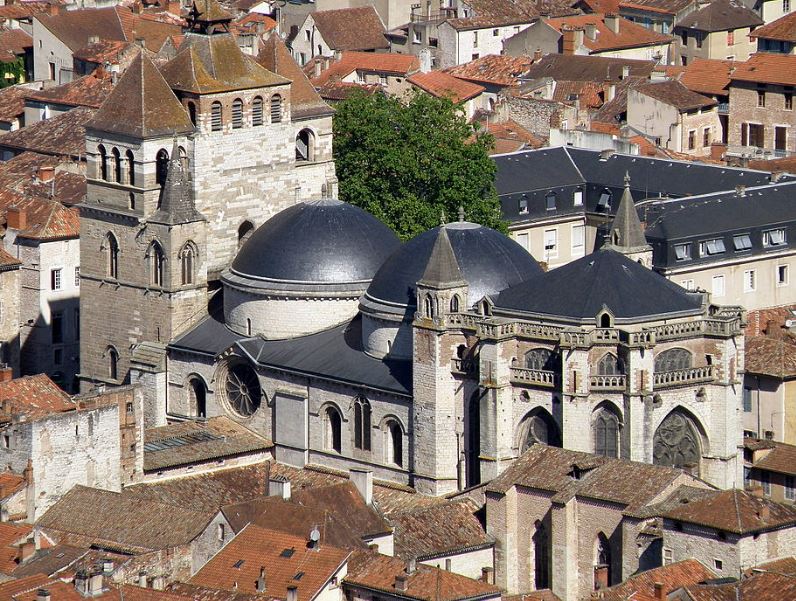
La Cathédrale Saint-Étienne de Cahors, Lot, which has an austere, fortified appearance, was built by bishop Gerard de Cardaillac in the twelfth century, on the site of a seventh-century church which had been erected by Saint Didier of Cahors. Most of the building was completed around 1140; however, the cupolas were probably added at the end of the century.
La Cathédrale Saint-Étienne de Cahors
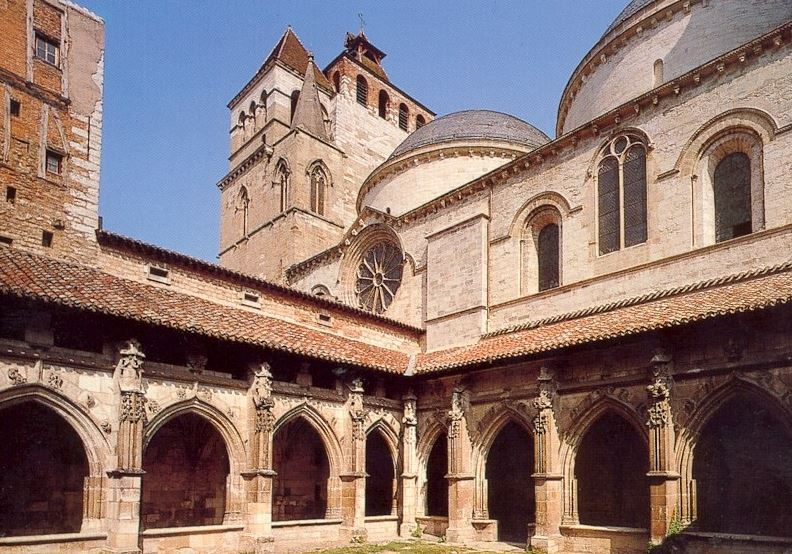
The nave as well as the north and south portals were built in the Romanesque style, although later additions such as the apse with three chapels, which were built on the Romanesque base, are Gothic. Unusually, the church has no transept. The cloister was added in 1504 by bishop Anthony of Luzech and is in the Flamboyant Gothic style.
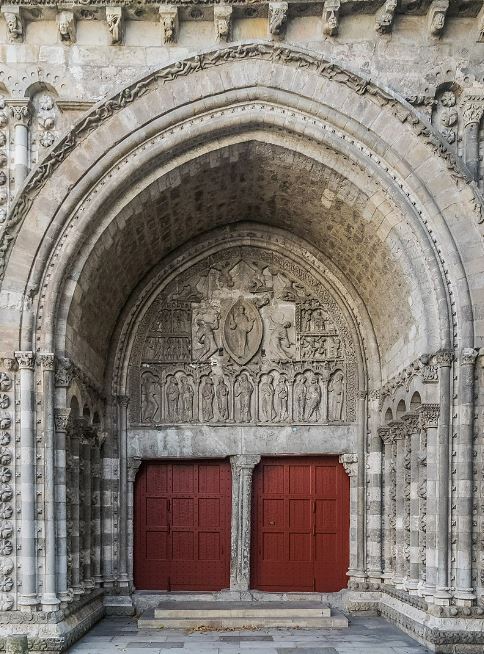
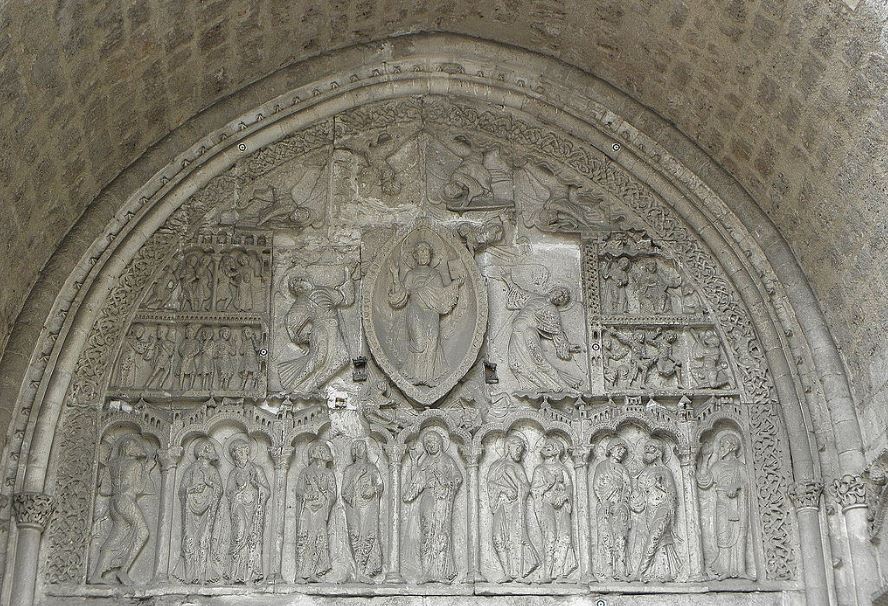
The north facade has an arched portal surmounted by a remarkable tympanum, dating from around 1140. Its theme is the Ascension of Christ and the life of Saint Stephen.
North portal, Cathédrale Saint-Étienne de Cahors
In the centre, Christ, surrounded by a mandorla, is standing with his right hand raised in a sign of blessing, a bible is in his left hand. Angels are depicted on either side. The Virgin is in the centre of the lower part of the tympanum, flanked by the figures of the apostles, who are limited to eleven after the betrayal of Judas.
On either side of the angels, is the story of the martyrdom of Saint Stephen, patron saint of the cathedral, as it appears in the Acts of the Apostles. On the left is the profession of faith before the Sanhedrin and Stephen being expelled by the high priest, whilst on the right, is the vision of Saint Stephen and his stoning in the presence of Saul.
North portal tympanum, Cathédrale Saint-Étienne de Cahors
West and north galleries of the cloister
Cloister, Cathédrale Saint-Étienne de Cahors
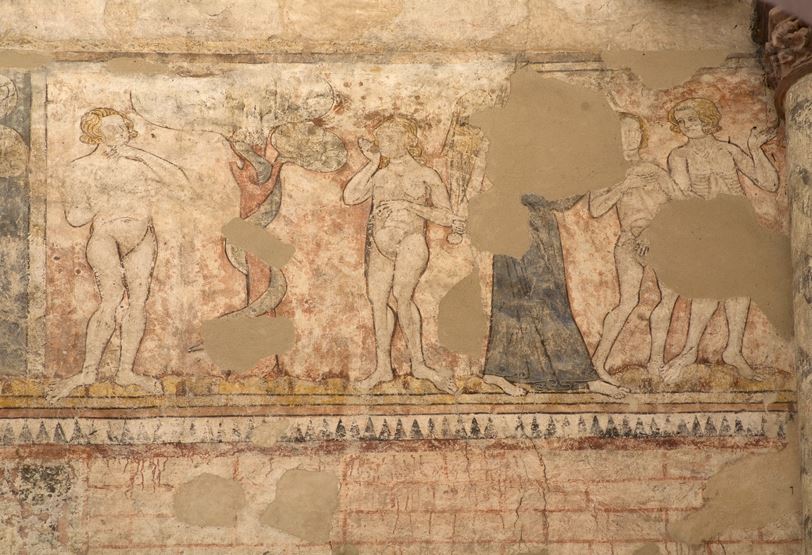
Wall paintings were discovered in 1950 in the narthex of the CathedraL and they were restored in 1988 and 1989. They date from between 1316 and 1324 and illustrate the story of Creation through the original sin of Adam and Eve.
‘Original Sin’ and ‘Adam and Eve expelled from Paradise’















 The Diary of One Who Disappeared