Fauré, Saint-Saëns and Weill

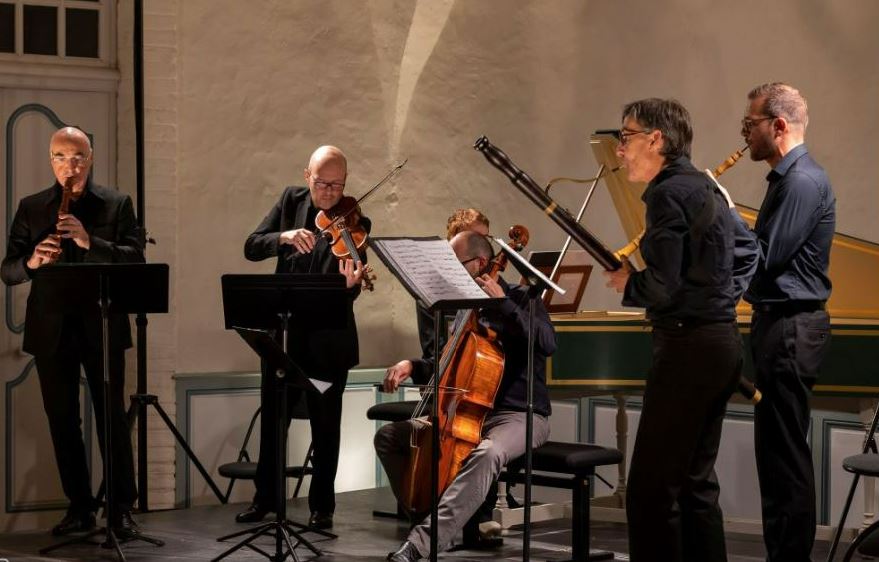
The excellent Orchestre National du Capitole de Toulouse (voted French Orchestra of the Year in 2022) under conductor Roberto Fores Veses performed a varied and extremely entertaining programme at La Prade Cultural Hall, Pradines, in the Lot department, as part of the Festival ClassiCahors.

Roberto Fores Veses

The evening beagn with Gabriel Fauré’s ‘Masques et Bergamasques’, commissioned in 1918 by Prince Albert I of Monaco. Fauré reworked and expanded his 1902 ‘Fête Galante’ by linking together previously composed instrumental and choral pieces and it has become his most frequently performed stage work. Containing a charming Menuet and a lively Gavotte, it was an entertaining concert opener.

The first half continued with Camille Saint-Saëns’ ‘Cello Concerto no.1’, composed in 1872. Although the concerto has three sections it is played as one continuous movement. It was wonderfully performed by soloist Sarah Iancu. Iancu trained at the National Conservatory of Music in Paris and was named Principal Cellist of the Toulouse Orchestra in 2002. She played the Concerto with elegance and great feeling, especially the demanding third section. An appreciative audience brought her back for an encore.

Sarah Iancu

The second half saw a wonderfully rousing performance of Kurt Weill’s ‘Symphony no. 2’, known as ‘Fantaisie symphonique’. Composed in 1933 – 34, it was commissioned by Princesse de Polignac, heir to the Singer sewing machine fortune. It is a modernist, well-crafted work in three movements. The first begins quite slowly before adopting a lively allegro molto with distinctive rhythmic motif, whilst the second takes the form of a slow march, although towards the end it builds to a climax before finally fading out. The finale, allegro vivace, goes back to the pace of the opening movement, several times building to a theatrical intensity before a joyful ending. The orchestra performed superbly and, as in the first half, a well-deserved encore was the result.

Gabriel Fauré: Masks and Bergamasques, Suite op. 112; Camille Saint-Saëns: Cello Concerto no. 1 in A Minor, Op. 33; Kurt Weill: Symphony no. 2

Musée Fabre, Montpellier

At the Musée Fabre in Montpellier to see the nineteenth- and early twentieth-century collection. Thanks to an exceptional donation by Montpellier collector Alfred Bruyas (1821 – 1877) the Museum boasts an excellent collection of the works of Gustave Courbet. Montpellier artist Frédéric Bazille is also heavily featured.

Gustave Courbet ‘L’homme la pipe’ (c.1849)

Gustave Courbet ‘Les Baigneuses’ (c.1853)

Gustave Courber ‘Bonjour Monsieur Courbet’ (1854)

Frédéric Bazille ‘Vue de Village’ (1868)

Frédéric Bazille ‘La toilette’ (1870)

Frédéric Bazille ‘Jeune femme aux pivoires’ (1870)

Berthe Morisot ‘Jeune femme près d’une fenetre’ ou ‘L’Eté’ (1879)

Edouard Manet ‘Portrait d’Antonin Proust’ (1881)

Paul Serusier ‘Nature morte dans l’atelier de l’artiste’ (1891)

Henri Matisse ‘Nature morte aux couteaux noirs’ (1896)

Sonia Delaunay ‘Philomène’ (1907)

Kees van Dongen ‘Fernande Olivier’ (1907)

Beethoven and Berlioz in Montpellier

The opening symphonic concert of the 2023 Festival Radio France in Montpellier promised to be a treat and so it turned out to be. The Orchestre Philharmonique de Radio France under John Eliot Gardener were on top form with Beethoven’s ‘Concerto for Piano and Orchestra no. 4’, with the wonderful Alexandre Kantorow on piano, and in a superb second half with the Berlioz ‘Symphonie Fantastique’.

Beethoven’s ‘Concerto pour piano et orchestre n° 4 en sol Majeur’ op. 58 was written in 1805 – 06, with Beethoven himself taking the solo role in the first performance in Vienna in 1808. The first movement, allegro moderato, begins with solo piano before the orchestra enters and it was clear from the beginning that twenty-six year old French pianist Alexandre Kantorow was on form.

Described by Gramophone as a “fire-breathing virtuoso with a poetic charm”, Kantorow won the first prize, gold medal and Grand Prix at the 16th International Tchaikovsky Competition in 2019 when only 22. He now performs solo recitals at concert halls across Europe as well as performing with major orchestras. His performance of the Beethoven Concerto was sublime and the ovation that followed brought him back for an encore.

Alexandre Kantorow and John Eliot Gardener

In the second half we were treated to the famous ‘Symphonie fantastique’ by Hector Berlioz – and what a wonderful performance it was. John Eliot Gardener, now aged 80, was clearly enjoying himself as he almost danced around the podium with enthusiasm. This certainly rubbed off on the orchestra as they produced a stunning performance with the percussion, brass and woodwind sections particularly impressive. Gardener received so many curtain calls that he ended up involving the audience in replaying part of the work again. It was a simply wonderful concert.

Beethoven ‘Concerto pour piano et orchestre n° 4 en sol Majeur’ op. 58; Berlioz ‘Symphonie fantastique’, op. 14.

Quatuor Modigliani in Montpellier

The Quatuor Modigliani are fast becoming one of the world’s great string quartets and are this year celebrating their twentieth anniversary. They formed in Paris in 2003 following their studies at the Conservatoire de Paris. They are Amaury Coeytaux, first violin, Loïc Rio, second violin, Laurent Marfaing, viola, and François Kieffer, cello.

They began the evening at Le Corum in Montpellier with Joseph Haydn’s ‘String Quartet in G major, opus 54, no. 1’. A very lively opening Allegro was followed by a beautifully played Allegretto. The Presto finale was typically joyful Haydn, and it was all handled supremely by the Quartet.

Hugo Wolf’s ‘Italian Serenade’ was written in 1887 and originally named ‘Serenade in G major’ however, he later changed its name. It was planned as three movements but Wolf abandoned this and it became a short one-movement work lasting only about seven minutes. It was a very lively and enjoyable performance.

To celebrate their twentieth anniversary the Quatuor Modigliani commissioned a piece from French composer Jean-Frédéric Neuburger. It is called ‘High altitude’ as it is mainly written for the high register and this gives it an ethereal, almost eerie, sound. It was very different from the rest of the programme, unusual but interesting.

For me the highlight of the concert was Bedrich Smetana’s ‘String Quartet in E minor’. Written in 1876, it has autobiographical, nationalistic elements, honoring his Czech origins in the work’s subtitle ‘From my Life’ and with references to Czech dance rhythms, especially in the second movement. The work features the viola quite strongly and Laurent Marfaing performed superbly as did the rest of the Quartet.

Joseph Haydn ‘String Quartet in G Major op. 54 n°1; Hugo Wolf ‘Italian Serenade in G Major’; Jean-Frédéric Neuburger ‘High altitude for string quartet’; Bedrich Smetana ‘String Quartet No. 1 in E minor De ma vie’.

Musée Angladon, Avignon

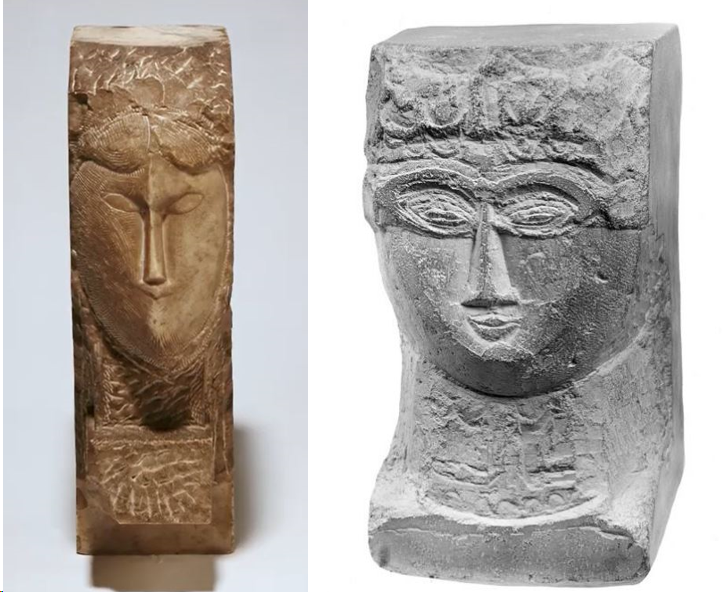
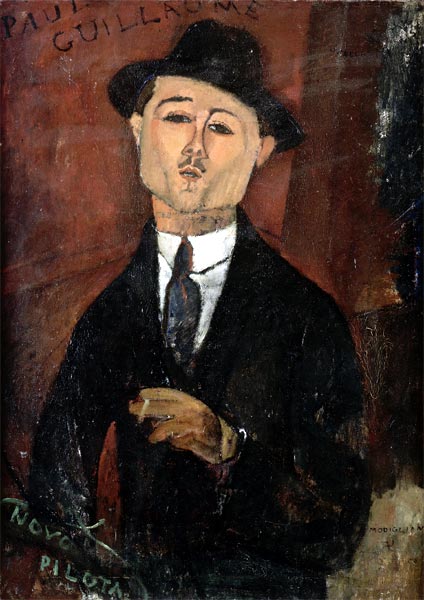
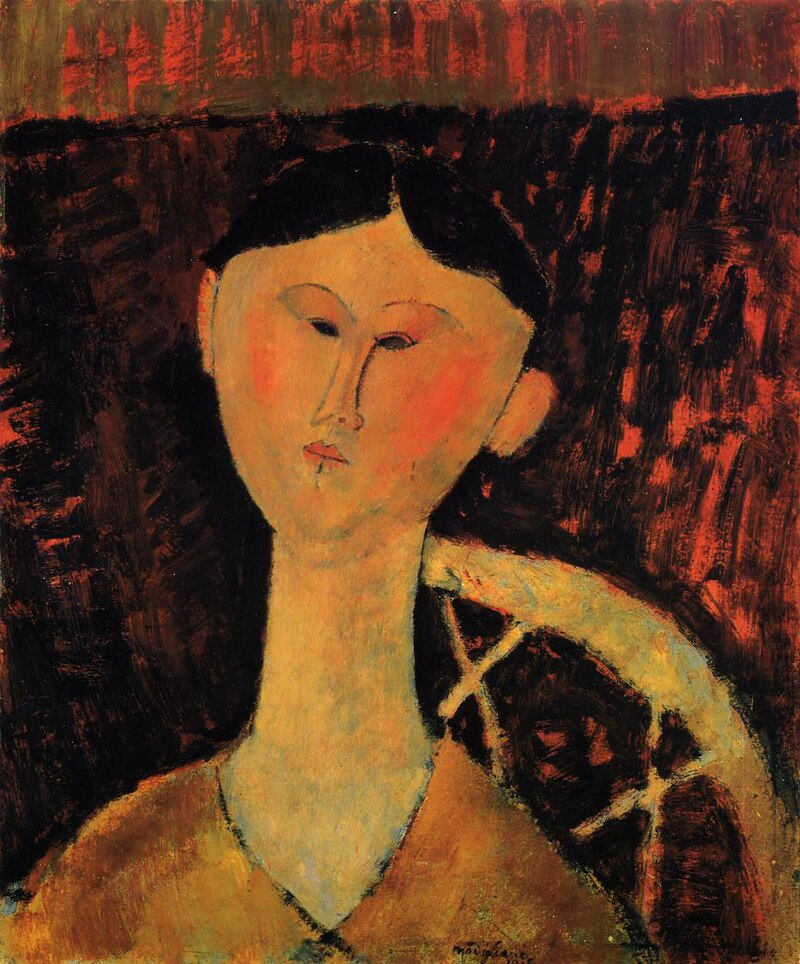
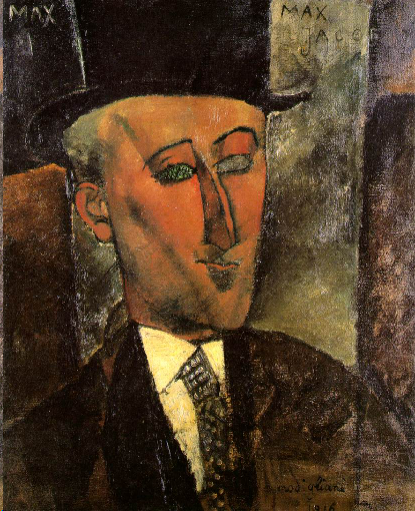
The Musée Angladon contains the collection of Jacques Doucet (1853-1929), a pioneer in high fashion and patron of artists. Whilst the collection contains works from the Renaissance to the twentieth century, the paintings from the nineteenth and twentieth centuries are particularly impressive and include Daumier, Degas, Van Gogh, Cézanne, Manet, Redon, Picasso and Modigliani.

Honoré Daumier ‘Sancho Panza’ (c.1855)

Edouard Manet ‘Le lapin’ (1866)

Paul Cézanne ‘Nature morte au pot de grès’ (1874)

Edgar Degas ‘La repasseuse’ (1874)

Odilon Redon ‘Autoportrait’ (1875)

Vincent van Gogh ‘Wagons de chemin de fer à Arles’ (1888)

Pablo Picasso ‘Arlequin assis’ (1915)

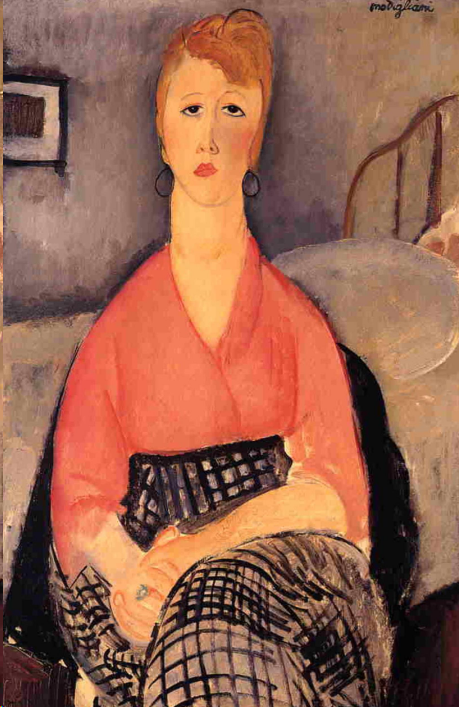
Amadeo Modigliani ‘La blouse rose’ (1919)

Musée Calvet, Avignon

At the Musée Calvet, Avignon, to see the permanent collection of French late-nineteenth and twentieth-century paintings. The Museum has a particularly fine collection of works by Chaïm Soutine.

Edouard Manet ‘Nature morte, guitare et chapeau’ (1862)

Camille Claudel ‘Bust de Paul Claudel en jeune Romain’ (1884 – 87)

Maurice de Vlaminck ‘Sur le Zinc’ (1900)

Chaïm Soutine ‘Vue d’un village, Céret en Roussillon’ (1919)

Chaïm Soutine ‘L’Idiot’ (c.1920)

Chaïm Soutine ‘Vieillard aux mains jointes’ (c.1920)

Chaïm Soutine ‘Déchéance’ (c.1920 – 21)

Chaïm Soutine ‘La raie’ (1922)

Palais des Papes, Avignon

At the magnificant UNESCO World Heritage Site of the Palais des Papes in Avignon, the largest Gothic palace in Europe. The papacy was resident in Avignon from 1309 to 1376 due to a conflict between the papacy and the French crown. Following the death of Pope Benedict XI, Philip IV of France forced a deadlocked conclave to elect the French Clement V as pope, but Clement refused to move to Rome, instead setting up his court in Avignon where it remained for the next 67 years.

Palais des Papes

Of particular interest to me were the frescoes that decorate the walls of the chapels and private apartments in the Palais. Matteo Giovannetti, born in Viterbo, Italy, c.1322, was responsible for the decoration of both the Saint-Jean Chapel and the Saint-Martial chapel (the latter now unfortunately closed because of its precarious state) as well as the Grand Tinel, a huge 48 metre-long feast room.

Matteo Giovannetti ‘Saint John Chapel frescoes’ (1347 – 48)

Chambre du cerf

Frescoes by Simone Martini, originally painted in 1340 for Notre-Dame-des-Doms Cathedral, are also displayed in the Consistory Hall of the Palais.

Simone Martini frescoes, Consistory Hall, Palais des Papes

Reproductions of prominent figures during the papal rule, North Sacristy

Le Pont d’Avignon

Pont Saint-Bénézet, known as Le Pont d’Avignon

Pont Saint-Bénézet was built with twenty-two arches in the twelfth century and once spanned the Rhône, linking Avignon with Villeneuve-lès-Avignon. Today only four of the arches survive.

The bridge is known the world over thanks to the children’s song ‘Sur le pont d’Avignon’. It has been listed as a UNESCO World Heritage Site since 1995.

‘The Coronation of the Virgin’ at Musée Pierre-de-Luxembourg

At Musée Pierre-de-Luxembourg in Villeneuve-lès-Avignon to see Enguerrand Quarton’s amazing altarpiece ‘The Coronation of the Virgin’. It was commissioned in 1453 by Jean de Montagny, a canon in Avignon, for the Carthusian monastery of Villeneuve-lès-Avignon.

Enguerrand Quarton ‘The Coronation of the Virgin’ (1453 – 54)

The painting is in two main sections. In the upper section the Virgin is crowned by the Holy Trinity. Unusually, God the Father and Jesus Christ are depicted as mirror images with the same form, with the Holy Spirit between them. They are surrounded by groups of angels painted in a vivid red colour. This near-symmetry is a feature of the painting and occurs in several places.

In the lower section, just left of the crucified Christ, Mont Saint Victoire, a notable local feature of the landscape, rises above the horizon, whilst to Christ’s right is the kneeling figure of the donor. Below the cross are depictions of the cities of Rome and Jerusalem and under them is the Last Judgement. Angels receive the souls of the saved beneath Jerusalem, whilst the damned are tormented in hell beneath Rome.

Mahler ‘Symphony no. 7’ and Betsy Jolas

Betsy Jolas is a ninety-six year old French – American composer who was in tonight’s audience at the Grand Théâtre de Provence to hear the European premiere of her latest work for symphony orchestra and soprano. ‘These beautiful years’ was a joint commission from the LSO, the Festival d’Aix and the Cleveland Orchestra  It is a joyful piece that includes fragments of the melody of ‘Happy Birthday’ and snippets of Mozart operas. Towards the end a solo soprano joins the orchestra as a ‘messenger angel’ to call everyone to celebrate – as the audience did when she was introduced to them at the conclusion of the piece.

Betsy Jolas

Mahler’s Symphony no. 7 in E minor, sometimes called ‘Song of the Night’, dates from 1905 and opens up a completely different world. It is a monumental eighty-minute work, which Rattle conducted from memory. In some parts it evokes the natural world, in others the brass bands that Mahler heard in his youth. It is a complex work yet Rattle’s handling of the LSO brought clarity to it. The audience loved it and the performance was rewarded with a deserved standing ovation.

Sir Simon Rattle and the London Symphony Orchestra

Betsy Jolas ‘These Breautiful Years’; Gustav Mahler; ‘Symphony no. 7 in E minor’.