Alban Berg’s ‘Wozzeck’

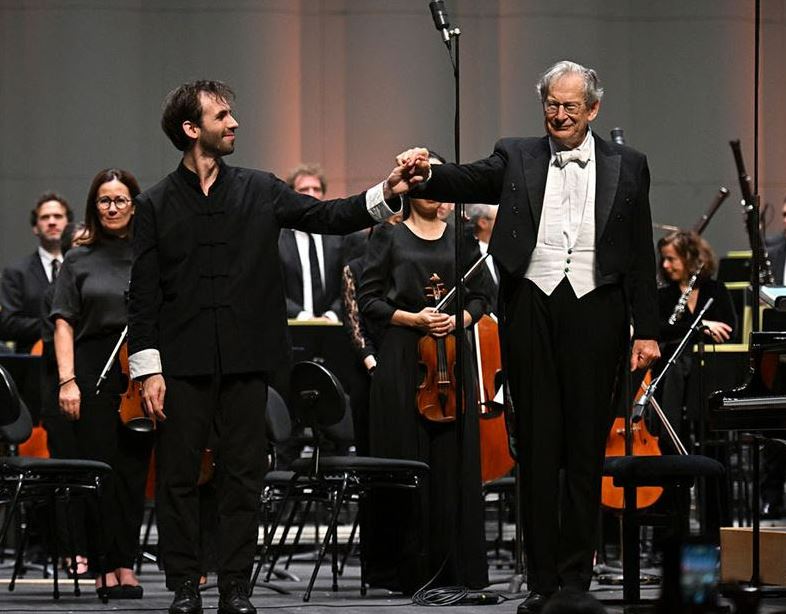
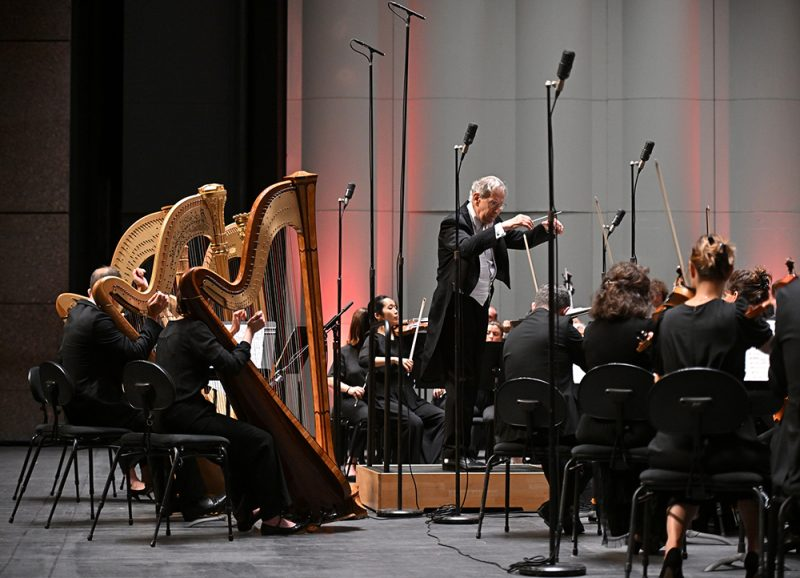
In contrast to any misgivings about last night’s performance of ‘L’Opera de Quat’Sou’, this performance of Alban Berg’s ‘Wozzeck’ was nothing short of superb. The London Symphony Orchestra under Sir Simon Rattle were on excellent form and the cast of the opera, in particular Christian Gerhaher in the title role and Maria Byström as Marie, sang wonderfully. The production by stage director Simon McBurney and set designer Miriam Buether really brought the story to life.

Malin Byström as Marie and Christian Gerhaher as Wozzeck

Again there is a political aspect to the story, Wozzeck is a soldier who represents the social injustices of the time. He is a pitiful character who kills his mistress out of jealousy before committing suicide. Although he carries out a murder it is difficult not to have sympathy for Wozzeck, who clearly has a ravaged mind. Berg’s music, although atonal, adds to the drama of the story. It was wonderfully performed by all.

Musée Granet XXe, Collection Jean Planque

The modern art collection at Aix’s Granet Museum was considerably expanded in 2011 when the Jean and Suzanne Planque Foundation donated the Jean Planque collection, named after the Swiss painter and collector who died in 1998. To house the collection the museum was expanded into the nearby Chapelle des Pénitents blanc, an impressive seventeenth-century chapel.

The collection includes some 300 paintings, drawings and sculptures by Impressionist and Post-Impressionist artists, including Renoir, Monet, Van Gogh, Degas and Redon, as well as major artists of the twentieth century, including Bonnard, Rouault, Braque, Dufy, Léger and Klee. Planque became close friends with Pablo Picasso during his time as advisor to the Galerie Beyeler in the 1960s and over time amassed a collection of more than twenty of his works.

Paul Cezanne ‘Bathers’ (c.1895)

Edgar Degas ‘Two Bathers’ (c.1895)

Claude Monet ‘Leicester Square’ (1901)

Pierre Bonnard ‘Torso of a Woman in Profile’ (c.1918)

Paul Klee ‘Un son de la flore nordique’ (1924)

Fernand Léger ‘The Rose and Compass’ (1925)

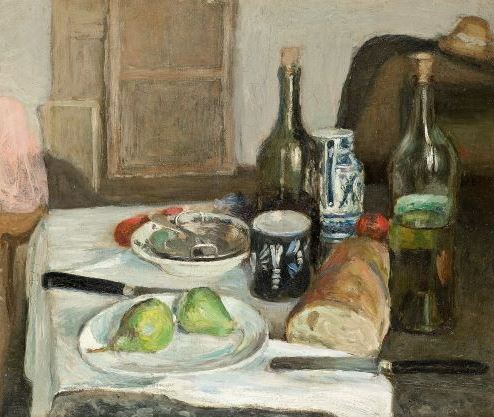
Pablo Picasso ‘Compotier avec fruits et couverts’ (1924)

Pablo Picasso ‘Le Sauvetage’ (1933)

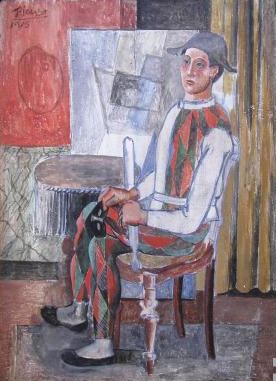
Pablo Picasso ‘Femme au chapeau dans un fauteuil’ (1939)

Pablo Picasso ‘Femme au chat assise dans un fauteuil’ (1964)

Pablo Picasso ‘Nu et homme à la pipe (La Conversation)’ (1968)

Musée Granet – Donation Meyer: From Cézanne to Giacometti

In 2000, collector Philippe Meyer donated an exceptional collection of works to the Museums of France. The Musée d’Orsay, the initial recipient of the collection, deposited a large part of it at the Musée Granet in Aix-en-Provence, a city that Meyer was particularly fond of. 

Eugène Boudin ‘Marine, soleil couchant’ (1883 – 87)

Piet Mondrian ‘Composition en rouge, jaune et bleu’ (1922)

Paul Klee ‘Coup de foudre’ (1924)

Fernand Léger ‘Le pot rouge’ (1926)

Pablo Picasso ‘Femme au balcon’ (1937)

Alberto Giacometti ‘L’homme qui chavire’ (1950)

Max Ernst in Aix-en-Provence

At the Hôtel de Caumont, Aix-en-Provence, for the exhibition ‘Max Ernst. Mondes magiques, mondes libérés’, a survey of the career of the German-born artist who was associated with both the Dada group and Surrealism.

The exhibition presents 120 works that retrace the career of this ingenious artist who distanced himself from any group style to pursue his own techniques, which included collage, frottage (pencil rubbings of relief surfaces and textured objects), grattage (scratching fresh paint with a sharp blade) and decalcomania (transferring paint from one surface to another by pressing the two surfaces together).

Born in Brühl, Germany, in 1891, Ernst began painting in 1909, however his studies were interrupted by World War I, in which he served on both the eastern and western fronts. He moved to Paris in 1922 and two years later became a founding member of the Surrealist movement. At the outbreak of World War II, Ernst moved to the United States, where he joined his third wife, the collector and gallery owner Peggy Guggenheim. However, the marriage did not last and in 1946 he married American Surrealist painter Dorothea Tanning. He returned to France in 1953. Ernst died at the age of 84 on 1 April 1976 in Paris.

Max Ernst ‘Oedipus Rex’ (1922)

Max Ernst ‘Monument aux oiseaux’ (1927)

Max Ernst ‘Epiphanie’ (1940)

Max Ernst ‘Un tissu de mensonges’ (1959)

Max Ernst ‘La dernière forêt’ (1960 – 70)

Max Ernst ‘La fête a Séillans’ (1964)

Kurt Weill and Bertolt Brecht’s ‘L’Opera de Quat’Sous’

‘L’Opera de Quat’Sous’ (original German ‘Die Dreigroschenoper’; in English ‘The Threepenny Opera’), first produced in August 1928, was adapted from a translation of John Gay’s eighteenth-century English ballad opera, ‘The Beggar’s Opera’. 

Although Brecht wrote the text prior to the political plays influenced by his reading of Marx, his interpretation was intended as a socialist critique of capitalist society. However, this approach was totally lost in this production, staged by Thomas Ostermeier and performed by members of the Comédie-Française, where French slapstick often took over. In theory, the ideas of a communist utopia, which swept across Europe at the time, should have been ideally set in the underworld of 1920s London; but the production was too slick, and sometimes too silly, to put across any political message.
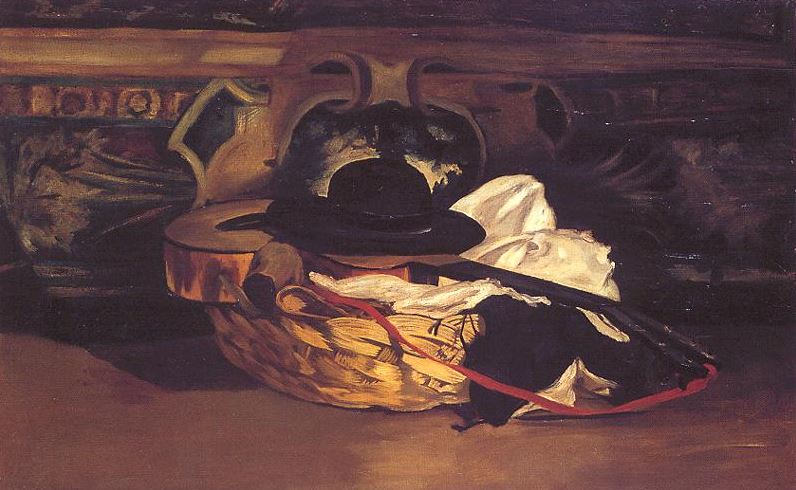
Birane Ba as Macheath

Nevertheless, it was not an unenjoyable evening as it was saved by the quality of the musicians and much of the singing. The production’s shortcomings were unfortunately down to Ostermeier’s staging.

Festival d’Aix-en-Provence 2023

In the beautiful town of Aix-en-Provence for the 2023 Festival. Looking forward to some wonderful opera and classical music.

I will particularly enjoy seeing Alban Berg’s ‘Wozzeck’, with music by the London Symphony Orchestra under Sir Simon Rattle, at Le Grand Théâtre de Provence. I had tickets for the same production at the 2020 Festival but it was unfortunately cancelled because of Covid. Rattle and the LSO will also be performing Mahler’s Symphony no. 7 and I will also be at the Théâtre de l’Archevêché for a new production of Kurt Weill and Bertolt Brecht’s ‘L’Opera de Quat’Sous’, performed by La Comédie-Française. Much to look forward to.

Quatuor Dudok in Issigeac

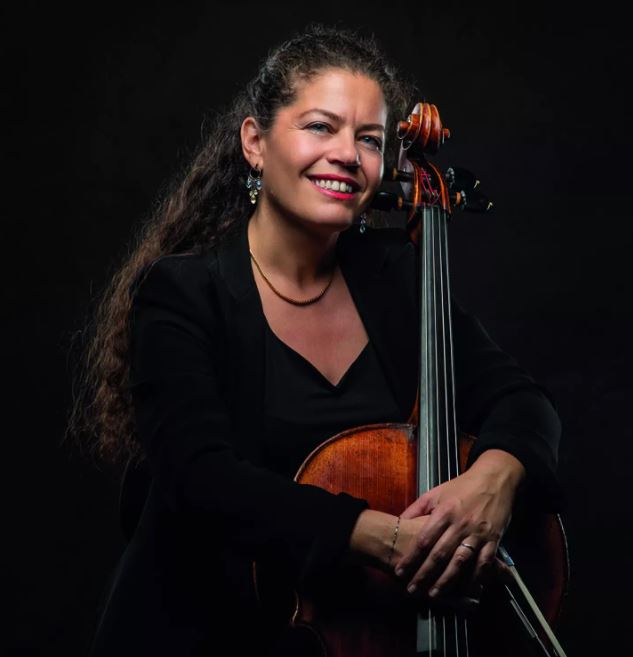
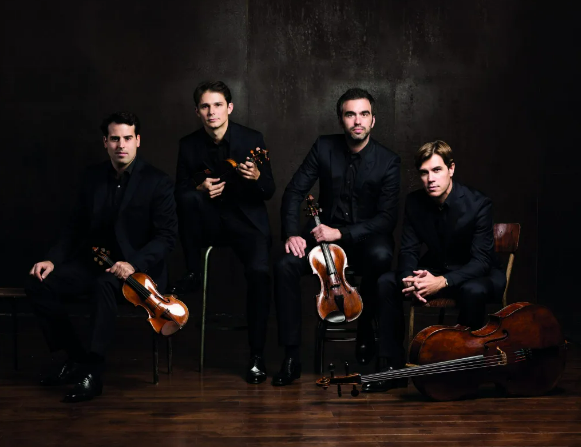
At the Issigeac International Music Academy in the Dordogne for a concert by the internationally-acclaimed Quatuor Dudok from Amsterdam. Quatuor Dudok are Marleen Wester and Judith Van Driel (violins), Marie-Louise de Jong (viola) and David Faber (cello). They treated us to an evening of quartets from the Classical (Mozart), Romantic (Tchaikovsky) and Modern (Shostakovich) periods.

Quatuor Dudok

The first half opened with Mozart’s ‘String Quartet no. 23 in F major (K590)’. Written in 1790, it is the third of the Prussian Quartets dedicated to the King of Prussia, Friedrich Wilhelm II. It is in four movements, the second of which is reminiscent of a siciliana, with a gentle pastoral feel. The last movement is more lively, with each instrument given the opportunity to play a solo part.

The Quartet really came alive with the second piece, Tchaikovsky’s ‘String Quartet no. 1 in D major’ (opus 11). The second movement, the Andante cantibile in B flat, is one of Tchaikovsky’s best-known themes and was exquisitely played. The Scherzo and Finale are much more lively and showed off the Dudok’s virtuosity at its very best.

The second half, Shostakovich’s ‘String Quartet no. 5 (opus 92), was much darker and more serious. Shostakovich wrote the piece in the autum of 1952, during the final paranoid years of Stalin’s reign, but it remained in manuscript until November 1953, when it was performed by the Beethoven Quartet, to whom it is dedicated. The work develops from a motif containing the composer’s musical monogram, DSCH (D, E-flat, C, B natural), and was played by the Dudoks with great feeling.

The standing ovation which the Quartet received was well deserved and brought them back for an encore of a string quartet arrangement by cellist David Faber of a Shostakovich Piano Prelude.

Mozart ‘String Quartet no. 23 in F major (K590)’; Tchaikovsky ‘String Quartet no. 1 in D major’ (opus 11); Shostakovich ‘String Quartet no. 5 (opus 92).

Aboriginal Songlines at the Quai Branley

At the Musée du Quai Branly, Paris, for a fascinating exhibition entitled ‘Songlines. Tracking the Seven Sisters’. Aboriginal Australians’ understanding of the world and its creation is referred to as The Dreaming, which involves the passing on of beliefs via stories and songs known as Songlines. These Songlines enable trails through the country to be remembered by future generations.

This exhibition tells of a trail known as the Seven Sisters. In the story the seven sisters (Minyipuru) travel across the land in an effort to flee from their pursuer, known as Yurla. The works in the exhibition tell the story of their journey through Martu Country in central Western Australia. The vibrant acrylic paintings are representations of the creation stories linking places on the journey. The woven sculptures of the Seven Sisters Tree Women (Minyma Puna Kungkarangkalpa), made from grass, raffia and fencing wire, represent the sisters after they have learned to disguise themselves to preserve their safety.

Kumpaya Girgirba, Ngamaru Bidu, Thelma Judson, Reena Rogers, Yuwali Janice Nixon, Karnu Nancy Taylor and Ngalangka Nola Taylor ‘Hunting Ground, Parnngurr Area’ (2014)

Betty Laidlaw and Nyumitja Laidlaw ‘Tjukurrpa Kungkarrangkalpa’ (1994)

Tjapartji Kanytjuri Bates ‘Tjukurrpa Kungkarrangkalpa’ (1995)

Carol Maanyatja Golding ‘Wanarn’ (2004)

Ilawanti Ungkutjuru Ken and associates ‘Seven Sisters Tree Women’ (2013)

It is particularly enjoyable to spend time looking around the Quai Branly permanent collection and I am always drawn towards the Oceanic collection which has some spectacular exhibits.

Funerary Mask (New Ireland, early 20th century)

Malagan mask (New Ireland, end 19th century)

‘Vungvung mask’ (New Britain, late 19th century)

Asmat mask costume (1990s)

Giovanni Bellini in Paris

‘Giovanni Bellini. Influences croisées’, at the Musée Jacquemart-André, is the first exhibition of the artist’s works to be held in France.

Giovanni Bellini, born c.1435, belonged to a family workshop of Venetian artists together with his father Jacopo and his older brother Gentile. His sister, Nicolosia, married Andrea Mantegna in 1453, so Giovanni’s young life was immersed in art and he had the opportunity to master all aspects of painting, sculptural forms and perspective. He also benefitted from the opportunity to study the works of the Florentine sculptor Donatello who spent a decade working in nearby Padova. After the arrival in 1475 of much-travelled Sicilian artist Antonella da Messina in Venice, Giovanni learned the techniques of oil painting, allowing him to move in a new direction.

Giovanni and his workshop became extremely influential both in Venice and further afield, so much so that when Albrecht Durer stayed in the city in 1506, he declared that Giovanni, although by then old, was the greatest painter of all time.

The exhibition presents his work in the context of these influences, with paintings by his family and contemporaries as well his students, in particular Giorgione.

Jan van Eyck and workshop ‘Crucufixion’ (c.1425)

Giovanni Bellini ‘Crucifixion’ (c.1459)

Giovanni Bellini ‘Dead Christ supported by two Angels’ (c.1479 – 75)

Antonella da Messina ‘Dead Christ supported by three Angels’ (1476)

Giovanni Bellini ‘Virgin and Child’ (1475 – 80)

Giorgione ‘Madonna and Child’ (c.1500)

Giovanni Bellini ‘Virgin and Child with John the Baptist and female saint’ (c.1500)

Andrea Mantegna ‘Ecce Home’ (c.1500)

Hans Memling ‘Christ Blessing’ (c.1480 – 90)

Giovanni Bellini ‘Christ Blessing’ (c.1505 – 10)

Giovanni Bellini ‘God the Father’ (c.1505 – 10)

Manet/Degas at the Musée d’Orsay

In Paris for the exhibition ‘Manet/Degas’ at the Musée d’Orsay, which examines both the similarities and differences between the two artists who both played a pivotal role in the new painting styles of the 1860s – 1880s.

They had many similar experiences; both being involved in the Franco-Prussian War of 1870 – 71 and both frequenting the same places in Paris with mutual friends. However, whilst Degas exhibited with the Impressionists, Manet refused to do so, despite similarities in their subject matter.

Despite their differences there was a mutual admiration and respect. After Manet died in 1883, one of his heirs cut up one of the versions of ‘The Execution of Maximilian’ to sell the parts separately; however, Degas bought the fragments in order to reassemble the painting and then went on to collect many more of Manet’s works.

Edgar Degas ‘Woman on a Terrace’ (1857)

Edouard Manet ‘Olympia’ (1863)

Edouard Manet ‘The Execution of Maximilian’ (1867 – 68)

Edouard Manet ‘Portrait of Emile Zola’ (1868)

Edouard Manet ‘The Balcony’ (1868 – 69)

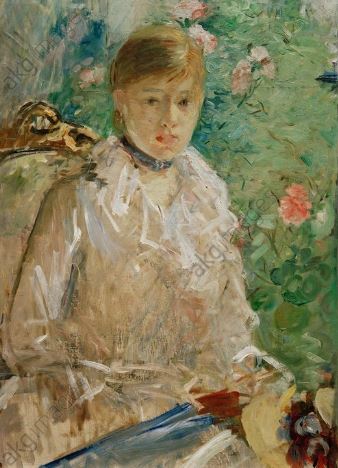
Edouard Manet ‘Berthe Morisot with Bouquet of Violets’ (1872)

Edgar Degas ‘A Cotton Office in New Orleans’ (1873)

Edgar Degas ‘In a Café (L’Absinthe)’ (1875 – 76)

Edgar Degas ‘The Tub’ (1886)

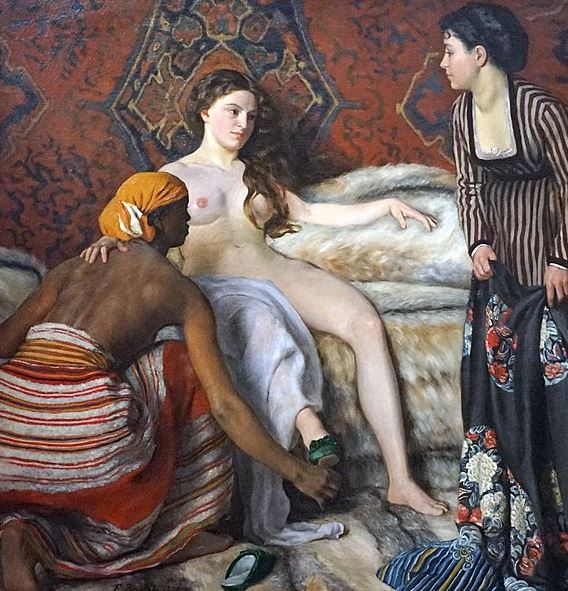
Paul Gauguin ‘Olympia (after Manet)’

Both Edouard Manet and Edgar Degas, particularly the latter, also feature in the Musée d’Orsay’s other current exhibition, ‘Pastels from Millet to Redon’.

Pastel is a technique that brings together both line and colour without being either drawing or painting. Pastels are versatile, enabling blended shading and hatching as well as textured finishes and bright colouring.

Pastel was first used in the sixteenth century, notably by Leonardo da Vinci, but underwent a resurgence in the eighteenth and nineteenth centuries. Jean-François Millet often used pastel in his depictions of rural life. Edgar Degas became particularly skilled in the use of pastels, placing complementary and contrasting hues side by side to produce rich tapestries of colour. Odilon Redon was another artist who used pastels to produce extremely colourful effects.

Jean-François Millet ‘The Woman at the Well’ (c.1866 – 68)

Édouard Manet ‘Portrait of Irma Brunner’ (1880 – 82)

Edgar Degas ‘Seated Dancer’ (1881 – 83)

Edgar Degas ‘Dancers’ (1884 – 85)

Lucien Levy-Dhurmer ‘Woman with a Medallion’ (1896)

Edgar Degas ‘At the Milliner’s’ (c.1905 – 10)

Odilon Redon ‘Buddha’ (c.1906 – 07)