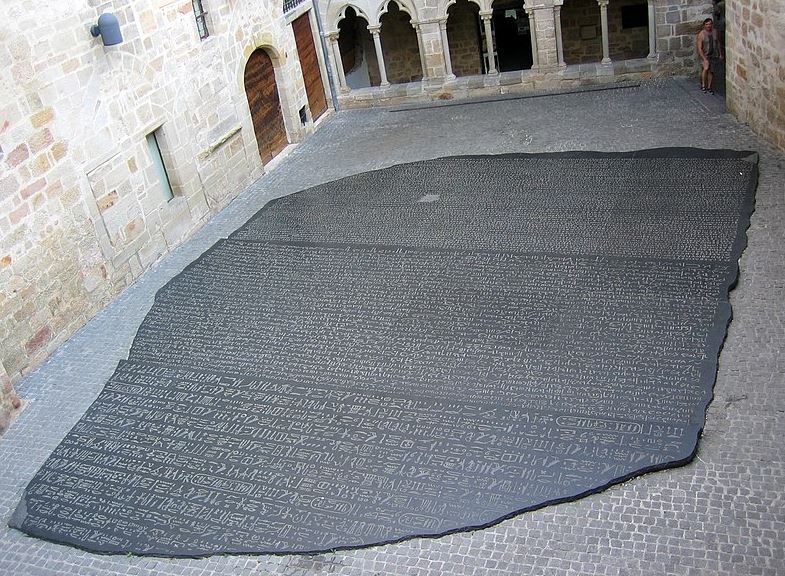
The Rosetta Stone, which contains three versions of a decree issued in Memphis, Egypt, in 196 BC, was discovered in 1799 being used as a building material in the construction of Fort Julien near the town of Rashid (or Rosetta) in the Nile Delta.
The first version was in Egyptian hieroglyphic, never before translated, and the last was in Ancient Greek. This enabled scholars to work on the interpretation of the hieroglyph symbols. Jean-François Champollion, who was born in Figeac, was the first to succeed and render hieroglyphics understandable.
Figeac now not only has a Champollion Museum but the town’s Place des écritures has a giant replica of the Rosetta Stone in his honour.
Rosetta Stone replica, Place des écritures, Figeac
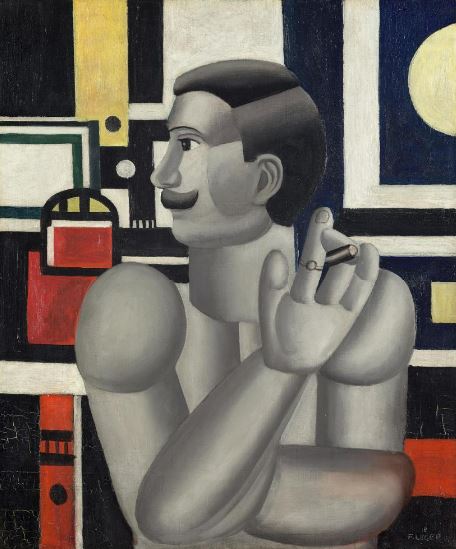
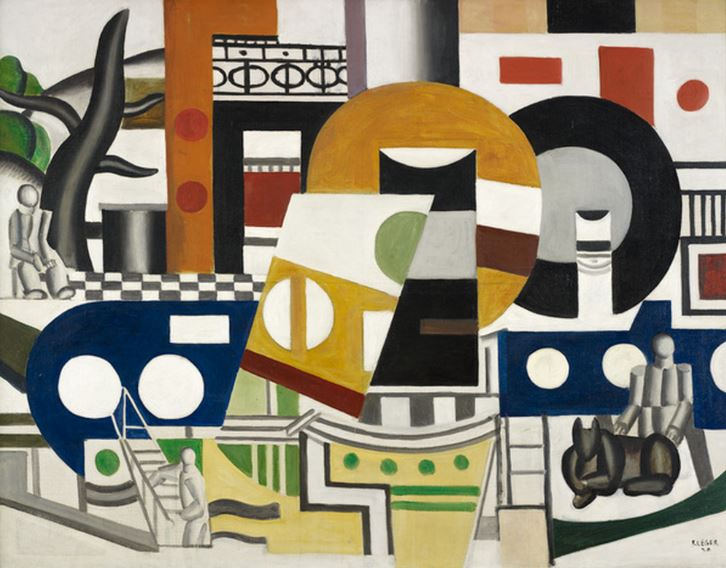
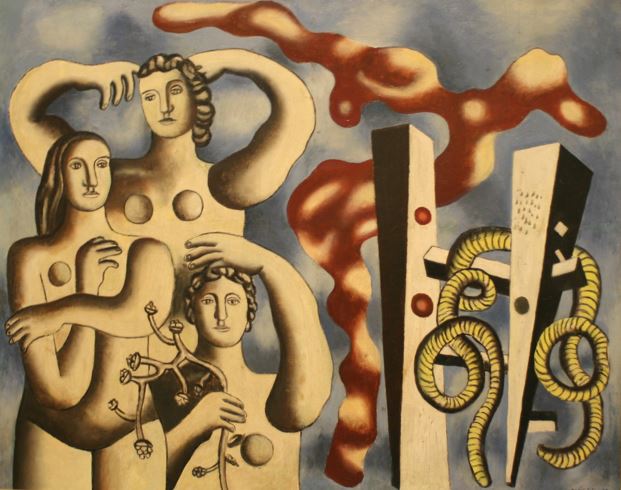
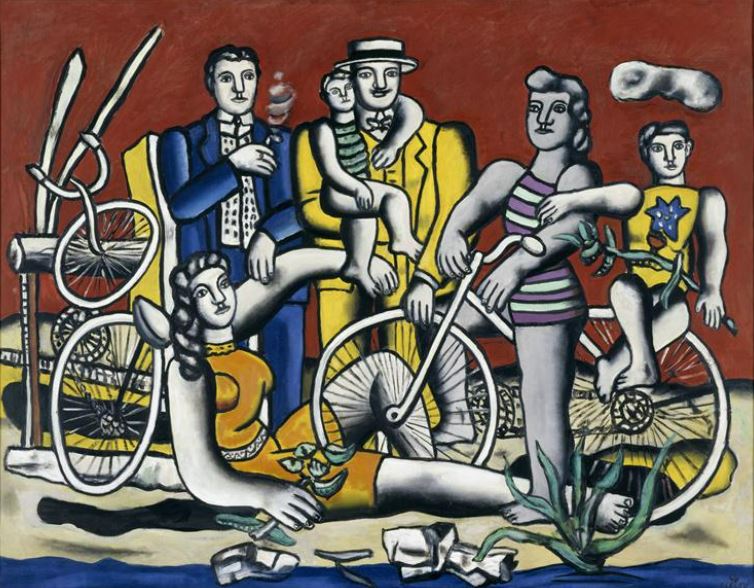
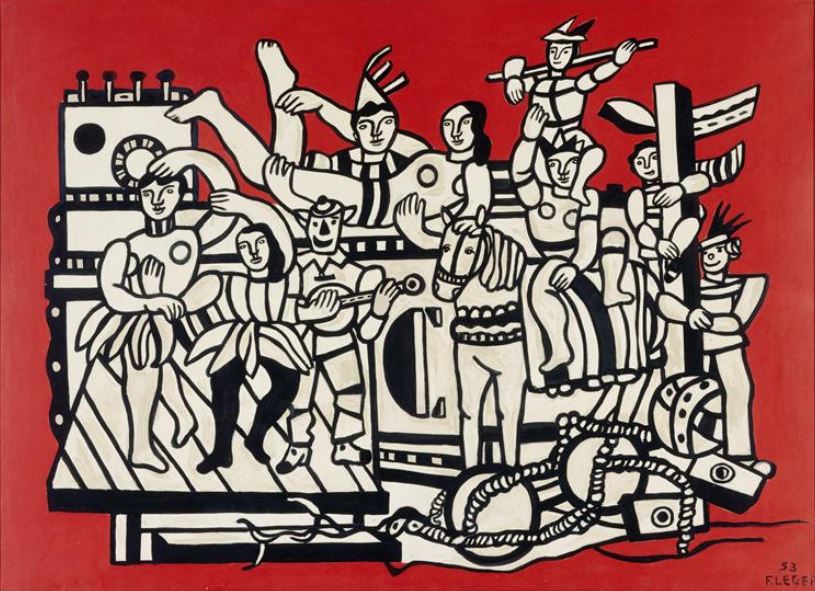
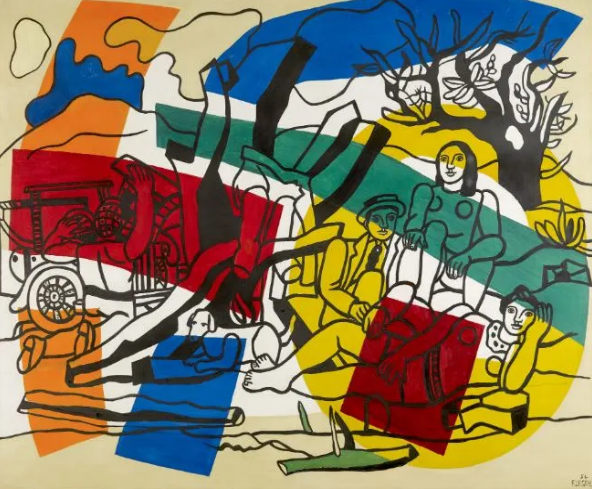
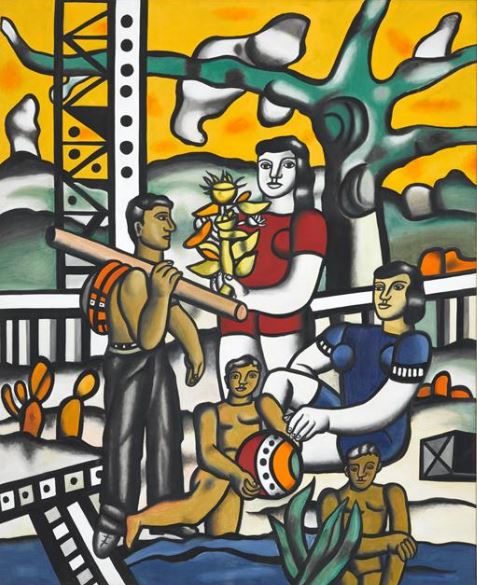
At the Musée Soulages in Rodez, in the Aveyron department of southern France, for the exhibition ‘Fernand Leger. La vie à bras-le-corps’. The exhibition, which was twice cancelled due to the Covid pandemic, presents eighty-six paintings, mainly from the Centre Pompidou in Paris and the Fernand Léger museum in Biot. It focuses on three main themes in Léger’s work: the city, the world of work and the world of leisure.
Fernand Léger ‘Le Mécanicien’ (1918)
Fernand Léger ‘Le Remorqueur’ (1920)
Fernand Léger ‘Composition aux trois figures, fond bleu’ (1931)
Fernand Léger ‘Les Loisirs sur fond rouge’ (1949)
Fernand Léger ‘La Partie de Campagne (Deuxième état)’ (1954)
Fernand Léger ‘La Partie de Campagne (Deuxième état)’ (1954)
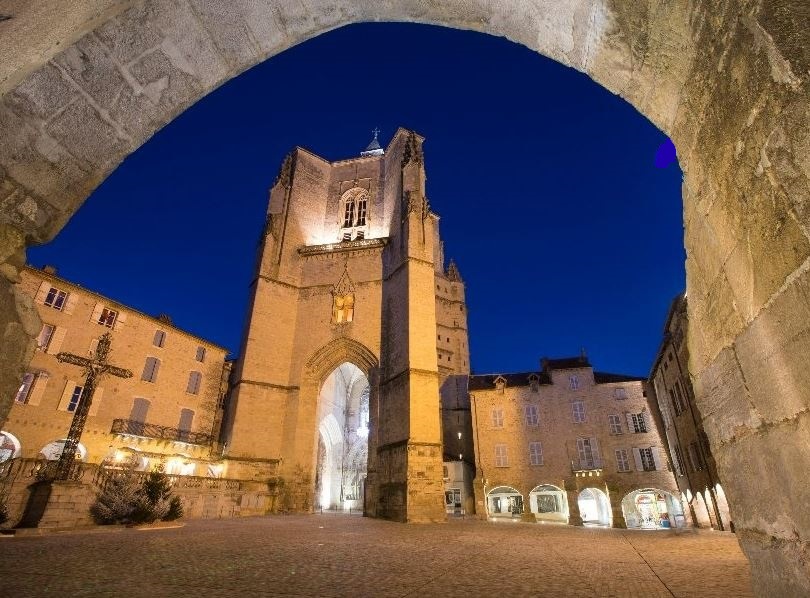
Villefranche-de-Rouergue, in the Aveyron department of southern France, was founded by Alphonse de Poitiers in 1252 as a bastide town. Its central square, Place Notre Dame, is dominated by thirteenth-century townhouses and La Collégiale Notre-Dame.
Collegiate church of Notre-Dame de Villefranche-de-Rouergue
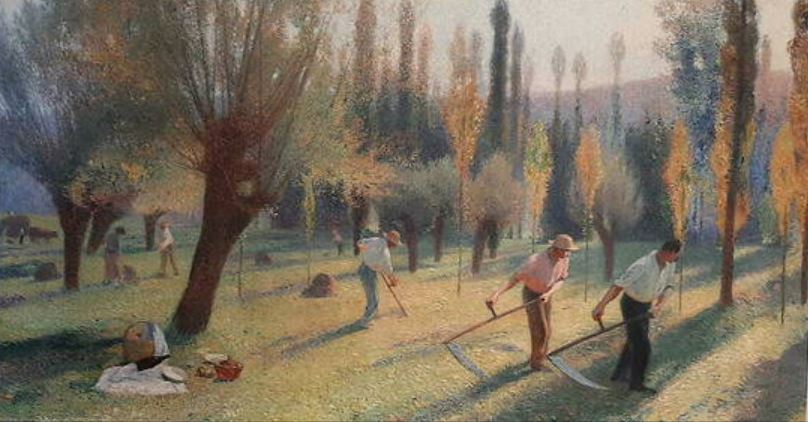
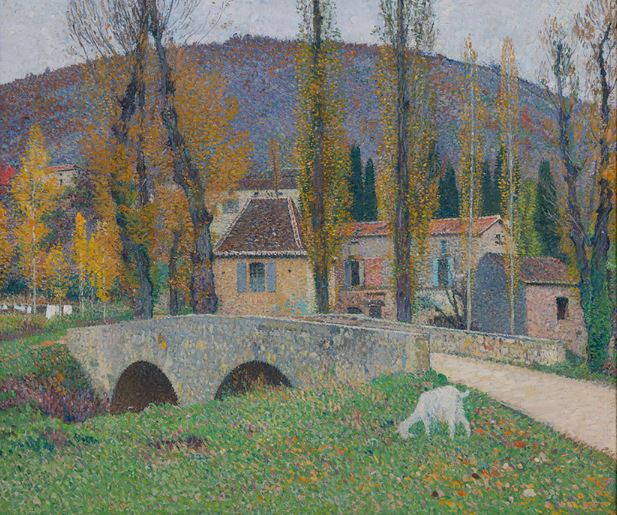
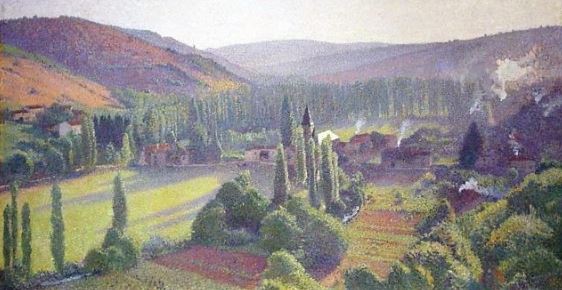
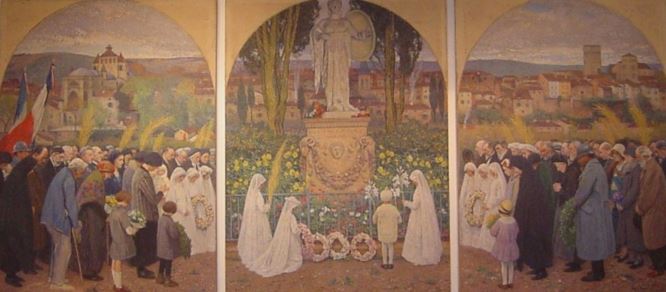
In Cahors to visit the recently reopened Musée Henri Martin, which contains a fine collection of sculpture and paintings from the fifteenth to the nineteenth century, including the world’s largest collection of paintings by Post-Impressionist artist Henri Martin.
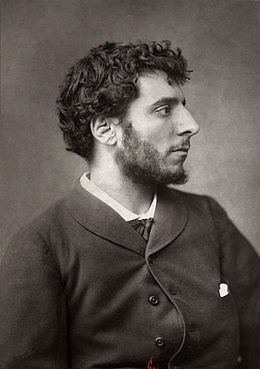
Henri Jean Guillaume Martin was born in Toulouse in 1860 and attended the Ecole des beaux-arts in the city from 1877 to 1879, when he left for Paris. In Paris he continued his studies and won a scholarship to tour Italy where he studied the artists of the early Renaissance.
Henri Martin c.1882
He developed a Pointillist style of painting and earned a gold medal at the 1889 Salon. In 1896 he was made a knight of the Legion of Honour, before being promoted to the rank of officer in 1905 and commander in 1914. At the 1900 World Fair he was awarded the Grand Prize for his work.
When Martin decided to move away from Paris, he searched for ten years for his ideal home, eventually buying the Domaine de Marquayrol, overlooking the village of Labastide-du-Vert, near Cahors. He produced what is considered to be his best work in this new tranquil environment where he lived for over forty years. He also produced paintings for many public buildings, including the Capitole in Toulouse, the Sorbonne and the Council of State in Paris and several Parisian town halls. He died at Domaine de Marquayrol in 1943.
Henri Martin ‘Meditation’ (c.1890 – 1900)
Henri Martin ‘Haymaking’ (1910)
Henri Martin ‘The Bridge at Labastide-du-Vert’ (c.1920)
Henri Martin ‘Labastide-du-Vert, morning’ (c.1925)
Henri Martin ‘Monument to the Dead of Cahors’ (1932)
Cahors is the capital of the Lot department of south-west France. Its fourteenth-century Pont Valentré, with three machicolated towers, is probably the finest medieval fortified bridge in France and is now recognized as a UNESCO World Heritage site.
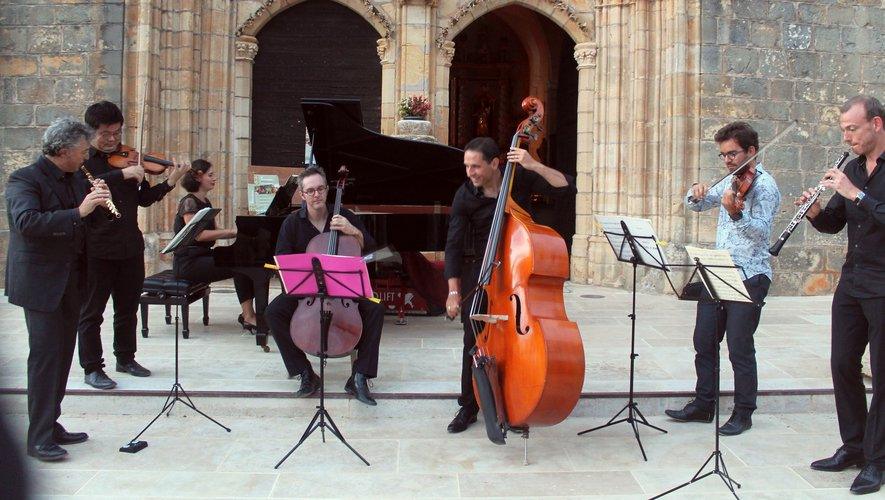
In Montcabrier, in the Lot department in south-western France, for the fifteenth edition of the ‘8 de Montcabrier’ festival. An enjoyable evening of Classical era compositions from Mozart, Haydn and Beethoven from an ensemble of excellent musicians, including Spanish flautist Vincens Prats, clarinetist Juncal Salada-Codina, also from Spain, French pianist Morgane Fauchois-Prado and a string quartet of members of the Orchestre de Paris.
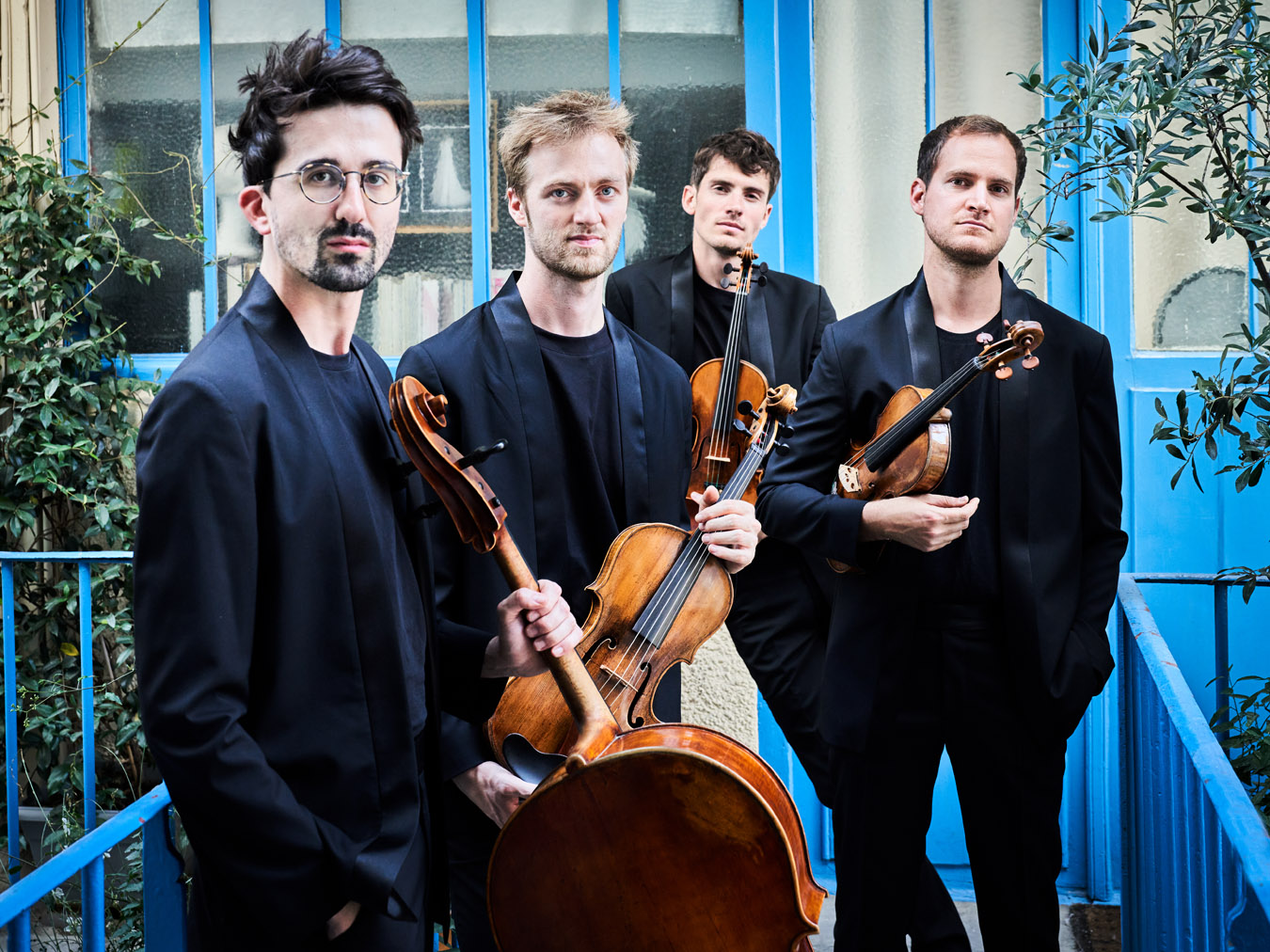
Members of the ‘8 de Montcabrier’ ensemble
The concert opened with Mozart’s ‘Flute Quartet no. 1’, which was written in 1777 during his period in Mannheim. It was a lively performance, with some stylish playing by flautist Vincens Prats
The first half continued with Haydn’s ‘String Quartet in D major’, known as ‘The Frog’, which is the last of the set of six ‘Prussian Quartets’, dedicated to King Frederick William II of Prussia. The finale contains a rapid repetition of the same note on adjacent strings, which some thought sounded like a croaking frog, hence the work’s nickname. First violinist, Pascale Meley, produced an extremely spirited performance.
The second half consisted of Beethoven’s ‘Trio for clarinet, cello and piano’, which was, for me, the most enjoyable performance of the evening, with particularly accomplished playing by clarinetist Juncal Salada-Codina
Mozart: ‘Flute Quartet no. 1, in D major’, K285; Haydn: ‘String Quartet in D major, ‘The Frog’, opus 50, no. 6; Beethoven: ‘Trio for clarinet, cello and piano in B flat major’, opus 11, no. 4.
At the Musique en Sol festival in Paunat, in the Dordogne department of France, for an excellent and varied concert with Quatuor Agate and Israeli pianist Adi Neuhaus.
Quatuor Agate
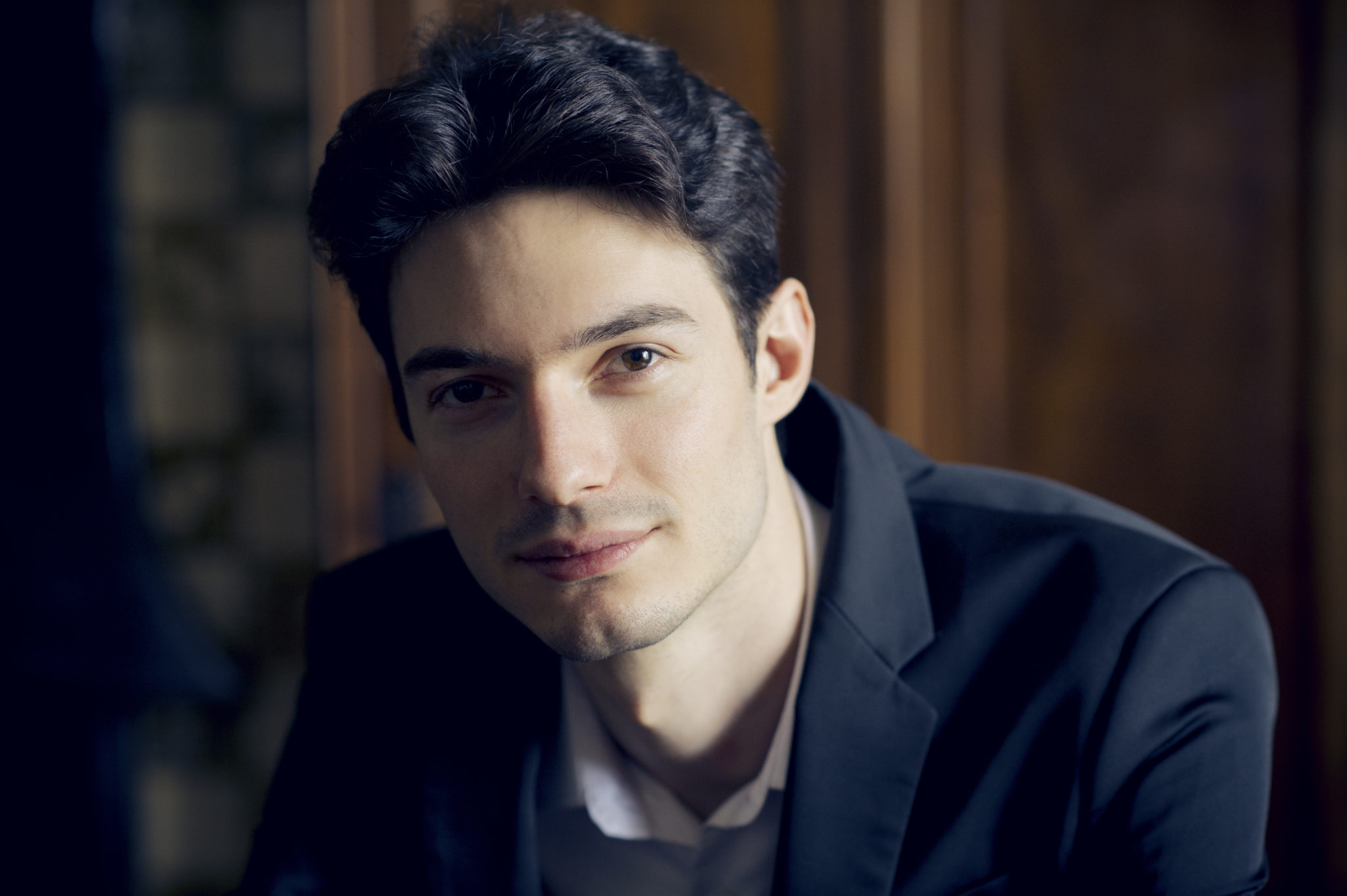
Adi Neuhaus
The concert opened with Chopin’s ‘Fantasy in F minor’, a very expressive single-movement work, generally regarded as one of the composer’s finest. It was very passionately played by Adi Neuhaus. The first half continued with Beethoven’s ‘String Quartet no. 13’. Completed during the final years of the composers life, the Quartet was controversial when first performed. The final movement, a difficult lengthy fugue, was negatively received and was replaced. However, it has been resurrected in recent performances and recordings, as it was by the Agate Quartet this evening, enabling the work to be heard as Beethoven originally intended. The whole piece was extremely well played, but the fugue was superb.
The ‘Piano Quintet’ of Shostakovich completed the evening’s performance. Written for the Beethoven Quartet in 1940, it was a great success on it’s first performance at the Moscow Conservatory and received the Stalin Prize. Tonight it was also extremely well played by the joint forces of Adi Neuhaus and the Agate Quartet. Whilst lurking dark shadows could often be discerned, especially from the piano, not surprising given the period during which it was written, the work was dramatically, sometimes even flamboyantly, performed, with the scherzo particularly enjoyable.
Chopin; ‘Fantasy in f minor’, opus 49; Beethoven: ‘String Quartet no. 13 in b flat major’, opus 130, with ‘Grosse Fuge’, opus 133; Shostakovich: ‘Quintet for Piano and Strings in g minor’, opus 57.
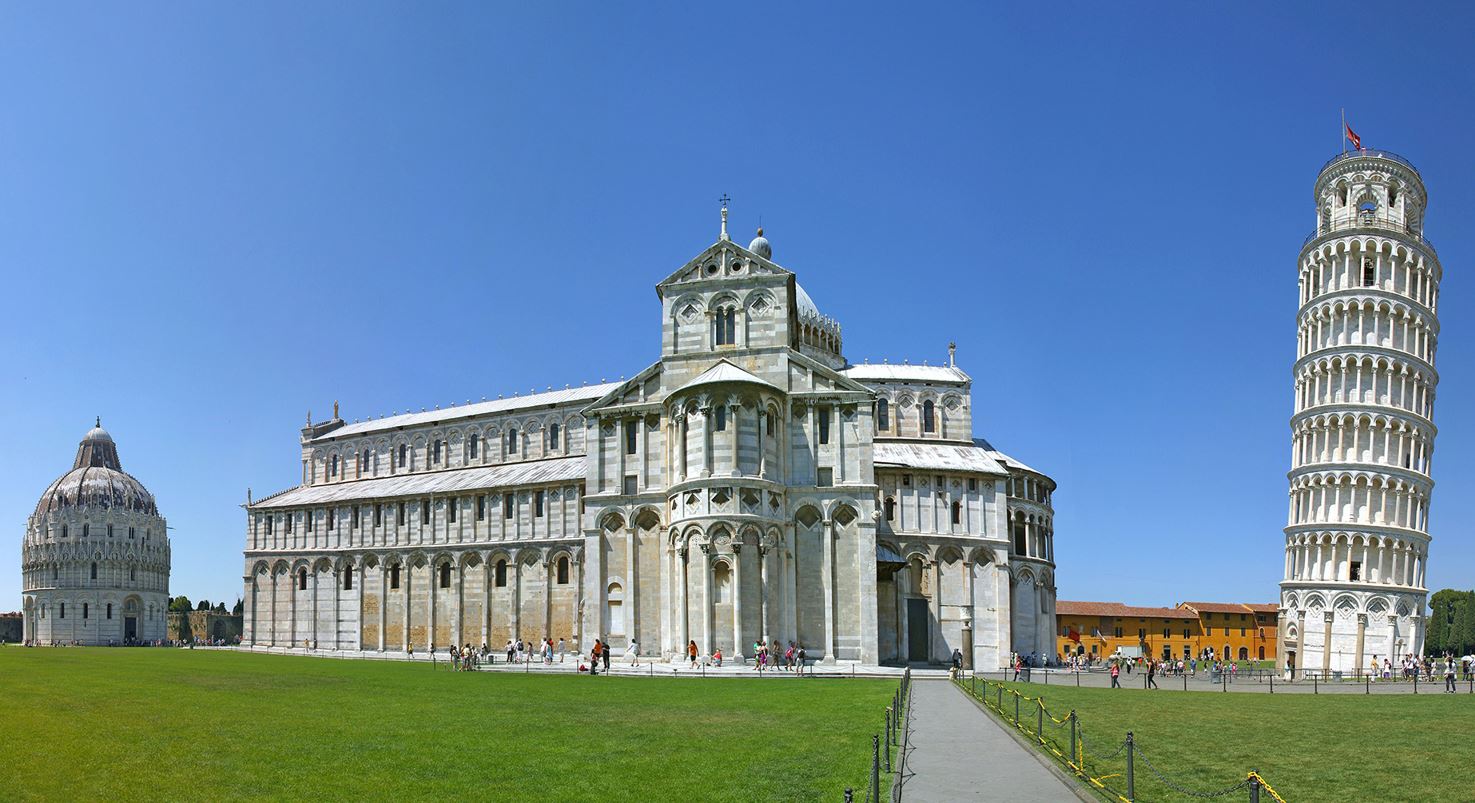
In the Piazza dei Miracoli, Pisa, western Tuscany, to visit the cathedral, baptistery and, of course, the famous leaning tower.
Piazza dei Miracoli
The Piazza is dominated by the cathedral, construction of which began in 1064. Whilst it is Romanesque in style it also shows clear Byzantine influences, especially in the interior mosaic decoration.
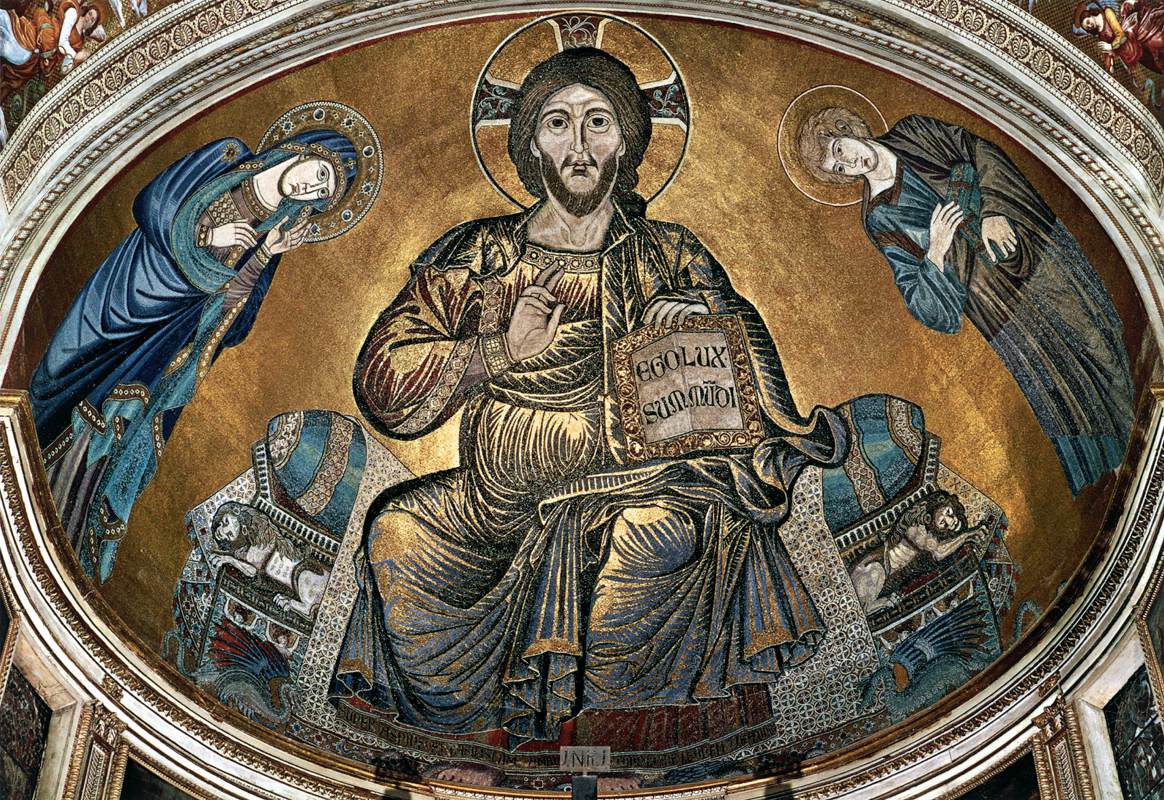
The apse mosaic depicts Christ in Majesty holding an open book in his left hand with the inscription EGO SUM LUX MUNDI (I am the light of the world). With his right hand he is giving benediction. He is flanked by the Virgin, who has raised her hands in intercession, and St John the Evangelist. The head of St. John was completed by Cimabue in 1302 and this was to be his last work as he died in Pisa in the same year.
Apse mosaic, Pisa Cathedral
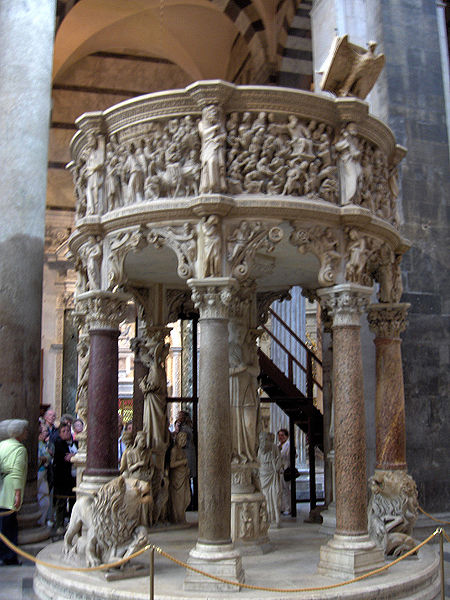
The cathedral contains a carved pulpit made by Giovanni Pisano between 1302 and 1310. Unfortunately, it was damaged in a fire in 1595 and has suffered somewhat from subsequent restoration work. Nevertheless, it is one of the most magnificent of the Pisano pulpits.
Giovanni Pisano ‘Cathedral pulpit’ (1302 – 10)
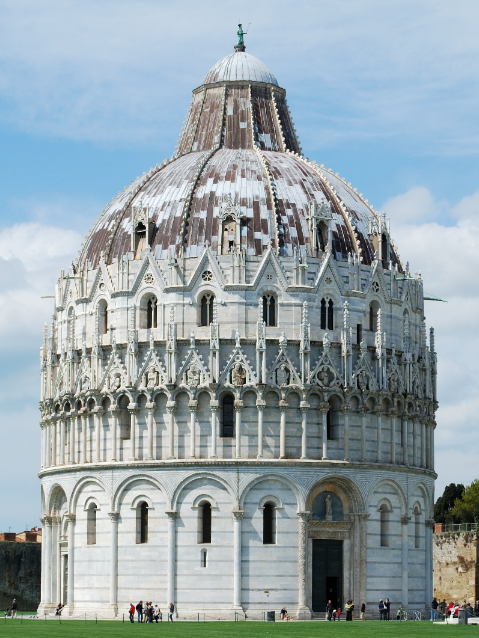
The Baptistery is a spectacular construction and is the largest in Italy. Building started in 1152 and it was completed in 1363 and so it is an example of the transition from the Romanesque to the Gothic style.
Baptistery
Baptistery interior
The interior is quite plain with a large octagonal font at the centre dating from 1246. The main feature is the pulpit which was sculpted by Nicola Pisano, the father of Giovanni, between 1255 and 1260. It is a hexagonal construction, raised on seven columns. At the base of three of these columns are sculpted lions.
Nicola Pisano ‘Baptistery pulpit’ (1255 – 1260)
The Leaning Tower of Pisa, the campanile or bell tower of the Cathedral, is the most famous feature of the Piazza, due to the fact that it has a nearly four-degree lean, the result of unstable foundations. The tower began to lean during its construction in the twelfth century, due to the soft ground which could not properly support its weight. By 1990, the tilt had reached 5.5 degrees; however, the structure was stabilized by remedial work between 1993 and 2001, and the tilt has now been reduced to 3.97 degrees.
The Leaning Tower of Pisa
Along the northern edge of the complex is the Camposanto Monumentale – the cemetery building. ‘Campo Santo’ translates as ‘holy field’, as legend says that it was built using sacred soil from Golgotha, brought back to Pisa after the Third Crusade.
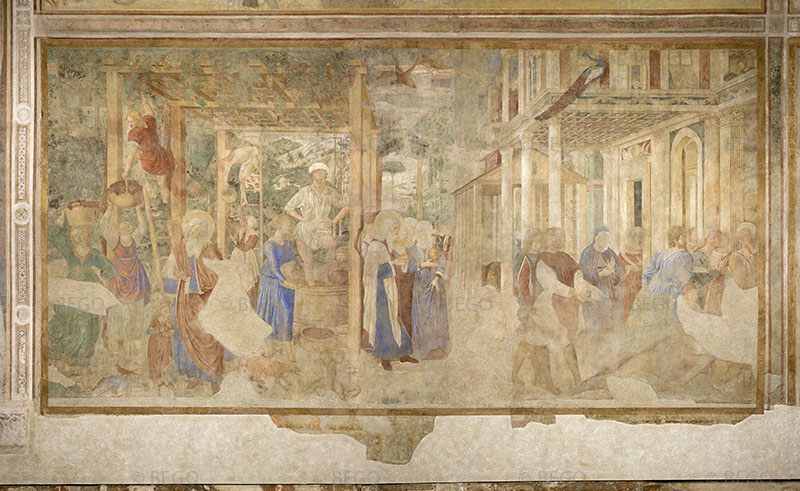
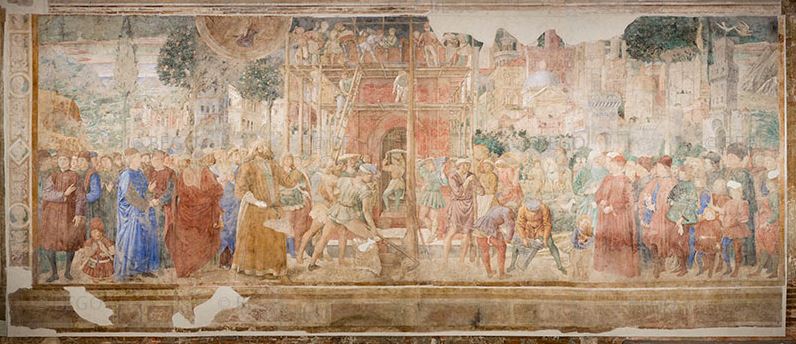
The walls of the structure were completely covered in frescoes. The earliest, attributed to Francesco Traini, were painted in 1336 – 41. Frescoes depicting ‘The Last Judgement’ and the ‘Triumph of Death’ in the south-western corner were painted in the years after the Black Death and are usually attributed to Buonamico Buffalmacco. In the north gallery there is a cycle of ‘Scenes from the Old and New Testaments’ by Benozzo Gozzoli, whilst in the south arcade are ‘Stories of Pisan Saints’ (1377 – 1391) by Andrea Bonaiuti, Antonio Veneziano and Spinello Aretino as well as ‘Stories of Job’ by Taddeo Gaddi from the end of 14th century.
In July 1944, a bomb fragment from an Allied air raid started a fire in the Camposanto, which burned for three days, causing the timber and lead roof to collapse. This severely damaged everything inside the cemetery, including the frescoes. Subsequent restoration work has stabilised them but most are now in poor condition.
Buonamico Buffalmacco ‘The Three Dead and the Three Living (left) and ‘The Triumph of Death’ (c.1338 – 39)
Benozzo Gozzoli ‘The Vintage and Drunkenness of Noah’ (early 1470s)
Benozzo Gozzoil ‘The Building of the Tower of Babel’ (early 1470s)
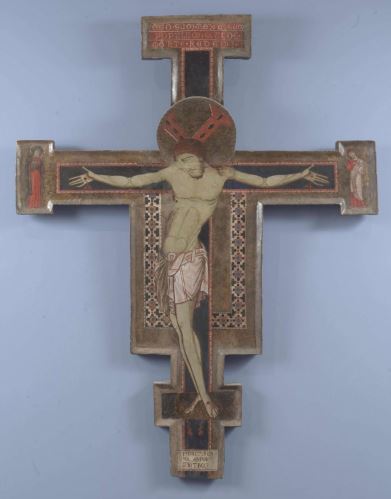
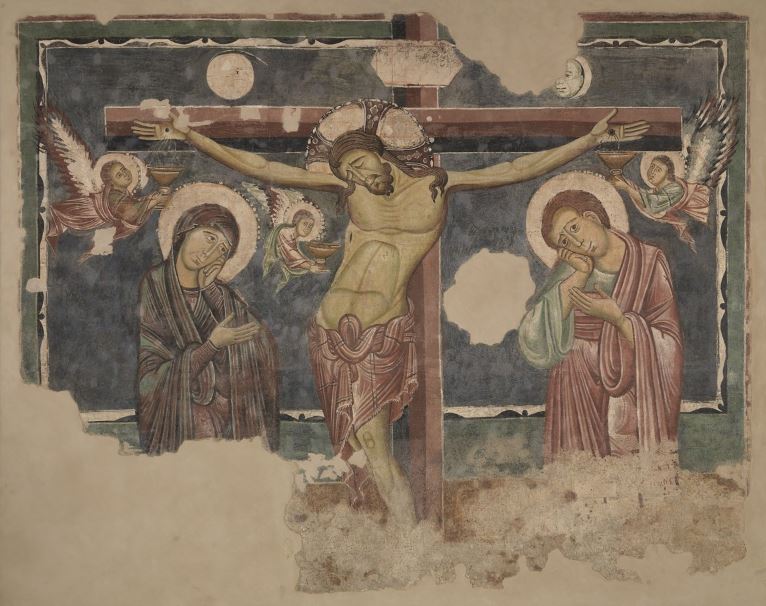
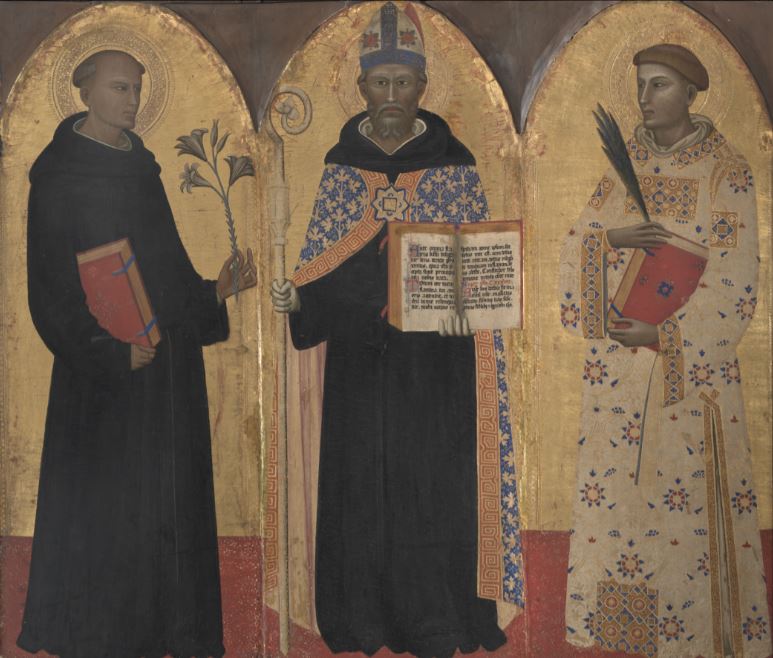
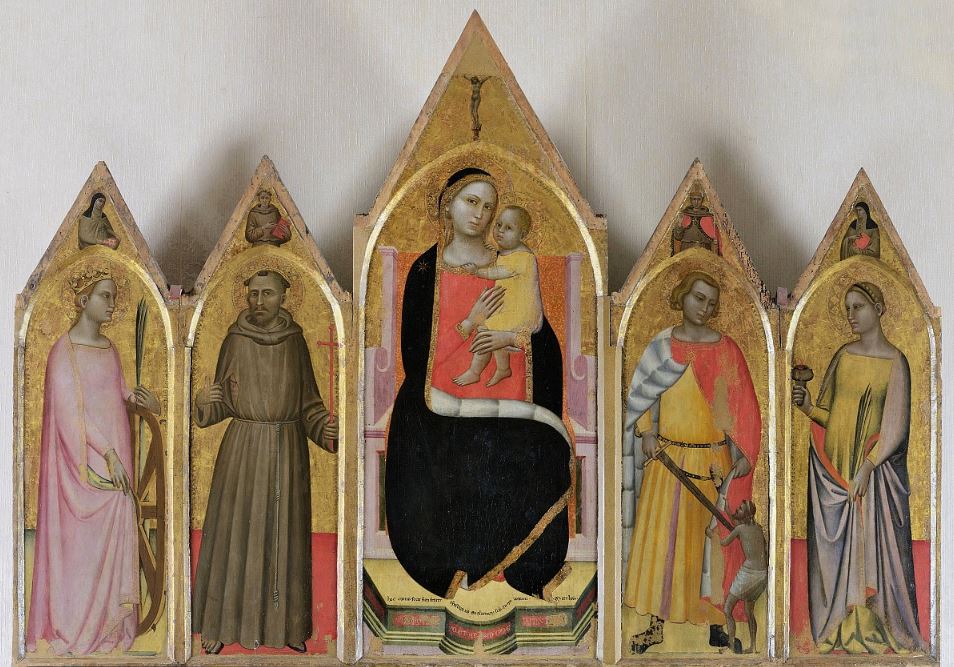
In Fabriano, Marche, to visit the Pinocoteca Civica, which has an excellent collection of late medieval and early Renaissance Italian art.
The collection begins with works from the Fabriano convent of Saint Augustine and continues with artists of the Fabriano school who were influenced by the style of Giotto. Late Gothic paintings from Allegretto Nuzi then lead into the fifteenth-century Renaissance works of Antonio da Fabriano, Bicci di Lorenzo and Neri di Bicci.
Rainaldetto di Ranuccio da Spoleto ‘Crucifix’ (second-half 13th century)
Master of St. Augustine ‘Crucifixion’ (second-half 13th centruy)
Master of Campodonico ‘Crucifixion’ (1345)
Allegretto Nuzi ‘Saint Augustine between Saints Nicola da Tolentino and Stefano’ (1362)
Allegretto Nuzi ‘Madonna and Child with Saints Catherine, Francis, Martin and Lucy’ (1366)
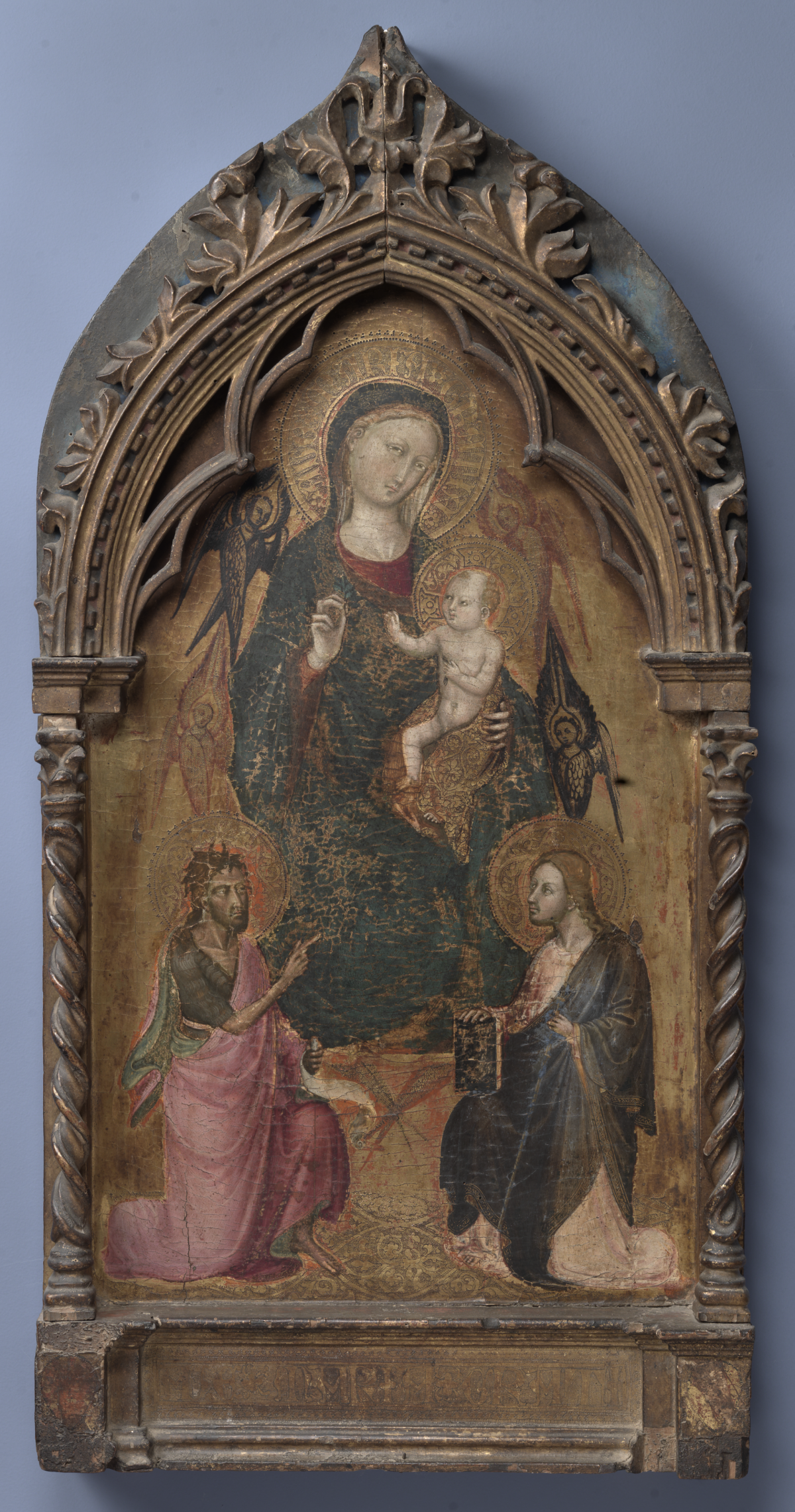
Bicci di Lorenzo ‘Madonna and Child with Saints John the Baptist and James the Great’ (15th century)
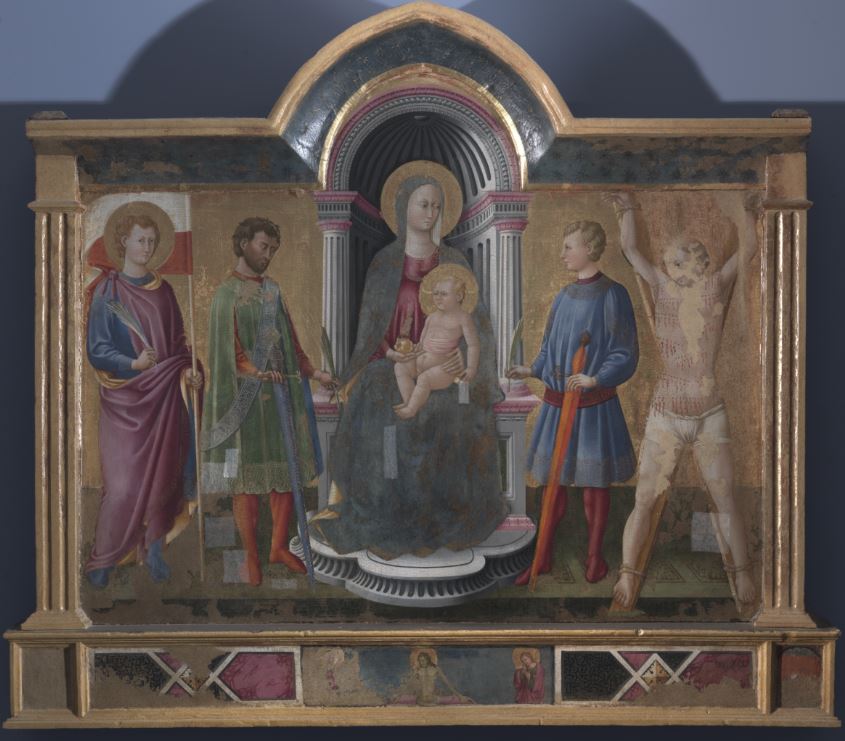
Neri di Bicci ‘Enthroned Madonna and Child with Saints Venanzio, Vittore, Florenzo, Andrea’ (15th century)
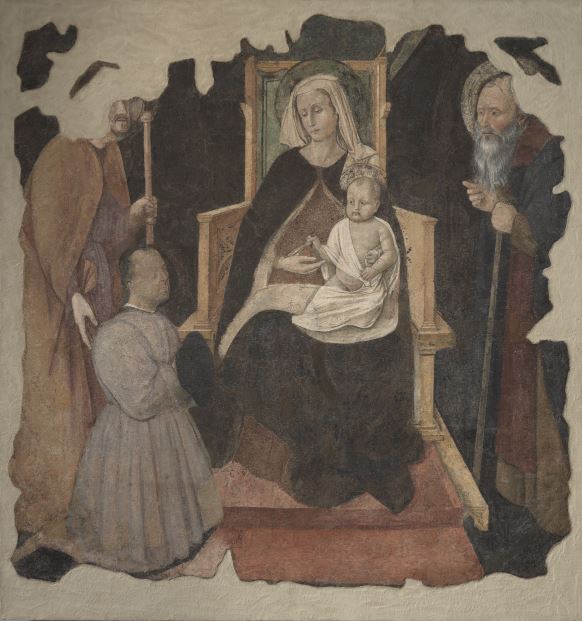
Antonio da Fabriano ‘Madonna and Child with Saints James the Great, Antonio Abate and Donor’ (2nd-half 15th century)
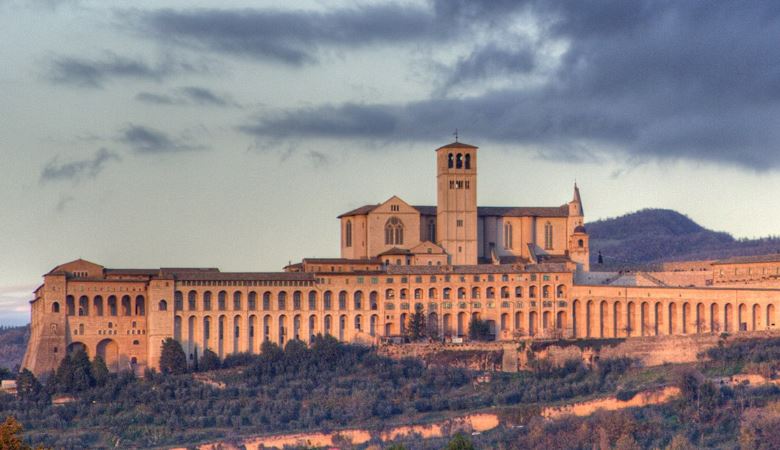
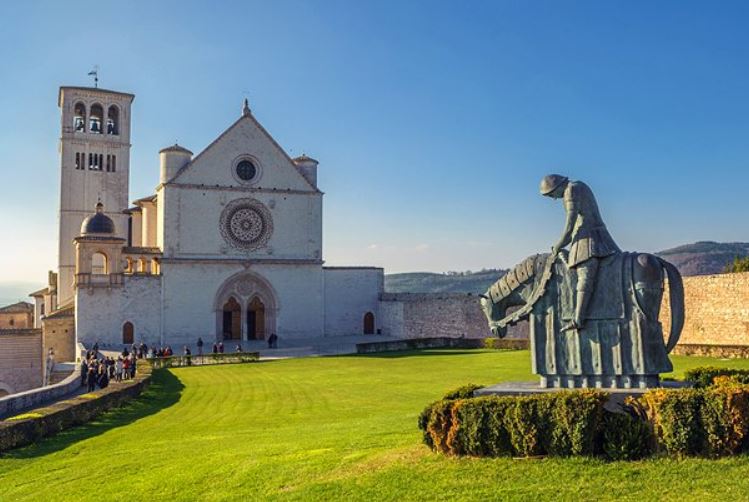
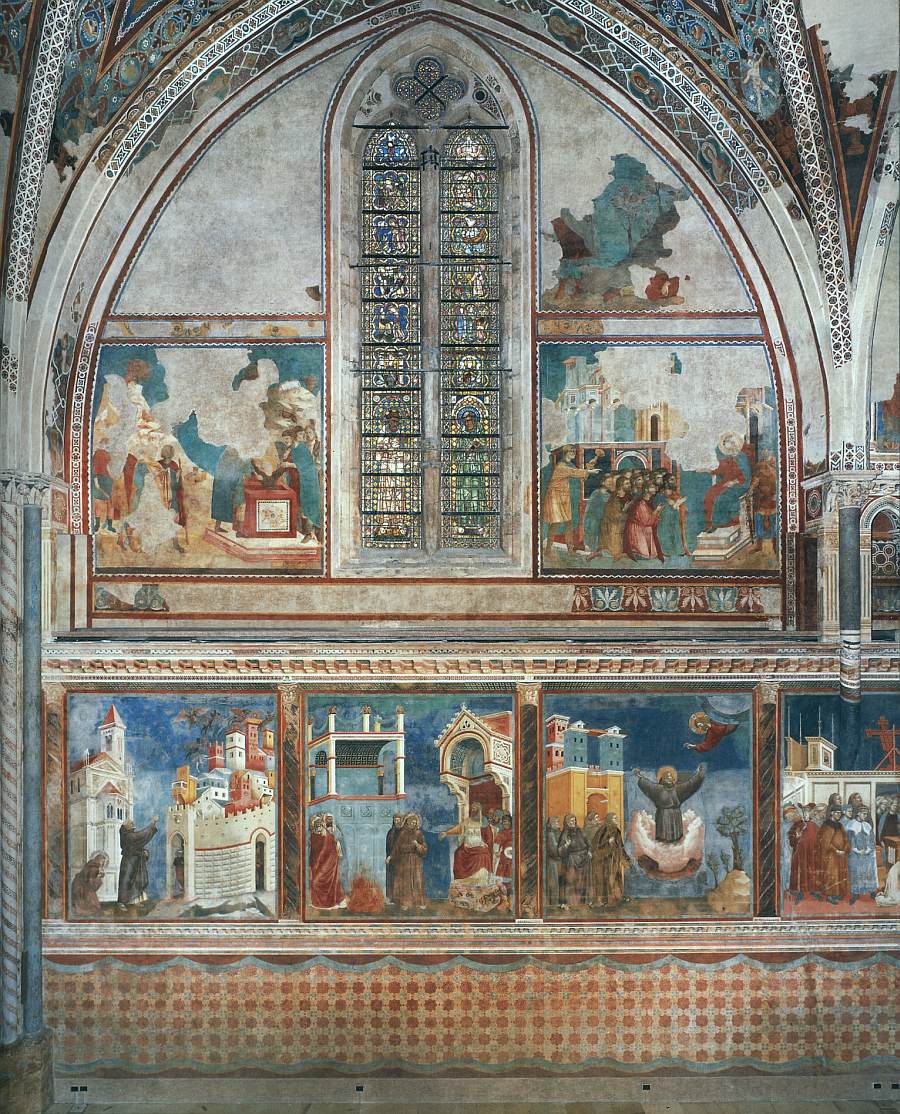
Just eighteen months after the death of Saint Francis on 4 October 1226, Pope Gregory IX ordered the building of a church dedicated to the saint. Construction of the church, which is built into the side of a hill, began in 1228. There are, in fact, two churches, known as the Upper Church and the Lower Church, and a crypt, where the remains of the saint are interred.
Both the Upper and Lower Churches are decorated with frescoes by artists from both the Florentine and Sienese schools, including Cimabue, Simone Martini and Pietro Lorenzetti. There is also much debate about the possible involvement of Giotto, although most scholars now think it unlikely.
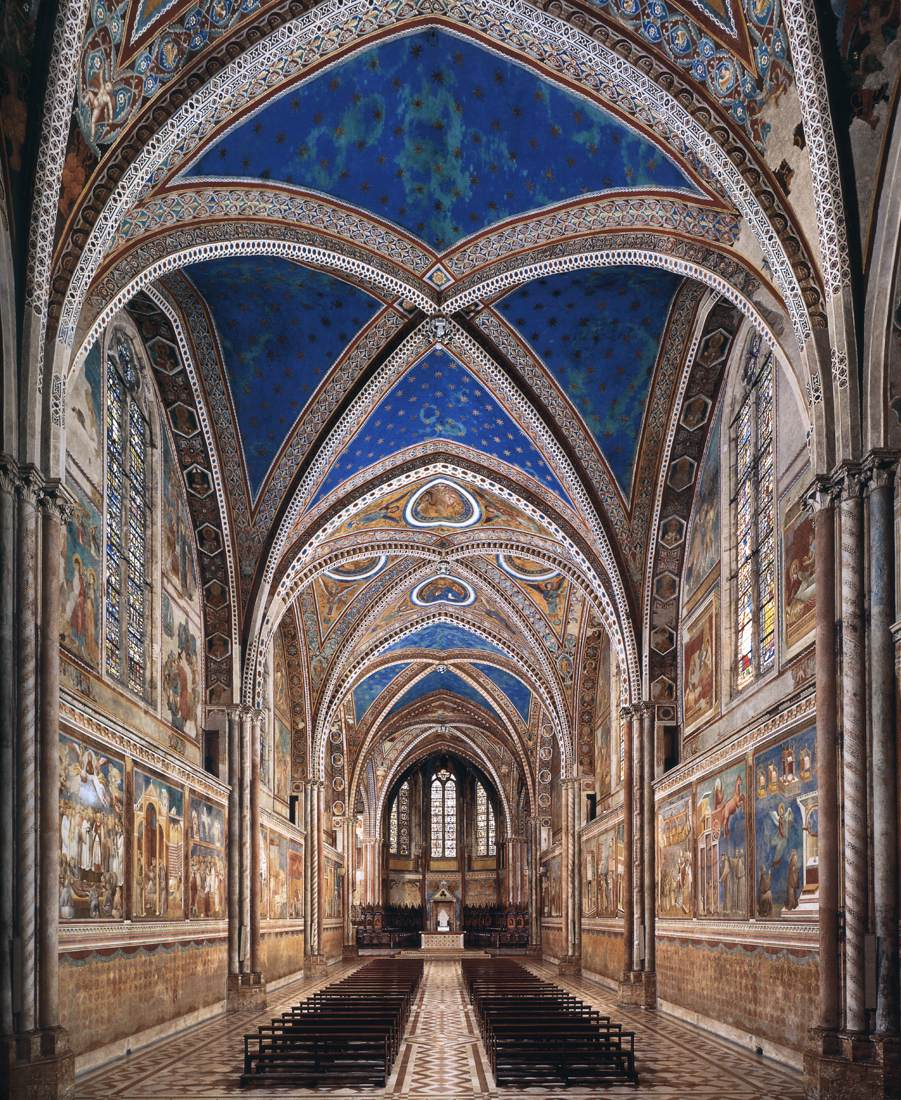
Nave of the Upper Church
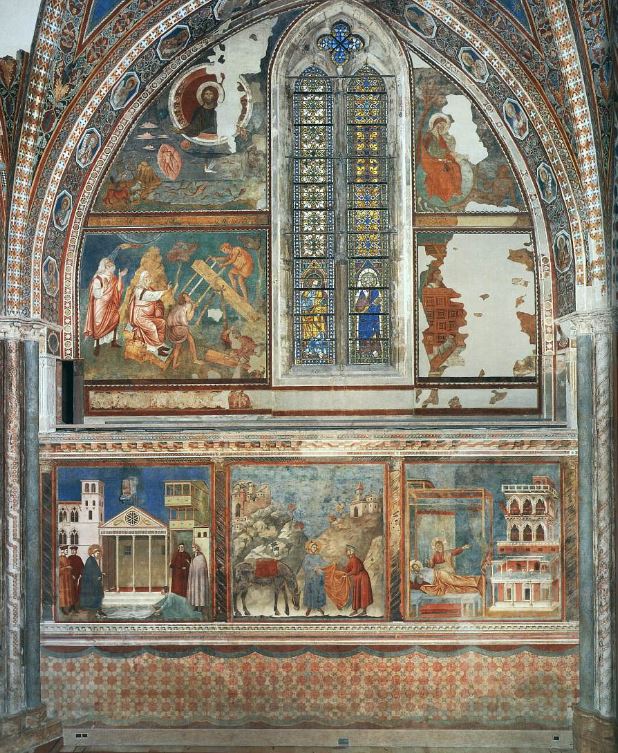
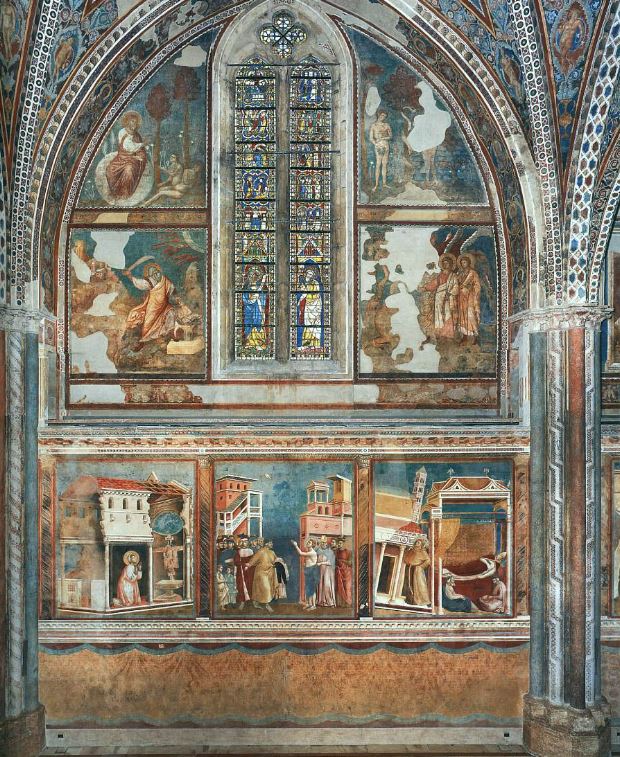
The nave of the Gothic-style Upper Church is decorated with twenty-eight frescoes depicting events from the life of Saint Francis. They have been variously attributed, including to Giotto and to a Roman artist named Pietro Cavallini, both on the basis of style, although there is no evidence of either artist being in Assisi.
In September, 1997, two earthquakes hit the Assisi region and there was widespread destruction. While a group of specialists and friars were inspecting the damage to the Basilica of Saint Francis, an aftershock shook the building, causing the collapse of the vault. Two Franciscan friars and two of the specialists were killed. Many of the frescoes in the Upper Church were damaged and those where the vault had collapsed were almost completely destroyed. The church was closed for two years for restoration.
Scenes from the Life of Saint Francis. Upper Church.
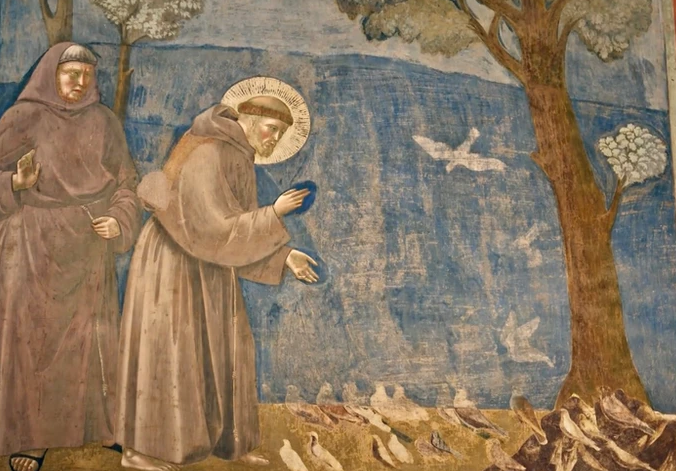
Saint Francis preaching to the Birds
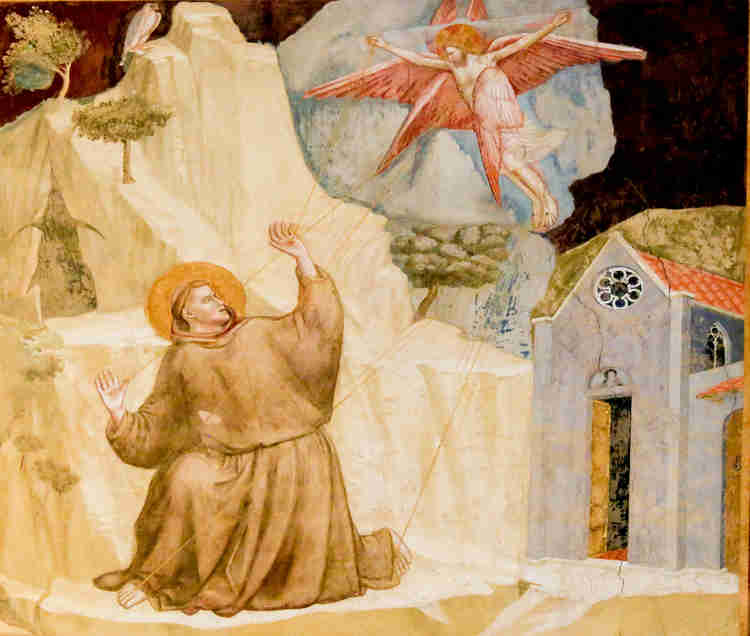
Saint Francis receiving the Stigmata
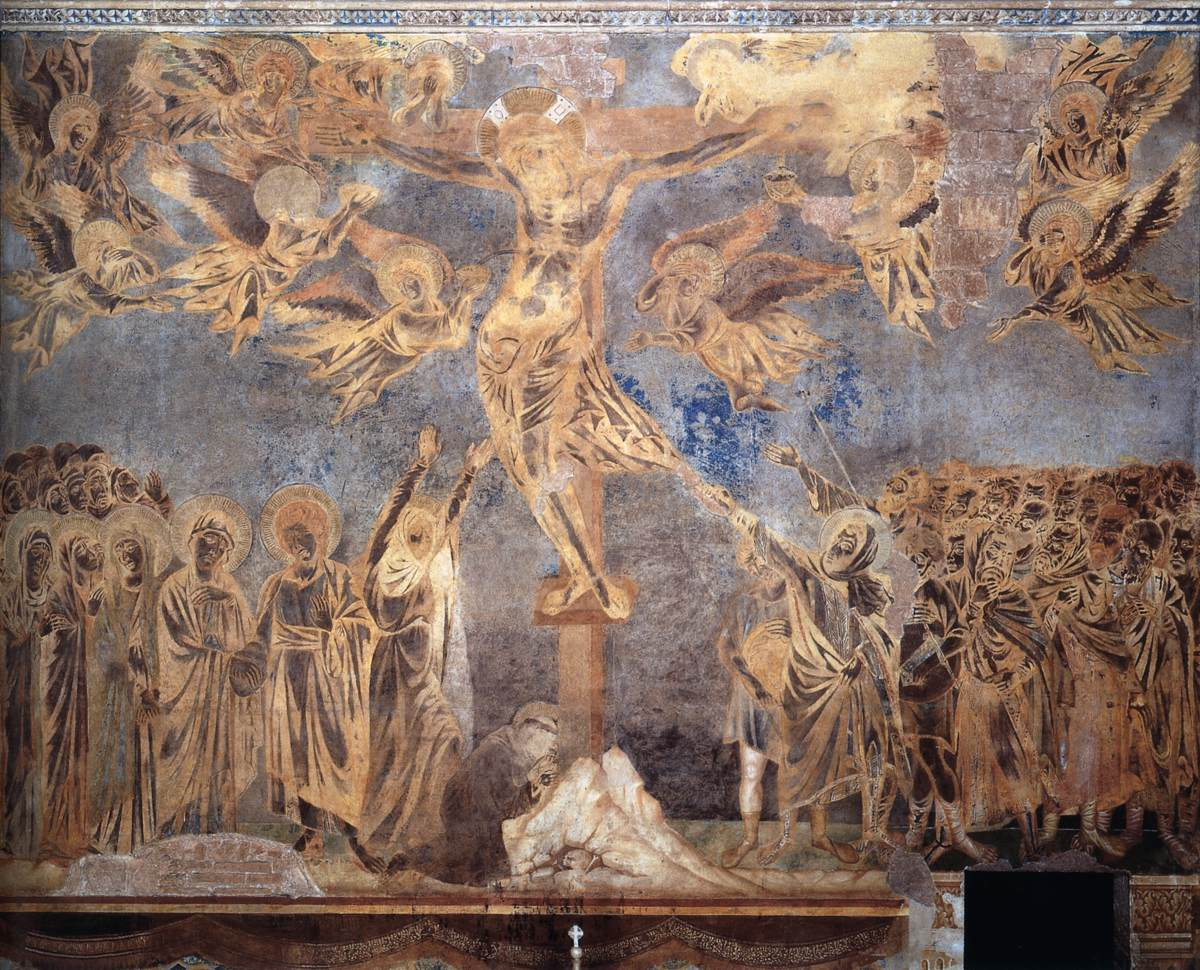
In the transept and apse of the Upper Church are frescoes by Cimabue. However, the oxidization of the lead-based paint over time has meant that they have degraded considerably.
Cimabue ‘Crucifixion’ (1277 – 80)
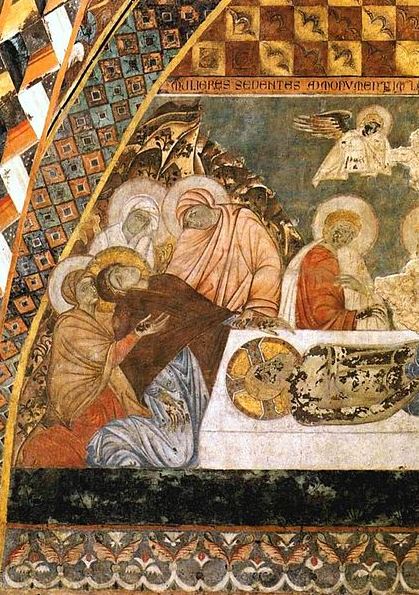
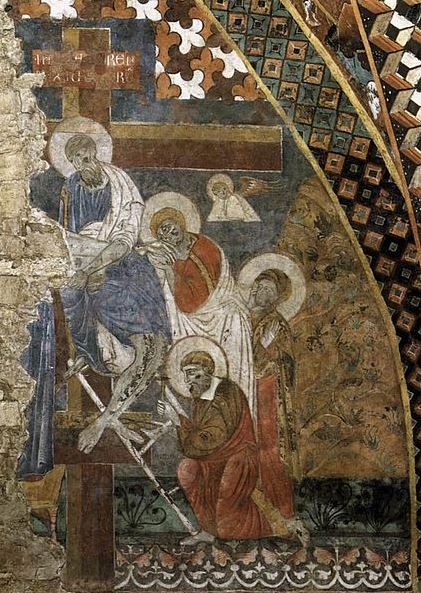
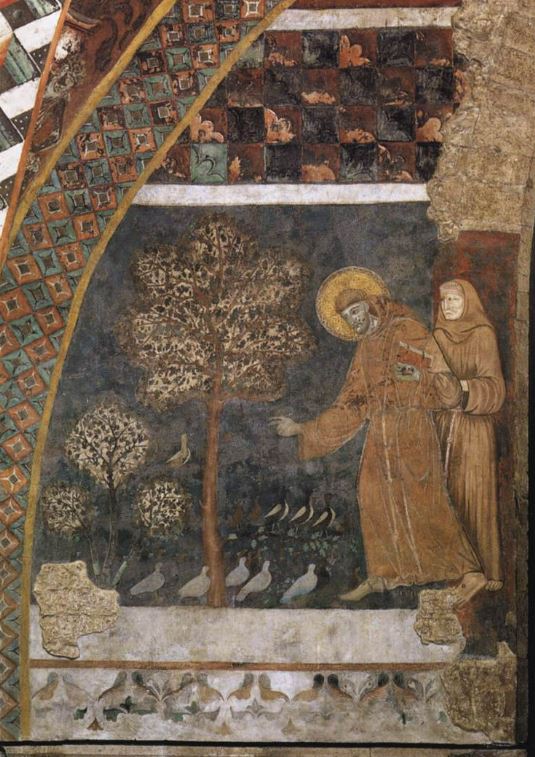
The Lower Church was constructed first and was built entirely in the Romanesque style. It consists of a central nave with several side chapels with semi-circular arches. The nave is decorated with the oldest frescoes in the church by an unknown artist known as Maestro di San Francesco. They feature scenes from the Passion of Christ on the right side, with scenes from the Life of St. Francis on the left.
Maestro di San Francesco ‘Lamentation over the Dead Christ’
Maestro di San Francesco ‘Deposition of Christ from the Cross’
Maestro di San Francesco ‘St. Francis preaching to the Birds’
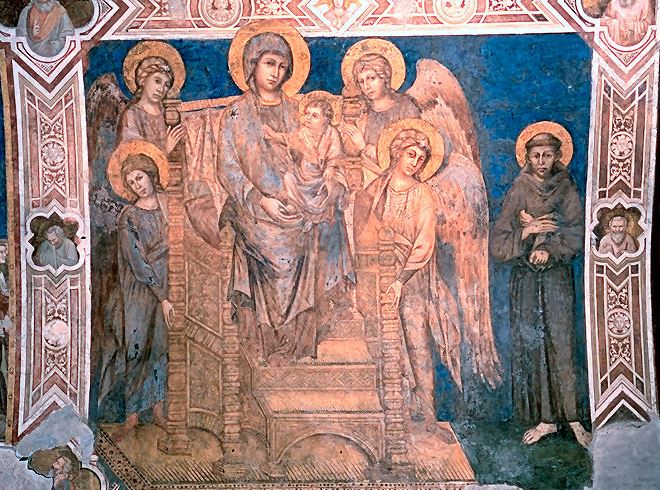
To the right of the high altar in the transept arm of the church is a ‘Maesta’, by Cimabue, a depiction of Mary and the Christ child surrounded by angels and flanked by St. Francis.
Cimabue ‘Maesta’ (1278)
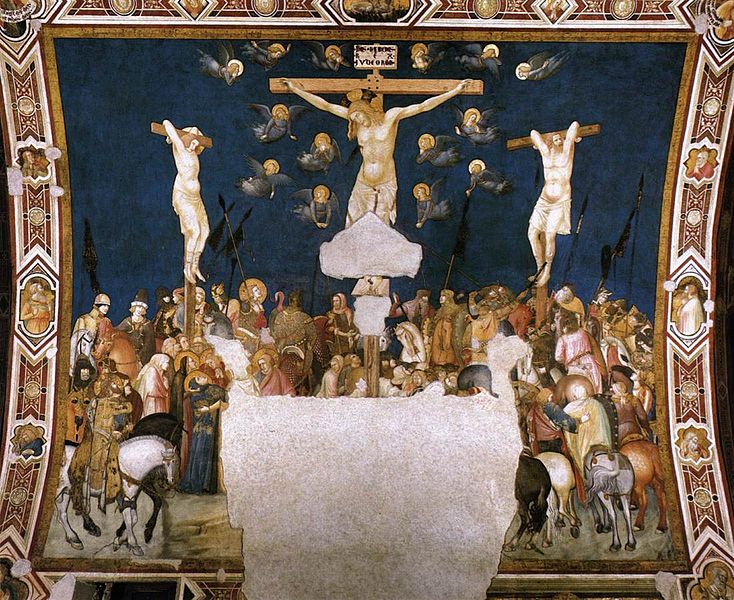
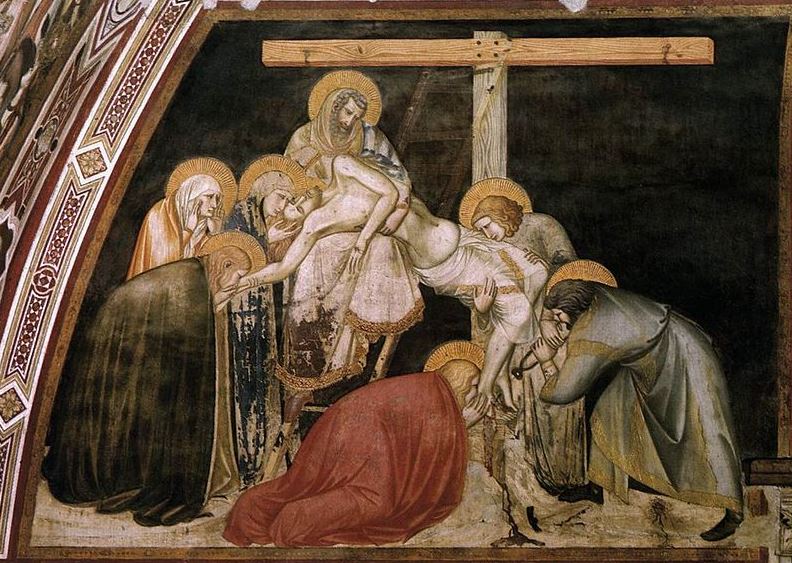
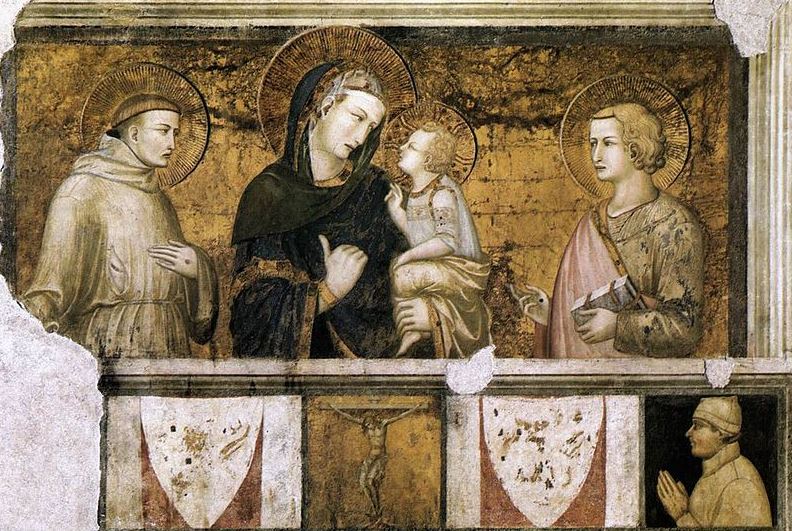
The south transept is decorated with six scenes from the ‘Passion of Christ’ by the Sienese artist Pietro Lorenzetti. The frescoes include a particularly emotional ‘Deposition of Christ from the Cross’, a monumental ‘Crucifixion’ and a ‘Madonna and Child with Saints John the Evangelist and Francis’.
Pietro Lorenzetti ‘Crucifixion’ (c.1320)
Pietro Lorenzetti ‘Deposition of Christ from the Cross’ (c.1320)
Pietro Lorenzetti ‘Madonna and Child with Saints Francis and John the Evangelist’ (c.1320)
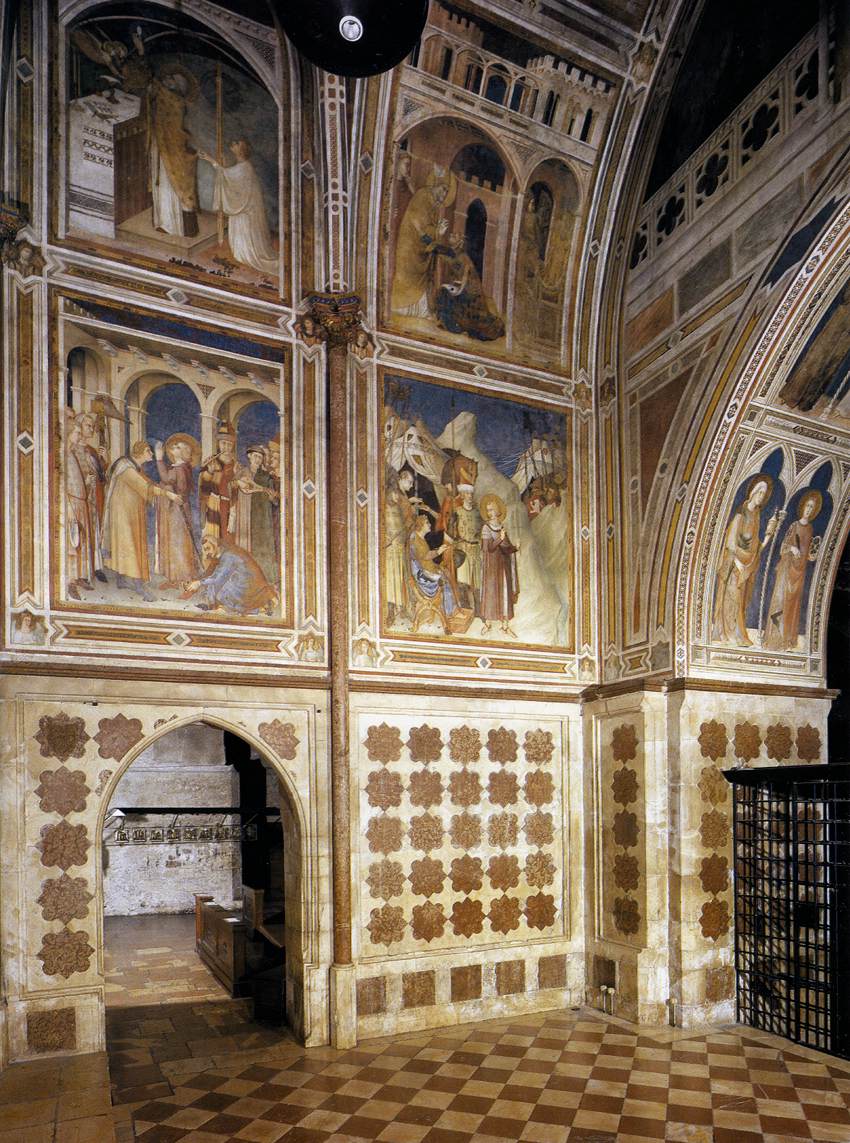
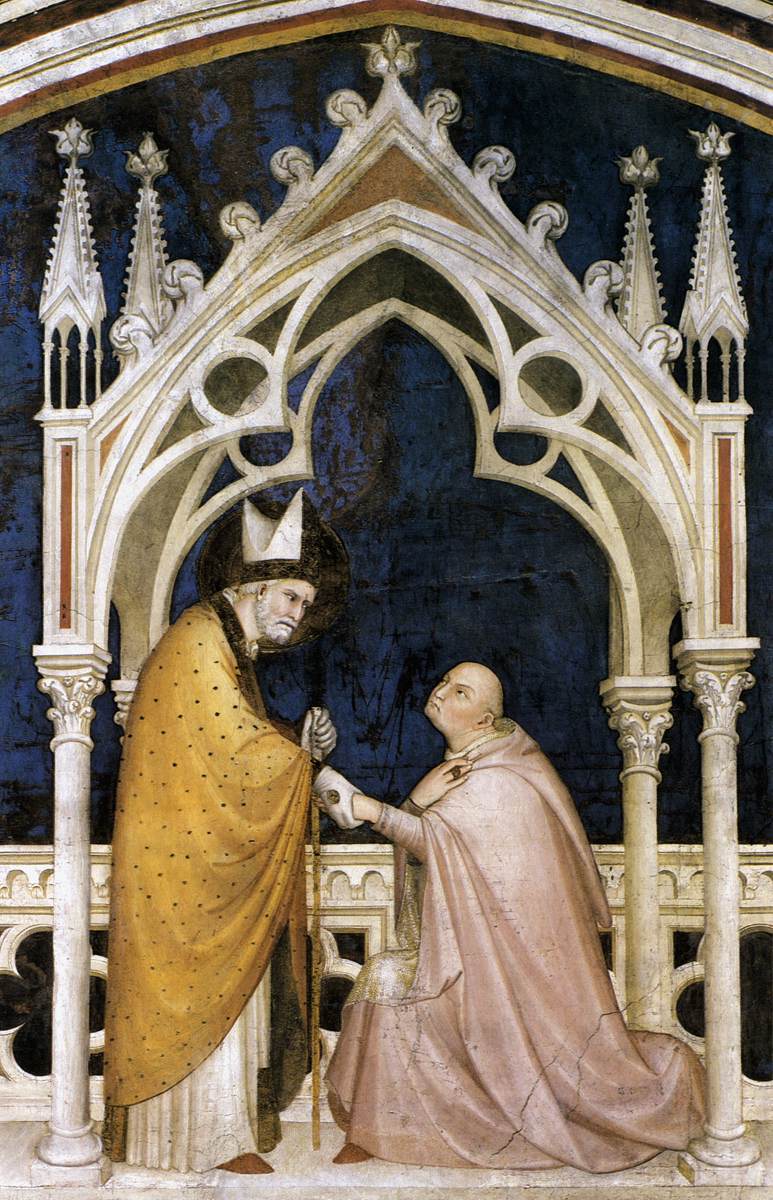
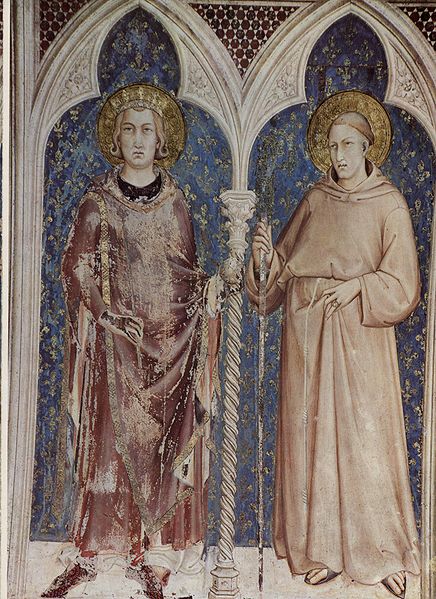
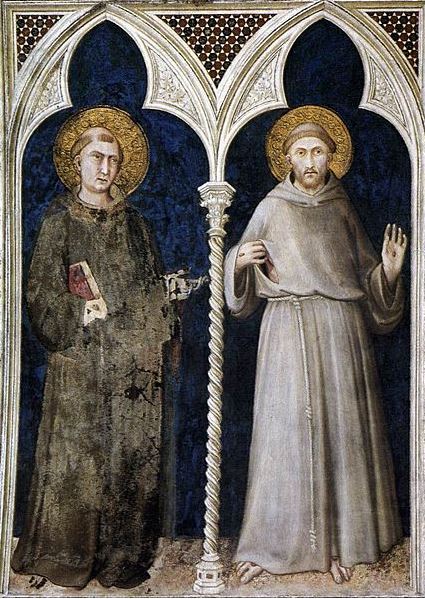
The first chapel on the left of the nave is the San Martino Chapel, dedicated to Saint Martin of Tours. It was decorated between 1317 and 1319 with ten frescoes depicting the saint’s life by another Sienese artist, Simone Martini.
Simone Martini ‘Chapel of St. Martin’ (1320 – 25)
Simone Martini ‘St. Martin with Donor kneeling’ (1320 – 25)
Simone Martini ‘St. Louis, King of France and St. Louis of Toulouse’ (1320 – 25)
Simone Martini ‘St. Anthony of Padua and St. Francis’ (1320 – 25)
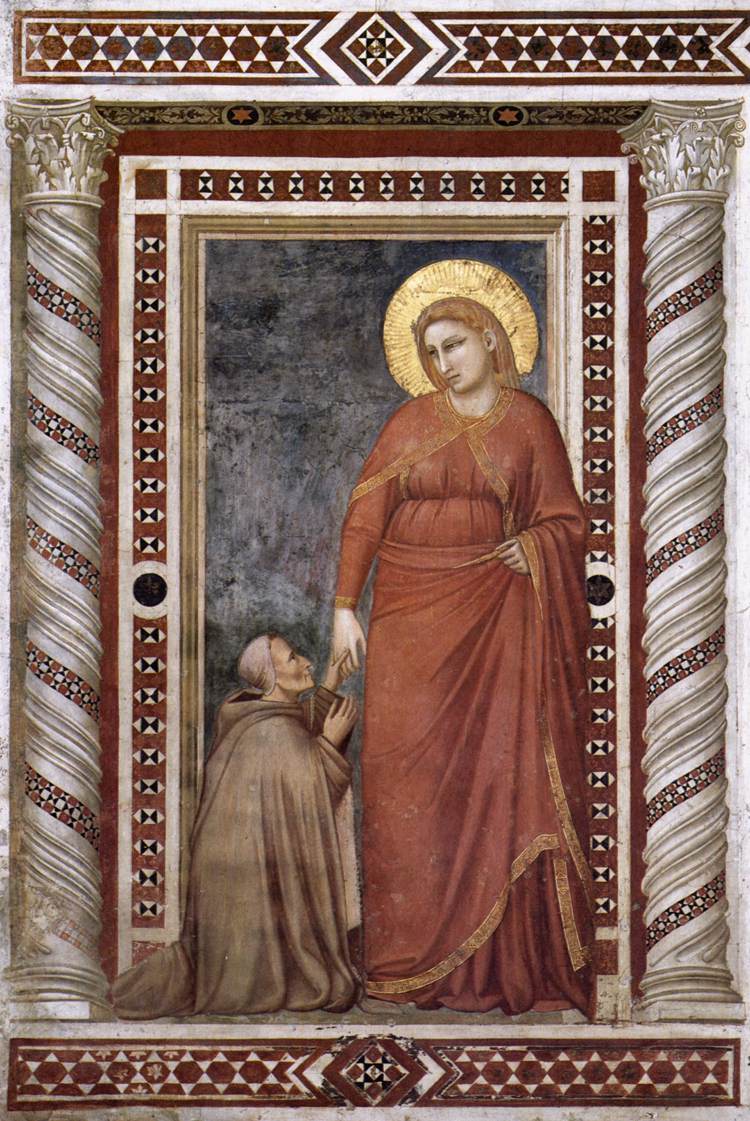
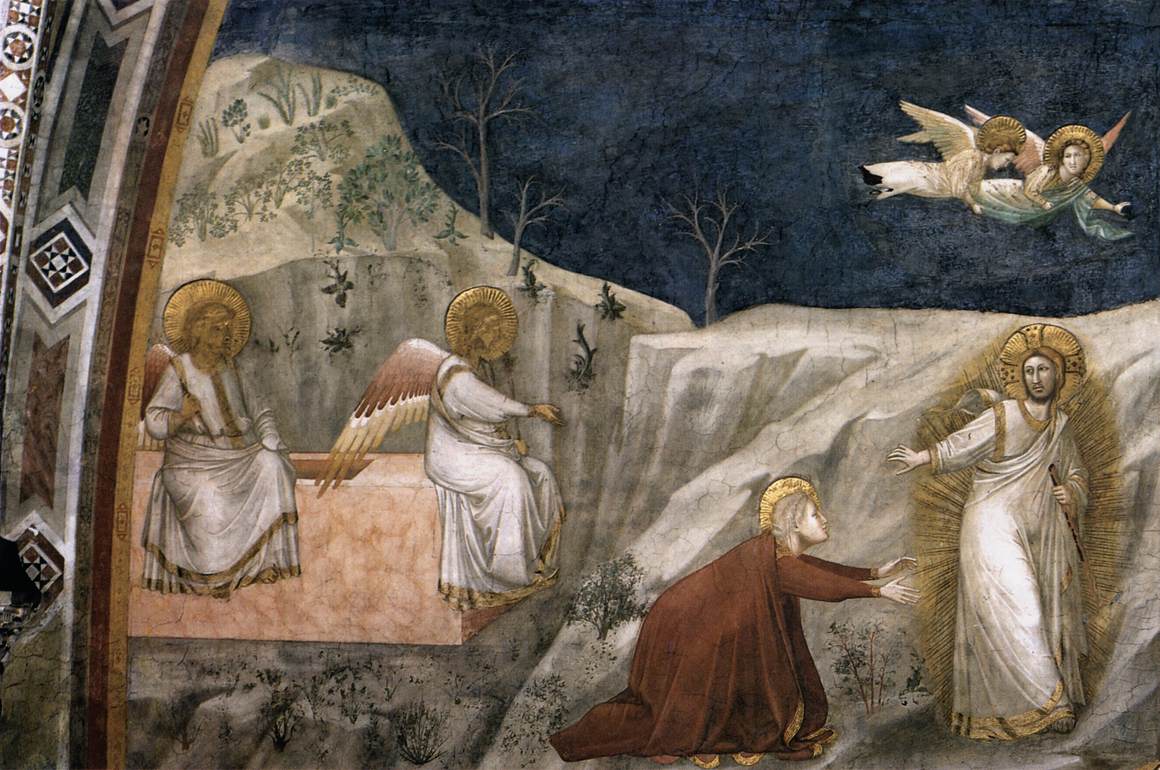
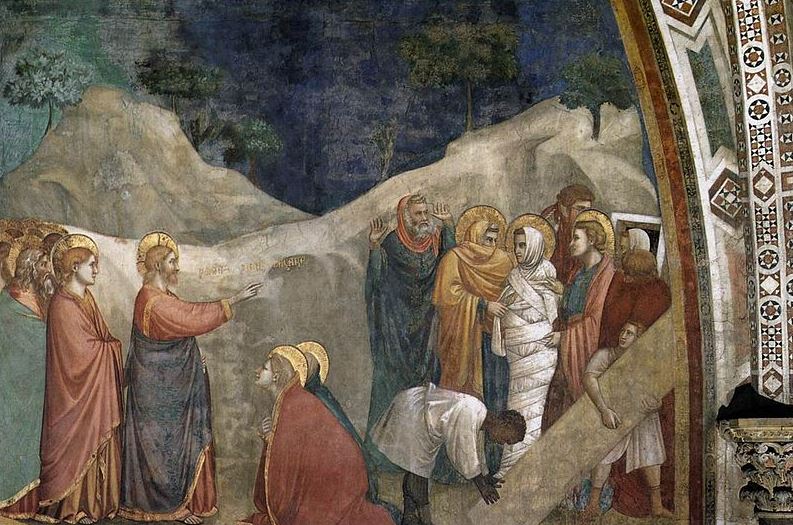
The Chapel of the Magdalene contains a series of frescoes with scenes from the life of Mary Magdalene. These were attributed to Giotto in the past, although this is now thought unlikely. Some believe that Giotto may have been involved in the planning of the series but that the painting was carried out by his workshop.
‘Mary Magdalene with the Donor, Cardinal Pontano’ (1320s)
‘Noli me tangere’ (Touch me not) (1320s)
‘Raising of Lazarus’ (1320s)
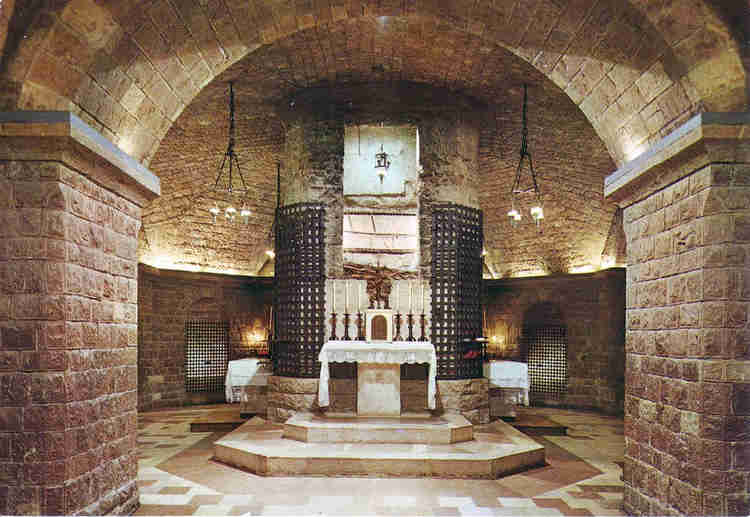
Tomb of Saint Francis
The crypt below the Lower Church contains the tomb of Saint Francis. However, there is no sarcophagus, rather his remains are interred inside a stone pillar. Its location remained unknown for six-hundred years, until, in 1818, Pope Pius VII allowed the lower basilica floor to be excavated. After digging for fifty-two days, the tomb was rediscovered under iron bars.