Back in Spain, this time to visit the splendid medieval cities of Burgos and León in the autonomous community of Castile and León.
Burgos
Burgos is a historic city known for its rich cultural heritage and important role in Spanish history. It is especially famous for its magnificent Gothic cathedral as well as several monasteries in the region. Located along the historic Camino de Santiago, Burgos combines impressive monuments and medieval character with the lively atmosphere of a modern Spanish city.
The Cathedral of Saint Mary of Burgos is one of the finest examples of Gothic architecture in Europe. Construction began in 1221, although the cathedral was developed and enriched over several centuries, resulting in its impressive combination of Gothic and Renaissance features. Its elaborate façade, soaring towers, and richly decorated interior make it Burgos’s most distinctive landmark. The cathedral is the burial place of Rodrigo Díaz de Vivar, known as ‘El Cid’, a medieval knight who was immortalized in the epic poem ‘Cantar del Mio Cid’, not to mention the 1961 film starring Charlton Heston and Sophia Loren. In 1984 the cathedral was declared a UNESCO World Heritage Site.
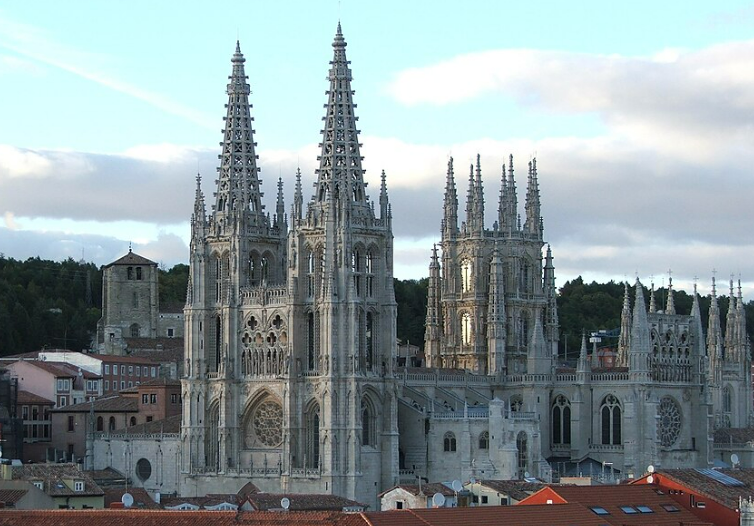
Burgos Cathedral
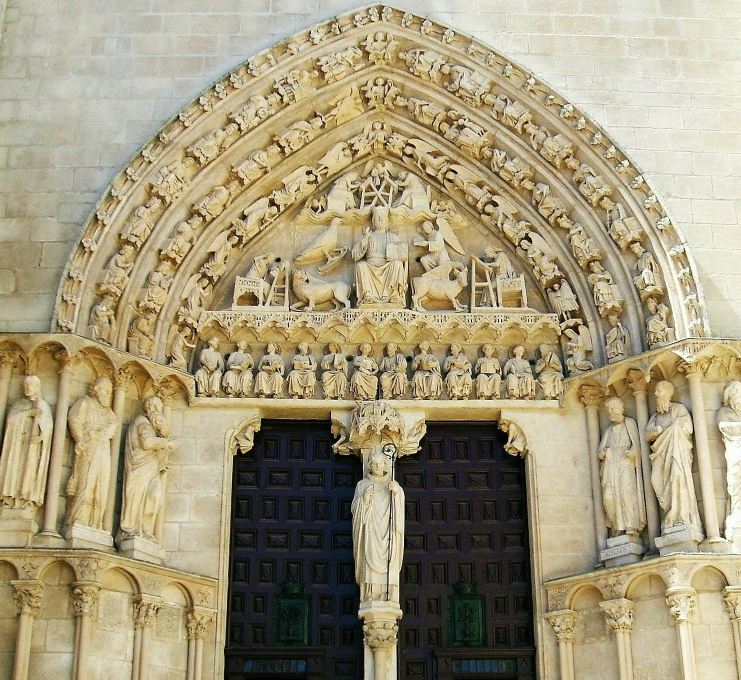
Tympanum of the Sarmental Door, Burgos Cathedral
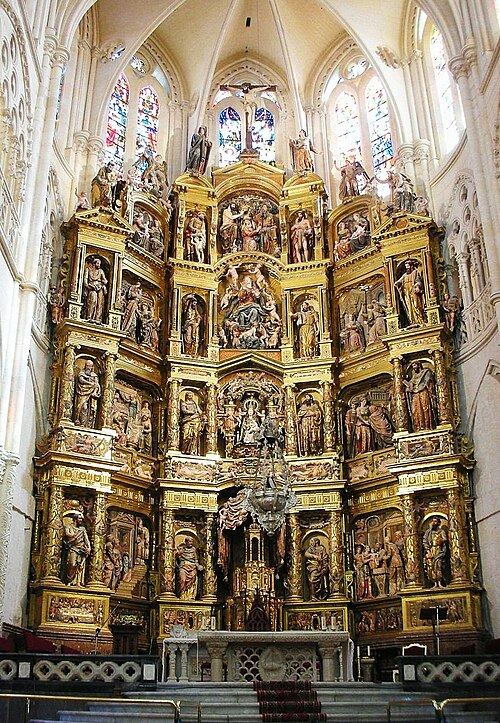
High altarpiece, Burgos Cathedral
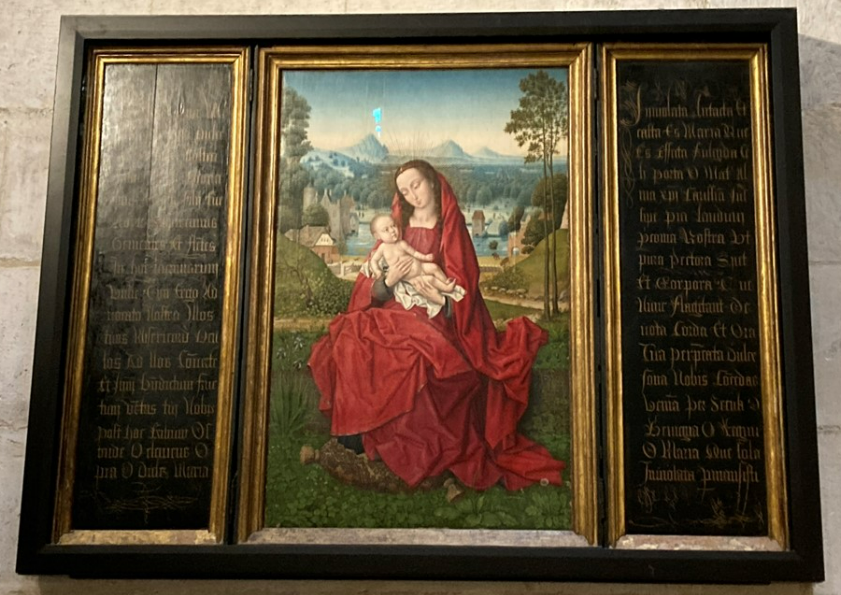
Master of the Madonna Grog ‘Madonna with Child in a Landscape’ (c.1492 – 98)
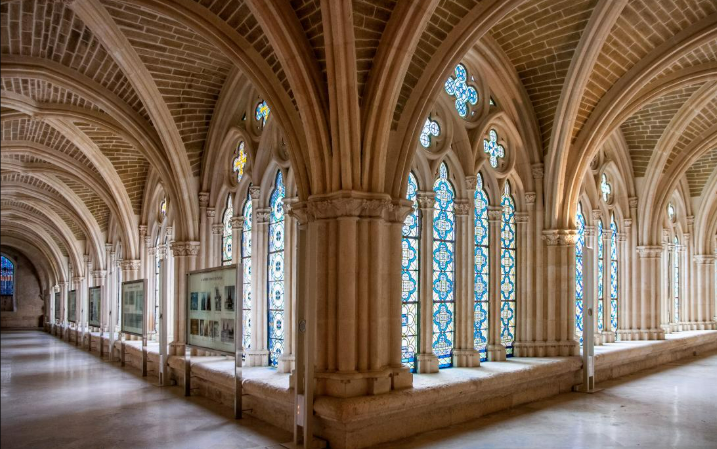
Burgos Cathedral cloister
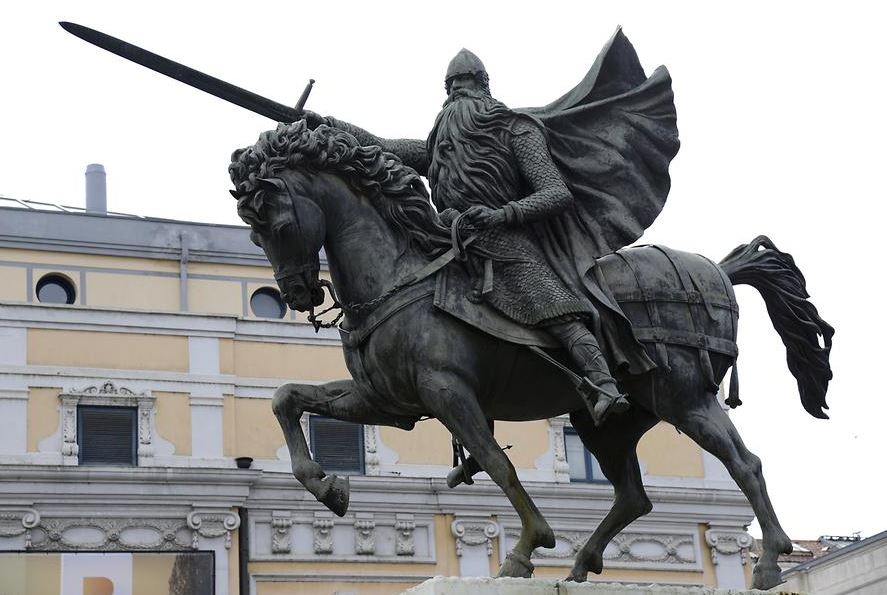
Statue of ‘El Cid’, Burgos
Arco de Santa Maria
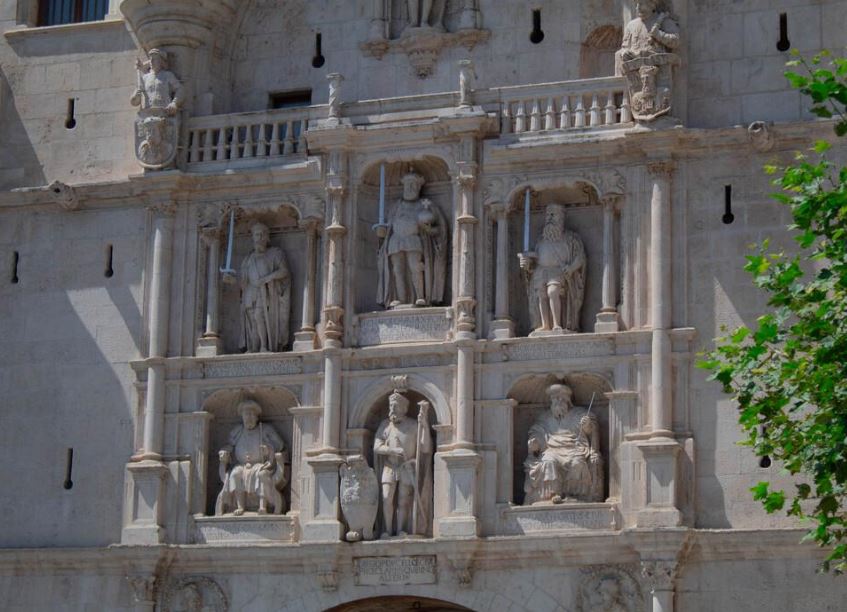
The Arco de Santa María is one of the twelve original medieval entrances to the city. It was rebuilt by Holy Roman Emperor Charles V in the sixteenth century after Burgos supported him during the Revolt of the Comuneros. The statues above the arch are of real or legendary people of importance to the city, including Charles V himself, Count Fernan Gonzalez, Count Diego Rodriguez Porcelos, the founder of the city in 884, and, of course, El Cid.
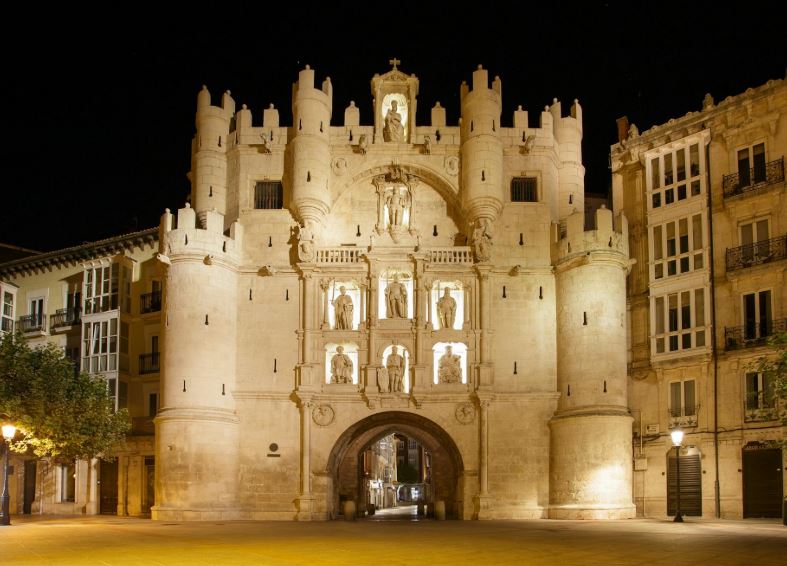
Arco de Santa Maria, Burgos
Cartuja de Miraflores
The Cartuja de Miraflores is a Carthusian monastery built in the Isabelline Gothic style. It was founded in 1442 by King Don Juan II of Castile and León, although it was almost exclusively the work of his daughter, Queen Isabella the Catholic. The monastery contains the tombs of Juan II and his wife, Isabella of Portugal.
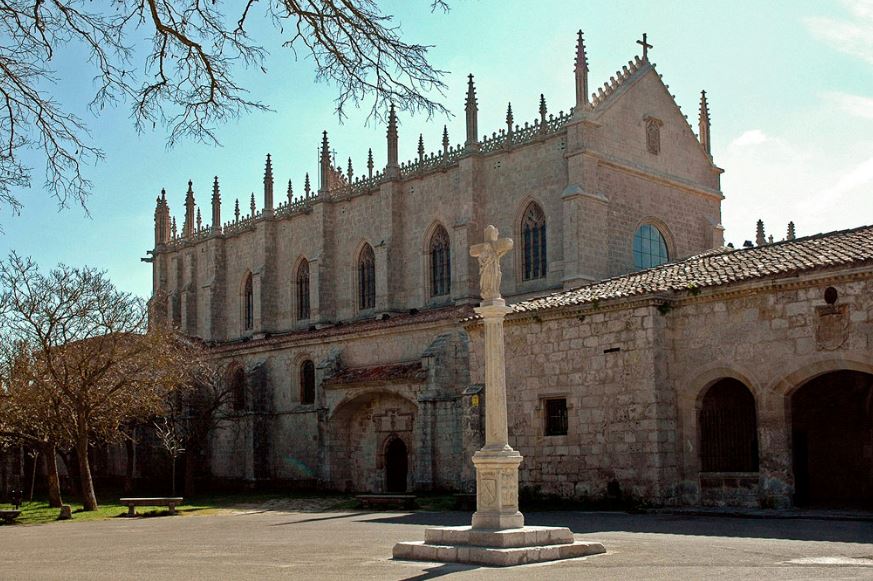
Cartuja de Miraflores, Burgos
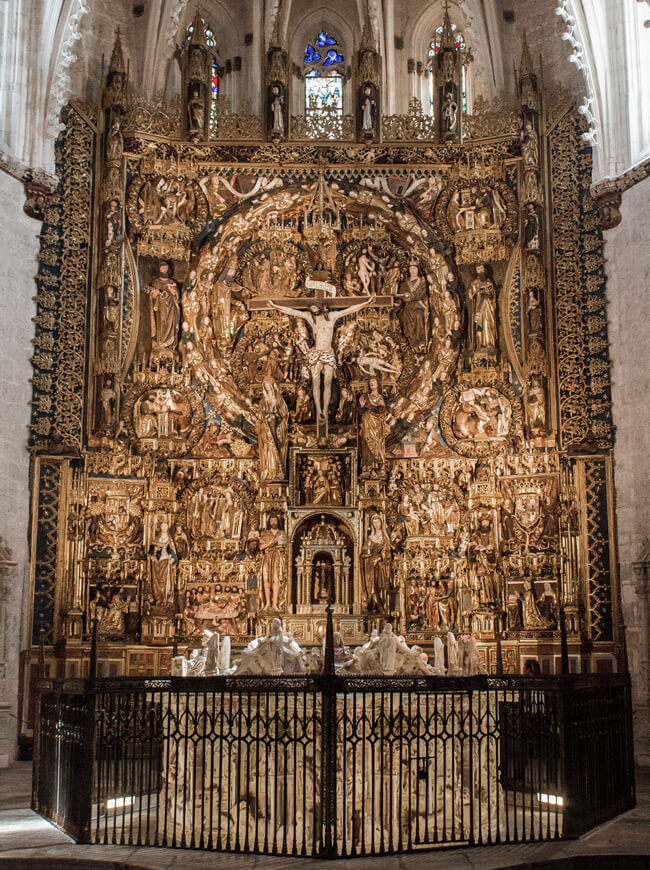
Main altarpiece, Cartuja de Miraflores, Burgos
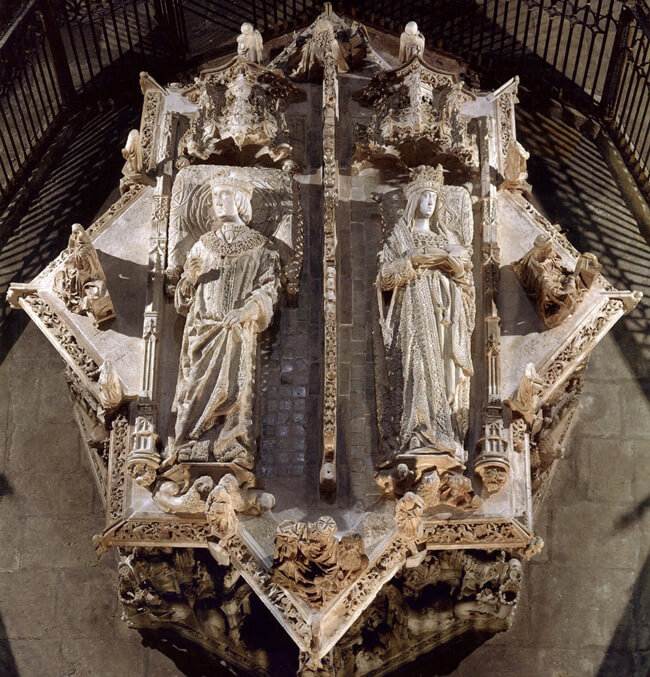
Gil de Siloé ‘Tomb of Juan II and Isabella of Portugal’ (1489 – 93)
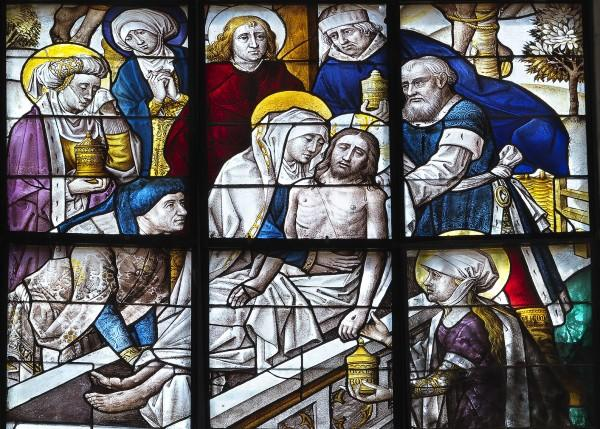
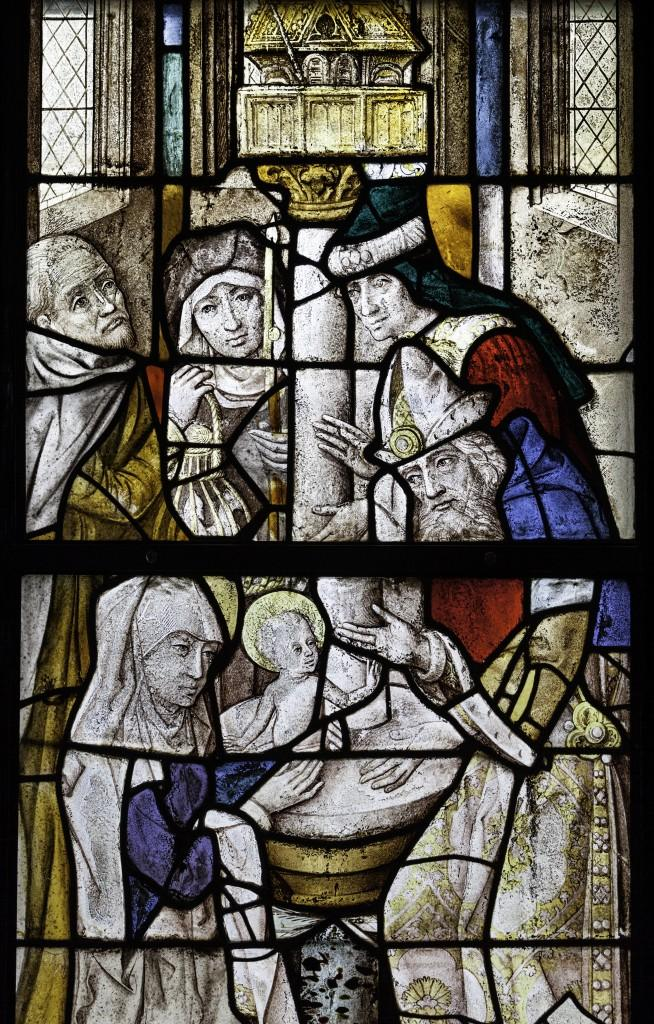
Flemish stained-glass windows (fifteenth century)
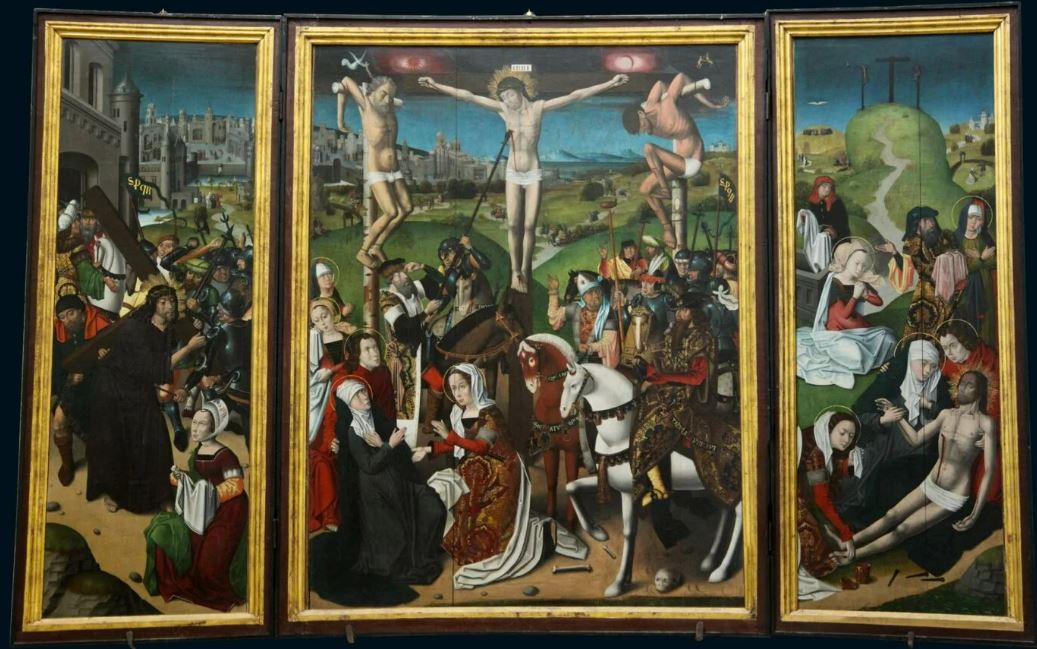
School of Rogier van der Weyden ‘Calvary Triptych’ (late fifteenth century)
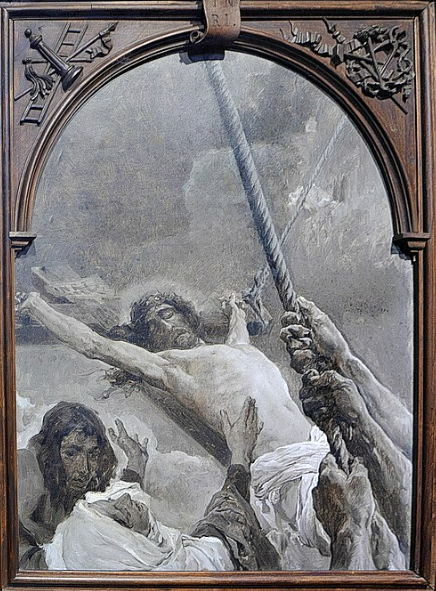
Joaquin Sorolla ‘The Raising of the Cross’ (1884)
León
León was founded during the Roman era and it became one of the most important Christian kingdoms of medieval Europe. Medieval and modern influences have resulted in a distinctive urban and cultural heritage and the city is particularly notable for its Gothic cathedral and medieval old quarter, as well as its role along the Camino de Santiago.
Cathedral de Santa Maria de León
The Cathedral of Santa María de León, is one of the most significant examples of Gothic architecture in Spain. Construction began in the thirteenth century, during a period of considerable religious and political development in the Kingdom of León. The building, which was erected on the site of earlier Roman and medieval structures, is particularly renowned for its remarkable stained-glass windows.
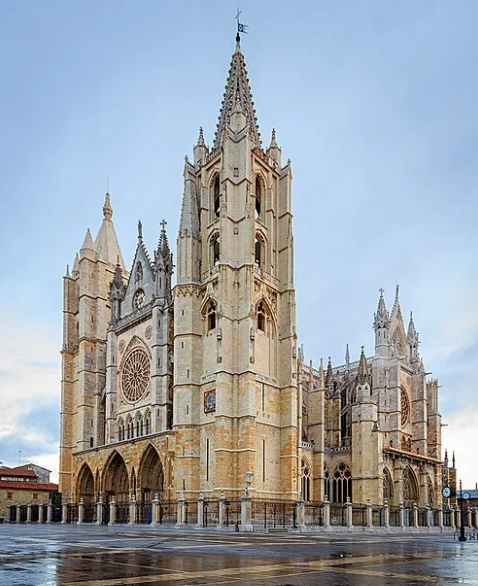
Cathedral de Santa Maria de León
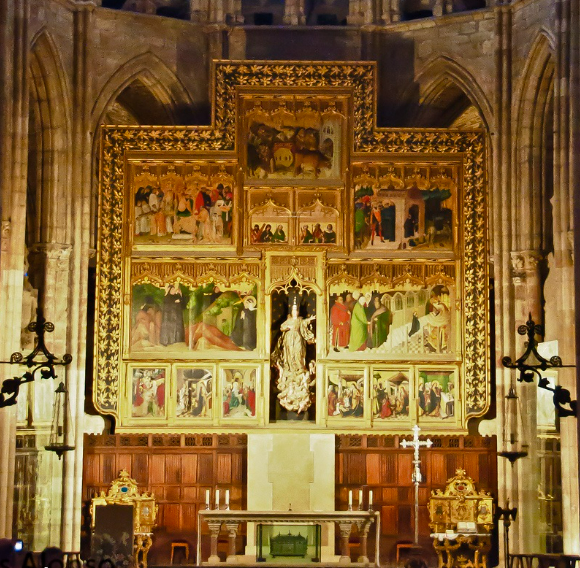
Main altar, Cathedral de Santa Maria de León
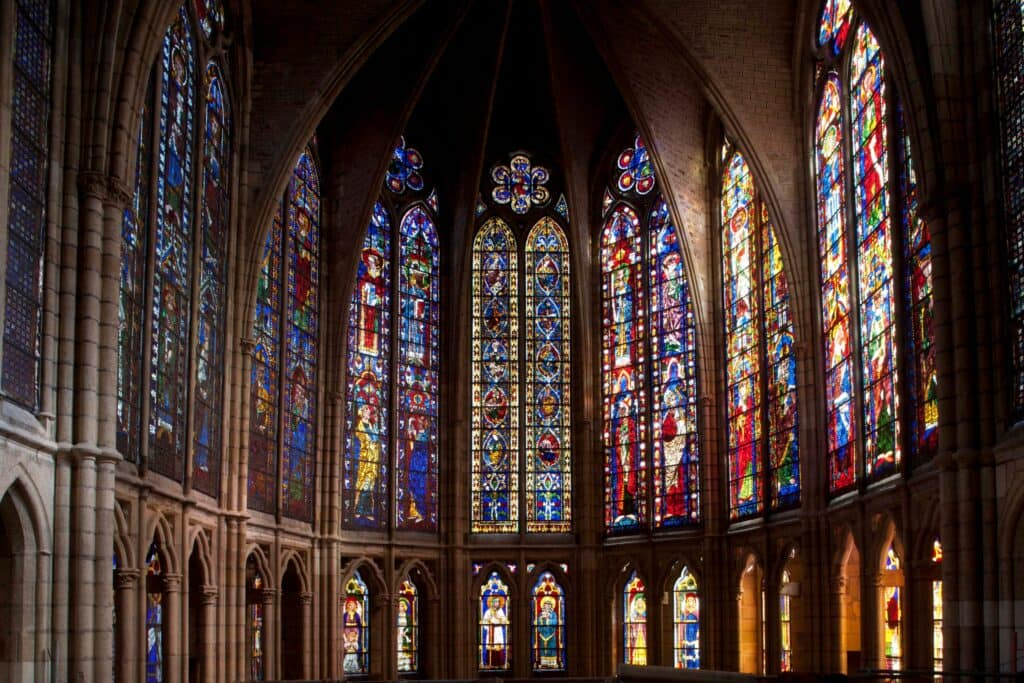
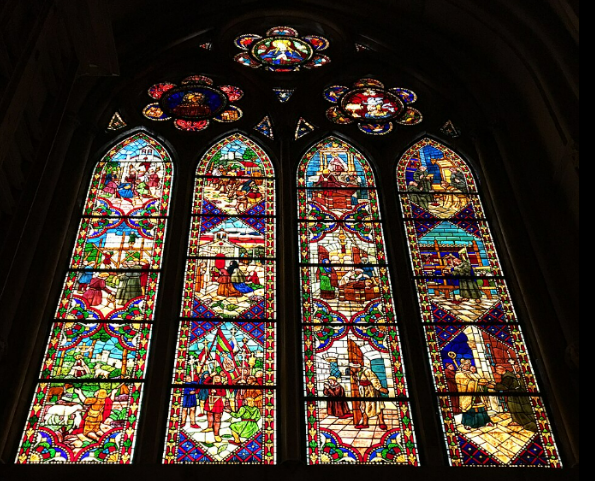
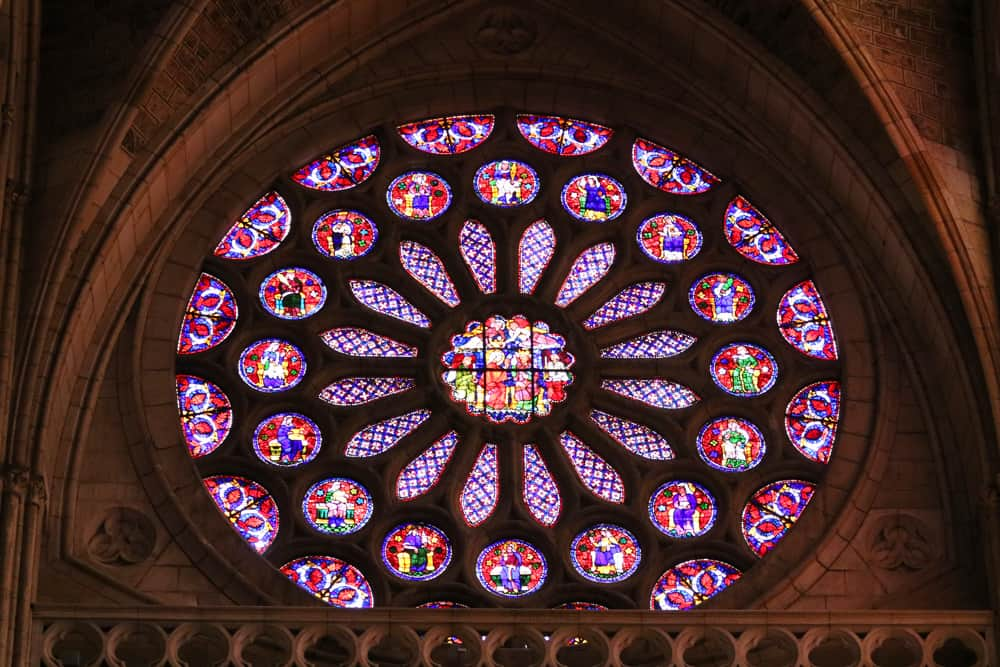
Stained-glass windows, Cathedral de Santa Maria de León
Basilica de San Isidoro
The Basilica of San Isidoro was consecrated in December 1063, when it was dedicated to Saint Isidore of Seville. Although it is mainly Romanesque, the apse and transept were added in the Gothic style. Its main entrance has a tympanum depicting the sacrifice of Isaac, whilst that of the entrance to the right, known as the ‘Door of Forgiveness’, depicts religious scenes, flanked on the spandrels by stone figures of Saint Peter holding the keys and Saint Paul. In 1168, King Ferdinand II changed the route of the Way of Saint James so that pilgrims would pass though Leon and those who were too sick or exhausted to finish the journey to Santiago de Compostela could pass through this door to receive plenary indulgence and forgiveness of their sins.
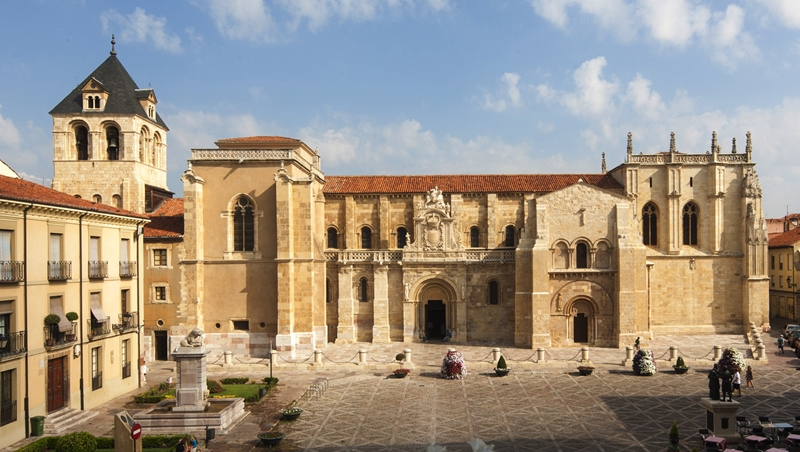
South façade, Basilica de San Isidoro
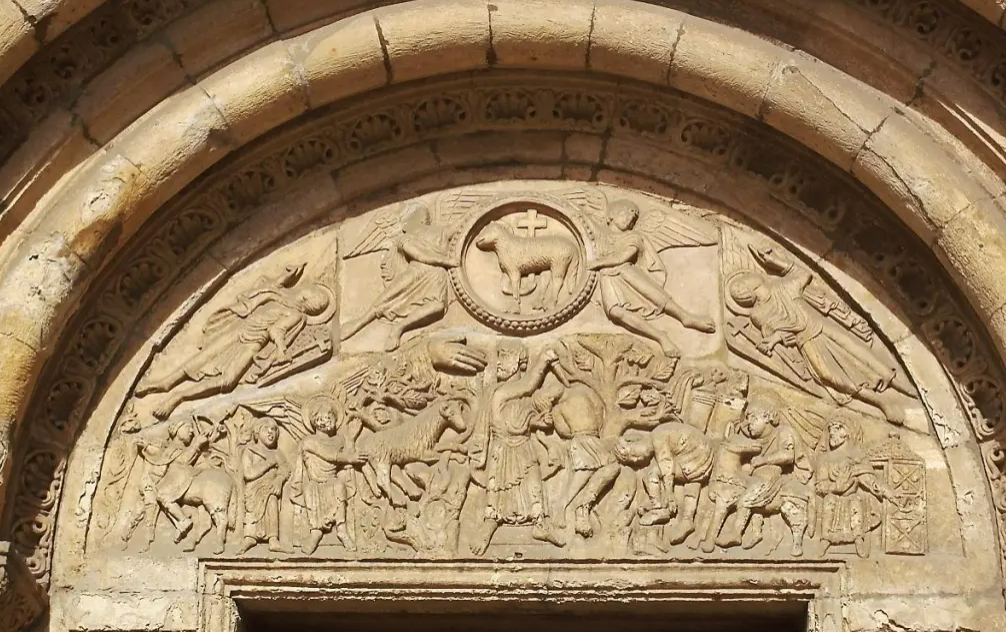
‘Sacrifice of Isaac’ tympanum, Basilica de San Isidoro
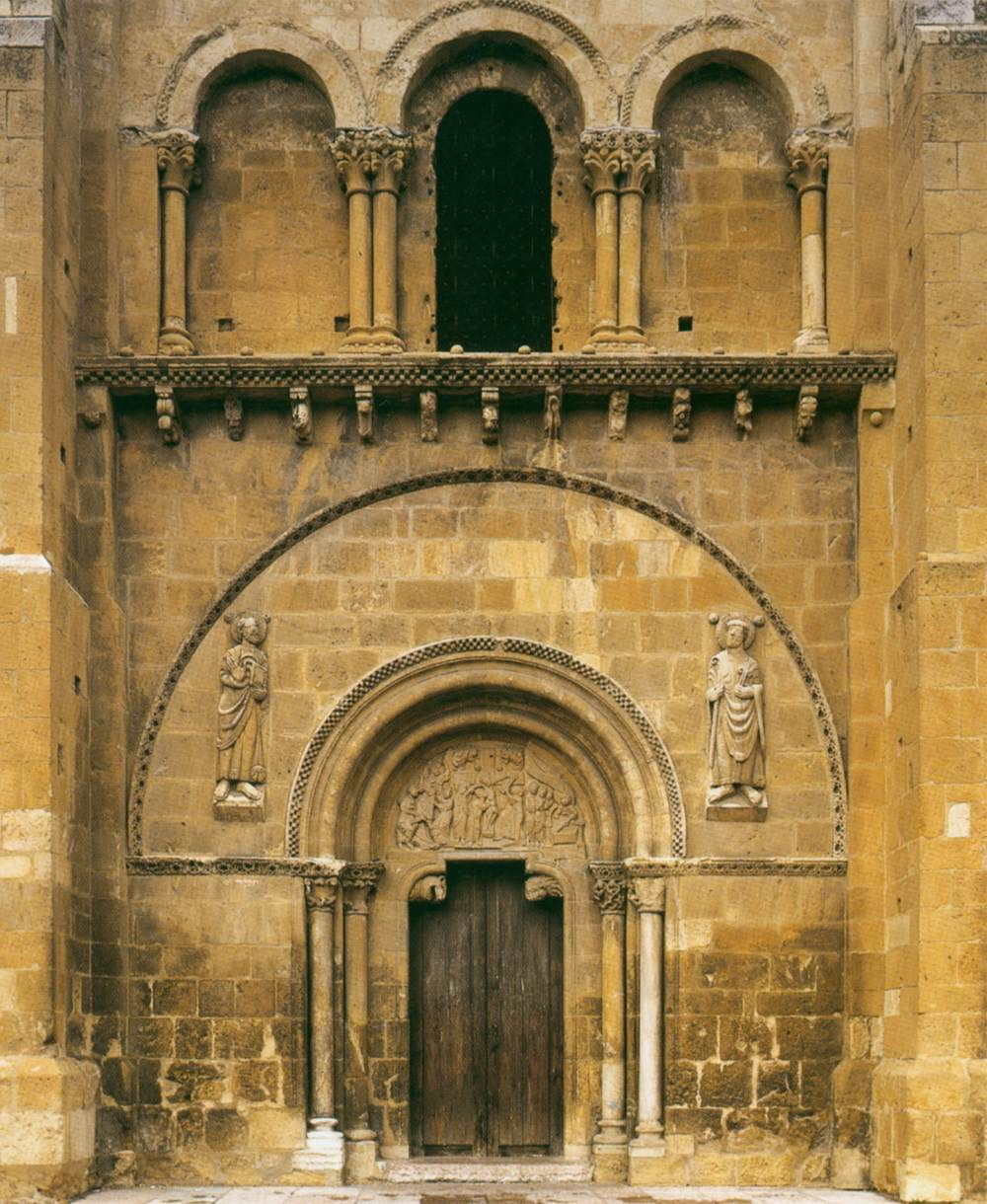
‘Door of Forgiveness’, Basilica de San Isidoro
Queen Sancha of León (1018–1067) selected the church as the site of the royal burial chapel. Eleven kings, twelve queens and numerous nobles lie interred in the Royal Pantheon, the vaults of which are richly decorated.
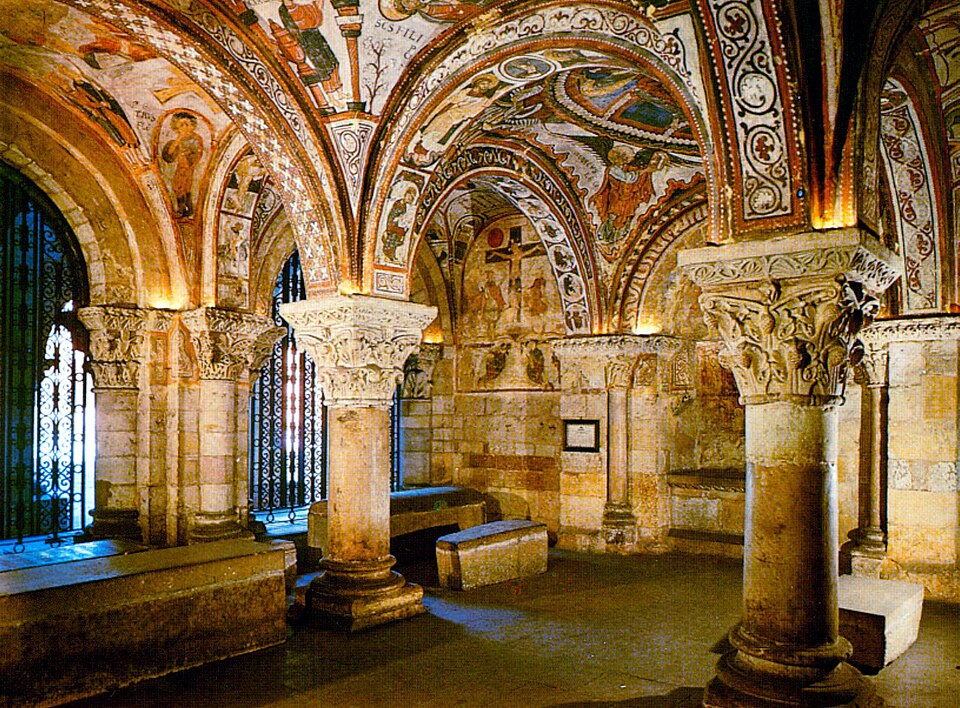
Vaulted ceilings of the Royal Pantheon
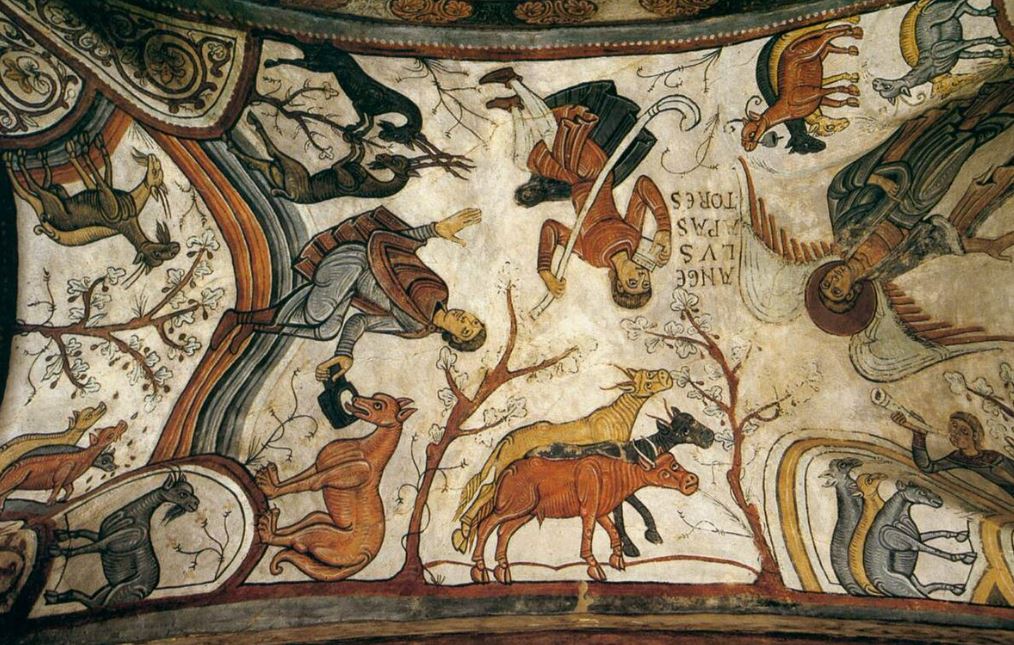
‘The Annunciation to the Shepherds’, Royal Pantheon (twelfth century)
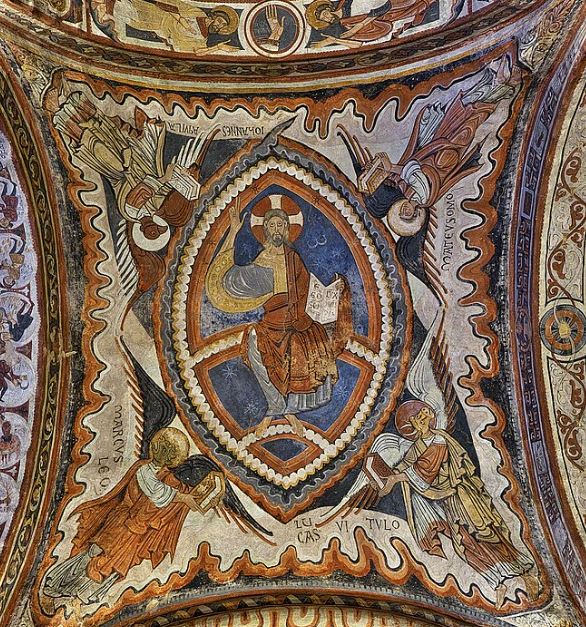
‘Christ in Majesty’, Royal Pantheon (twelfth century)
Convent of San Marcos
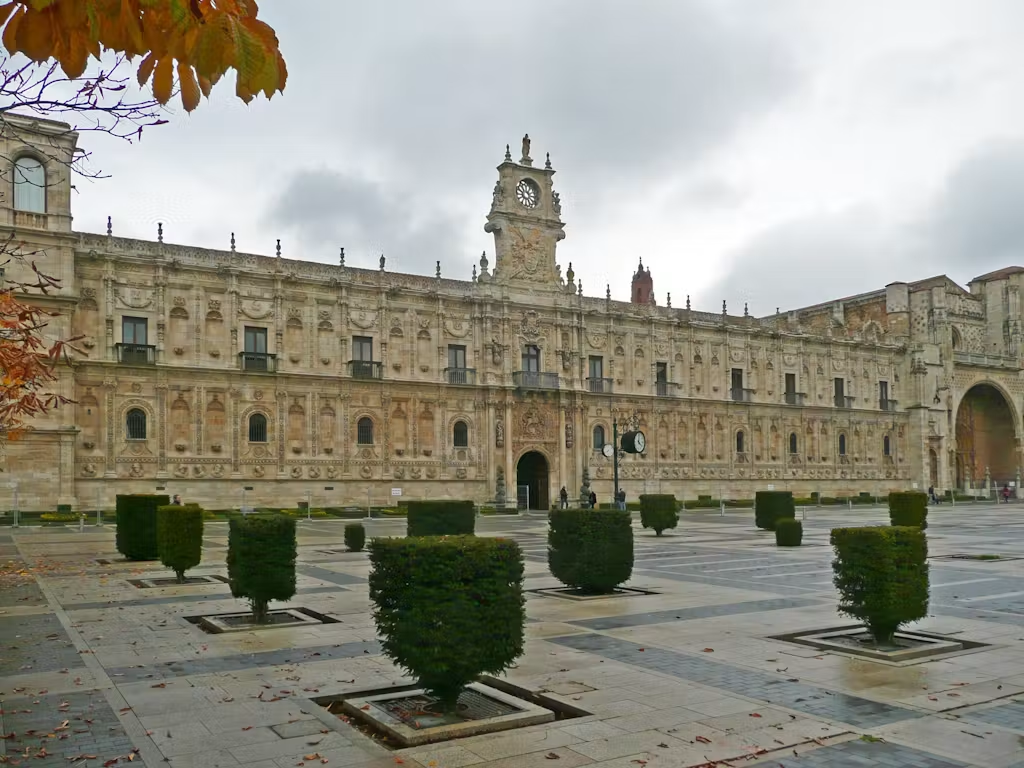
Convent of San Marcos, León
The origins of the Convent of San Marcos lie in the twelfth century. In July 1152 the Infanta Sancha of Castille, sister of Alfonso VII of Leon, made a donation to construct a building on the outskirts of the city where “the poor of Christ” could stay, offering shelter for pilgrims travelling the Camino de Santiago. However, In the sixteenth century, the medieval building was found to be in poor condition, so it was demolished and a new building was constructed thanks to a donation from King Ferdinand in 1514. The convent was further expanded between 1711 and 1715 with a new wall that perfectly blended with the existing building.
Today the convent has been converted into a luxurious Parador and although we didn’t get chance to stay there, we were able to have a splendid lunch in its restaurant.
Casa Botines
While Antoni Gaudí was working on the construction of the Episcopal Palace in Astorga, his friend and patron, Eusebi Guell, suggested that he should build a house in the centre of León. The owners of a company that did business with Güell then commissioned Gaudí to construct a residential building with a warehouse. In 1929, the Caja España savings bank bought the building and adapted it to its needs, without altering Gaudí’s original design.
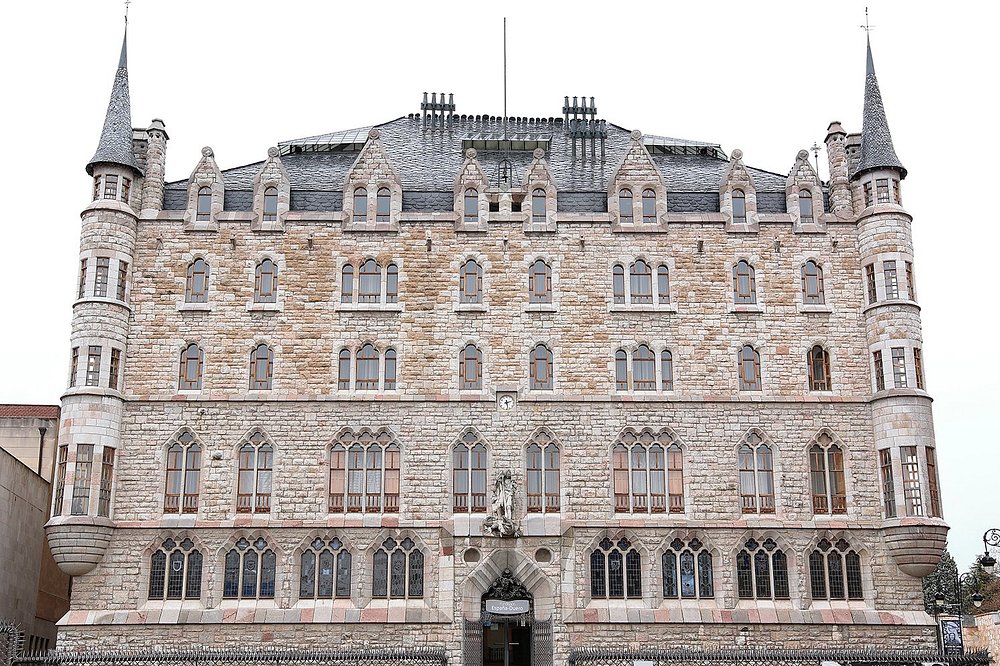
Casa Botines, Leon
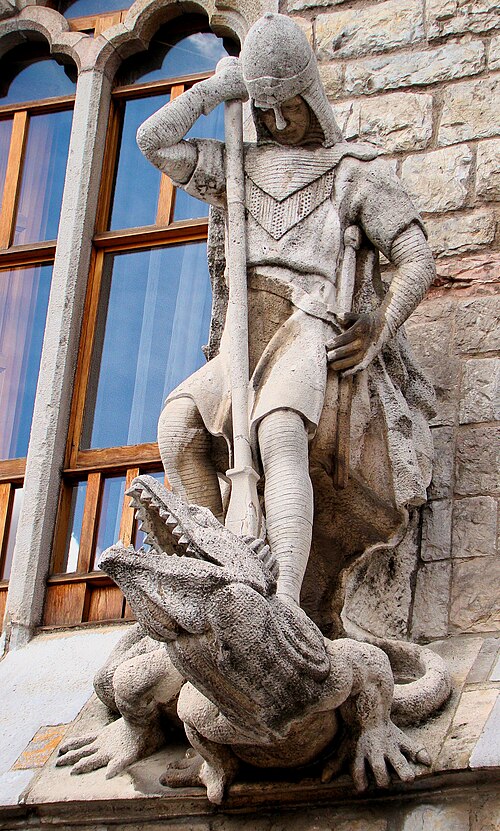
Llorenç Matamala i Piñol ‘Saint George and the Dragon’ statue above the main door.

