
Spending a few days exploring the Atlantic coast of south-west France around the Arcachon Basin. October is an ideal time to be here – the tourists have gone home, the sun isn’t too hot and migratory birds are gathering in readiness for their journey south to Africa.
Teich Ornithological Reserve
Teich ornithological reserve is an internationally important site for bird-watching and conservation. It contains marshland, reedbeds, meadows and lagoons and it is estimated that 300,000 birds can pass through in a year. The reserve is home to 323 different bird species who either nest here or use it as a wintering ground before migration. Tens of thousands of migratory birds travelling from northern and eastern Europe stop at the reserve to rest and feed on the lagoons and salt marshes before continuing south.
This was a really good time to visit, with very large flocks of Avocet, Curlew, Spoonbill and Egret. Amongst the many other species seen were Black-Winged Stilt, Bar-Tailed Godwit, Black-Tailed Godwit and numerous ducks including Shoveller and Teal.
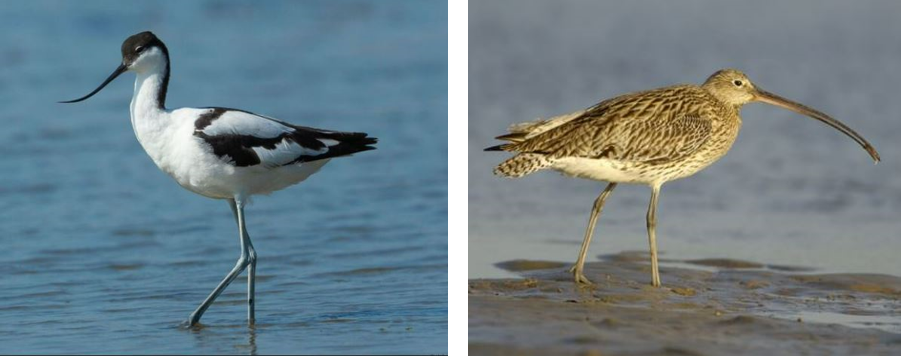
Avocet (Recurvirostra avosetta) and Curlew (Numenius arquata)
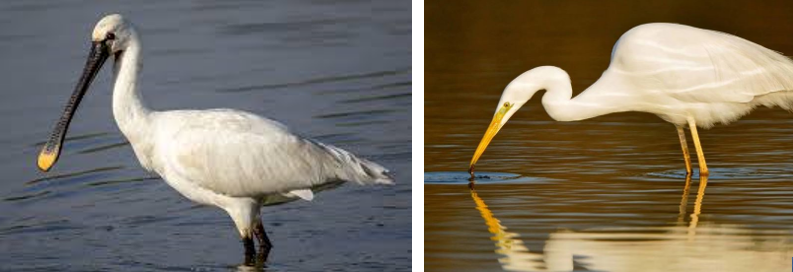
Spoonbill (Platalea leucorodia) and Great Egret (Ardea alba)
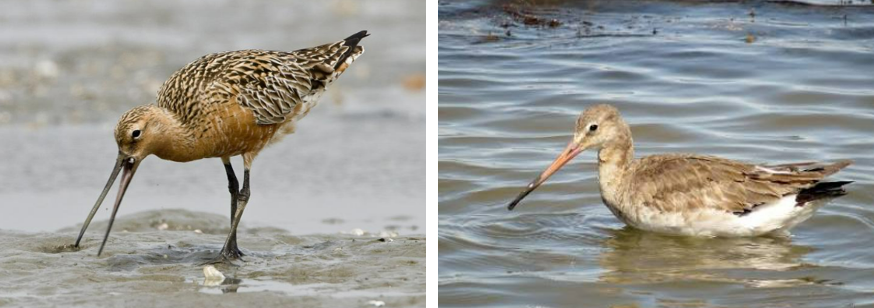
Bar-Tailed Godwit (Limosa lapponica) and Black-Tailed Godwit (Limosa limosa)
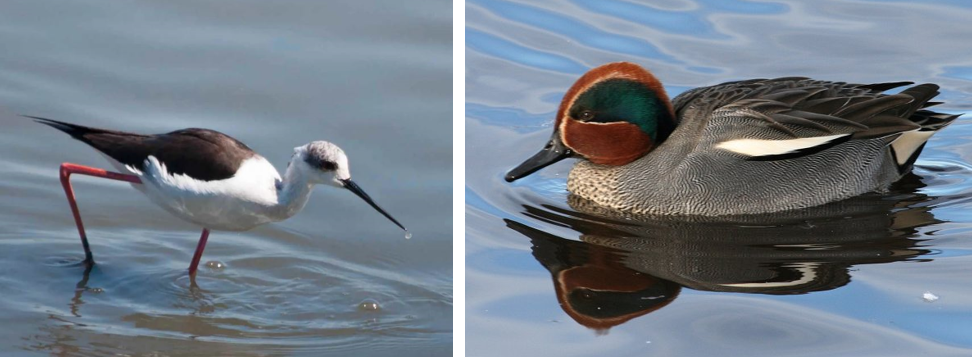
Black-Winged Stilt (Himantopus himantopus) and Teal (Annas crecca)
Banc d’Arguin National Nature Reserve
Banc d’Arguin National Nature Reserve covers an area of nearly 4,360 hectares and encompasses all the sandy islets that form at the entrance to the Arcachon Basin, including the island of Banc d’Arguin. However, the boundaries of the reserve change size and shape with the tides; at low tide it is roughly 4 kilometres long and 2 kilometres wide, but at high tide most of the sand flats are submerged beneath the incoming Atlantic tides.
Banc d’Arquin is both a nesting ground and a shelter for migratory birds, most notably an enormous colony of Sandwich Terns, as well as Eurasian Oystercatchers and Kentish Plovers although, unfortunately, most of them seemed to be having a day off the day I was there!
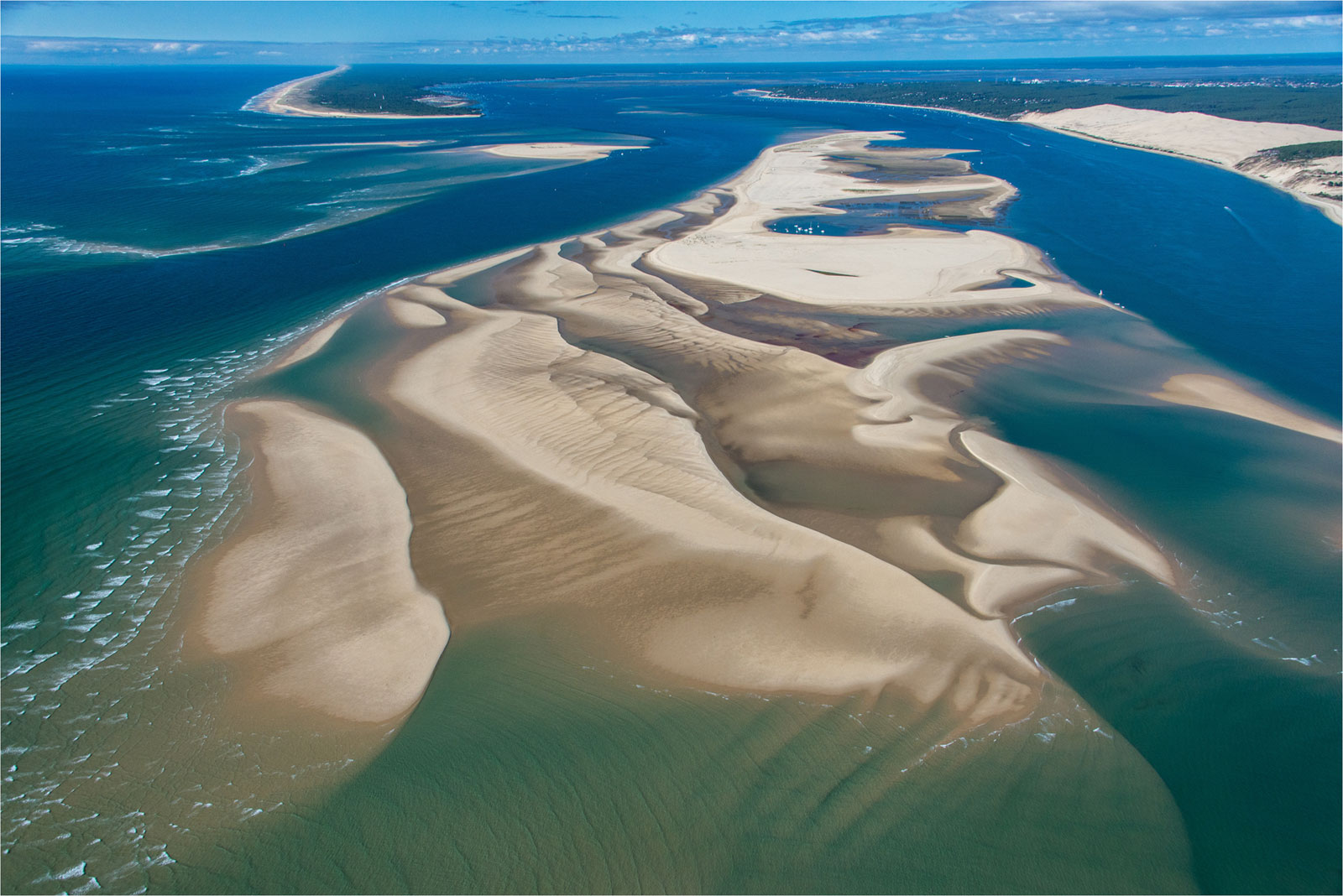
Le banc d’Arquin, with the Dune du Pilat opposite
Directly opposite the nature reserve is the Dune du Pilat in La Teste-de-Bouche, which is the biggest sand dune in Europe. The dune has a volume of sixty million cubic metres, is 2.7 kilometres long and over 100 metres high. It shifts inland by one to five metres every year under the pressure of Atlantic winds. And, yes, we did climb to the top and walk along the ridge!
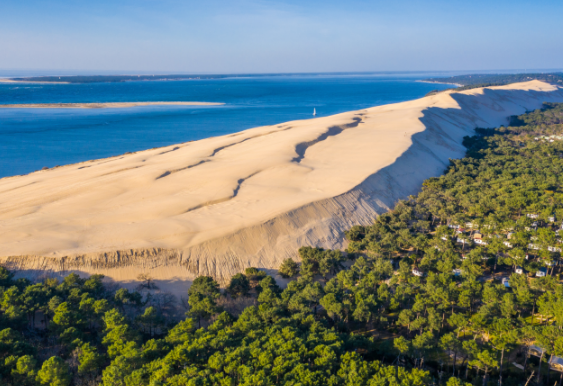
Dune de Pilat
Whilst the dune is probably no more than 200 years old, the site itself dates back over 4,000 years and archaeological excavations have been able to piece together much of its history. Whilst the bottom layers contain remains of plant life such as fossilised pine cones, further up there is evidence of human occupation such as postholes and pits that demarcate the wooden buildings and kitchen debris such as clumps of flat oyster shells, cockles, clams and scallops.
Evidence of later occupation has also been found, including sixteenth-century coins and ceramics. From the seventeenth century archaeologists found evidence of permanent habitation as well as artifacts from resin workers. From a more recent period there are remains of World War II Atlantic Wall fortifications and bunkers which were built directly on the dune.
Oysters
Arcachon Bay is one of the main centres of oyster farming in France. Its unique microclimate and the mixing of freshwater from the Leyre River with the Atlantic Ocean, makes it the primary natural breeding ground for oysters in Europe.
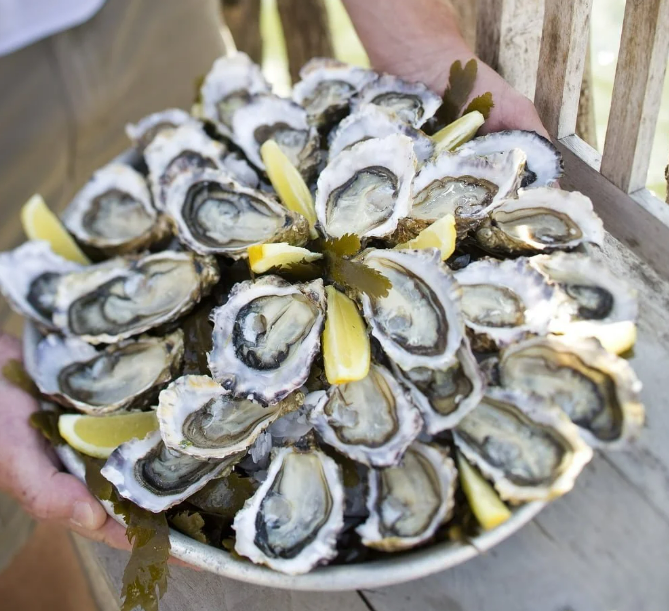
Oysters in Arcachon
Oyster farmers submerge wooden stakes, known locally as ‘pignots’, into the water and microscopic larvae, known as spat, naturally attach themselves to these. This process is so prolific in Arcachon that it supplies around 60% of all spat used by oyster farms in the rest of France, as well as in Ireland and Spain. Farming the oysters is very labour intensive as the farmers must travel out to the beds seven days a week at low tide to tend them for up to four years before they can be harvested.
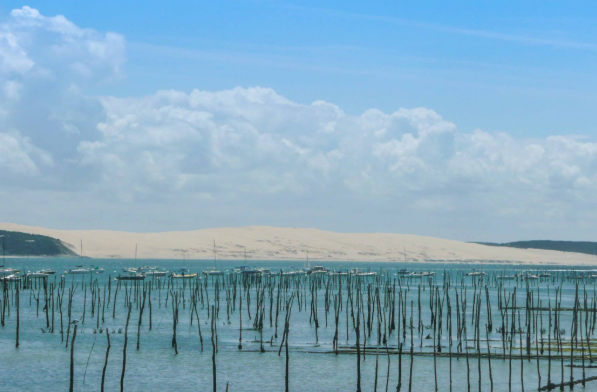
Oyster stakes in Arcachon Bay, with the Dune de Pilat in the background
There are twenty-three oyster-farming ports in the region which are lined with brightly painted wooden cabins, many of which double as tasting shacks, where visitors can eat fresh oysters directly from the producer. Gujan-Mestras is the oyster-farming capital of the bay and it has a ‘Maison de l’Huître’, a museum where it is possible to discover the process involved in cultivating and farming the oyster.
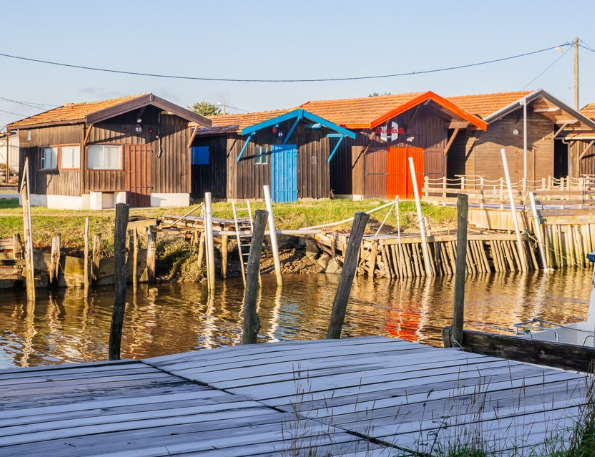
Oyster cabins in Gujan-Mestras

