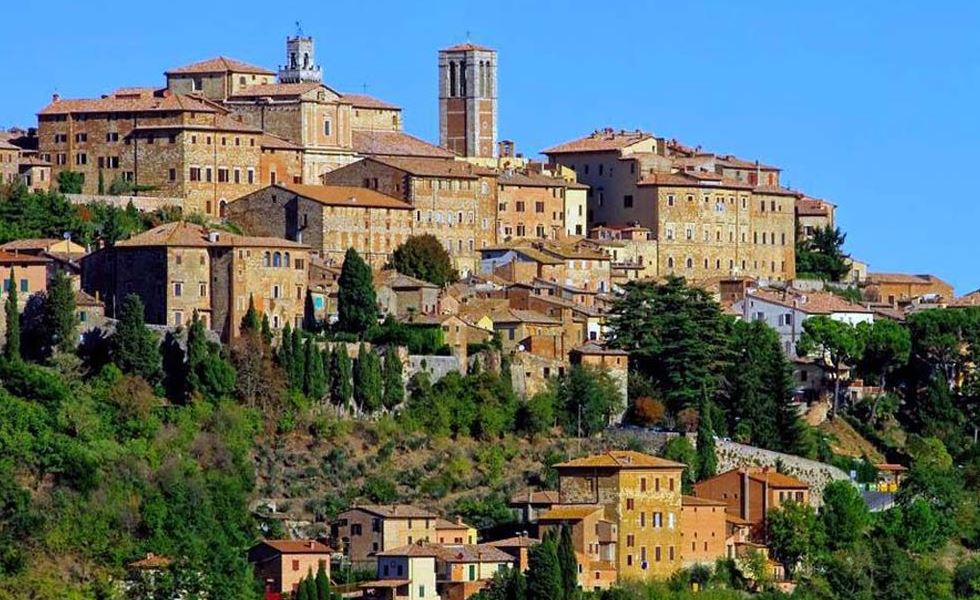
Montepulciano is a medieval hilltop town in the province of Siena. It is surrounded by vineyards and is known for its vino nobile red wine. The main square, the Piazza Grande, contains both the fourteenth-century Palazzo Comunale and the Duomo, which is normally home to an impressive triptych altarpiece, the ‘Assumption of the Virgin’, painted by Taddeo di Bartolo in 1401; however, unfortunately it had been removed for renovation.
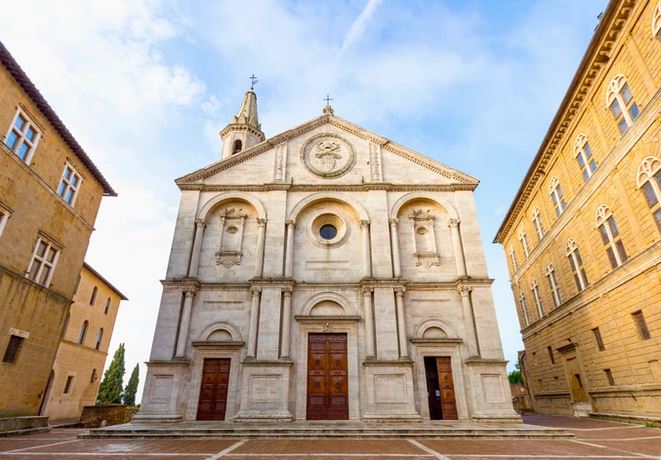
Pienza is a UNESCO-listed town in the Val d’Orcia region of central Tuscany. It is known as the first ‘ideal Renaissance town’ and its development was the idea of Enea Silvio Piccolomini, who would later become Pope Pius II. He hired the architect Bernardo Rossellino who used the principles of Renaissance town planning set out by his mentor, Leon Battista Alberti, in his treatise on architecture.
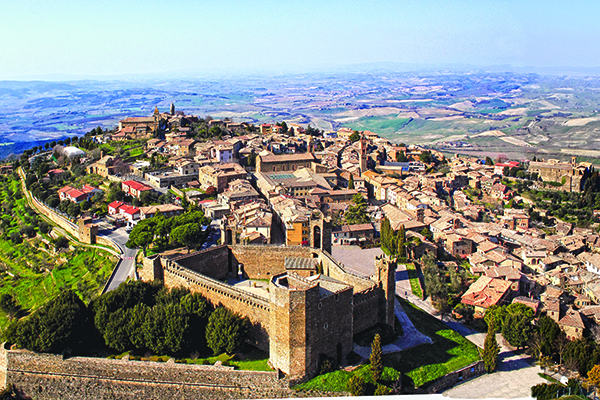
Montalcino had been under the influence of Siena since the Battle of Montaperti in 1260 and as such became involved in the conflicts between Siena and Florence in the fourteenth and fifteenth centuries. After Siena had been conquered by Florence under the rule of the Medici in 1555, rebels from Siena settled in Montalcino where they held out for almost four years before eventually falling to the Florentines.
Today Montalcino is known for its famous Brunello wine made from the sangiovese grosso grapes grown within the commune. Brunello, which must be aged for at least five years before release, was the first wine to be awarded Denominazione di Origine Controllata e Garantita (DOCG) status.
Although Cortona has an Etruscan background it eventually became a Roman colony before becoming an independent city-state in the thirteenth century. However, after being conquered by Ladislaus, King of Naples, in 1409, Cortona was sold to the Medici in 1411.
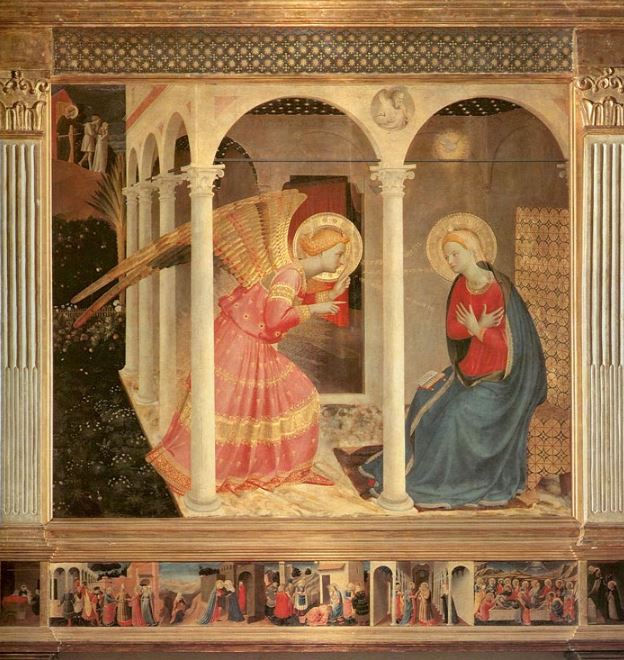
More recently its picturesque, steep narrow streets have provided the backdrop for the film ‘Under the Tuscan Sun’, based on Frances Mayes’ book. However, I was here to see the collection of the town’s Diocesan Museum, especially a most beautiful ‘Annunciation’ by Fra Angelico.
The altarpiece was originally executed for the church of San Domenico in Cortona. Amongst the columns and arches of a loggia, the Angel Gabriel appears to Mary, uttering the words “the Holy Ghost shall come upon thee, and the power of the highest shall overshadow thee”, from the Gospel of Saint Luke. To the left of the loggia, above a delicately painted garden, can be seen a depiction of Adam and Eve being expelled from Paradise.
The predella depicts scenes from the Life of the Virgin, including a ‘Visitation’, which is said to include the first identifiable landscape in Italian art.
Fra Angelico ‘Annunciation’ (1433 – 34)
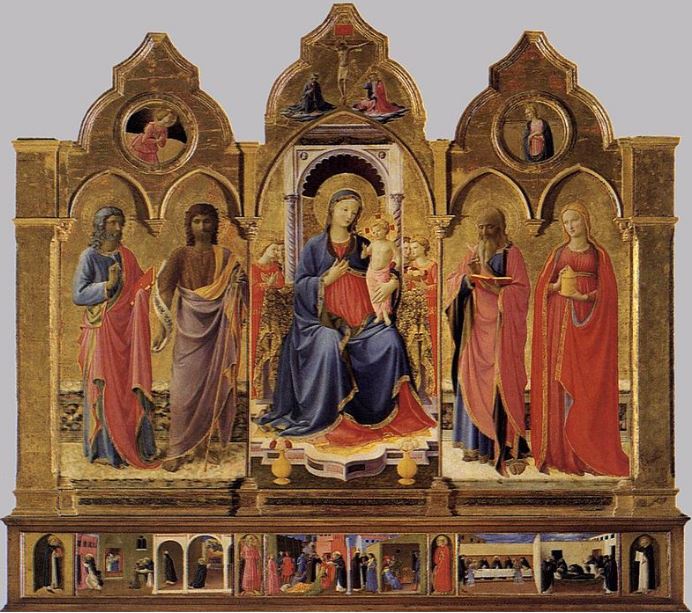
The Museum’s collection includes a second Fra Angelico, ‘Madonna and Child with Saints’, known as the Cortona Triptych, also painted for the church of San Domenico in Cortona. Its predella depicts scenes from Saint Dominic’s life.
Fra Angelico ‘The Cortona Triptych’ (1436 – 37)
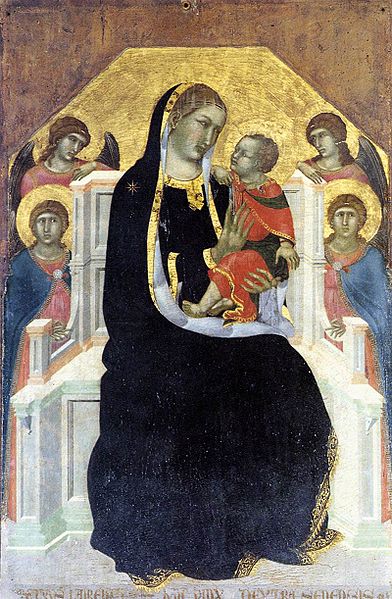
Other works include a ‘Madonna with Child Enthroned and Four Angels’ by Pietro Lorenzetti and a large ‘Crucifix’ by the same artist.
Pietro Lorenzetti ‘Madonna and Child Enthroned and Four Angels’ (c.1320)
Pietro Lorenzetti ‘Crucifix’ (1320s)
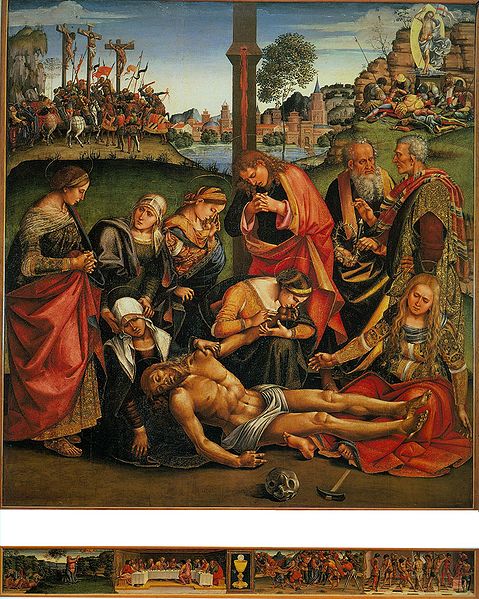
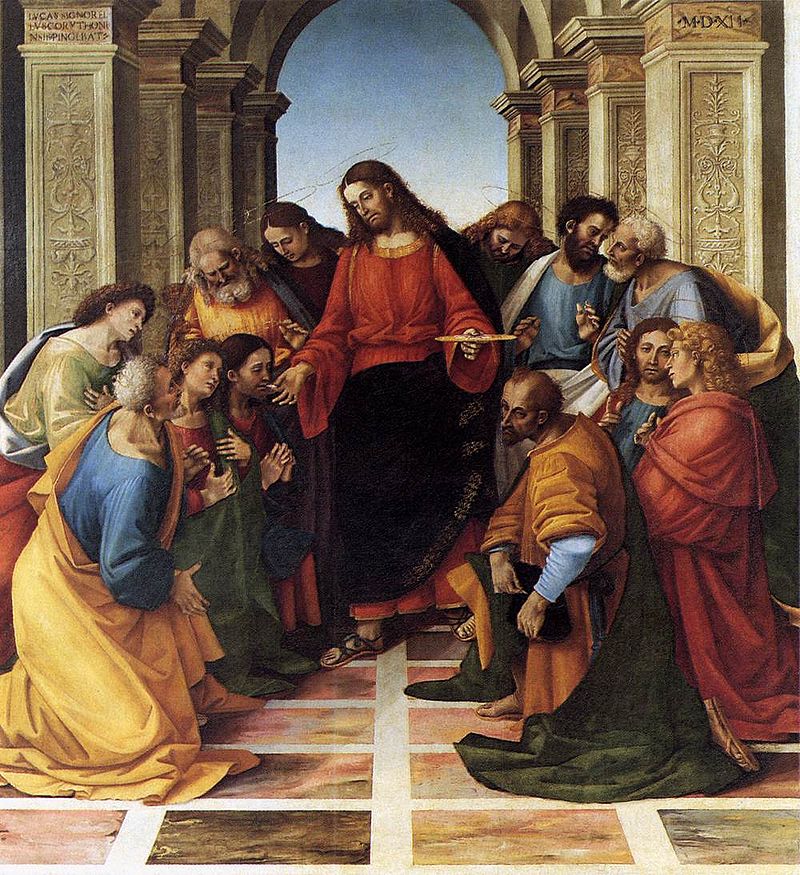
Luca Signorelli, best known for his frescoes of the ‘Last Judgment’ in Orvieto Cathedral, was born in Cortona and has his own room in the Museum.
Luca Signorelli ‘Lamentation over the Dead Christ’ (1501 – 02)
Luca Signorelli ‘Communion of the Apostles’ (1512)
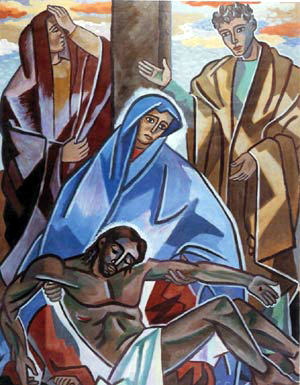
Surprisingly, amongst the collection of Renaissance masterpieces is a collection by the Italian Futurist, Gino Severini. However, Severini was born in Cortona in 1883, where his father was a junior court official. After meeting fellow artists Umberto Boccioni and Giacomo Balla he was invited by Filippo Tommaso Marinetti to join the Futurist movement and was a co-signatory, with Balla, Boccioni, Carlo Carrà, and Luigi Russolo, of the ‘Manifesto of the Futurist Painters’ in February 1910.
The Diocesan Museum has an impressive collection of cartoons for Severini’s ‘Stations of the Cross’ mosaics.
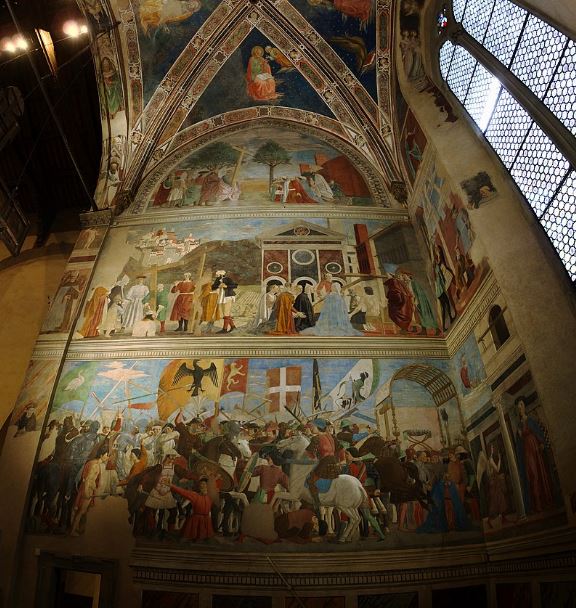
Arezzo also has Etruscan origins; indeed it is believed to have been one of the most important cities of the Etruscan League. Today it is the capital of Arezzo province and is one of Tuscany’s wealthiest cities, in part due to its production of expensive jewellery. It is also famous for Piero della Francesca’s frescoes in the Basilica of San Francesco, the purpose of my visit.
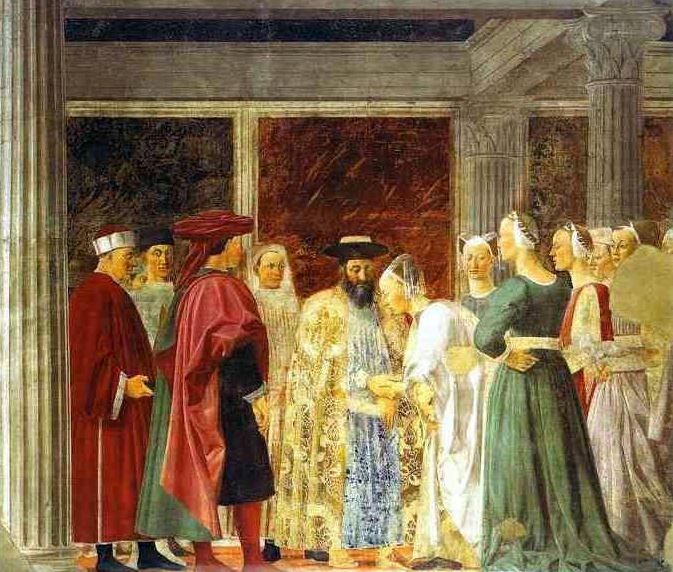
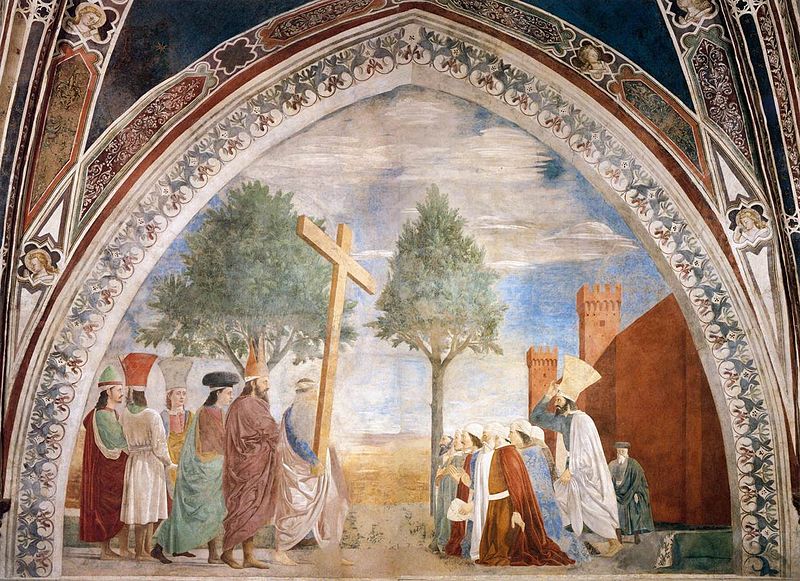
Piero’s ‘Legend of the True Cross’ fresco cycle tells the story of how the cross was found near Jerusalem by the Empress Helena and was adopted by her son, the Emperor Constantine, as his battle emblem. The frescoes are believed to have been painted from around 1452 to 1466 and were commissioned by the Bacci family
The story begins with the death of Adam and the planting of a branch (or seeds) from the tree of life in his mouth. The tree that eventually grows will be made into the cross used for the crucifixion. The Queen of Sheba discovers the wood and tells Solomon that his rule over the Jews would eventually be destroyed by a man who would die on it. Servants of Solomon bury the wood in the hope that the prophesy would not come true. However, Helena tortures by starvation a Jew who knows of its whereabouts and so recovers it.
Before the Battle of Milvian Bridge in 312, Constantine has a vision in which an angel tells him that the cross will lead him to victory, which, of course, it does. Another battle scene depicts the defeat of Chosroes, who had stolen the cross, by Heraclius, who then returns the cross to Jerusalem, thus completing its story.
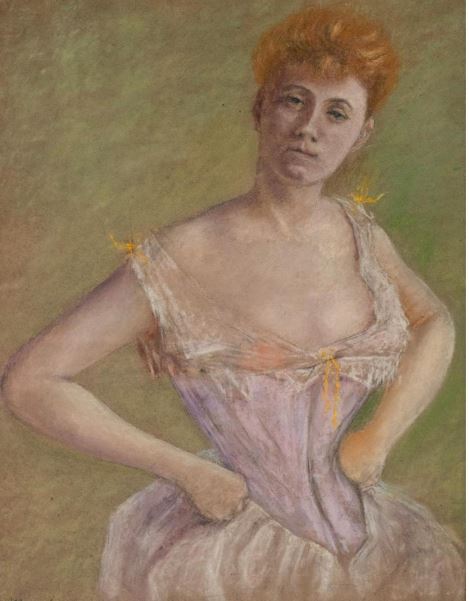
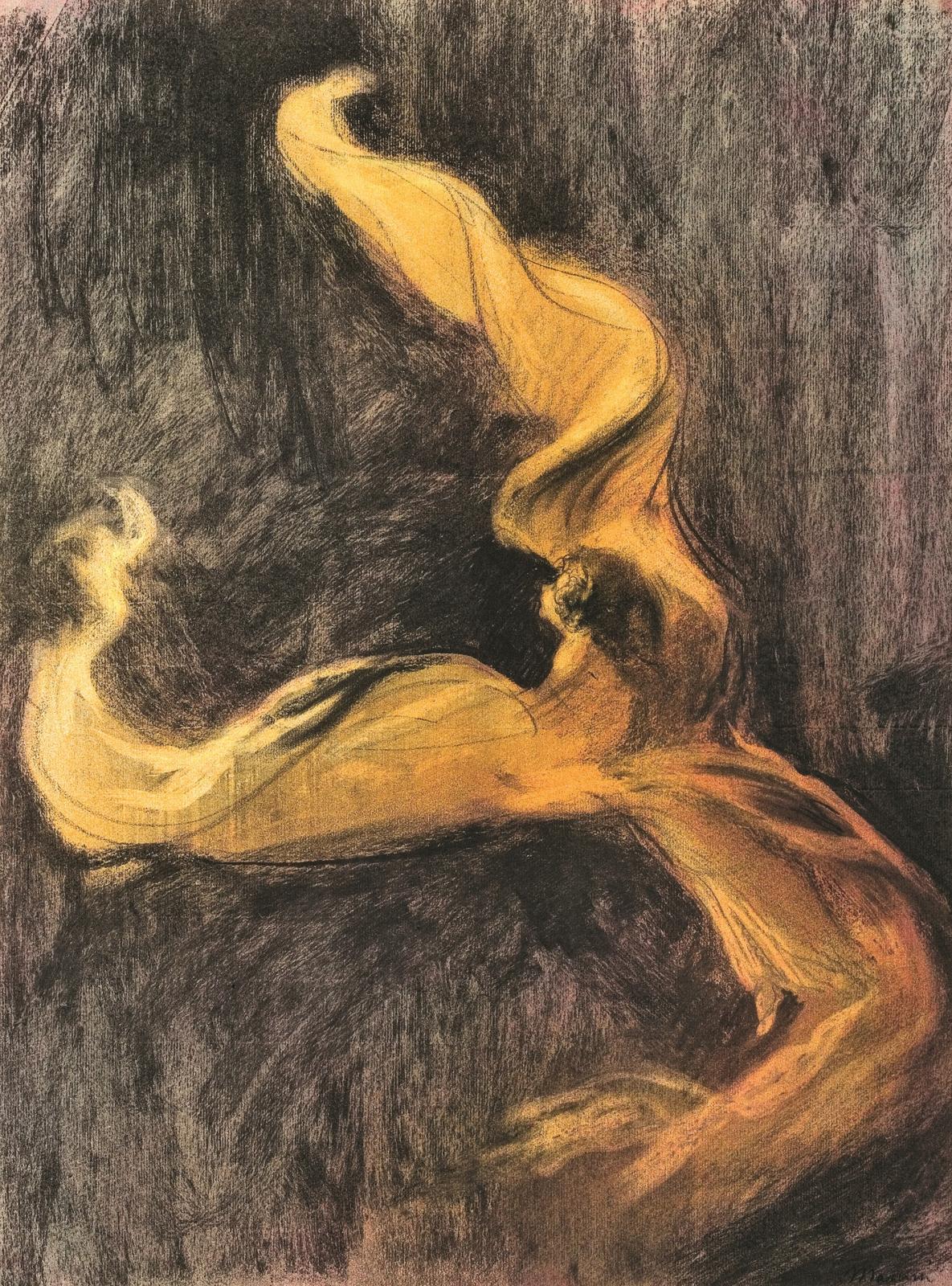
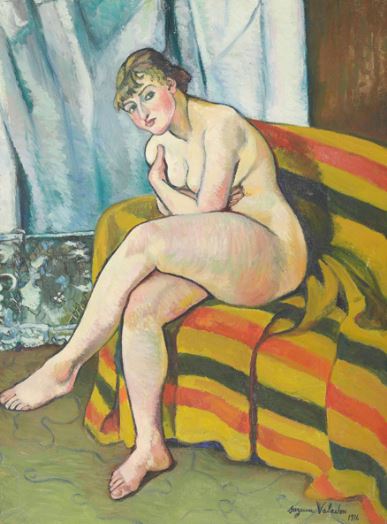
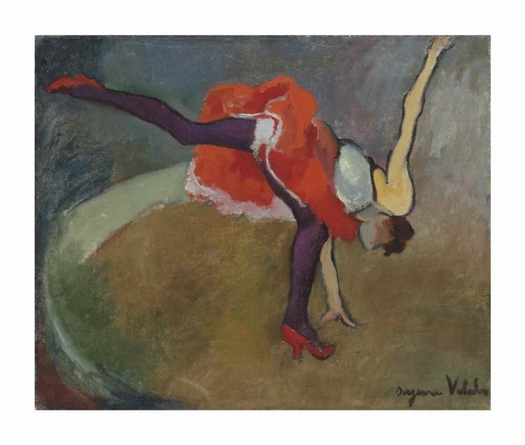
At the musée Toulouse-Lautrec in Albi for the exhibition “Montmartre: fin de siècle’. Nearly two hundred paintings, drawings, posters and other printed materials from the collection of David Weisman and Jacqueline Michel celebrating the avant-garde artists who lived and worked in the Montmartre area of Paris at the end of the nineteenth and the beginning of the twentieth centuries.
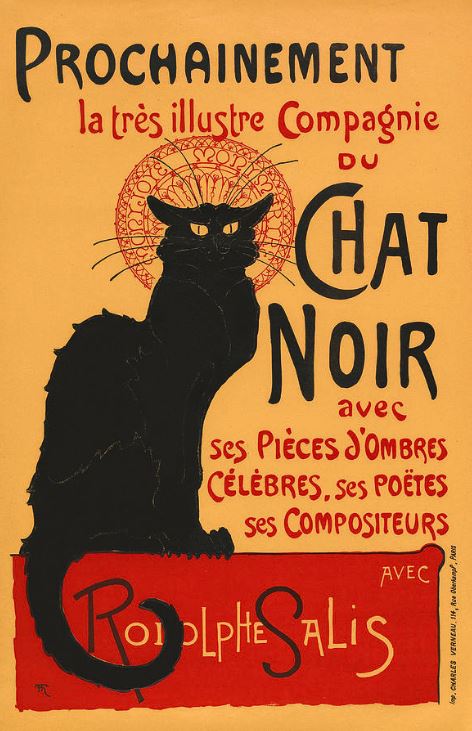
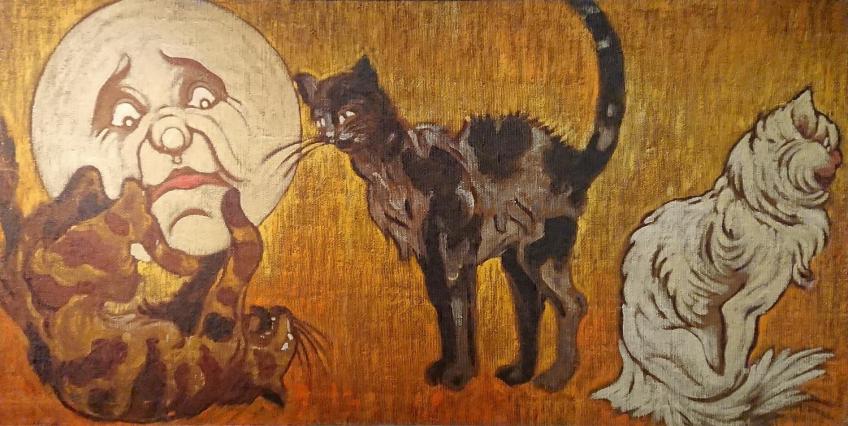
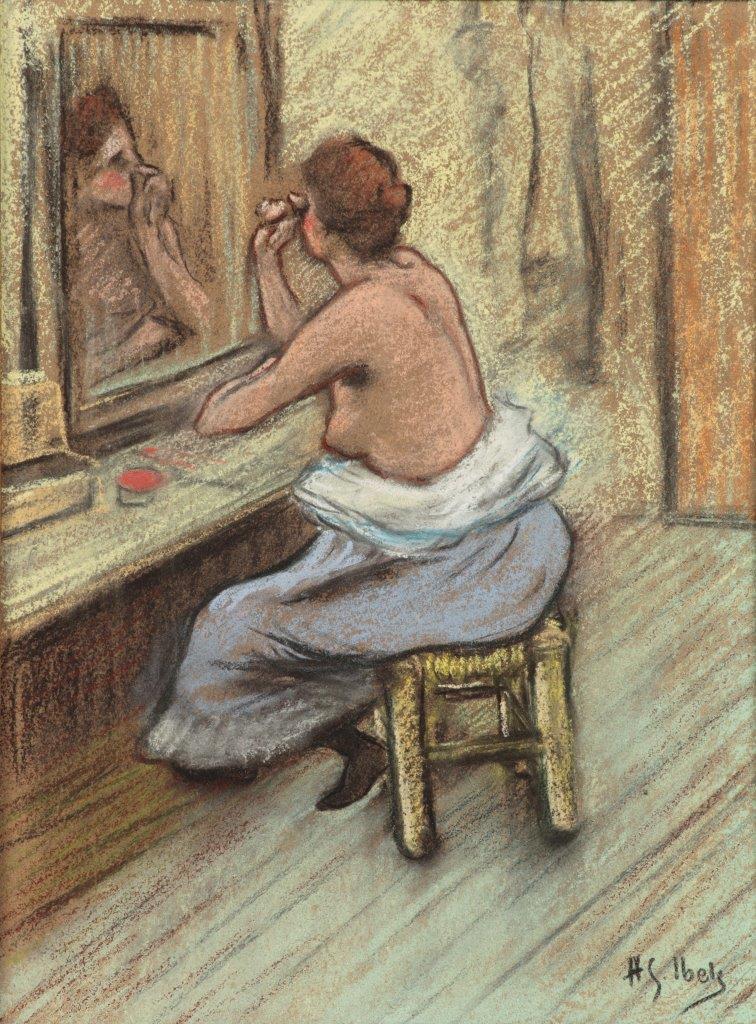
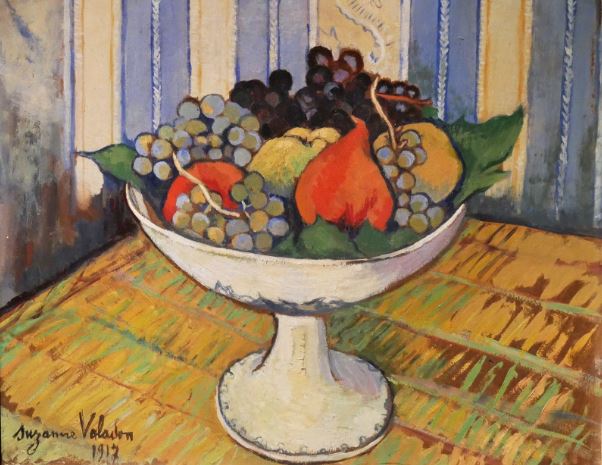
The collection is particularly rich in the works of Henri-Gabriel Ibels, Suzanne Valadon and Théophile Steinlen, the latter much involved in producing graphics for the famous ‘Le Chat Noir’ nightclub, which form an important part of the exhibition.
Théophile Steinlen ‘Le Chat Noir’ (1896)
Théophile Steinlen Part of the frieze ‘Cats and Moons’ (c.1895)
Henri-Gabriel Ibels ‘Mensonges’ (1893)
Charles Maurin ‘Prostituée en colère’ (c.1892 – 95)
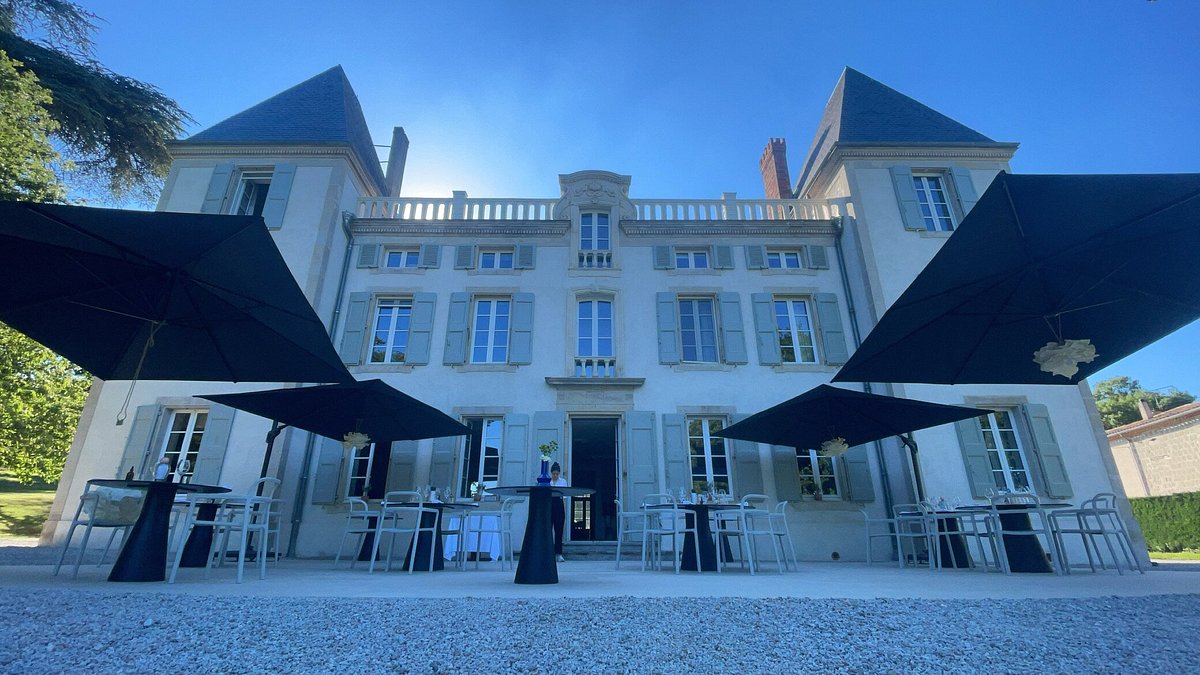
A few days in the Tarn department of southern France, exploring the region and its gastronomy from the excellent ‘L’Intangible’ at the Château de la Bousquétarié in the village of Lempaut.
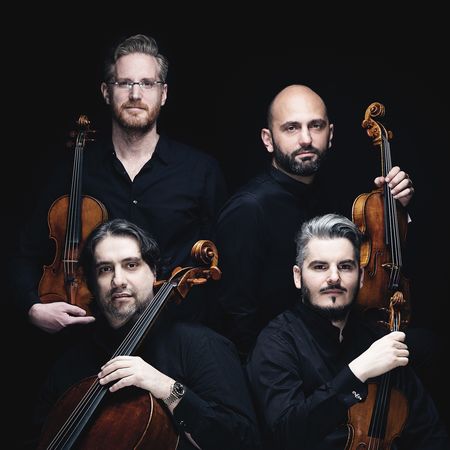
At the ‘Musique en Sol’ festival in Paunat in the Dordogne to see the internationally-renowned Italian string quartet, Quartetto di Cremona. They played a diverse programme which began with two Italian compositions, Puccini’s short but beautiful ‘Crisentemi’ elegy followed by Verdi’s String Quartet. In the second half, Shostakovich’s String Quartet no. 1 was followed by a wonderfully-played String Quartet no. 2, ‘Intimate Letters’, by Leoš Janáček. An encore from Bach’s Art of Fugue rounded off an extremely enjoyable evening.
Quartetto di Cremona
Puccini ‘ ‘Crisentemi’ movement for string quartet; Verdi ‘String Quartet in E minor’; Shostakovich ‘String Quartet no. 1 in C major’, opus 49; Janáček ‘String Quartet no. 2 ‘Intimate Letters’.
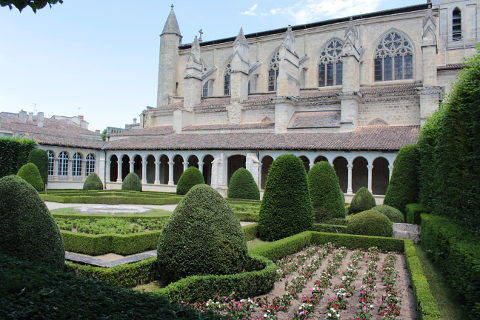
Marmande, in the Lot et Garonne region of south-west France, was founded in 1182 by Richard the Lionheart, then Duke of Aquitaine and future King of England. For the next five centuries, the town experienced a turbulent history including the crusade against the Cathars, the Hundred Years War, plague and the Religious Wars. The church of Notre Dame de Marmande was built between the thirteenth and fifteenth centuries and the cloisters are now fronted by a formal garden with impressive parterres and topiary.
The Aix-en-Provence Easter Festival, founded in 2013, is establishing itself as one of the leading events of the international classical music programme. However, the Covid pandemic meant the cancellation of the whole of the 2020 edition. With the current on-going restrictions in France, the organisers led by Artistic Director, French violinist Renaud Capuçon, were determined that this would not happen in 2021. They therefore took the brave decision to stream the entire festival for free to ensure that not only would it go ahead but that it could be seen by as many people as possible.
One concert every day for the sixteen days of the festival, 27 March to 11 April, was streamed live from the Grand Théâtre de Provence and the Théâtre du Jeu de Paume in Aix. The world-class line-up included Canadian conductor/soprano Barbara Hannigan, Les Siecles led by François-Xavier Roth, Argentinian cellist Sol Gabetta, William Christie and Les Arts Florissants, pianists Maria João Pires, Martha Argerich and Daniel Barenboim, as well as Renaud Capuçon.
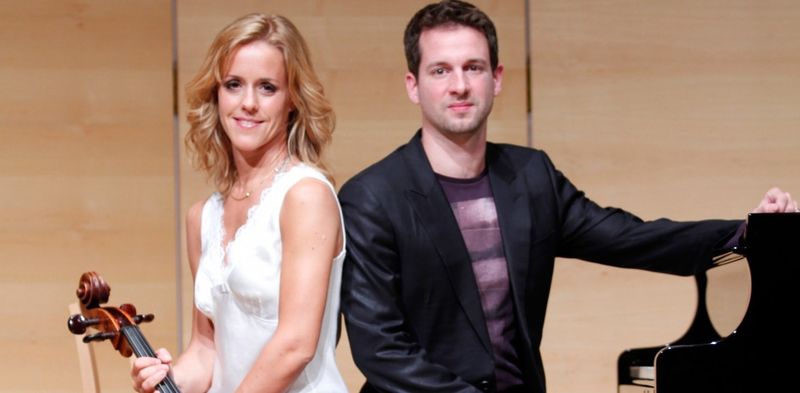
The festival opened with a weekend of delightful chamber music, on Saturday we were treated to Beethoven’s Archduke and Ghost Trios, beautifully and impeccably played by Renaud Capuçon, violin, François-Frédéric Guy, piano and Edgard Moreau, cello. On Sunday it was the turn of Argentine cellist Sol Gabetta and French pianist Bertrand Chamayou. They have been playing together for more than fifteen years and this is evident from the amazing understanding that they have developed together. They performed a programme they have been playing on some of their current European tour dates, in fact I had already seen a recording of this same programme from Venice’s La Fenice. It began with Schumann’s ‘Fantasy Pieces for Cello and Piano’ opus 73, written in 1849, originally for Clarinet and piano. This was followed by Benjamin Britten’s ‘Sonata for Cello and Piano’ opus 65, originally written for his friend Mstislav Rostropovich. Chopin’s ‘Sonata for Cello and Piano in G minor”, opus 65 completed the programme.
Sol Gabetta and Bertrand Chamayou
The first week also saw a wonderful performance by Japanese pianist Momo Kodama of Messiaen’s ‘Vingt Regards sur L’Enfant Jésus’, a piece she has performed many times and also recorded. She played with a beautiful touch, showing a complete mastery of the composition’s technical difficulties.
The following night’s concert was, for me, the highlight of the festival – a most sublime performance of Bach’s ‘St. Matthew Passion’ from l’église de la Madeleine d’Aix-en-Provence. Ensemble Pygmalion playing period instruments under Raphaël Pichon were excellent and the vocal parts were beautifully sung, particularly by tenor Julian Prégardien as the Evangelist and baritone Stéphane Degout as Christ. Also impressive were soprano Sabine Devieilhe and alto Lucile Richardot, especially in the duet ‘So ist mein Jesus’.
The second week included concerts by some of my favourite performers: Les Siecles conducted by François-Xavier Roth, Barbara Hannigan and Martha Argerich. First came Les Siecles accompanied by Renaud Capuçon and Bertrand Chamayou in an all Camille Saint-Saêns programme. Included were a well-played ‘Piano Concerto no. 5’ and the effervescent ‘Africa’, but most enjoyable for me was an impressive performance of the well-known ‘Dance macabre’.
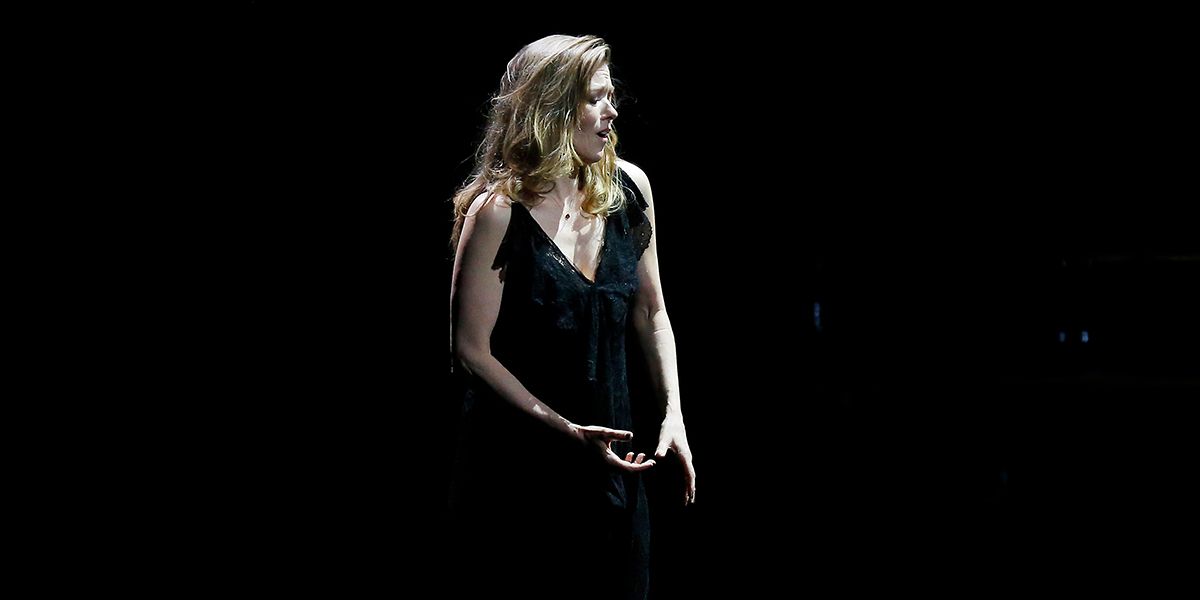
The concert advertised as ‘Barbara Hannigan and Friends’ was something quite different. One of the ‘friends’ was French composer and experimental musician David Chalmin, who was responsible for an unusual but interesting electronic treatment of Rameau’s ‘Tristes Apprêts’ from ‘Castor et Pollux’ as well as Ernest Chausson’s ‘Les Heures’. The concert also included more conventional performances of works by Paul Hindemith, Camille Saint-Saêns and Gabriel Fauré.
Barbara Hanningan
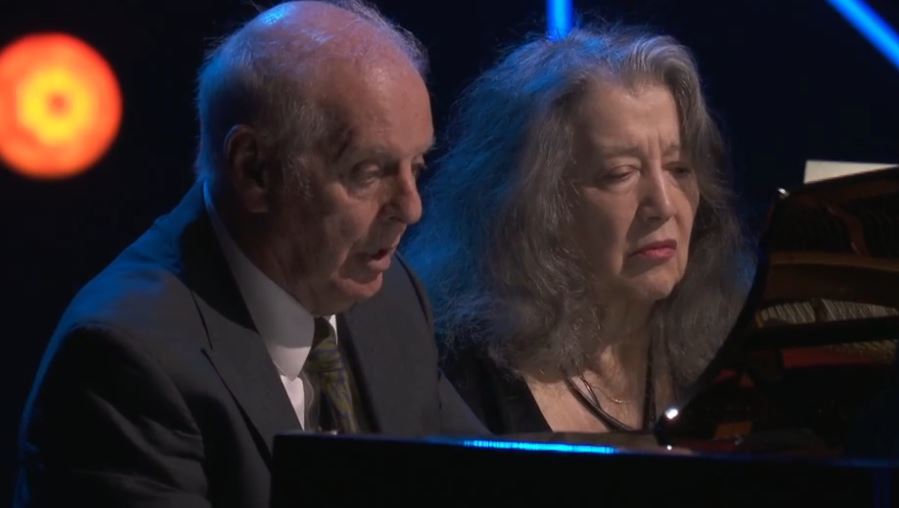
Pianists Martha Argerich and Daniel Barenboim, who have known each other since childhood, played a wonderful concert of four-handed works. They began with Mozart’s C major sonata, K521, technically demanding but delightfully played. This was followed by Debussy’s ‘Épigraphes antiques’, originally written for the stage work ‘Les Chansons de Bilitis’, sounding quite oriental. Bizet’s ‘Jeux d’enfants’, a suite of twelve miniatures, made a delightful finale.