Mosaics (and more) in Ravenna

A weekend in Ravenna in the Emiglia-Romagna region of northern Italy. Ravenna contains no less than eight UNESCO World Heritage sites – all religious buildings from the fifth and sixth centuries, all decorated with incredible designs in mosaic.

Ravenna was one of Europe’s most important cities in the Late Antique period. Between 402 and 751 it was the residence of the Western Roman emperors, the Byzantine governors and the Ostrogothic kings of Italy. Between 540 and 600, Ravenna’s bishops embarked upon a notable building program of churches, which were richly decorated in mosaic.

Basilica of San Vitale

Consecrated in 548 AD, the Basilica of San Vitale is one of the most important sites of early Christian art. In construction it is octagonal with a large central cupola. Inside, the mosaic decoration is extremely richly coloured and includes not only portraits of Emperor Justinian, Empress Theodora and Bishops Maximinian and Giuliano Argentario but also vivid depictions of wildlife, plants and landscape.
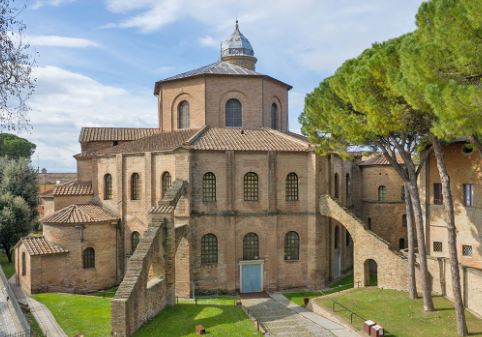
Basilica di San Vitale
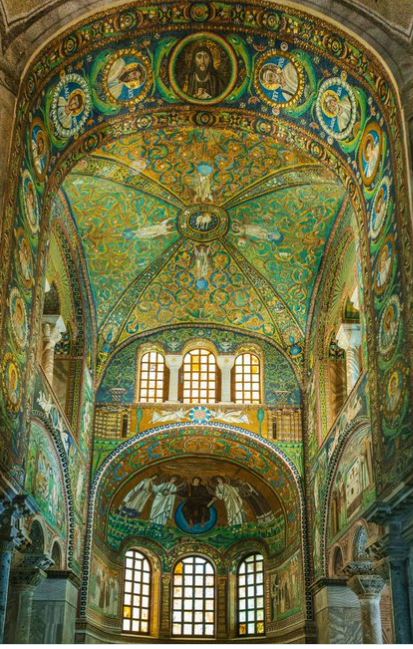
Apse mosaic
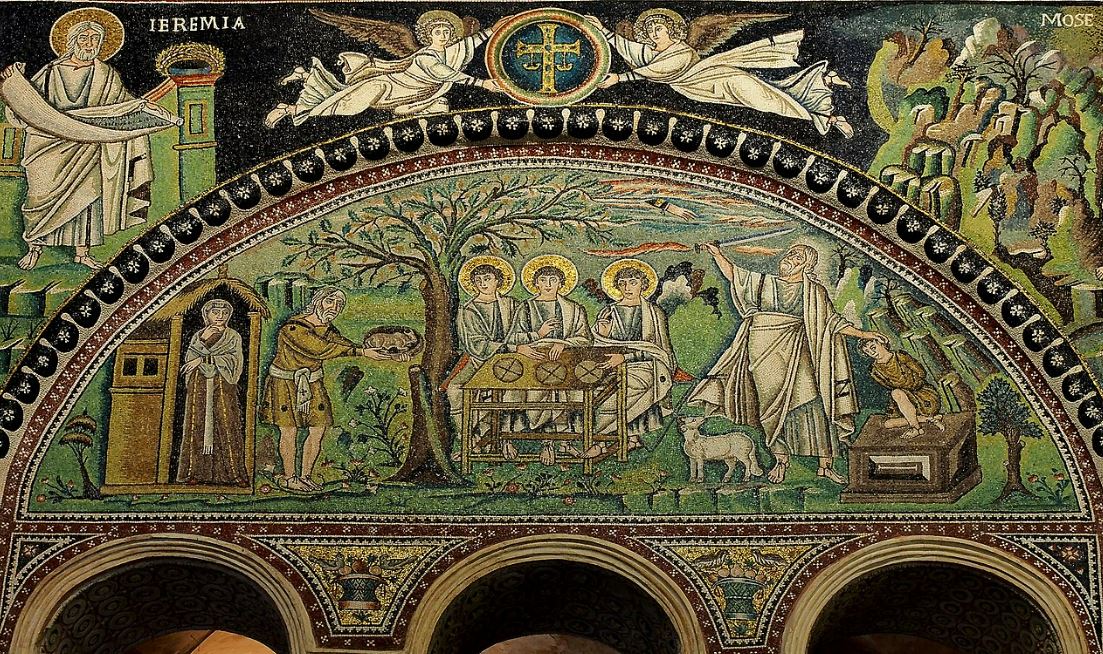
The Sacrifice of Isaac
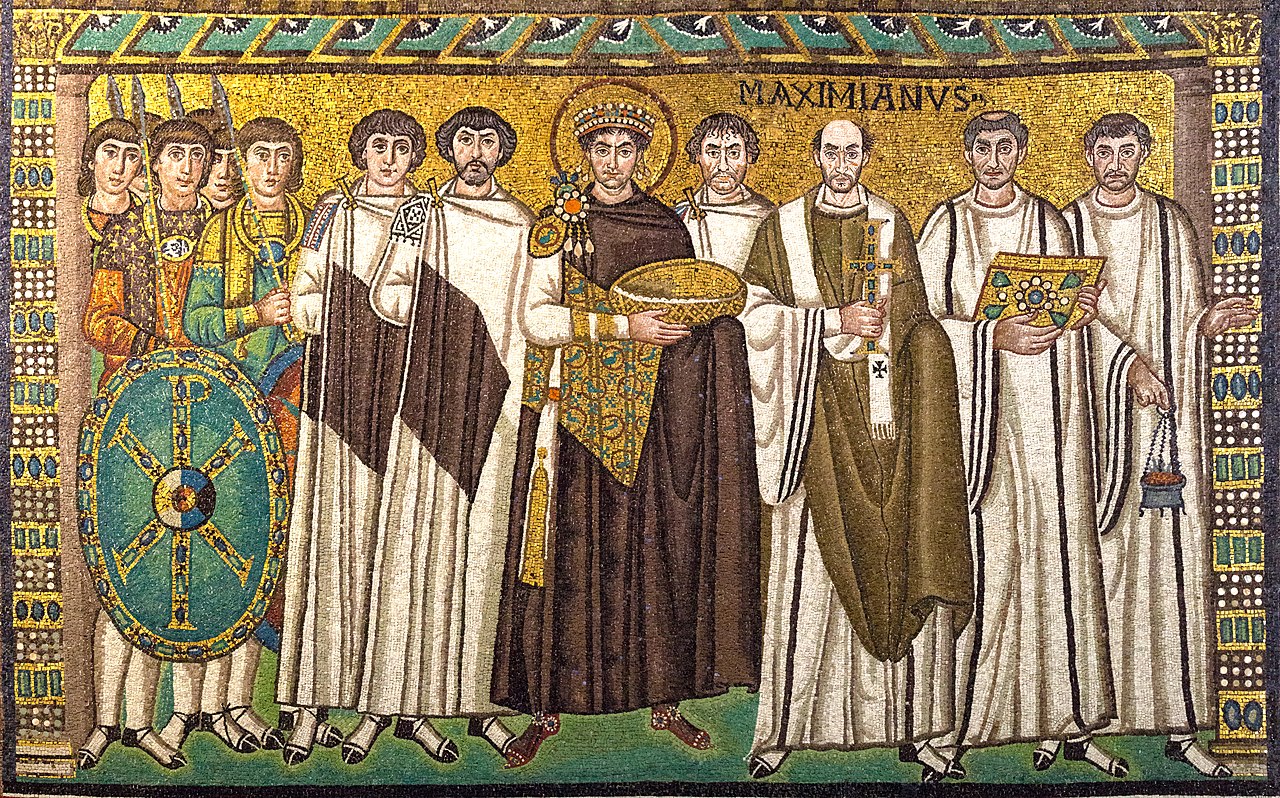
Emperor Justinian and his retinue
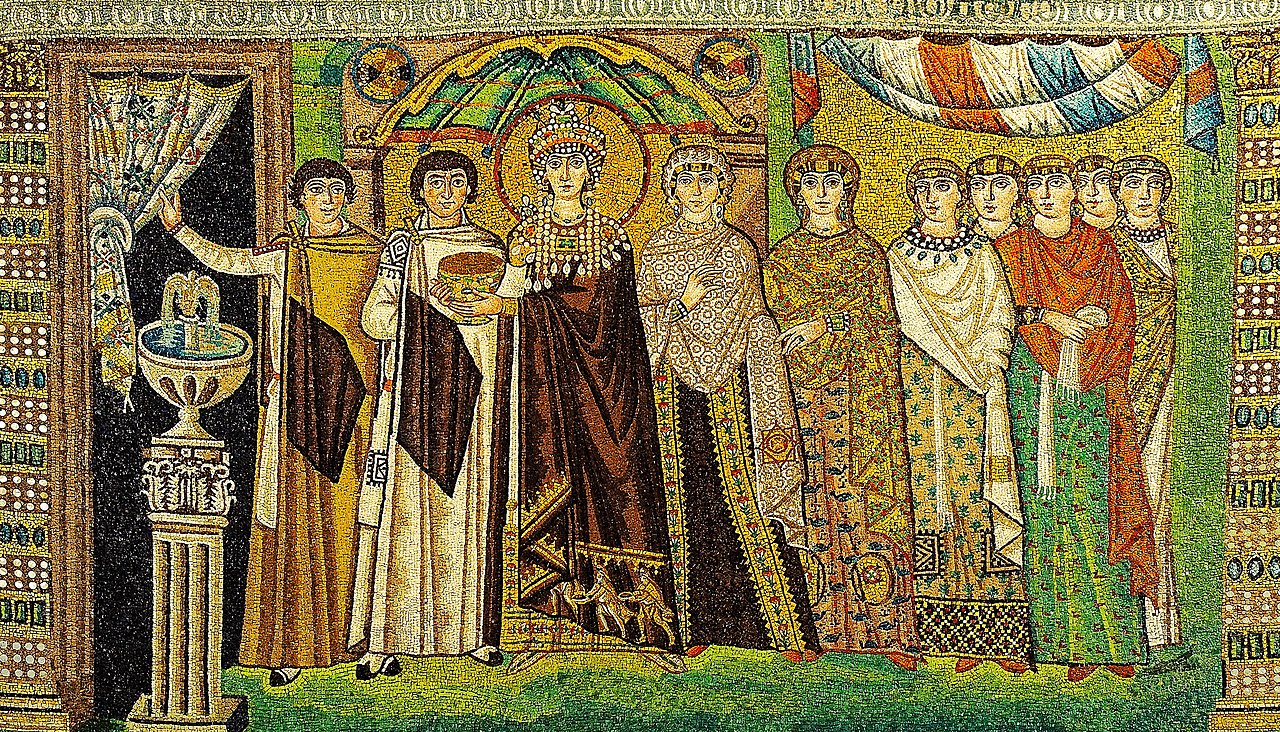
Empress Theodora and attendants

Mausoleum of Galla Placidia

This small mausoleum was built in the fifth century for Galla Placidia, daughter of the Roman Emperor Theodosius; however, it was never used for her as she was buried in Rome. The mosaic designs are Christian symbols of immortality and eternal life.
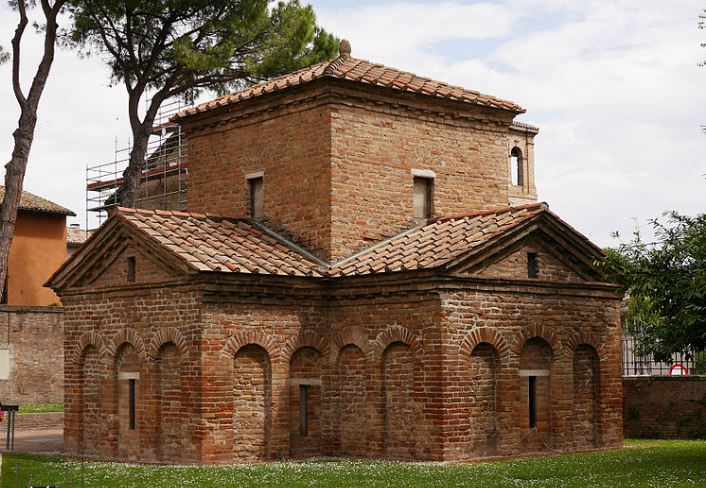
Mausoleum of Galla Placidia
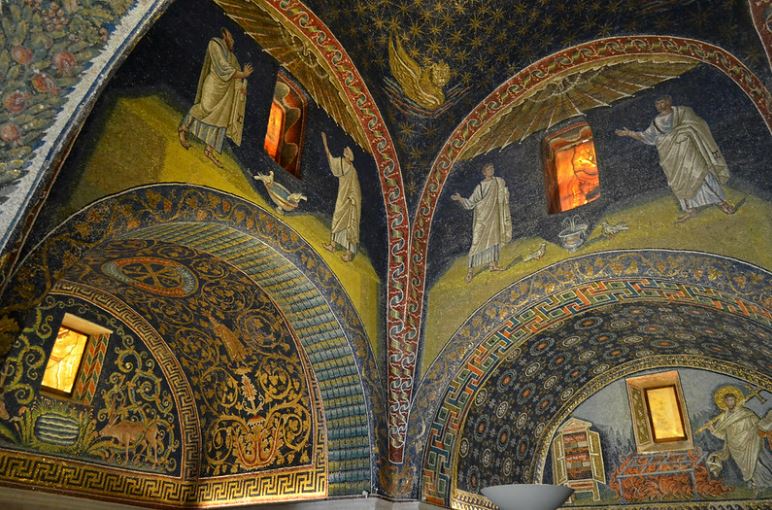
Mosaic lunettes with Apostles
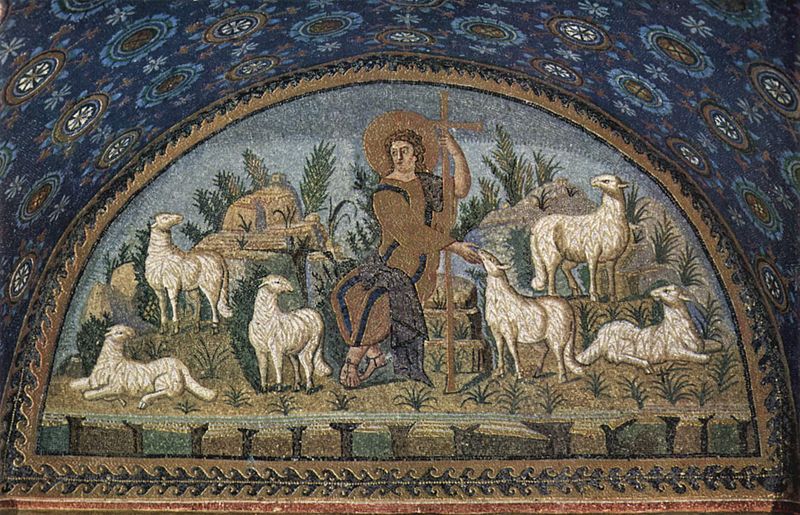
The Good Shepherd
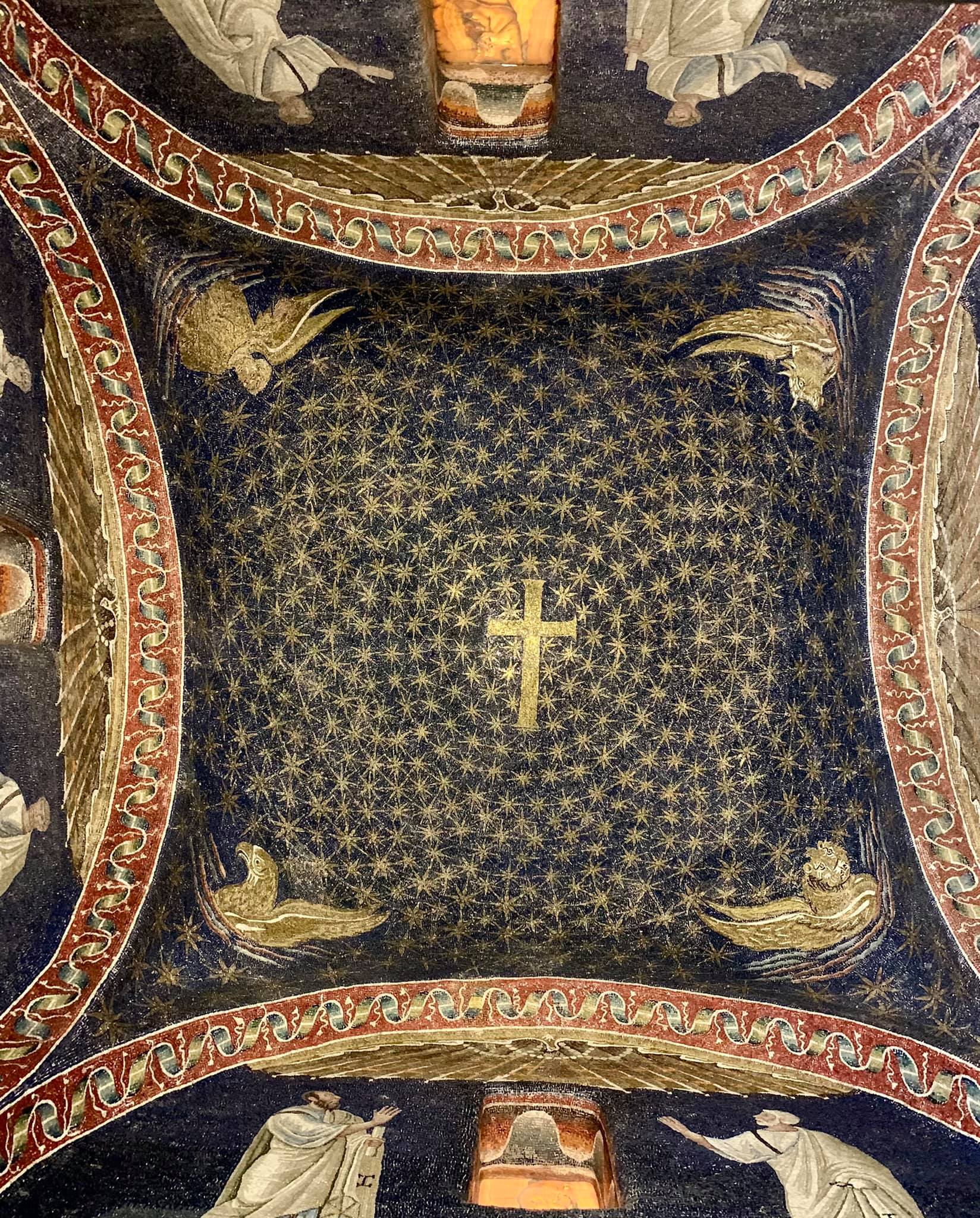
Ceiling design with central cross and symbols of the four Evangelists

Basilica of Sant’Appollinare Nuovo

Erected by the Ostrogothic king Theodoric the Great as his palace chapel and originally an Arian church, it was reconsecrated in 561 AD, under the rule of the Byzantine emperor Justinian I. The mosaic designs date from both periods and are in three rows. The top rows depict twenty-six scenes – thirteen show Jesus’s miracles and parables and thiteeen depict the Passion and Resurrection. Below these are prophets, saints, and evangelists, sixteen on each side, whilst the bottom row has, on one side, the Three Magi and a procession of the twenty-two Virgins and on the other side a procession of twenty-six Martyrs, led by Saint Martin and including Saint Apollinaris.
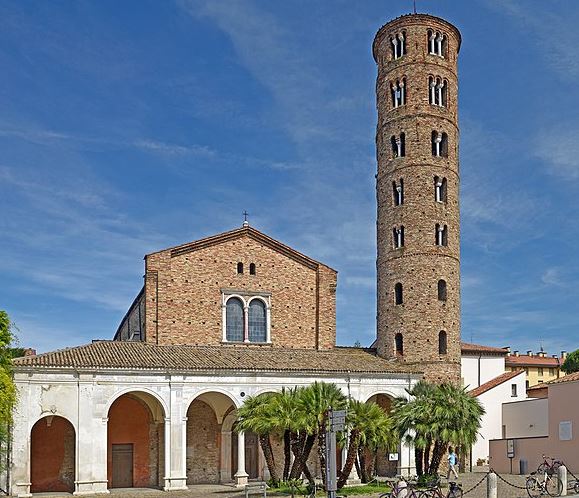
Basilica of Sant’Apollinaire Nuovo
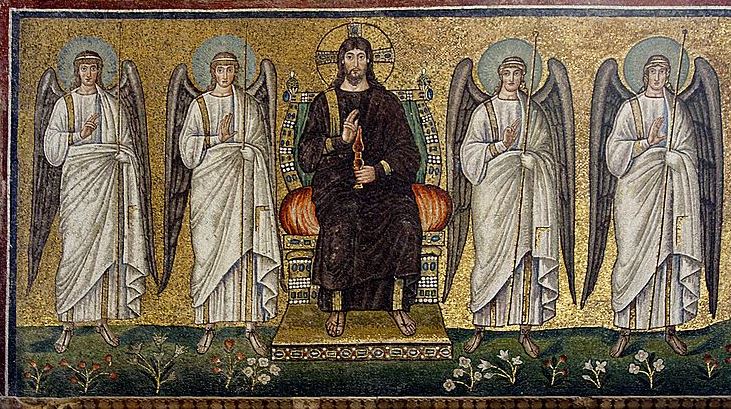
Christ and Angels
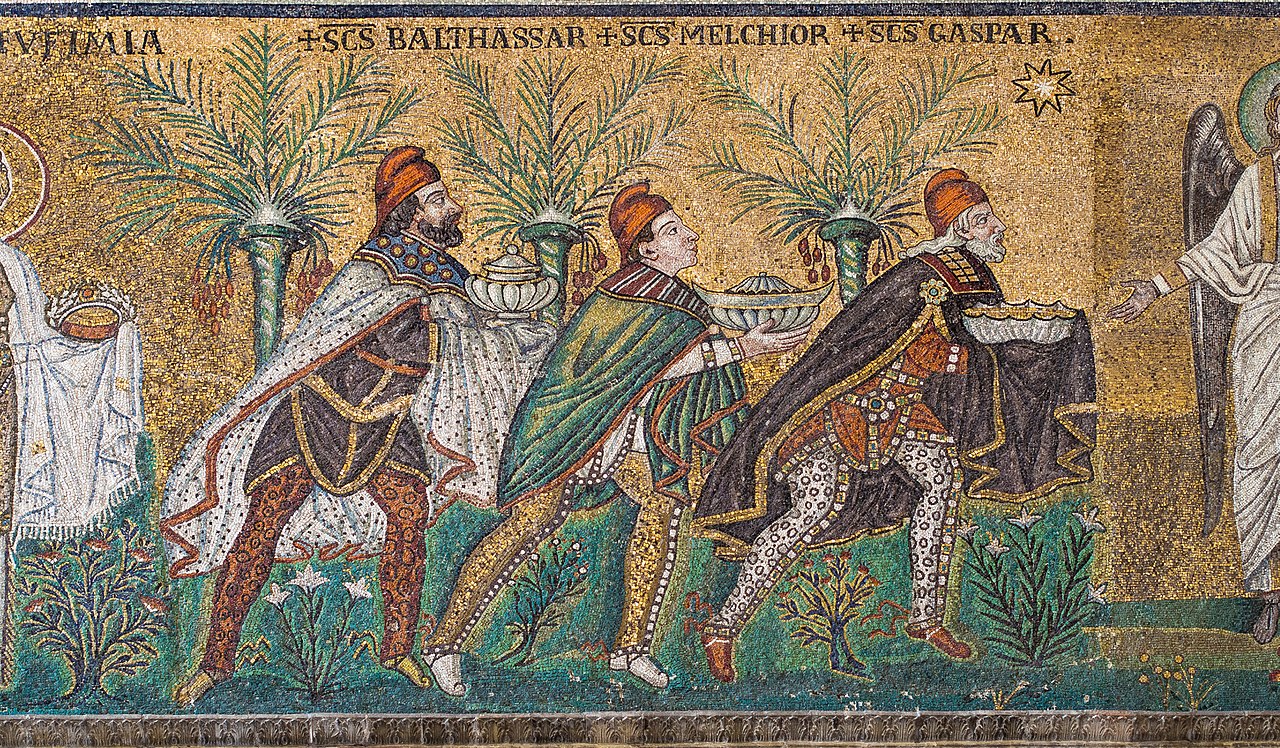
Three Magi

Procession of Virgins
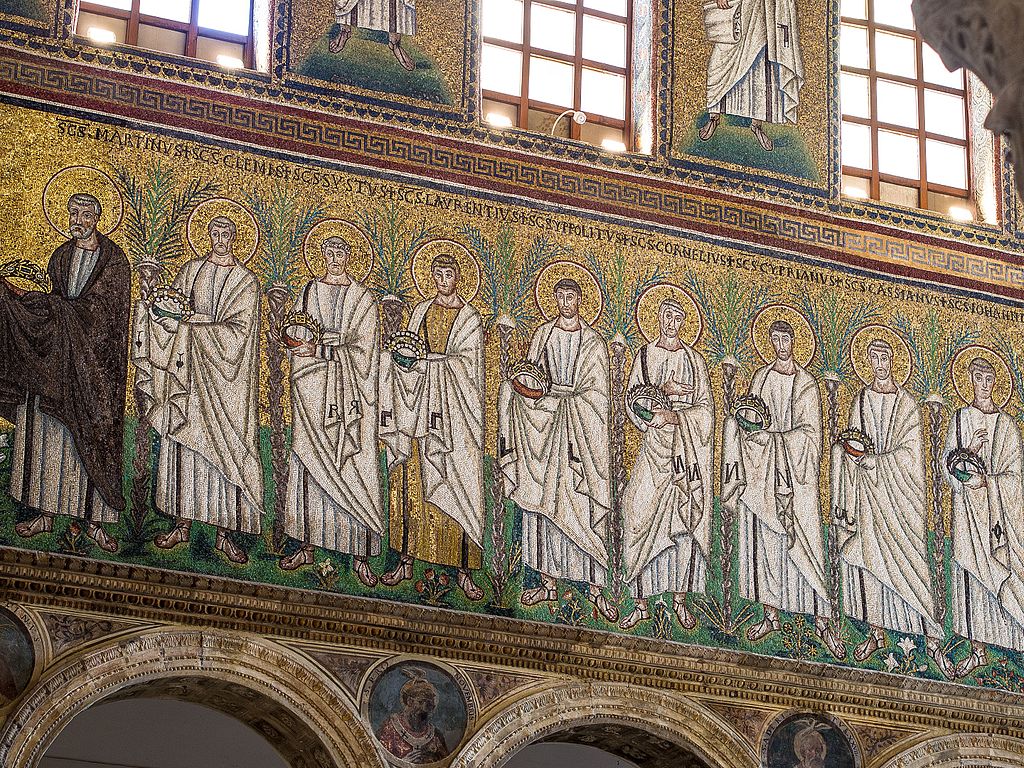
Prophets, saints, and evangelists

Neonian Baptistery

This is the most ancient of Ravenna’s monuments, its construction, octagonal in shape, dating back to the early fifth century. The mosaic decorations are from the period of Bishop Neon in the mid-fifth century.

The ceiling design depicts John the Baptist baptizing Christ, who is standing in the River Jordan. Zeus as personification of the Jordan, is also present. A procession of the twelve apostles proceeds around the centre mosaic in two directions, ending with Saint Peter meeting Saint Paul.
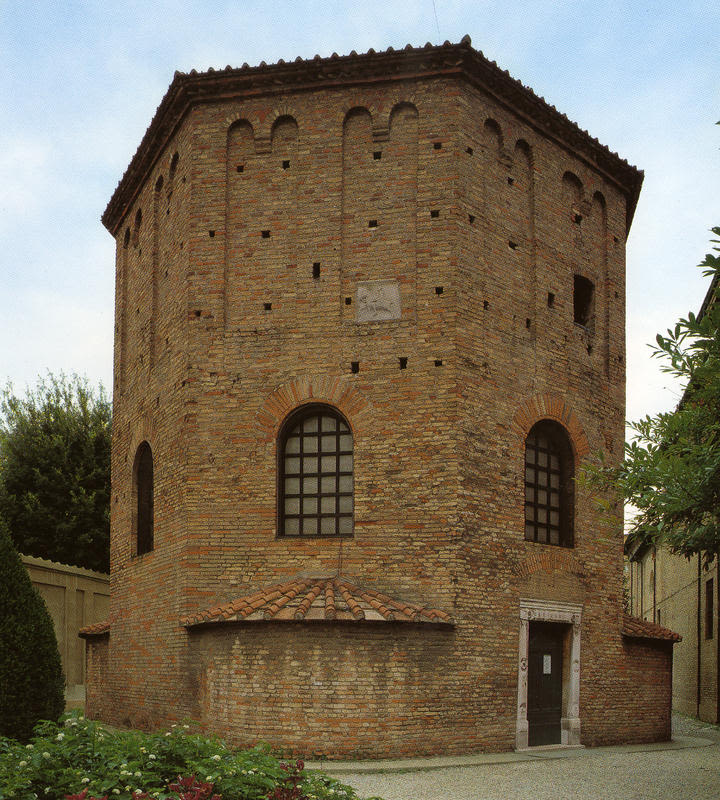
Neonian Baptistery

Ceiling mosaics – John the Baptist baptizing Jesus
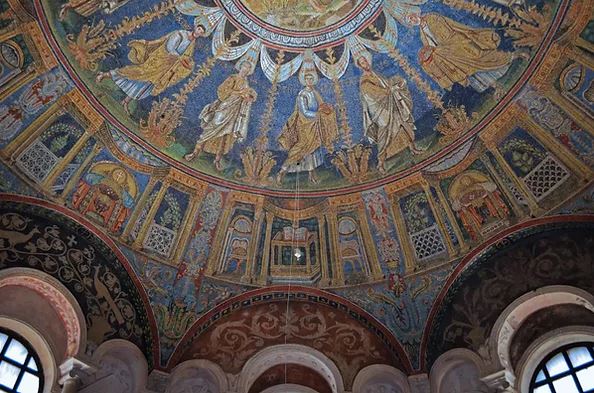
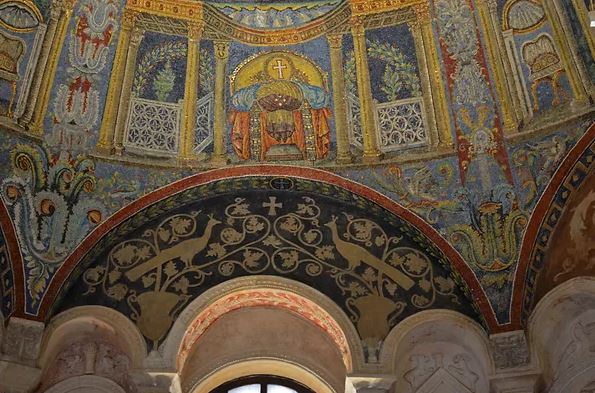
Saint Andrew’s Chapel

The Chapel was built by Bishop Peter II during Theodoric’s rule and it is the only archiepiscopal chapel of the early Christian era. It served as a private oratory of Trinitarian bishops from the beginning of the sixth century.
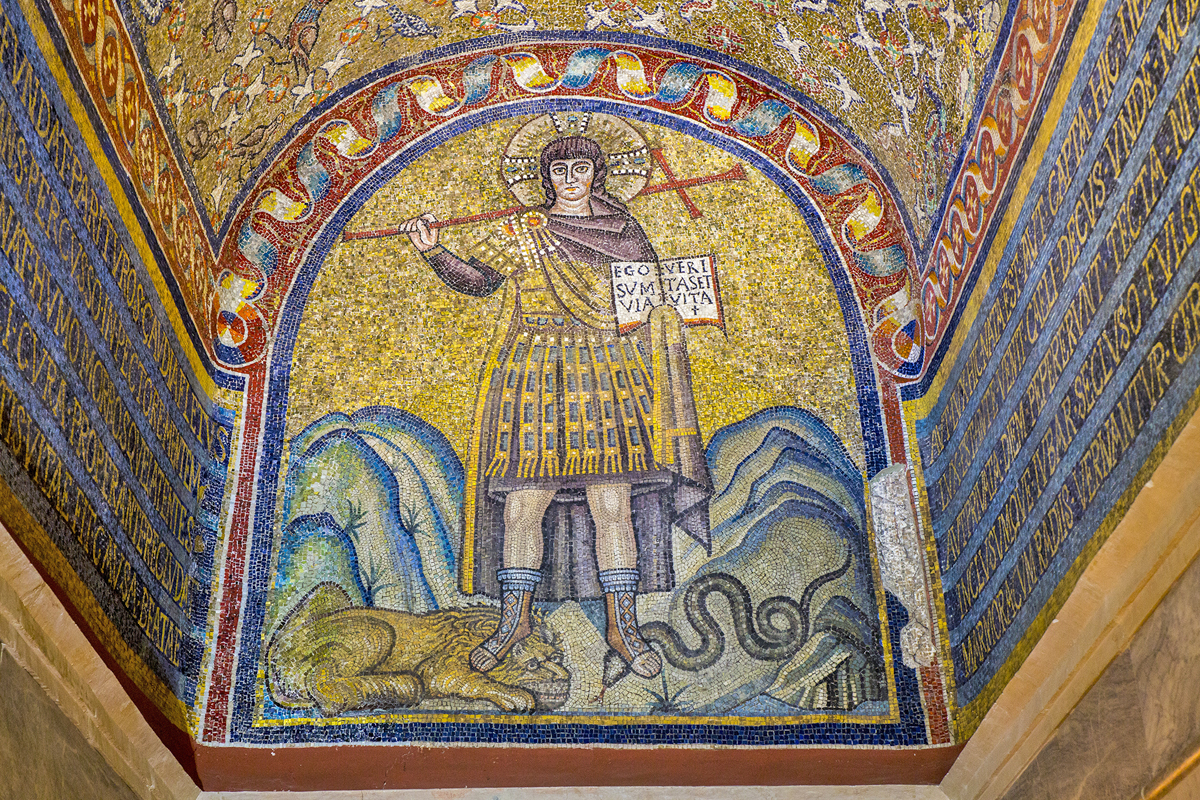
Christ dressed as a Roman soldier
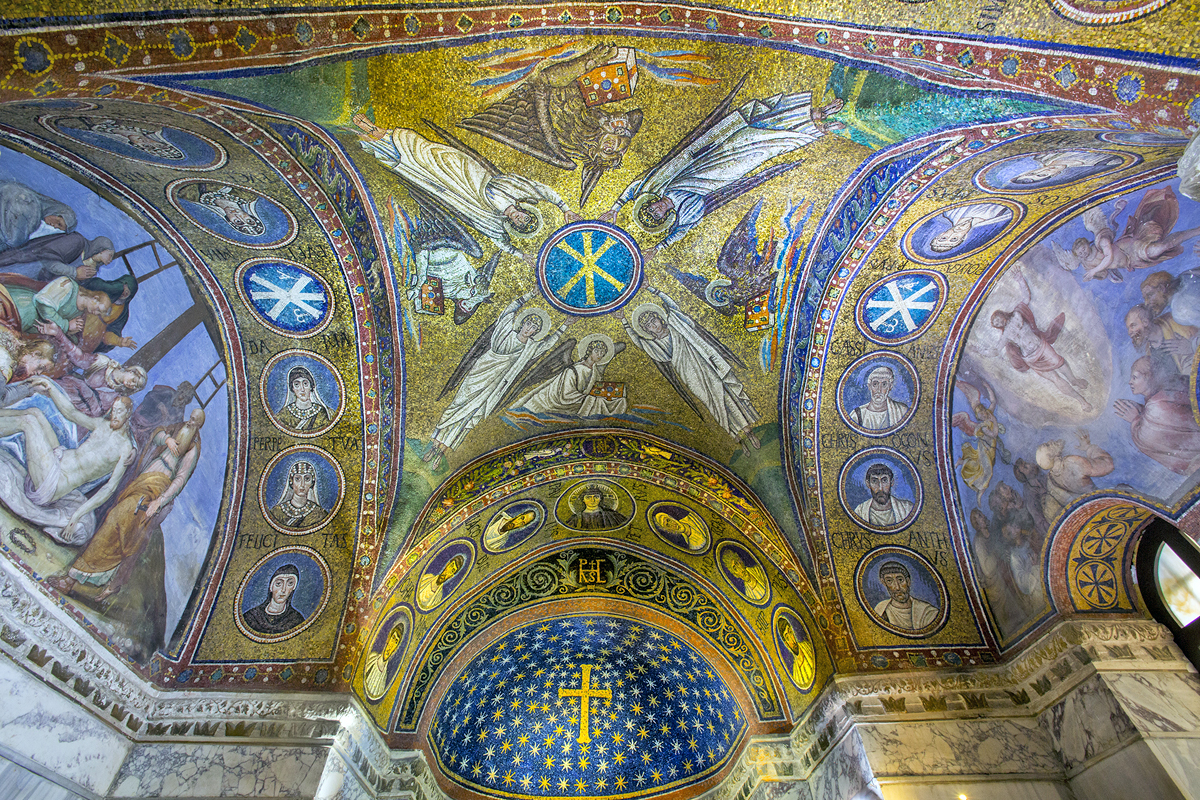
Ceiling mosaics
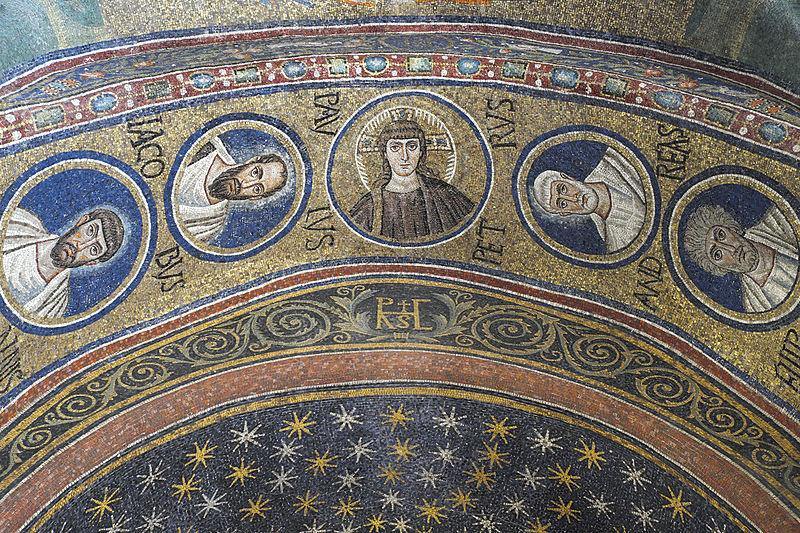
Figures of Evangelists above the apse altar

Adjacent to the chapel is the Archiepiscopal Museum, containing numerous artworks and archaeological finds relating to the ancient city cathedral (now demolished), the most important of which is the carved ivory throne (cathedra) of Maximian.

The throne is entirely covered with ivory panels. On the front, beneath Maximian’s monogram, is the figure of John the Baptist, flanked by the four evangelists. Scenes from the story of Joseph (Genesis 37 – 50) are located under each armrest. The back panels, inside and outside, have depictions of the early life of Christ and his miracles. 
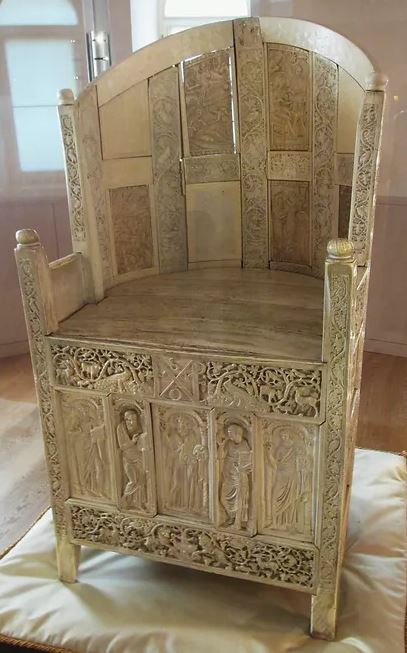
Throne of Maximian

Tomb of Dante Alighieri

Dante Alighieri, author of the ‘Divine Comedy’, was born in Florence around 1265 and spent his early life there. However, for political reasons to do with disputes between Guelph factions in the city, he was condemned to perpetual exile in 1302 and never returned to Florence. It was whilst in exile that Dante wrote the ‘Divine Comedy’.

After spending periods in Lunigiana and Verona, Dante was invited to Ravenna by Guido Novello da Polenta, lord of the city. In 1321, Guido sent Dante on a diplomatic mission to Venice; however, whilst travelling back he was stricken with malarial fever. He died in Ravenna in September 1321.

In the early-sixteenth century, Florence, with Papal support, asked for Dante’s remains to be sent to the town of his birth. Ravenna refused to comply and hid the bones. They had to be hidden again in 1810 during the French occupation to prevent them being confiscated and for a while they were forgotten about until they were found again in 1865. After being hidden again during World War II, they were finally replaced in the monument where they still remain.
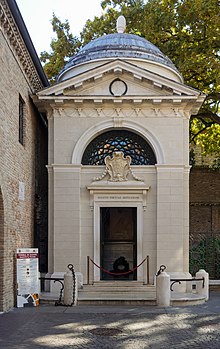
Tomb of Dante
In search of Piero (part III) Urbino

Continuing the Piero della Francesca trail to the Palazzo Ducale in Urbino, where two of the artist’s works can be found.

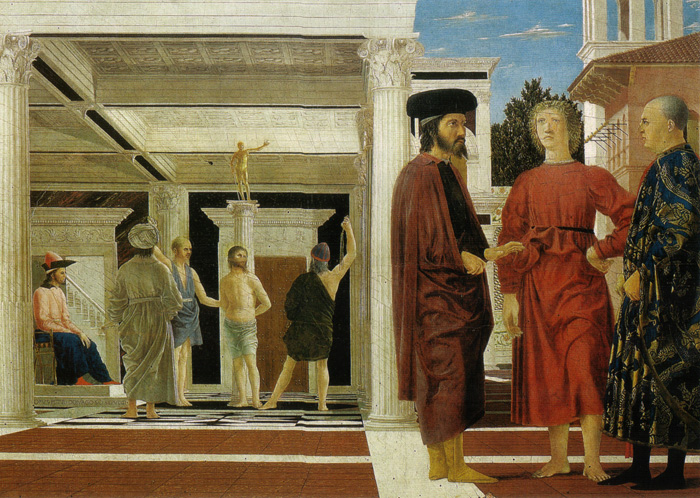
‘The Flagellation of Christ’ was described by the art historian Kenneth Clarke as “the greatest small painting in the world”. The scene on the left depicts a flagellation, assumed to be of Christ, whilst the portrayal of the three figures in the right foreground is something of an enigma, with numerous theories as to who they might be.

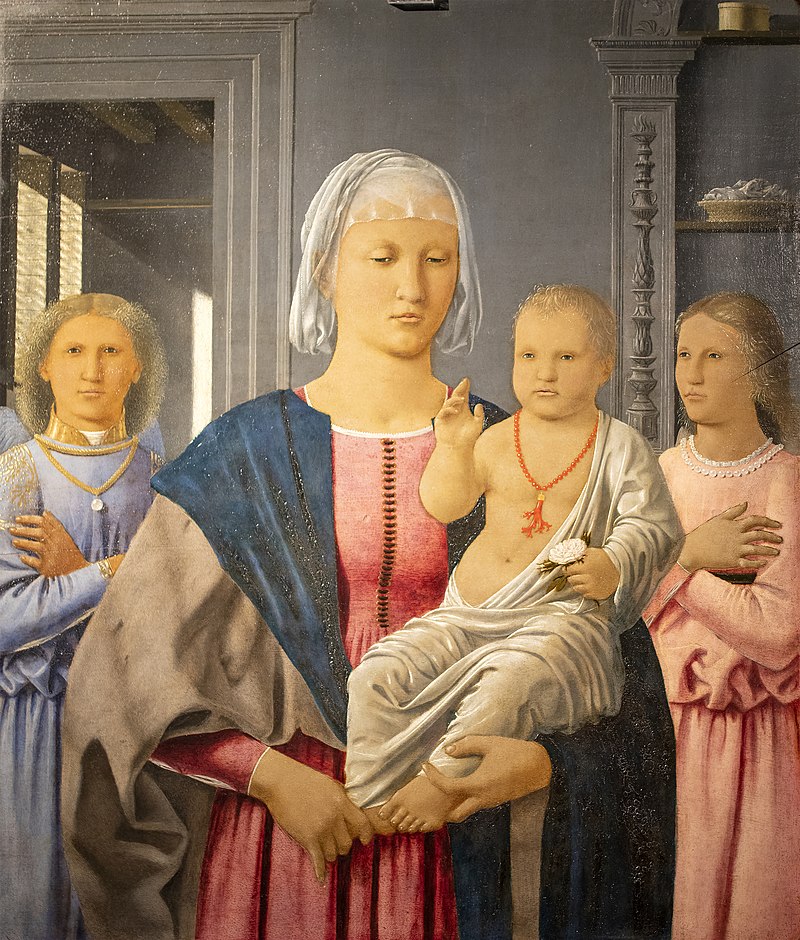
The ‘Madonna di Senigallia’ is a smallish painting and was probably originally used for private devotion. Surprisingly, it was not noticed until 1822 in the church of the Observant Franciscan convent of Santa Maria delle Grazie, just outside Senigallia in Marche, hence the name by which it is now known. After its discovery it was taken to the Palazzo Ducale.
Piero della Francesca ‘The Flagellation of Christ’ (c.1455)

Piero della Francesca ‘Madonna di Senigallia’ (c.1474)

Federico da Montefeltro exhibition, Urbino

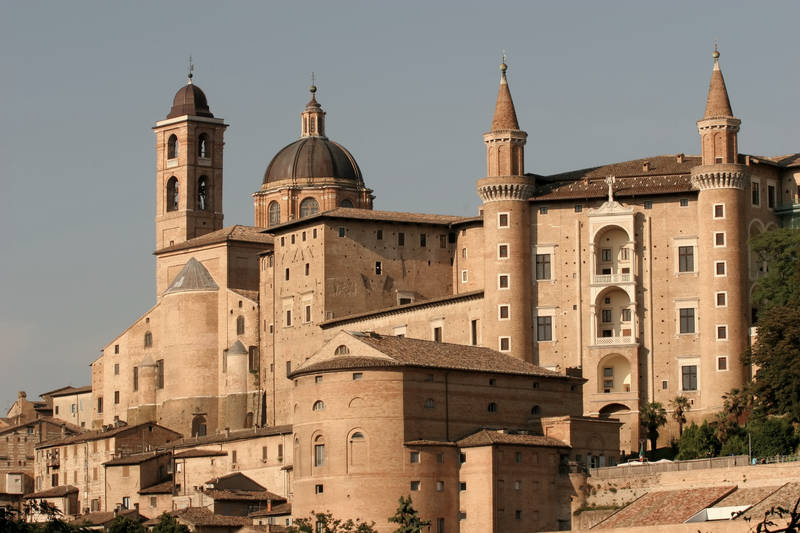
In Urbino in the Marche region of Italy, a UNESCO World Heritage site and the birthplace of Raphael, to visit the exhibition ‘Federico da Montefeltro and Francesco di Giorgio: Urbino crossroads of the arts’, in the magnificent Palazzo Ducale.

Palazzo Ducale, Urbino

The exhibition celebrates the 600th anniversary of the birth of Duke Federico da Montefeltro and, in particular, his relationship with the Sienese artist, sculptor and architect, Francesco di Giorgio (1439 – 1501).

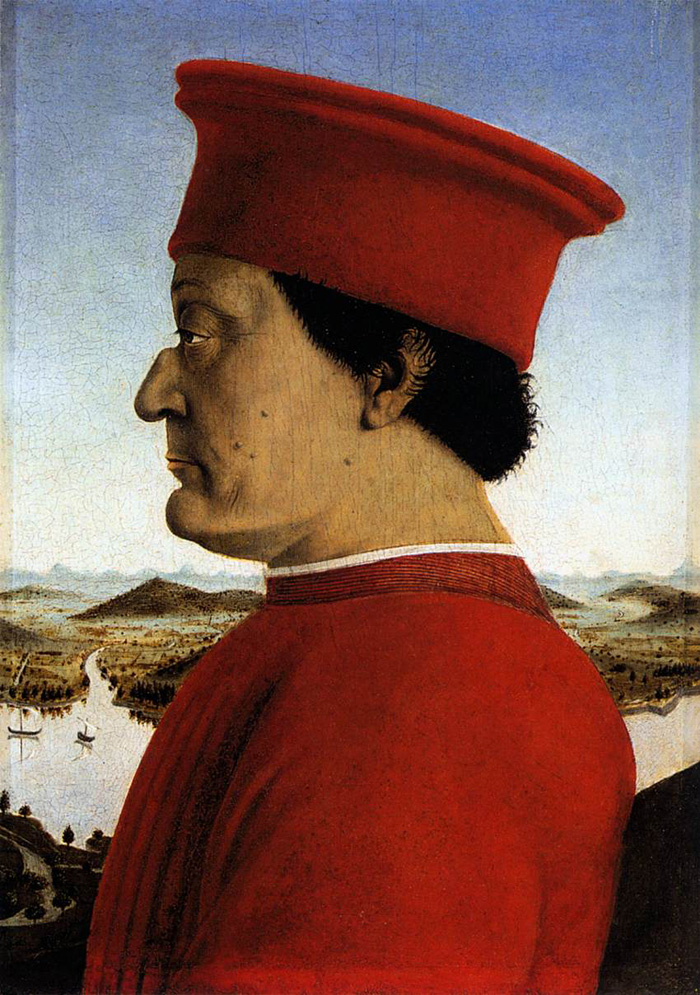
Federico da Montefeltro, who was born in Gubbio in 1422, began his career as a mercenary captain. He seized the city of Urbino after the death of his half-brother Oddantino da Montefeltro, Duke of Urbino, in 1444. He then ruled from his palace in the city, where he assembled around him a large humanistic court. He lost his right eye during a tournament and subsequently had the bridge of his nose removed to improve his field of vision. Subsequent portraits, including that by Piero della Francesco, always depicted him in profile, only showing the left side of his face.

Piero della Francesca ‘Portrait of Federico da Montefeltro’ (1470 – 73) [Uffizi, Florence]

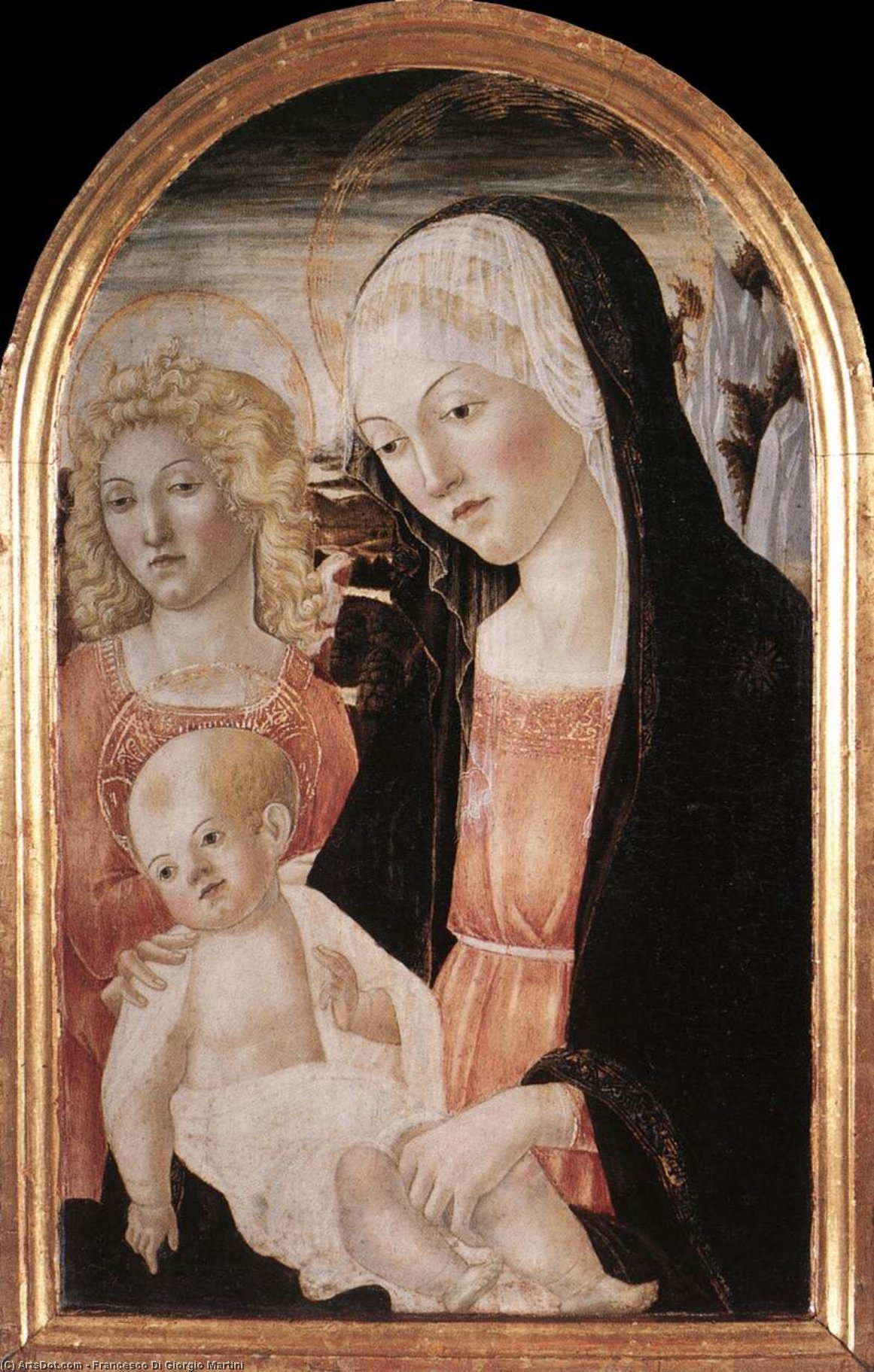
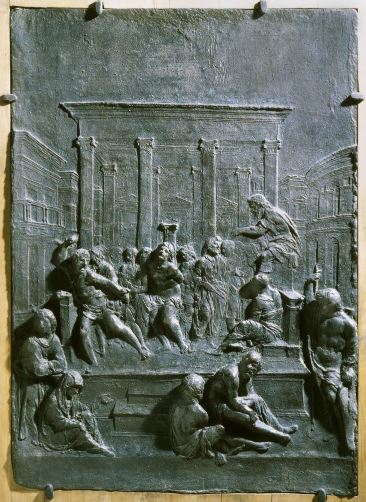
Around 1473 he established a relationship with Francesco di Giorgio, who had trained and worked in Siena. Di Giorgio would create a number artistic works for the Duke, as well as serving as an architect and engineer. More than eighty works by Di Giorgio and other artists are on show at the exhibition, which is divided into sections including paintings, sculptures, drawings, medals and detached frescoes.

Francesco di Giorgio ‘Madonna and Child with an Angel’ (c.1470 – 74)

Francesco di Giorgio ‘Flagellation’ (bronze relief, c.1480)

Francesco di Giorgio ‘Lamentation over the Dead Christ (terracotta, c.1486 – 89)

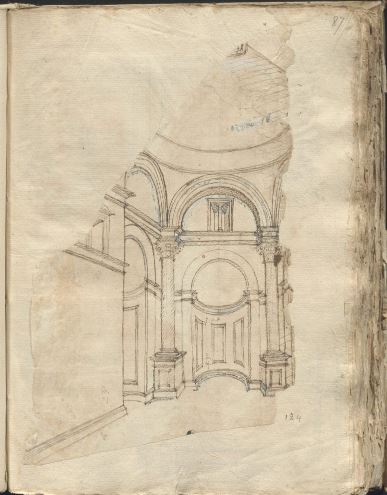
Francesco di Giorgio ‘Design for the interior of San Bernardino degli Zoccolanti’

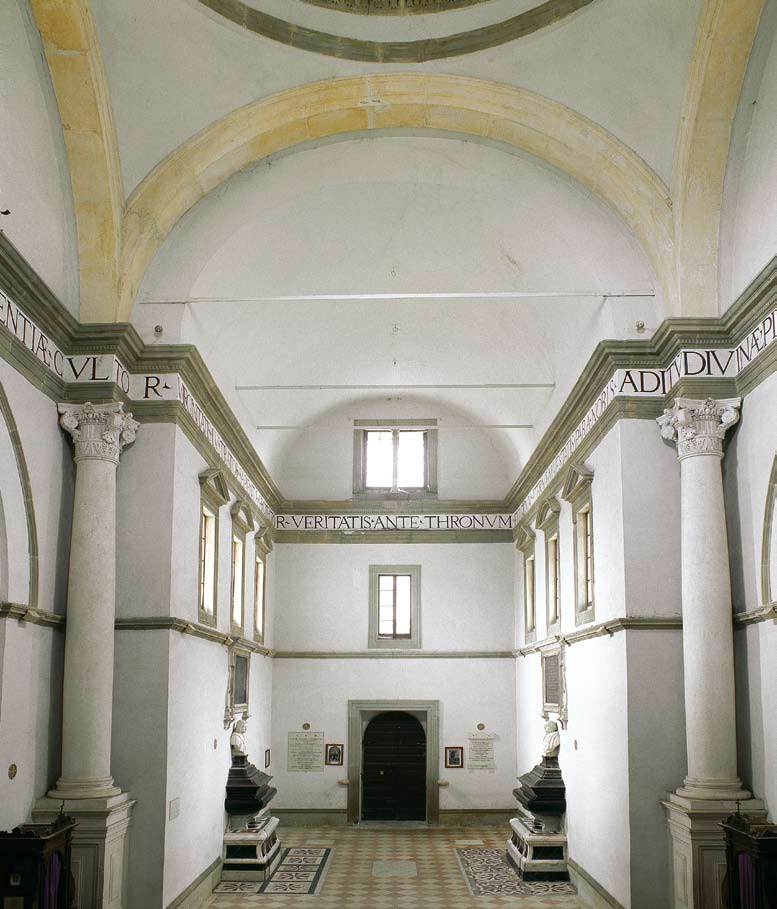
Church of San Bernardino degli Zoccolanti, Urbino (burial place of Federico da Montefeltro)

Galleria Nazionale della Marche

It was also an excellent opportunity to explore the permanent collection in the Galleria Nazionale della Marche, in the Palazzo Ducale, which houses one of the world’s finest renaissance collections.

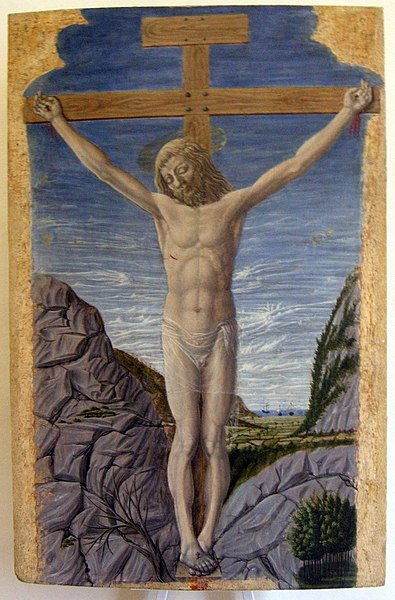
Fra Carnevale ‘Crucifixion’ (c.1450 – 60)

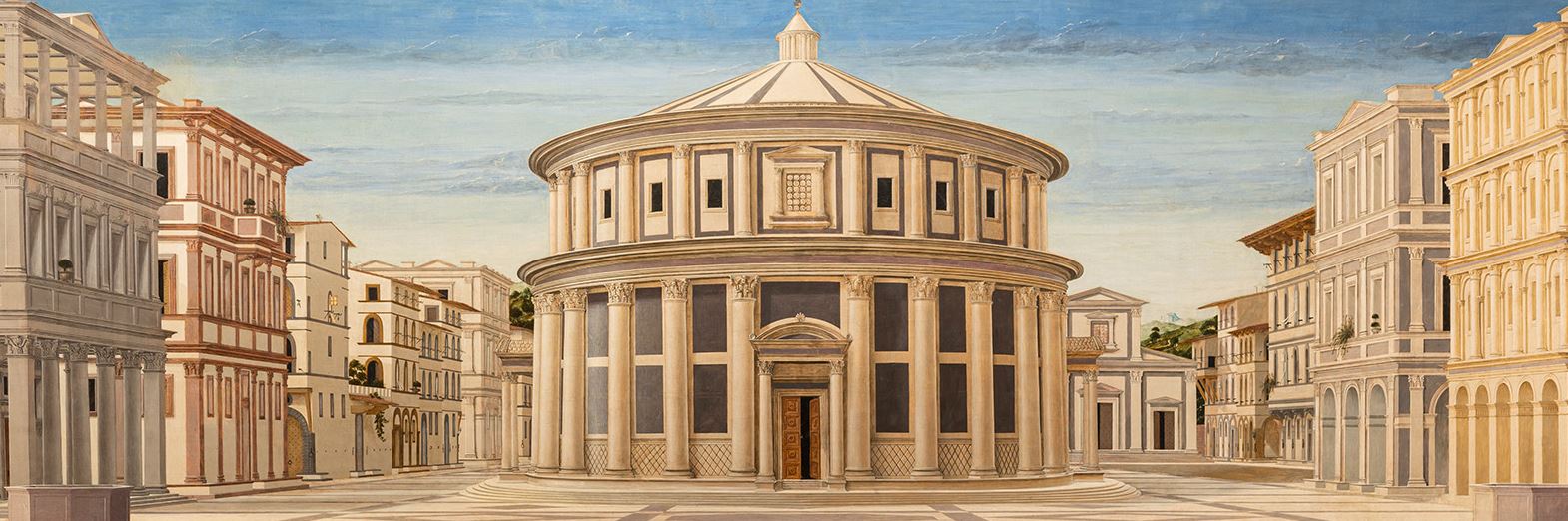
Unknown ‘The Ideal City’ (c.1470)

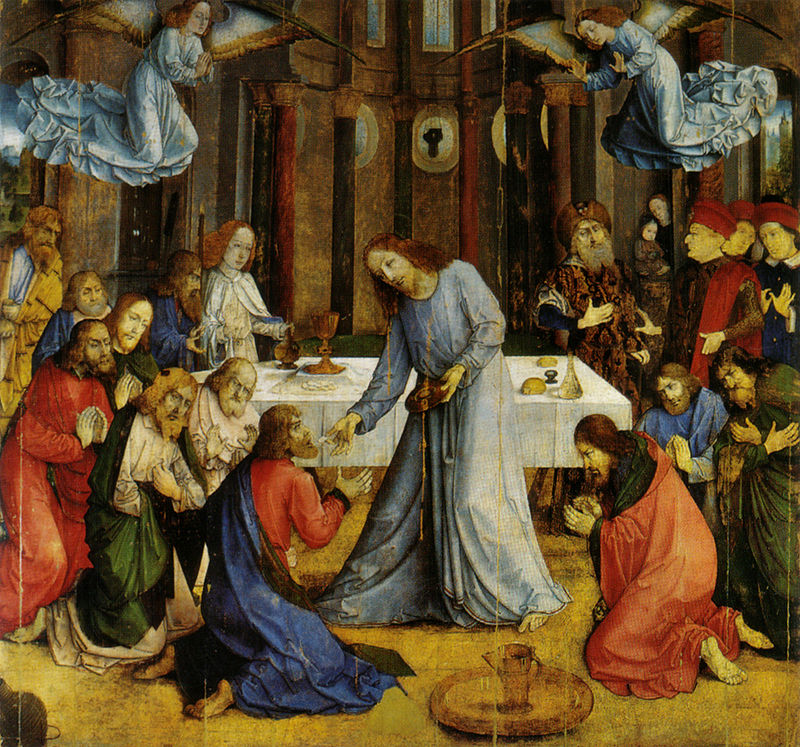
Justus van Ghent ‘Communion of the Apostles’ (1472 – 74)

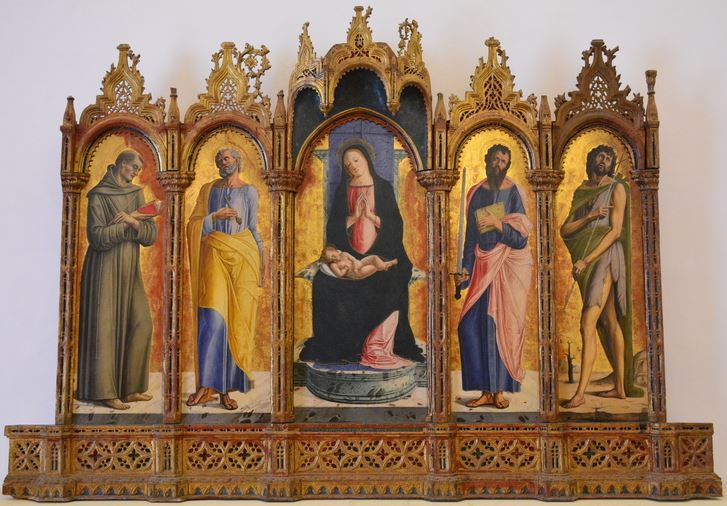
Alvise Vivarini ‘Madonna and Child and Saints Francis, Peter, Paul, John the Baptist’ (1476)

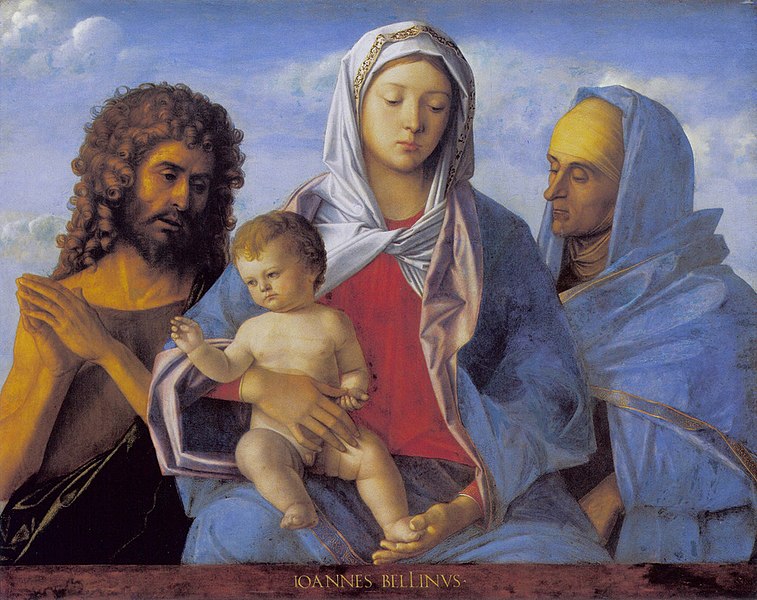
Giovanni Bellini ‘Madonna and Child with John the Baptist and St. Elizabeth’ (c.1490 – 1500)

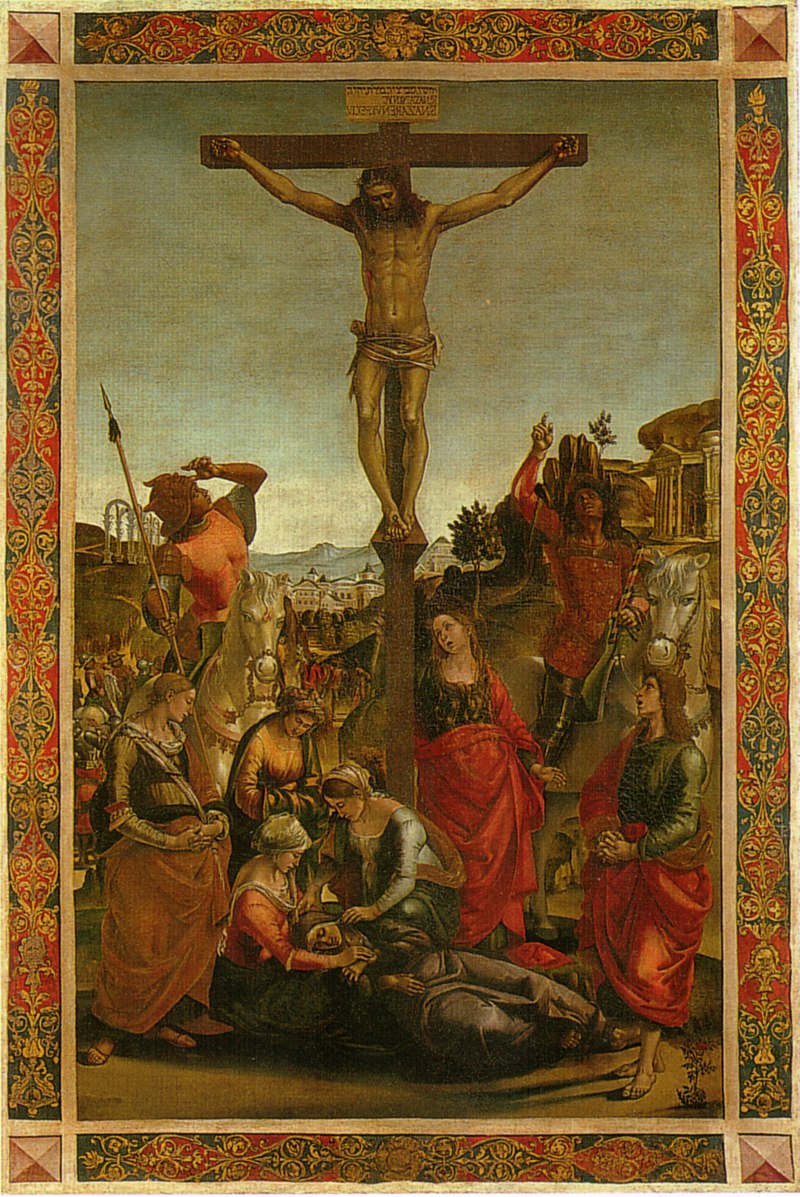
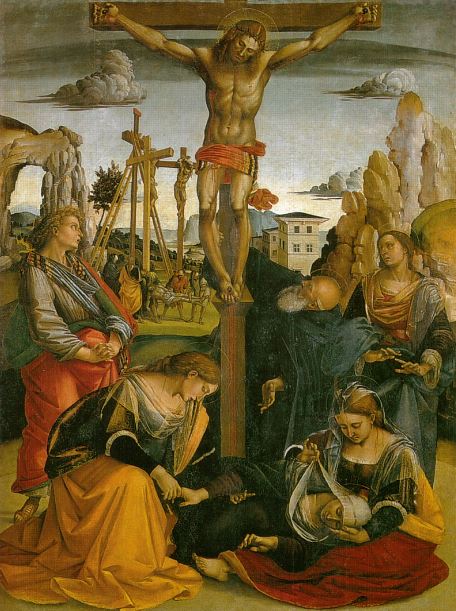
Luca Signorelli ‘Crucifixion’ (c.1494)

Gubbio

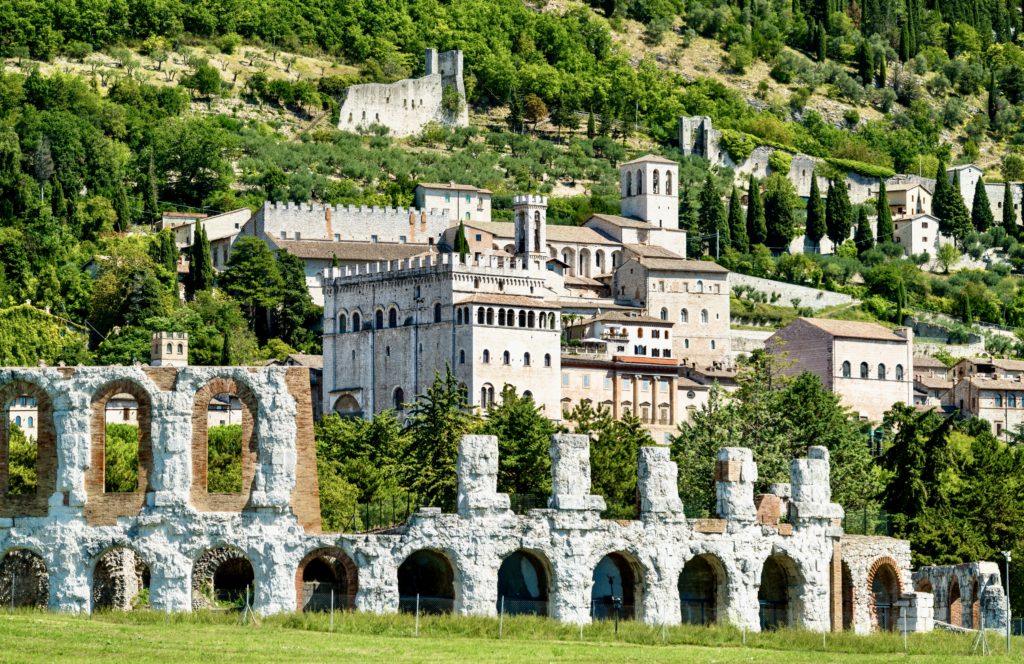
Although most of Gubbio, in northern Umbria, is of medieval construction, the first buildings that welcome visitors to the town are Roman. In addition to the well-preserved first-century arcades of a Roman theatre, there is also a mausoleum, a monumental tomb of which the burial chamber has survived.

Roman theatre remains, Gubbio

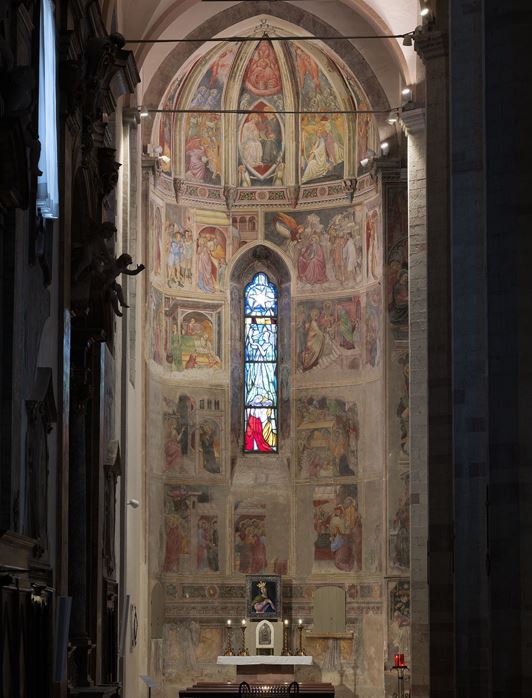
The town is built on a steep hill, meaning that buildings are on several different levels. On the bottom level can be found Gubbio’s finest church, San Francesco, construction of which began in the mid-1200s.

Church of San Francesco, Gubbio

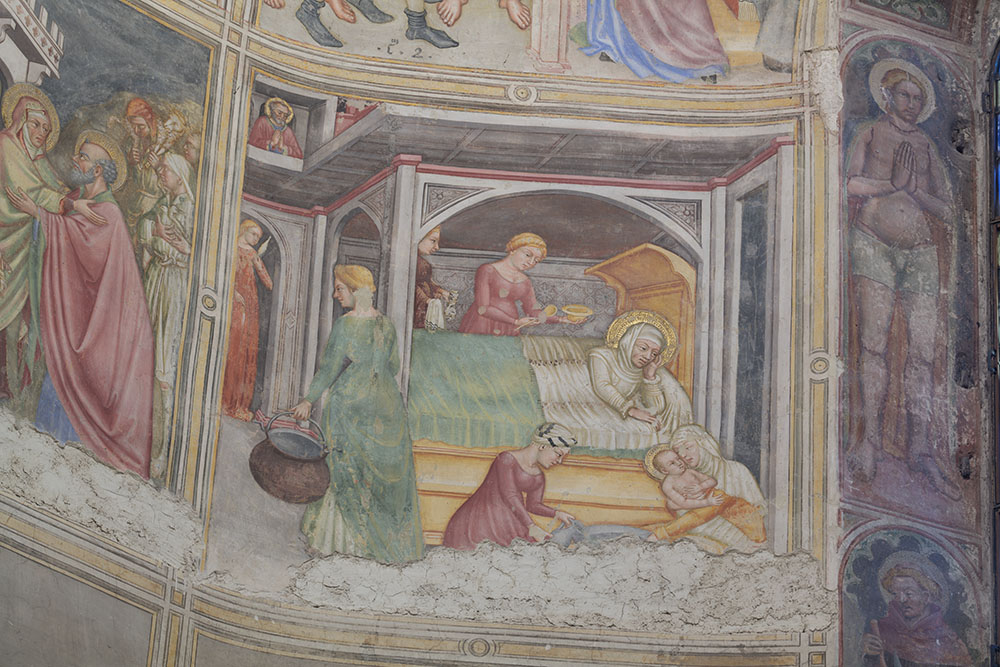
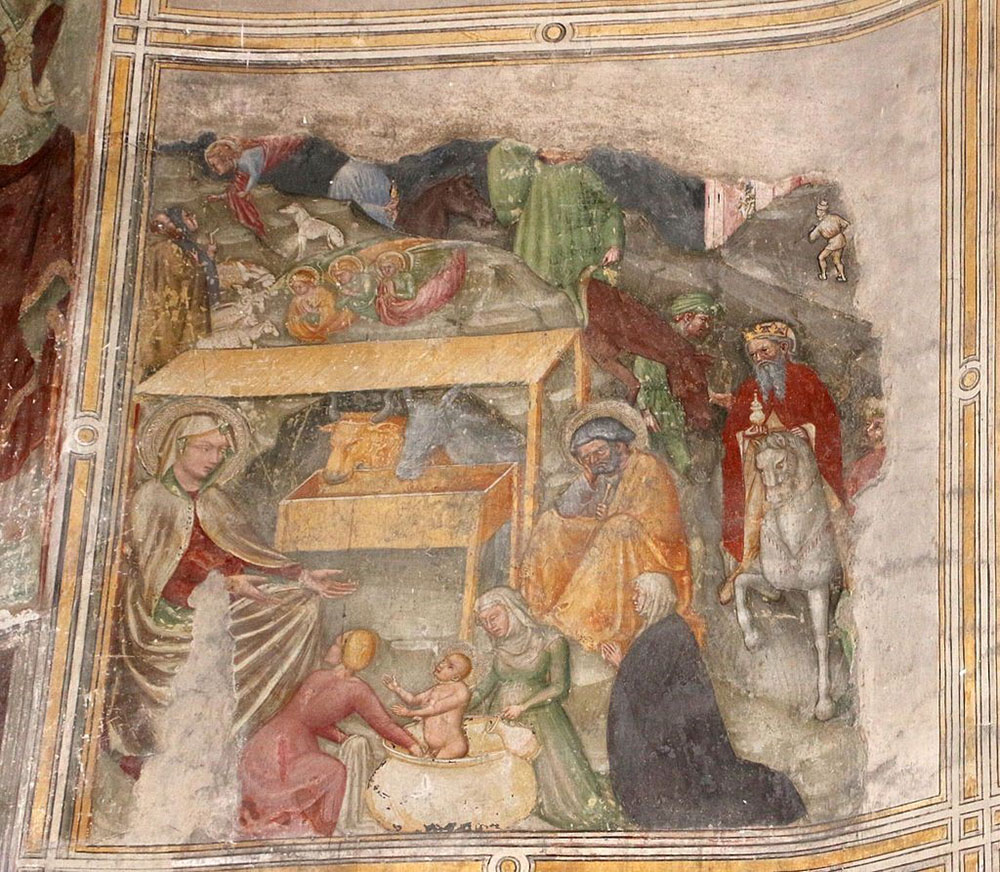
In the left apse of the church is a fresco cycle by Ottaviano Nelli, born in Gubbio in 1375, with ‘Scenes from the Life of Mary’, painted in the, then fashionable, International Gothic style.

Ottaviano Nelli ‘Stories from the Life of Mary’ (c.1408 – 13)

Ottaviano Nelli ‘Birth of Mary’ (c.1408 – 13)

Ottaviano Nelli ‘Birth of Jesus’ (c.1408 – 13)

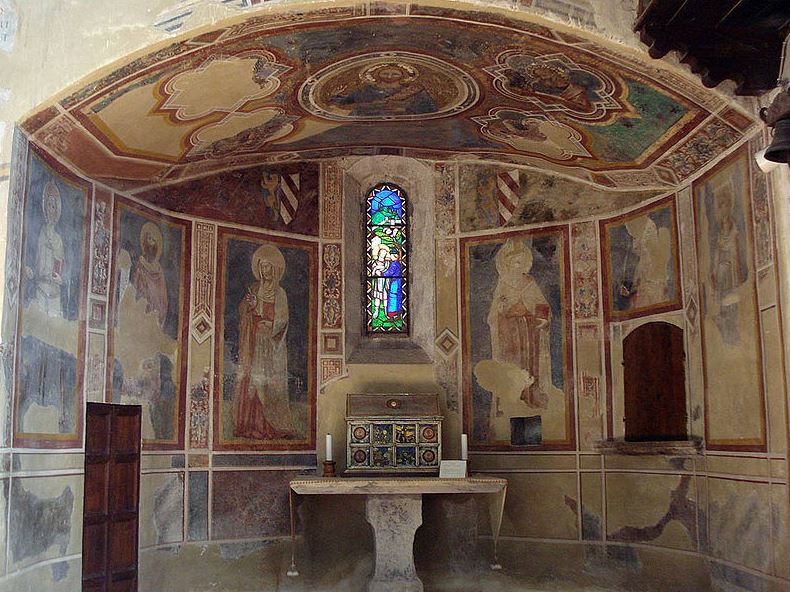
The right apse is split into two parts, the lower part being a chapel with frescoes from the early-fourteenth century. They are attributed to the Maestro Espressionista di Santa Chiara and depict, on the ceiling, Christ and the four Evangelists, although Matthew has been lost, and on the walls, the figures of six saints.

Maestro Espressionista di Santa Chiara ‘Christ with Evangelists and Saints’ (early-14th century)

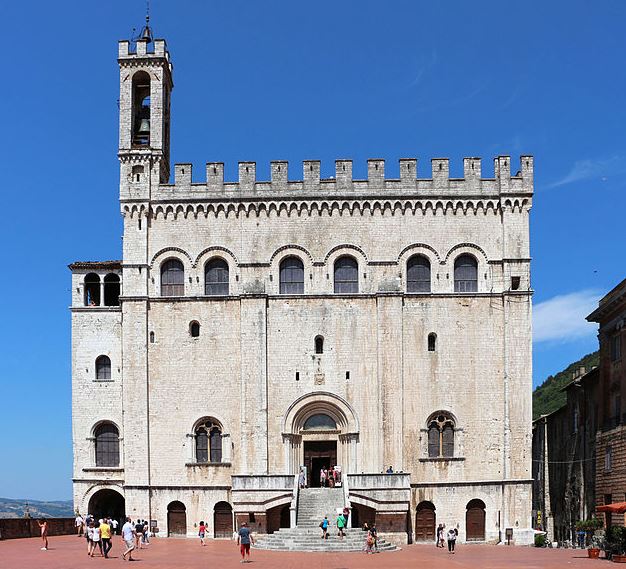
On one of the upper levels of the town is the impressive Palazzo dei Consoli, begun in 1332, which overlooks Piazza Grande with its amazing views over the town and the surrounding countryside. The building, which is in the Gothic style, now houses the Museo Civico. The Sala dell’Arengo, which occupies the entire first floor, was used for popular assemblies in the fourteenth century.

Palazzo dei Consoli, Gubbio

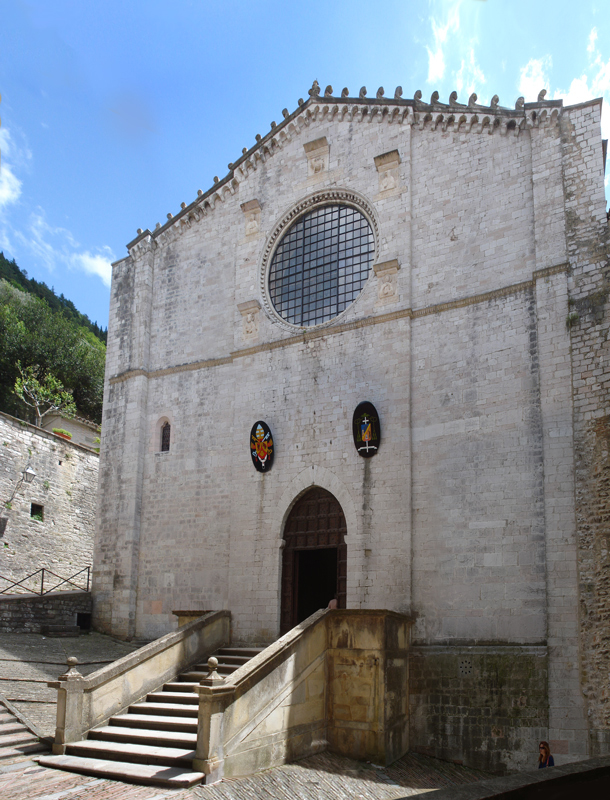
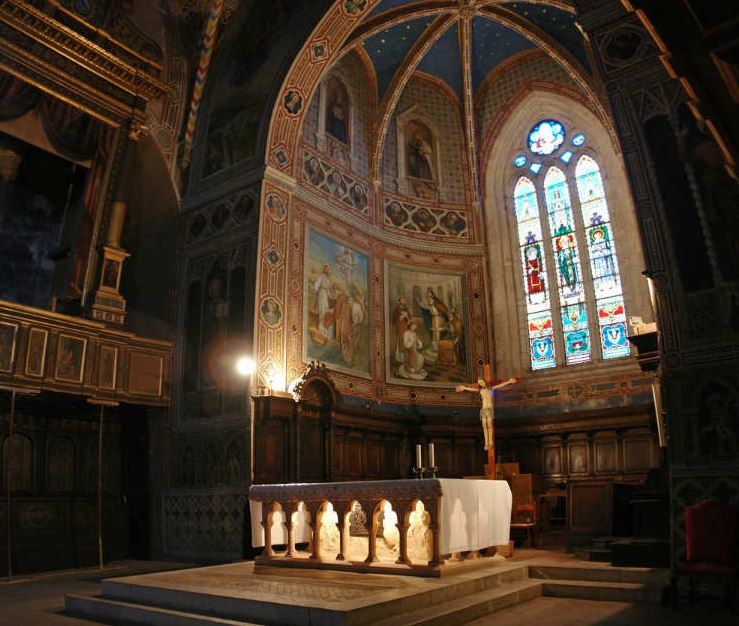
On the town’s highest level can be found the impressive duomo, dedicated to Saints Mariano and Giacomo. It was first founded in 1229 and built on the site of a previous Romanesque church. The interior has frescoes from the sixteenth century, mainly by local artists.

Gubbio Cathedral (facade)

Gubbio Cathedral (interior)

Città di Castello

Città di Castello is a picturesque medieval town in northern Umbria, although it was originally a settlement of the ancient Umbri. It contains some interesting architecture, including the Duomo, built between the eleventh and fifteenth centuries and the fourteenth-century Palazzo Communale with the Torre Civica.

The Pinacoteca Communale, located in the splendid renaissance Palazzo Vitelli alla Cannoniera, contains one of the most important art collections in the region.

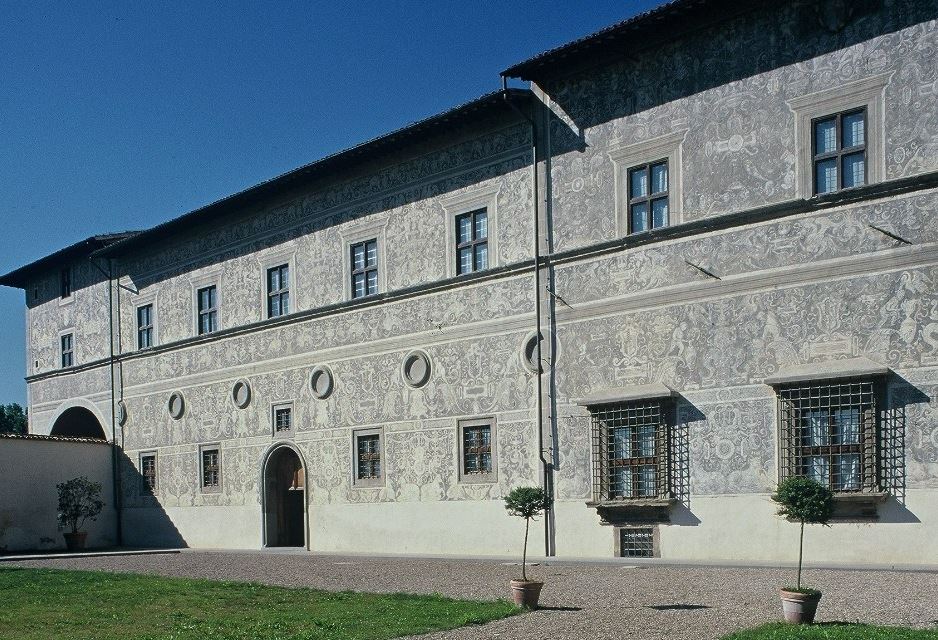
Palazzo Vitelli alla Cannoniera

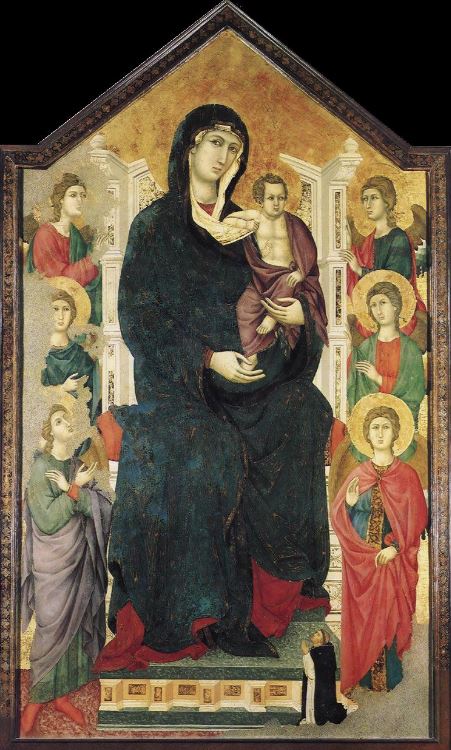
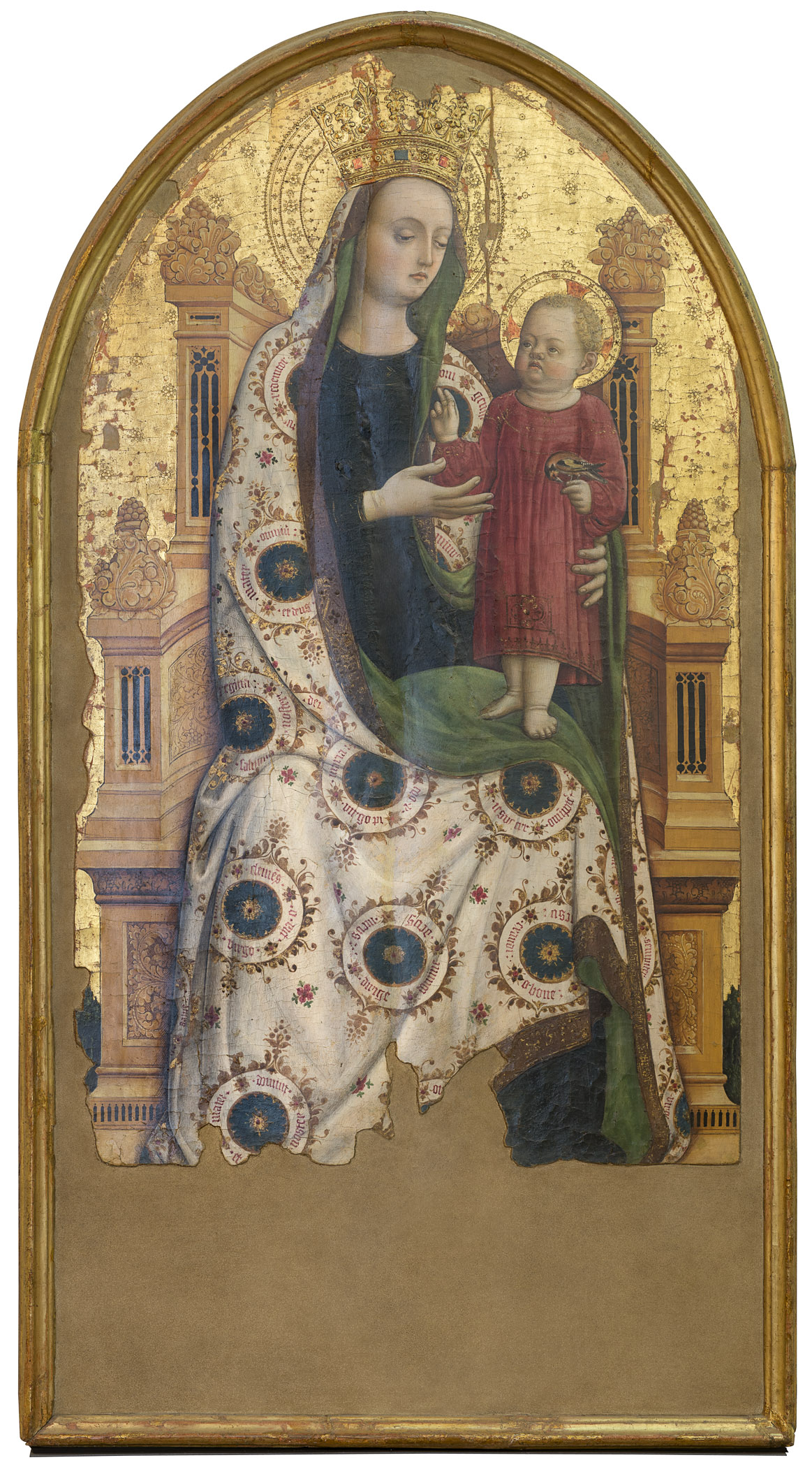
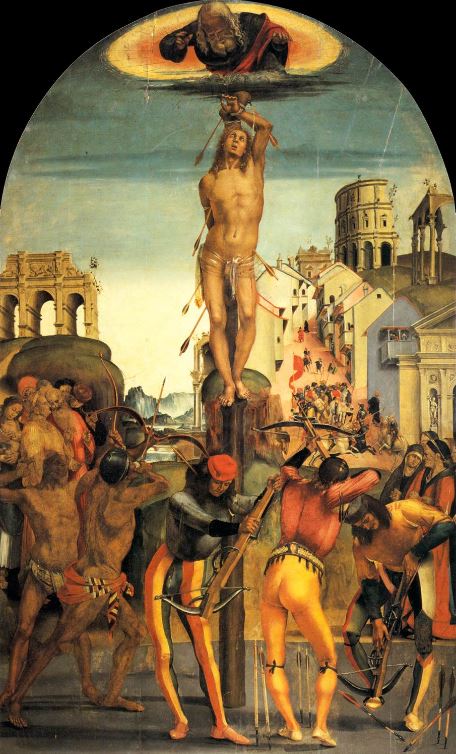
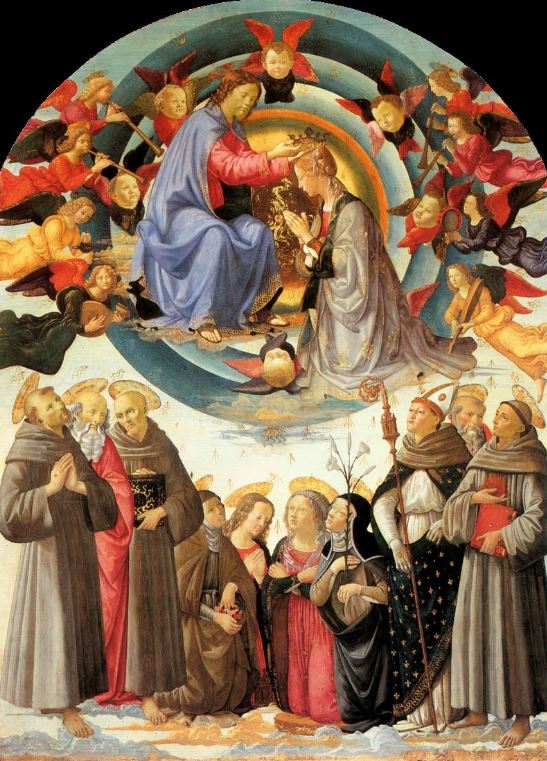
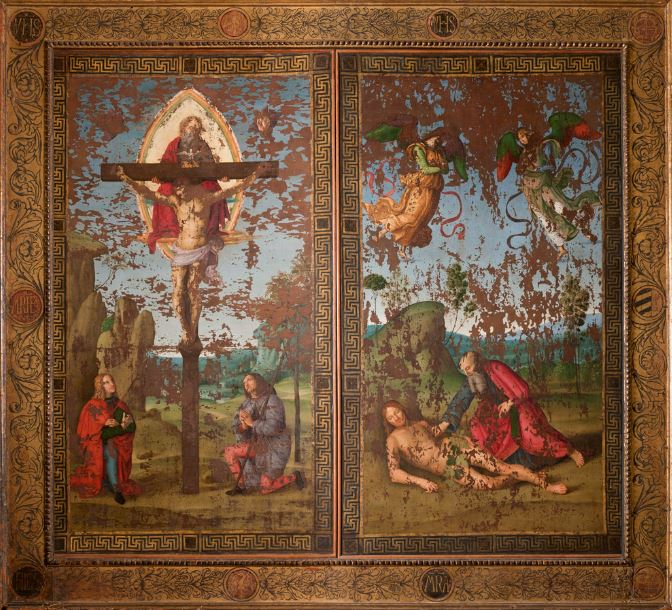
Of particular note are a ‘Madonna and Child with Six Angels’ by the Maestro di Città di Castello (early-fourteenth century), Antonio Vivarini’s ‘Madonna and Child’ (1440 – 50), a wonderful ‘Martyrdom of Saint Sebastian’ (1497 – 98) by Luca Signorelli, a ‘Coronation of the Virgin’ by Domenico Ghirlandaio and workshop (end 15th century) and a ‘Gonfalone della Santissima Trinità’ by Raphael (1499).

Maestro di Città di Castello ‘Madonna and Child with Six Angels’ (early 14th century)

Antonio Vivarini ‘Madonna and Child’ (1440 – 50)

Luca Signorelli ‘Martyrdom of St. Sebastian’ (1497 – 98)

Domenico Ghirlandaio and workshop ‘Coronation of the Virgin’ (end 15th century)

Raphael ‘Trinity with Saints Sebastian and Roch’ and ‘Creation of Adam and Eve’ (c.1500)

In search of Piero (part II) Sansepolcro and Monterchi

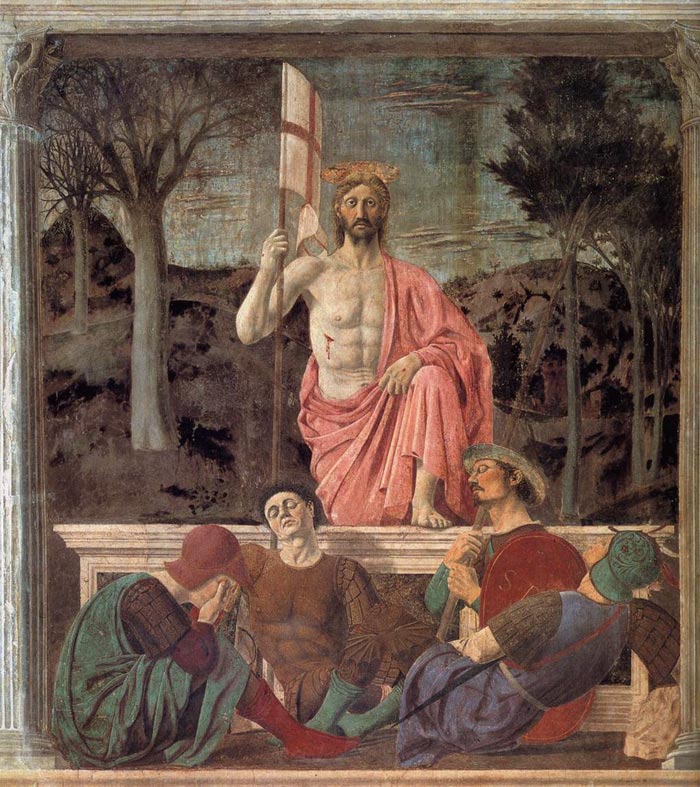
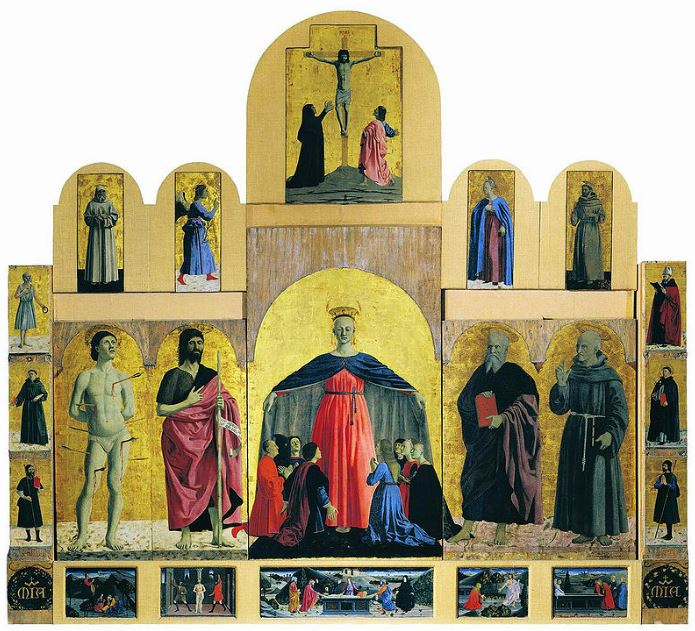
Back in Tuscany to continue the Piero della Francesca trail that began during last year’s visit to Arezzo with the ‘Legend of the True Cross’ cycle. In Sansepolcro, the town of Piero’s birth between 1415 and 1420, the Museo Civico displays two magnificent works; the ‘Polyptych of the Misericordia’ and what the English writer Aldous Huxley called “the greatest painting in the world”, the ‘Resurrection’.

In 1467, Piero was commissioned to paint the fresco of the ‘Resurrection’ for the Palazzo dei Conservatori di Sansepolcro, the meeting hall used by the chief magistrates and governors of the town. Christ is positioned in the centre of the painting at the moment of his resurrection with the four sleeping soldiers in the foreground. It is believed that the second figure, dressed in brown armour, is a self-portrait of Piero. The landscape in the background depicts the river Tiber, which runs along the border of the town of Sansepolcro. The trees on the left of the landscape have no leaves, whereas those on the right are flourishing, which is said to allude to the renovation of men through the light of the Resurrection.

During World War II, the British artillery, led by an officer named Tony Clarke, were ordered to fire on the town of Sansepolcro, but Clarke knew of Huxley’s essay that described the ‘Resurrection’ as the greatest painting in the world, and defied the order to fire, even though his commanding officer ordered him to “get on with it”, thereby saving the painting.

Piero della Francesca ‘Resurrection’ (1467 – 68)

The Polyptych of the Misericordia, dating from 1445 – 62, is one of the earliest works by Piero. It was commissioned in 1445 by the Compagnia della Misericordia, a confraternity of Borgo San Sepolcro. The central panel depicts the Virgin as Madonna della Misericordia (Madonna of Mercy), who is spreading her cloak around the kneeling donors. The side panels show saints; on the left are John the Baptist and Saint Sebastian, whilst the right has Saint Andrew and Saint Bernardino. Because Piero became busy with commissions from elsewhere, the polyptch was not finished for seventeen years, the central panel being the last to be completed.

Piero della Francesca ‘Polyptych of the Misericordia’ (1445 – 62)

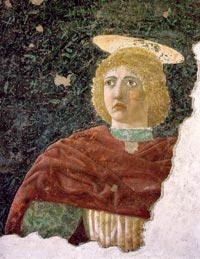
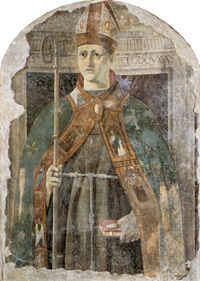
The museum also holds the detached fresco of Saint Julian, originally in the church of Sant’Agostino in Borgo San Sepolcro, which was not discovered until 1954, and of San Ludovico di Tolosa, originating from the Palazzo Pretorio, which shows the saint dressed in a Franciscan habit with a richly decorated bishop’s cope.

Piero della Francesca ‘St. Julian’ (1455 – 60)

Piero della Francesca ‘St. Ludovico di Toloso’ (c.1460)

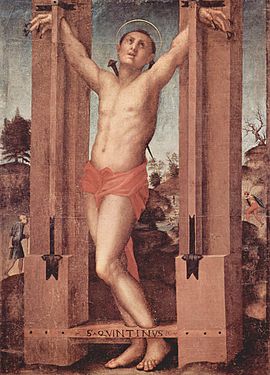
The museum also contains paintings by other local artists including Pontormo, Raffaellino del Colle and Luca Signorelli.

Luca Signorelli ‘Crucifixion Standard’ (c.1502 – 05)

Jacopo Pontormo ‘Saint Quentin’ (1517)

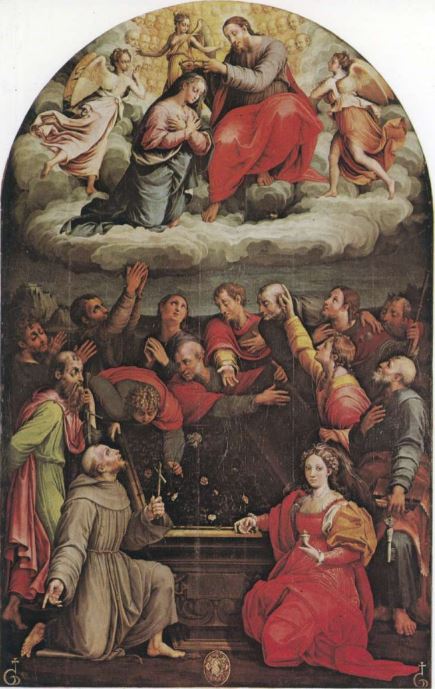
Raffaelino del Colle ‘Assumption and Coronation of the Virgin’ (1526 – 1527)

Monterchi

In nearby Monterchi is Piero’s fresco known as the ‘Madonna del Parto’, in which two angels hold open the flaps of a tent to reveal a pregnant Madonna dressed in a billowing blue gown, partially open to reveal her swollen abdomen containing the future Saviour. The fresco was originally painted by Piero between 1450 and 1475 for the Church of Santa Maria a Momentana between the villages of Monterchi and Cisterna.

Piero della Francesca ‘Madonna del Parto’ (c.1460)

Gozzoli in Montefalco

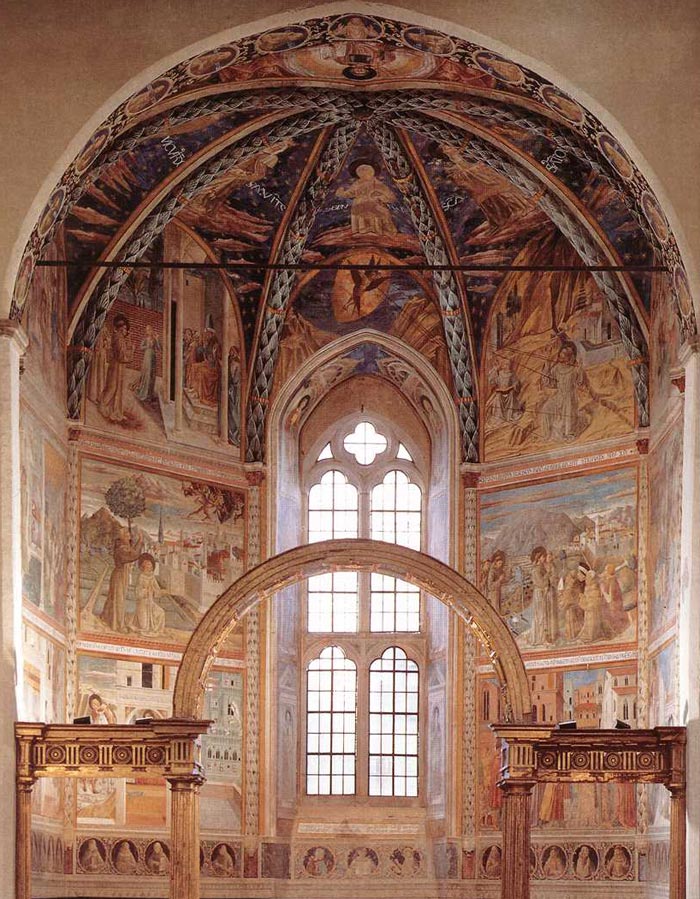
In Italy, at the (now deconsecrated) church of San Francesco in Montefalco, in southern Umbria, to see the frescoes painted by Benozzo Gozzoli in the mid-fifteenth century. In the central apse there is a magnificent cycle depicting events from the life of Saint Francis.

Benozzo Gozzoli ‘Stories from the Life of Saint Francis’ (1450 – 52)

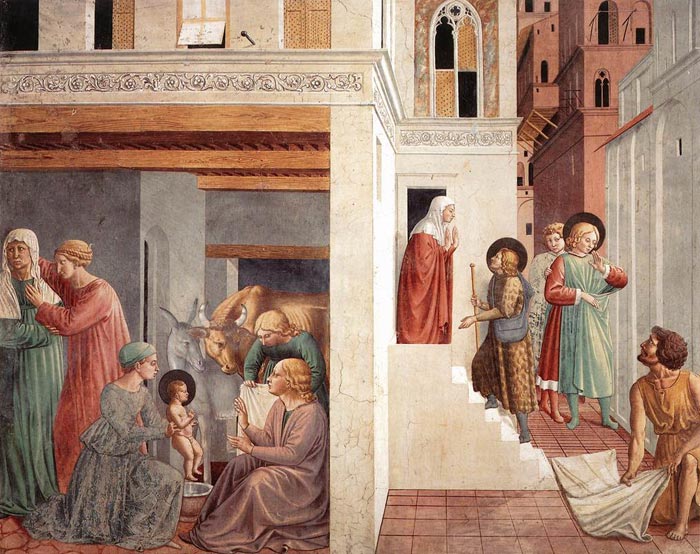
Benozzo Gozzoli ‘The Birth of St. Francis, the Prophecy of the Pilgrim and the Homage of the Simple Man’ (1450 – 52)

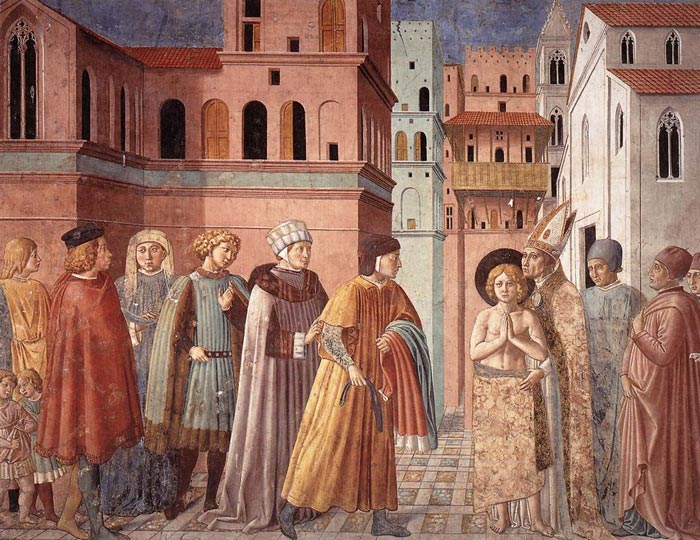
Benozzo Gozzoli ‘The Renunciation of Possessions’ (1450 – 52)

Benozzo Gozzoli ‘Sermon to the Birds and the Blessing of Montefalco’ (1450 – 52)

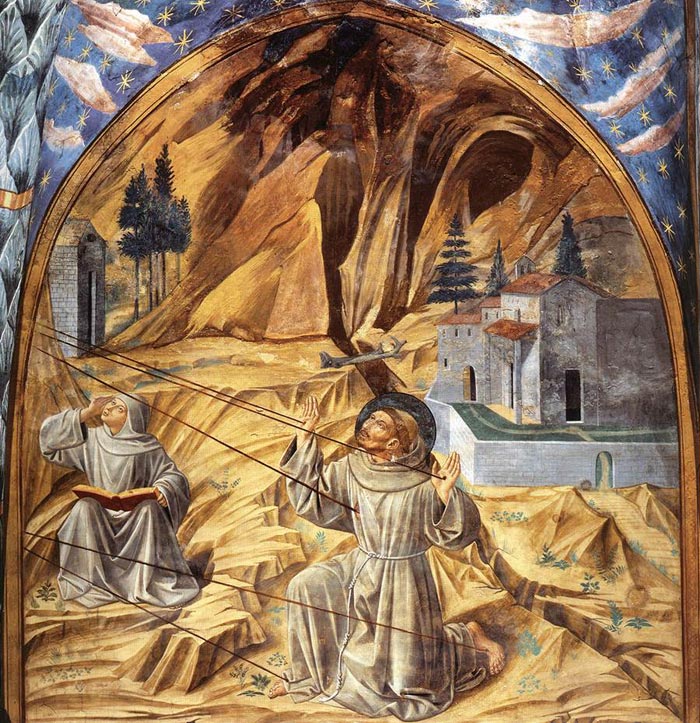
Benozzo Gozzoli ‘Stigmatization of the Saint’ (1450 – 52)

A further fresco cycle by Gozzoli is in the Chapel of Saint Jerome, depicting, amongst other events, the saint removing the thorn from the lion’s paw.

Benozzo Gozzoli ‘Scenes from the Life of Saint Jerome’ (1452)

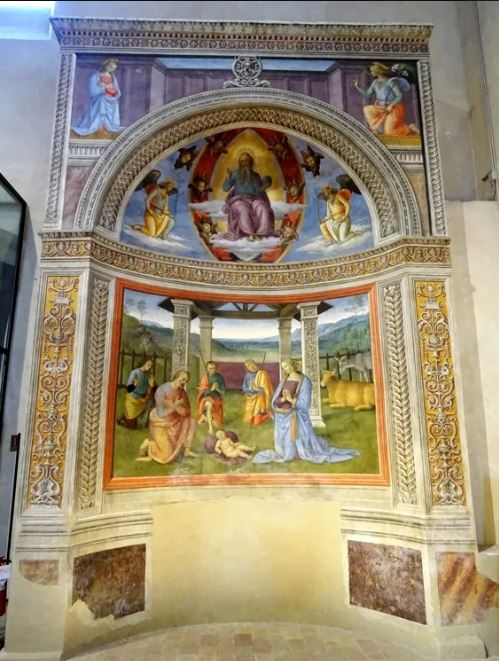
The church also contains a delightful ‘Nativity’ painted in 1503 by Perugino and a ‘Crucifix’ from the late-thirteenth – early-fourteenth centuries by the Maestro Espressionista di Santa Chiara.

Perugino ‘Nativity’ (1503)

Maestro Espressionista di Santa Chiara ‘Crucifix’ (late 13th – early 14th centuries)

Matisse Chapel, Vence

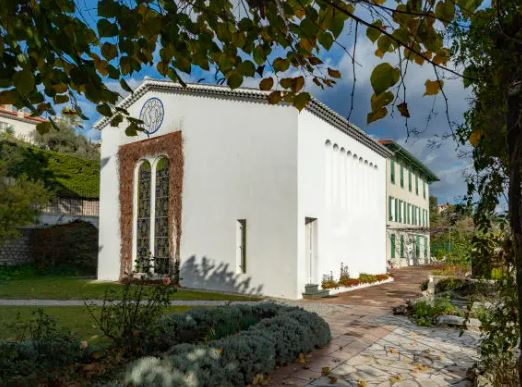
In Vence, in the Côte d’Azur region of the south of France, to visit the Chapelle de la Rosaire, also known as the Matisse Chapel. Henri Matisse designed and decorated the chapel for the Dominican sisters in Vence in gratitude for the care given to him by his nurse, Monique Bourgeois, who became Sister Jacques-Marie, after he had received major surgery in 1942.

La Chapelle du Rosaire

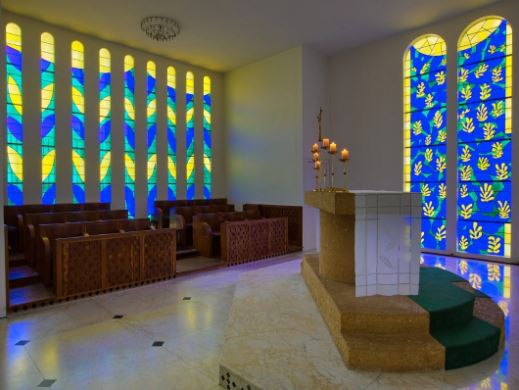
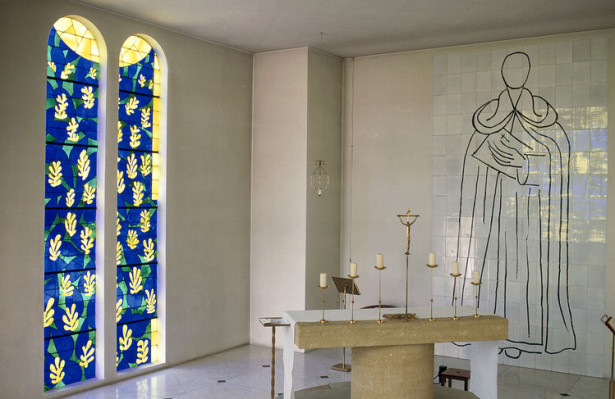
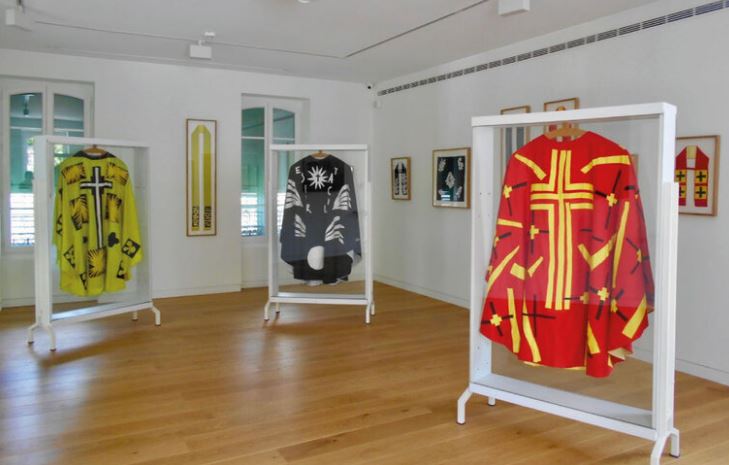
Matisse began the chapel project in 1948 and spent four years designing it and producing all the artworks, including the stained-glass windows, drawings on huge ceramic panels, furnishings and even the vestments worn by the priests.

Interior of chapel

A museum adjacent to the chapel contains all Matisse’s preparatory drawings and models for the building, as well as the brightly-coloured vestments which are still used for services in the chapel.

Vestments made to designs by Matisse

Piatti Quartet in Issigeac

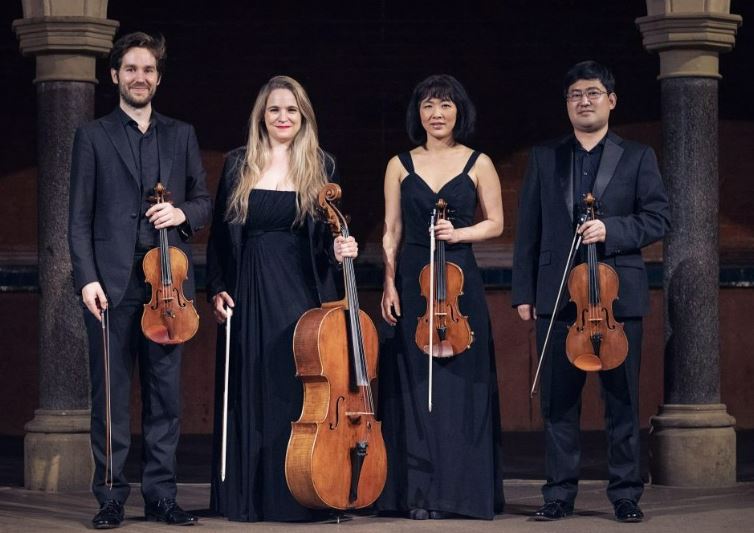
At the Issigeac International Music Academy for a concert by the excellent Piatti Quartet. Prizewinners at the 2015 Wigmore Hall String Quartet Competition, they now perform at festivals and concerts throughout the world.

Their programme this evening consisted of a first half that began with Mozart’s String Quartet no. 16 in E flat major, the third of the so-called Haydn Quartets. It was followed by a superb performance of Mendelssohn’s String Quartet no. 6 in F minor. This was extremely expressively played, with all the anguish, sadness and agony that Mendelssohn felt when writing it in 1847 as a homage to his beloved sister Fanny who had died just a few months before. It was to be Mendelssohn’s last composition, for a few months later he also died.

The second half was more cheerful, with Dvoraks ‘American Quartet’ in F major, which he wrote in 1893 during his time in the United States. It was very well played and enjoyed by the audience whose applause brought a well-deserved encore.

Piatti Quartet

Mozart ‘String Quartet no. 16 in E flat major’ K428; Mendelssohn ‘String Quartet no.6 in F minor’ opus 80; Dvorak ’String Quartet no. 12 (American) in F major, opus 96.

The Well of Moses, Dijon

In Dijon, the capital of the Burgundy region of eastern France, to see the monumental sculpture known as the ‘Well of Moses’ (‘Puits de Moïse’), the masterpiece of the Dutch artist Claus Sluter. It was constructed between 1395–1403 for the Carthusian monastery of Chartreuse de Champmol, built as a burial site by the Burgundian Duke Philip the Bold.

‘Portrait of Philip the Bold’ (17th-century copy of a late 14th-century painting)

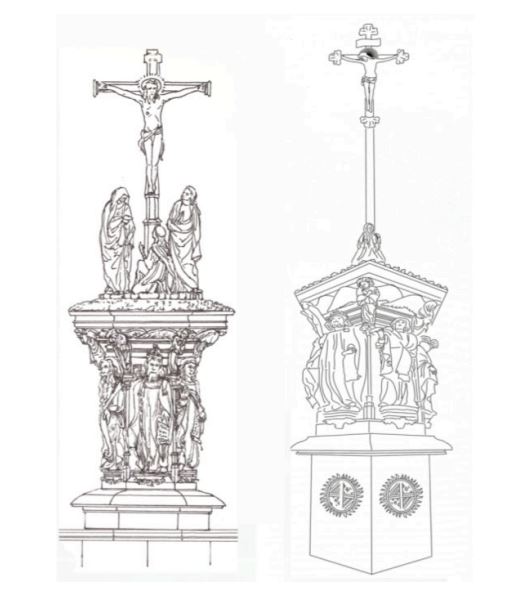
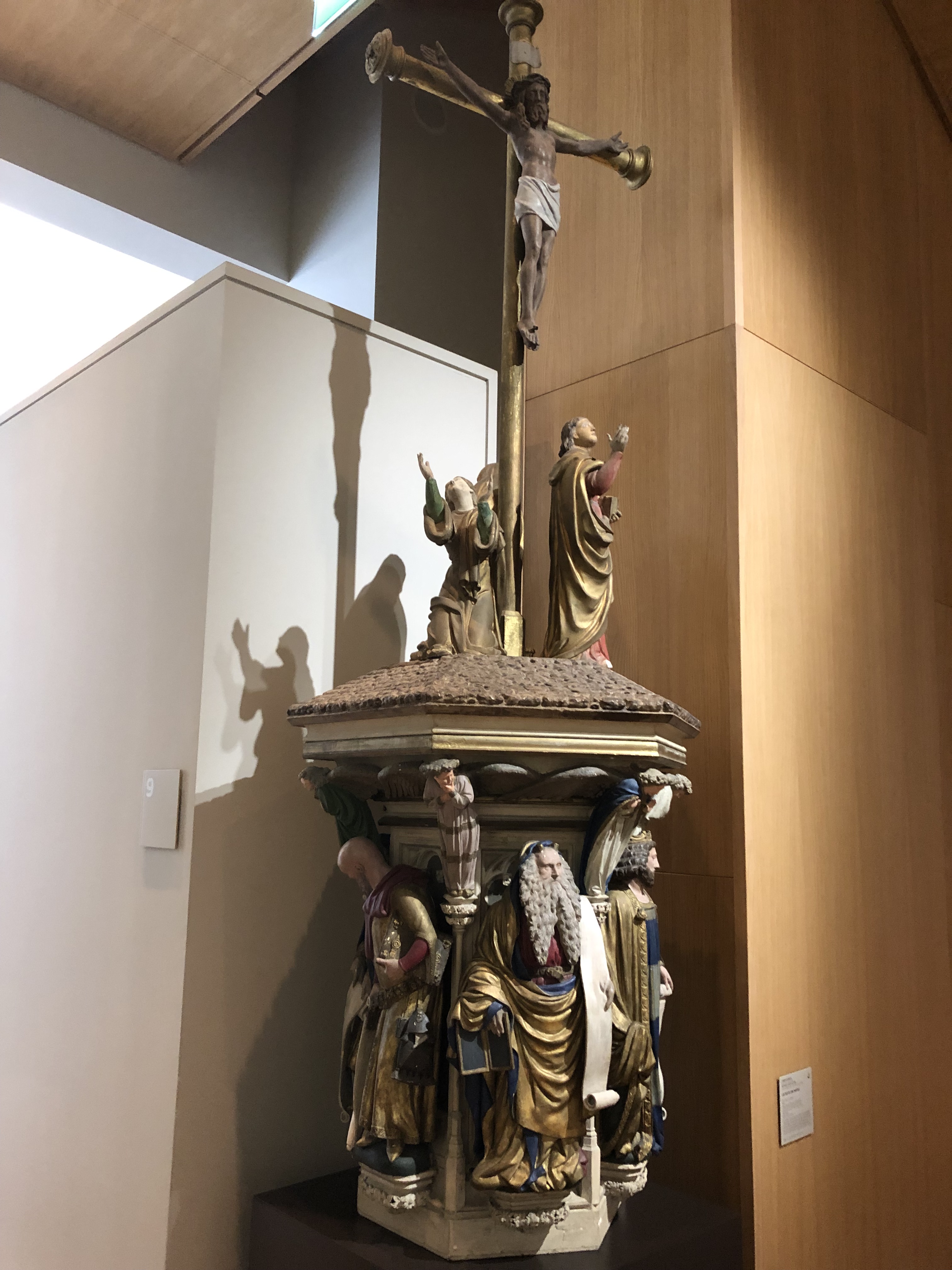
The structure was originally located in the central courtyard of the main cloister and consisted of four parts – the well, which was about four meters deep, the large hexagonal base, adorned with figures of prophets and angels, a terrace which sat on top of the pillar possibly containing the figures of a ‘Calvary’ scene, and a tall slender cross which rose from the centre.

Drawings of two possible reconstructions of the Well of Moses (copyright Eileen Greene, 2000, (left) Tom Bilson, 2006 (right))

Reconstruction in the Musée des Beaux-Arts, Dijon

Unfortunately, damage, mainly due to exposure to the weather, has meant that the cross has not survived and there are only fragments of the Calvary, now kept in the Musée des Beaux-Arts in Dijon. What is still intact is the hexagonal base with its sculptures of the six prophets who had foreseen the death of Christ on the Cross (Moses, David, Jeremiah, Zachariah, Daniel and Isaiah).

Claus Sluter ‘Well of Moses’ showing David and Jeremiah (1395 – 1403)

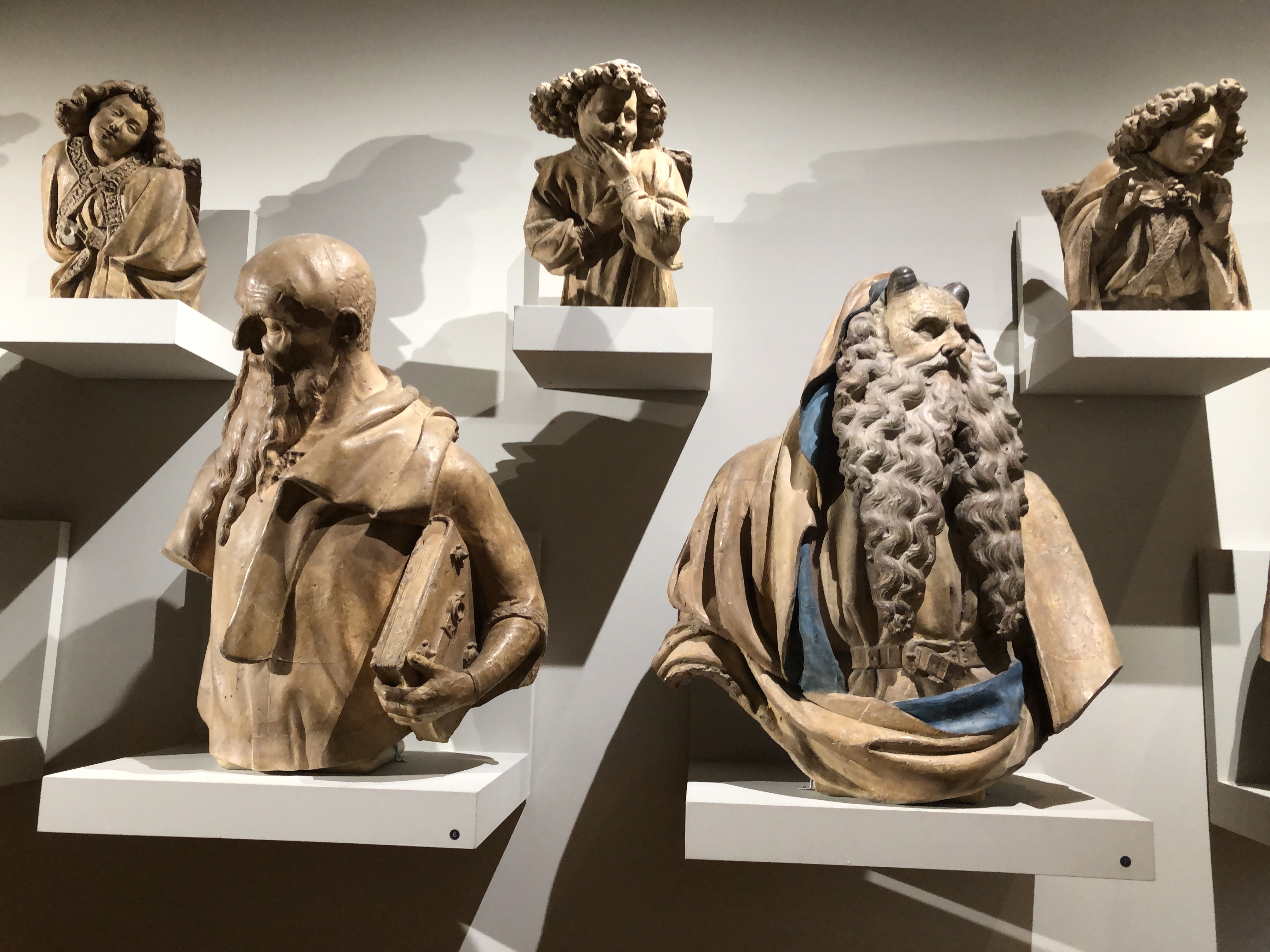
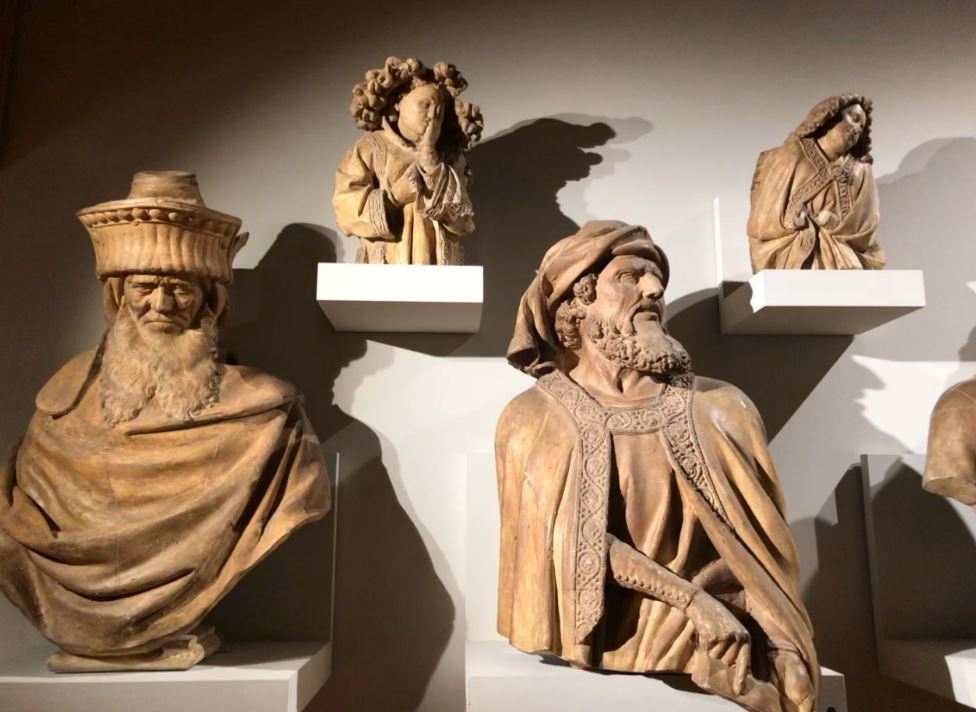
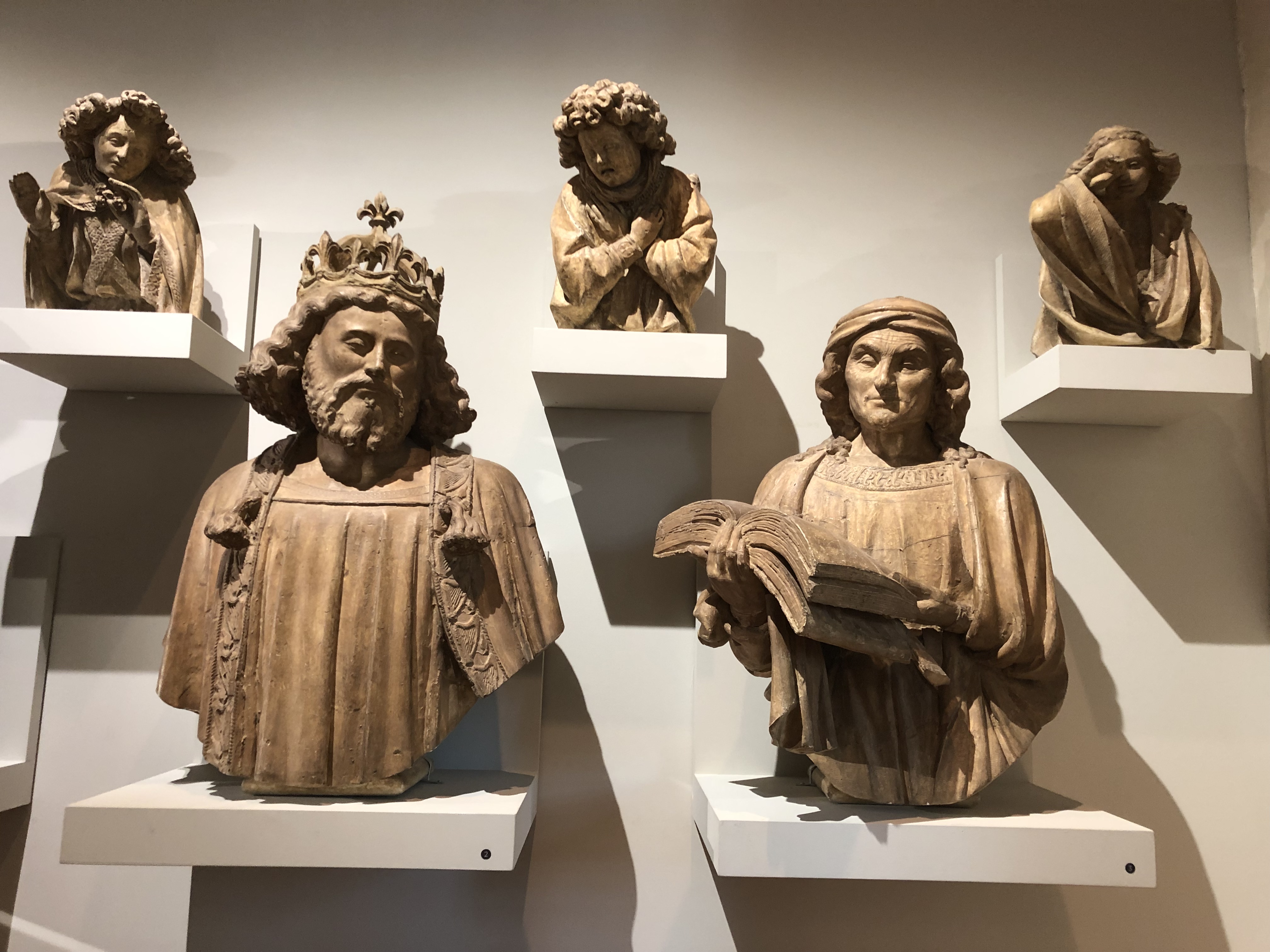
Also in the Musée des Beaux-Arts are casts of the busts of the prophets and angels, so these can be examined at close quarters.

Busts of the Prophets and Angels in the Musée des Beaux-Arts, Dijon

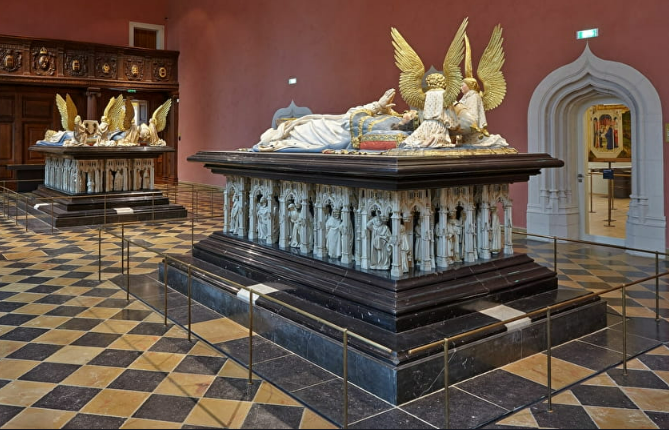
The tombs of Philip the Bold, his son, John the Fearless and John’s wife, Margaret of Bavaria have been moved from the Chartreuse de Champmol and are also now in the Musée.

Tombs of the Dukes of Burgundy